
There’s a moment every parent knows well — you’re folding laundry, wiping down the counter, or unloading groceries, and your toddler appears at your elbow with that determined look that says, “I want to do that too.” And your brain does this rapid-fire calculation: Let them help and it takes three times as long, or redirect them and deal with the meltdown?
Here’s the thing nobody tells you enough: that little helper instinct? It’s gold.
Chores aren’t just boring adult tasks to be suffered through — for young kids, they’re hands-on learning experiences wrapped in the magical feeling of being genuinely useful.
When you let your LO participate in real household work, you’re building responsibility, fine motor skills, confidence, and a sense of belonging — all before snack time.
So pull up a chair (while your toddler “mops” the kitchen floor for the fifth time), because here are 10 chore-based activities that turn everyday helpfulness into something your child will actually beg to do.
1. The Great Sock-Sorting Spectacular — Laundry as a Learning Activity
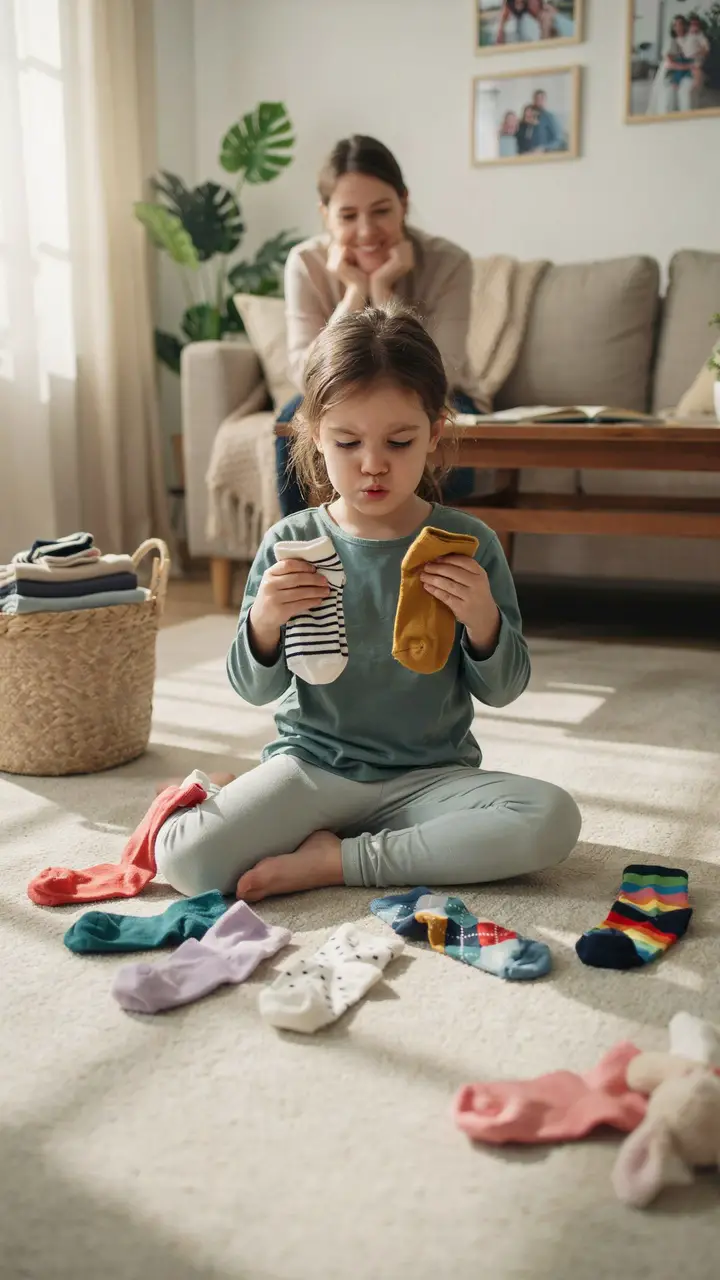
Sock sorting is one of those activities that sounds too simple to work — until you watch your toddler spend 25 uninterrupted minutes hunting for matching pairs with the intensity of a detective. I’ve seen it happen. It’s almost eerie how engaging it is for little ones.
The secret? It hits every sweet spot: color recognition, pattern matching, fine motor manipulation, and — best of all — it’s a real job with a visible result they contributed to.
How to Set This Up
- Materials needed:
- 1 clean laundry basket of mixed socks (family-sized works great)
- A low table or clear floor space
- Optional: small color-coded bins or bowls for sorting by color first
- Age appropriateness: 18 months–5 years (younger toddlers sort by color; older kids match patterns and fold)
- Setup time: 0 minutes — it’s literally your laundry
- Play duration: 15–40 minutes (prepare to be amazed)
- Cleanup time: 5 minutes
- Mess level: 🟢 Low — socks everywhere, but they’re clean!
- Developmental benefits:
- Color and pattern recognition
- Matching and categorization (early math concepts)
- Fine motor skills (pinching, folding, stretching)
- Sense of real contribution to family life
- How to play: Dump the clean socks onto the floor or a low table. For toddlers under 2, start by asking them to find “all the blue ones” or “all the stripey ones.” For ages 3+, challenge them to find exact pairs. Ages 4–5 can try basic folding (matching toe to cuff).
- Parent tip: Make it a game — “Can you find the sock that looks JUST like this one?” Hold up a sock dramatically and watch them dive into the pile.
- Safety notes: No concerns — completely safe, fully supervised activity. Just watch that babies don’t put ankle socks over their faces (it happens).
- Variations: Sort by family member (“These are Daddy’s big ones!”), sort by color into colored bins, or race against a timer for older kids.
2. Spray Bottle Wipers — The Cleaning Crew Kids Actually Want to Join
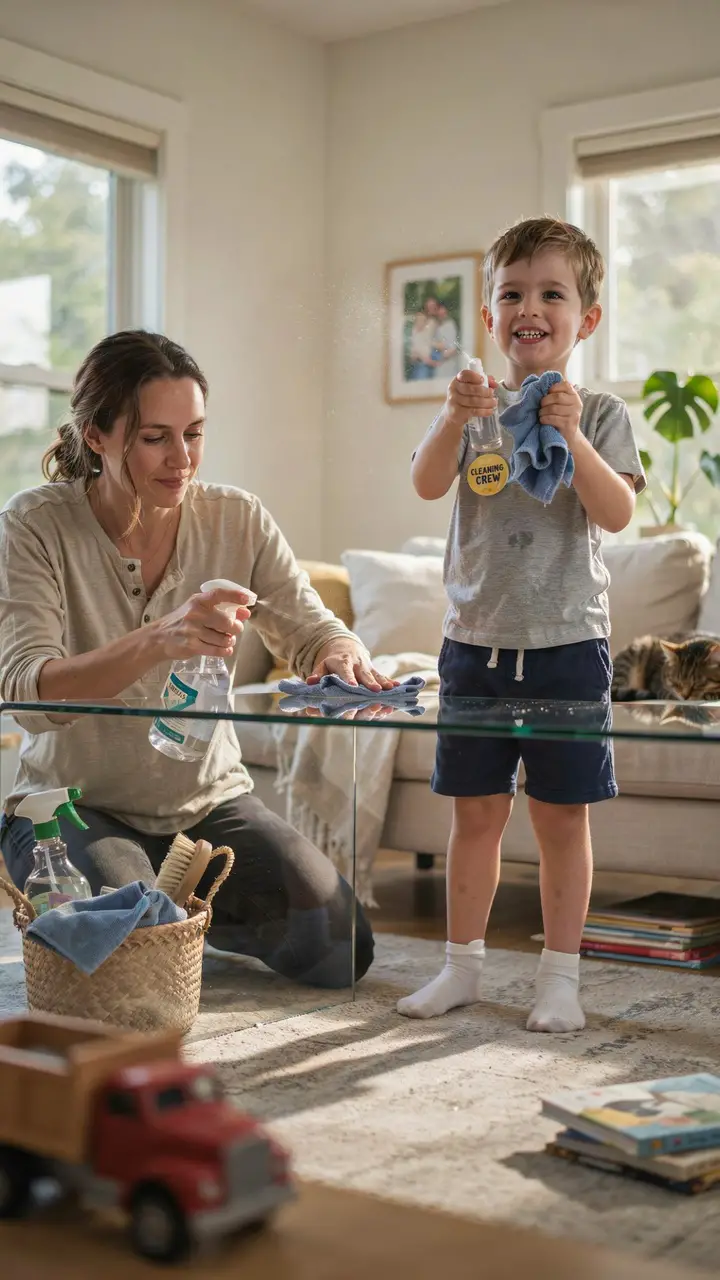
Hand a toddler a spray bottle and watch their eyes light up. There’s something deeply satisfying to small children about the squirt-squirt-wipe rhythm — and honestly, who can blame them? It feels powerful and purposeful in the best way.
This one works because kids get to use a real tool and see an immediate, visible result. No toy kitchen compares to the real thing.
How to Set This Up
- Materials needed:
- 1 small spray bottle filled with water (or diluted child-safe all-purpose cleaner for ages 3+)
- 2–3 small microfiber cloths or old washcloths
- Low surfaces to clean: coffee table, lower cabinet doors, baseboards, windows at child height, outdoor furniture
- Age appropriateness: 2–6 years (2-year-olds use plain water; 4+ can handle diluted gentle cleaners with supervision)
- Setup time: 3 minutes
- Play duration: 20–45 minutes — they will not stop willingly
- Cleanup time: 2 minutes (hang cloths to dry)
- Mess level: 🟡 Medium — wet surfaces and occasionally soggy floors
- Developmental benefits:
- Hand strength and bilateral coordination (operating the spray mechanism)
- Circular scrubbing motion supports shoulder and arm development
- Cause-and-effect understanding (spray → surface gets wet → wipe → surface gets clean)
- Responsibility and contribution to the household
- Parent tip: Give them their very own labeled spray bottle. Write their name on it with a permanent marker or add a sticker. Ownership transforms the whole experience.
- Safety notes: Use only plain water or explicitly child-safe products. Keep away from eyes. Avoid near electronics.
- Variations: “Window washing day” outside with a bucket of soapy water and a squeegee (ages 4+), wiping down outdoor play equipment, or “mirror cleaning” — they’ll be fascinated by their own reflection.
3. Grocery Bag Unloaders — Kitchen Helpers in Training
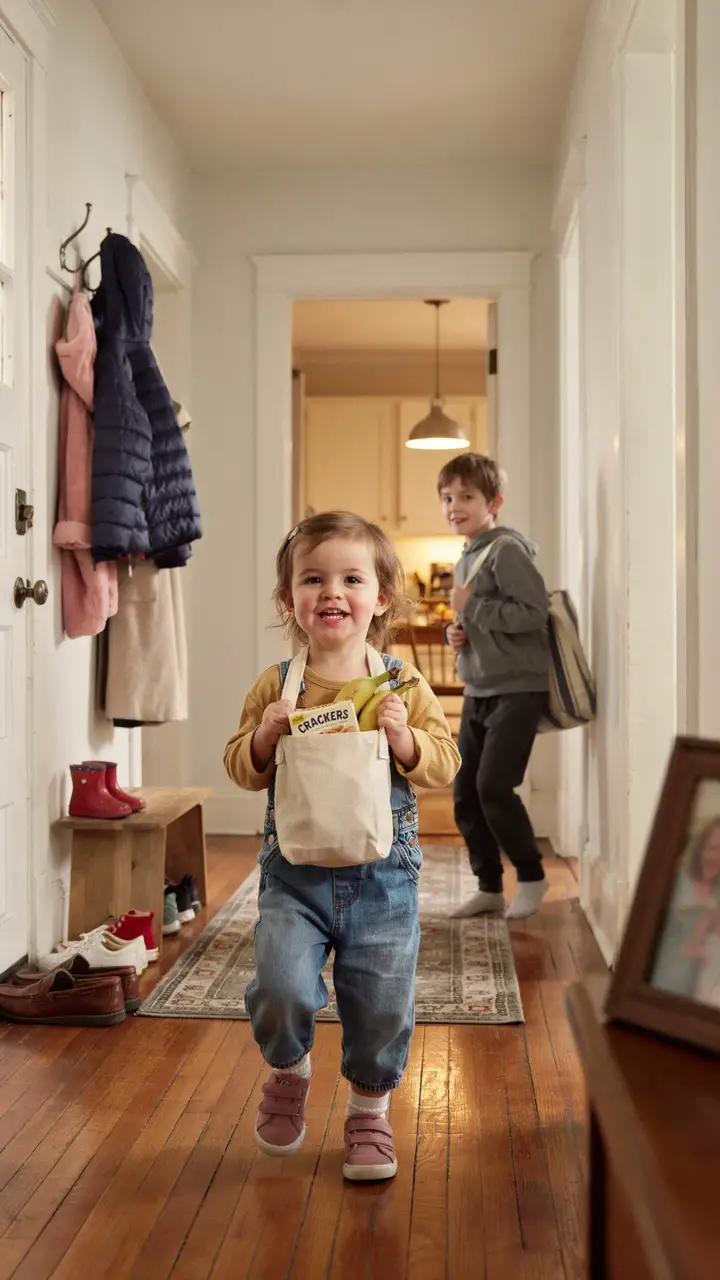
Grocery day is secretly one of the best toddler activity opportunities you have. The whole thing — carrying bags, identifying items, sorting what goes where — is genuinely engaging and teaches practical life skills that most kids never get enough of.
My personal favourite part? Watching a 2-year-old confidently carry a bag of bread to the counter like they’re delivering the most important package in the world.
How to Set This Up
- Materials needed:
- Grocery bags (give your LO a lightly loaded reusable bag of their own)
- Low pantry shelf or designated “kid shelf” where they can put away their items
- Optional: picture labels on pantry shelves showing where items belong
- Age appropriateness: 18 months–6 years (younger kids carry one soft item; older kids categorize and sort)
- Setup time: 0 minutes — it’s part of your normal routine
- Play duration: The duration of your unpack (15–30 minutes)
- Mess level: 🟢 Low — occasional dropped eggs aside (FYI: keep those for adult hands)
- Developmental benefits:
- Gross motor skills (carrying, lifting)
- Category sorting and classification (fridge vs. pantry vs. counter)
- Vocabulary building (naming foods, packaging)
- Real-world responsibility and family contribution
- Make it educational: Ask questions as you go. “Is this cold or room temperature? Where does it live?” For ages 4+, let them decide whether items go in the fridge or pantry and explain their reasoning.
- Safety notes: Keep raw meat, glass jars, heavy items, and breakables for adult hands. Assign only soft, light, unbreakable items to little helpers.
4. Table Setting Masters — Counting, Placing, and Owning the Dinner Prep
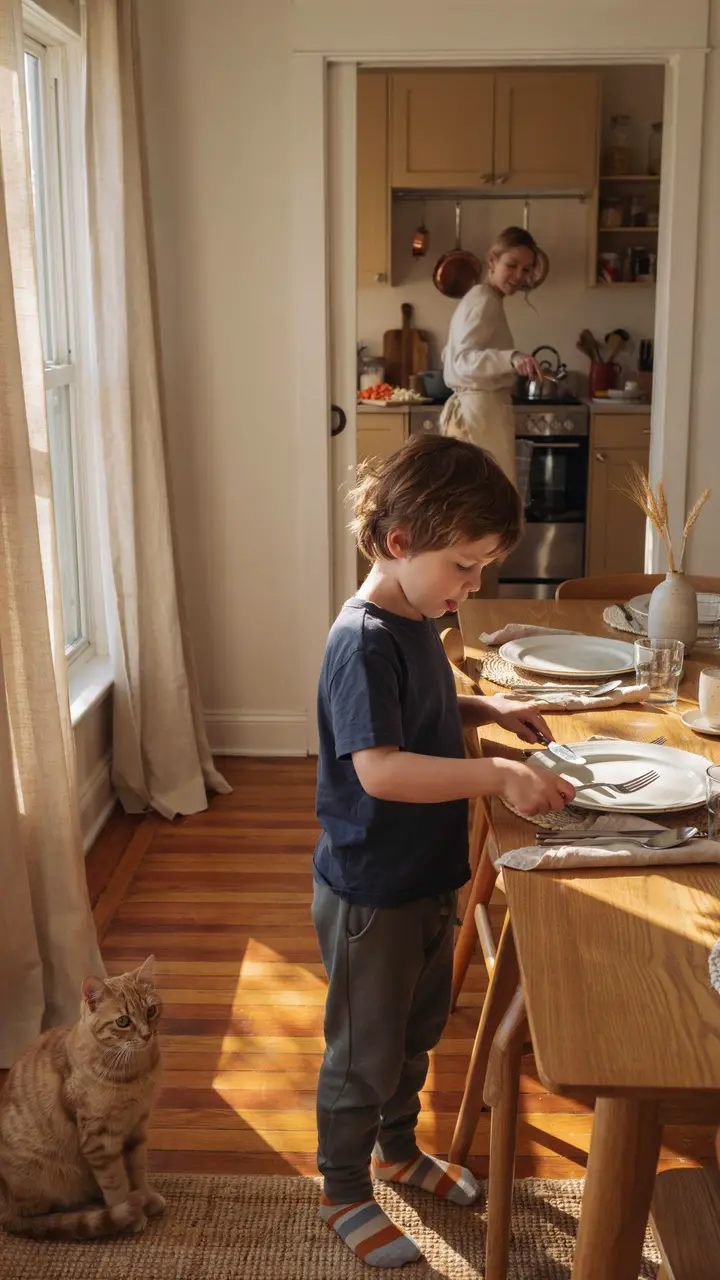
Table setting is one of those underrated chores that quietly teaches an enormous amount. Counting settings, remembering what goes where, matching the number of plates to the number of people — it’s math, spatial reasoning, and memory all dressed up as dinner prep.
And the pride when everyone sits down to their table? Priceless.
How to Set This Up
- Materials needed:
- Child-accessible storage for plates, bowls, cups, and cutlery (a low drawer or shelf works brilliantly)
- Placemat with a printed outline showing where each item goes (great for beginners — easy DIY with paper and lamination!)
- Unbreakable dishes and kid-safe cutlery for toddlers
- Age appropriateness:
- 2–3 years: Carries napkins, places unbreakable cups
- 3–4 years: Places plates and napkins with guidance
- 4–6 years: Full place setting independently
- Setup time: 5 minutes to arrange accessible storage the first time; 0 minutes after that
- Play duration: 10–20 minutes
- Mess level: 🟢 Low
- Developmental benefits:
- Counting and one-to-one correspondence (one plate per person)
- Spatial reasoning (left/right placement)
- Memory and sequencing
- Fine motor skills (placing items carefully)
- Pride of contribution to family meals
- Parent tip: Make a laminated placemat guide showing fork on the left, knife and spoon on the right — and let them match up each piece. It’s genuinely Montessori-approved and genuinely easy to make at home. 🙂
5. Plant Watering Duty — Little Gardeners, Big Responsibility
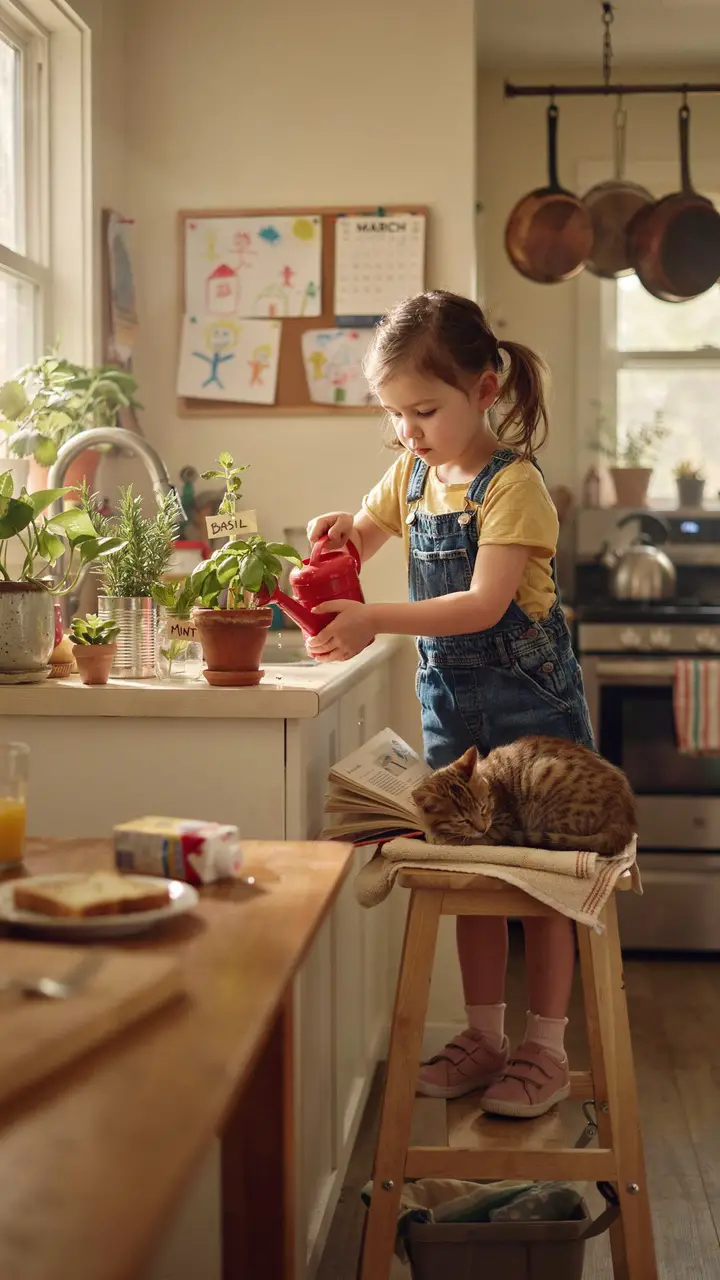
There’s something genuinely beautiful about watching a toddler take ownership of keeping something alive. Plant watering builds nurturing instincts, a sense of daily routine, and — eventually — an understanding of cause and effect (water the plant → plant grows and thrives).
BTW, even if your houseplants are half-dead already, this is still worth doing. The learning is in the doing, not in the botanical perfection of your windowsill.
How to Set This Up
- Materials needed:
- 1 small, child-sized watering can (these are widely available and very affordable)
- 2–3 designated “their” plants at a reachable height
- A small tray under pots to catch overflow
- Optional: a simple picture chart showing which day of the week to water
- Age appropriateness: 2–6 years
- Setup time: 5 minutes to designate plants and fill the can
- Play duration: 10–20 minutes
- Cleanup time: Wipe up any spills — 2 minutes
- Mess level: 🟡 Medium — water on floors happens. Use a tray.
- Developmental benefits:
- Nurturing and empathy (caring for a living thing)
- Routine and responsibility (a recurring, predictable task)
- Measuring and pouring (fine motor + early science)
- Nature connection and observation skills
- Safety notes: Avoid plants with toxic leaves (common culprits: pothos, philodendron). Opt for child-safe plants like herbs, spider plants, or succulents.
- Extension idea: Let your child grow something from seed in a small pot that’s entirely theirs to tend — sunflowers and radishes are fantastic for impatient young gardeners.
6. Dustpan and Brush Brigade — Sweeping Up with Pride
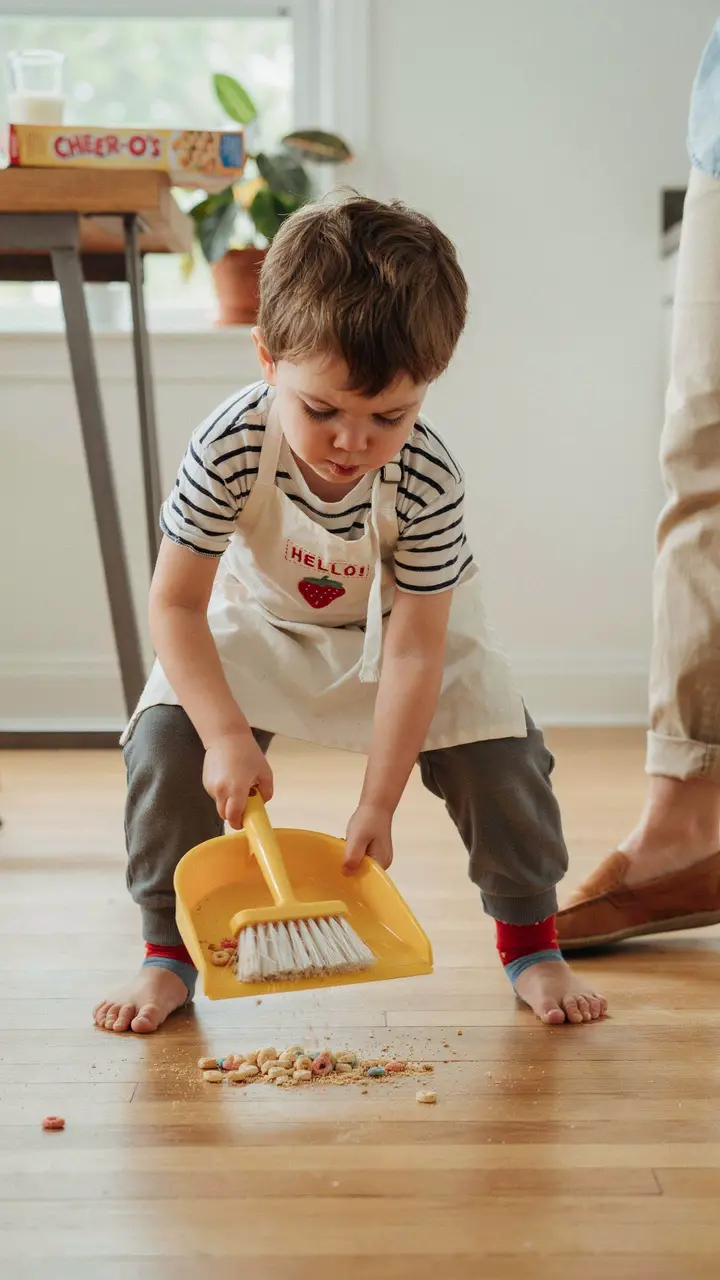
Sweeping is one of those motor tasks that looks easy but actually takes real coordination — and kids love the satisfying swish-and-collect rhythm of it. Invest in a child-sized dustpan and brush set (they’re inexpensive and genuinely life-changing for this age) and assign your LO a “sweeping zone.”
How to Set This Up
- Materials needed:
- 1 child-sized dustpan and hand brush set
- Optional: small child-sized broom for bigger sweeping jobs (ages 4+)
- A designated sweep zone — under the kitchen table is perfect
- Age appropriateness: 2.5–6 years
- Setup time: 0 minutes once you have the tools
- Mess level: 🟡 Medium — sweeping redistributes before it collects, so expect some chaos
- Developmental benefits:
- Bilateral coordination (holding pan with one hand, brushing with the other)
- Spatial awareness and eye-hand coordination
- Persistence (sweeping takes multiple passes to get right)
- Practical life skill with immediate visible results
- Parent sanity tip: Don’t re-sweep after them right away (at least not where they can see). The job doesn’t need to be perfect — the doing is what matters.
7. Veggie Washing Station — Kitchen Science in Disguise
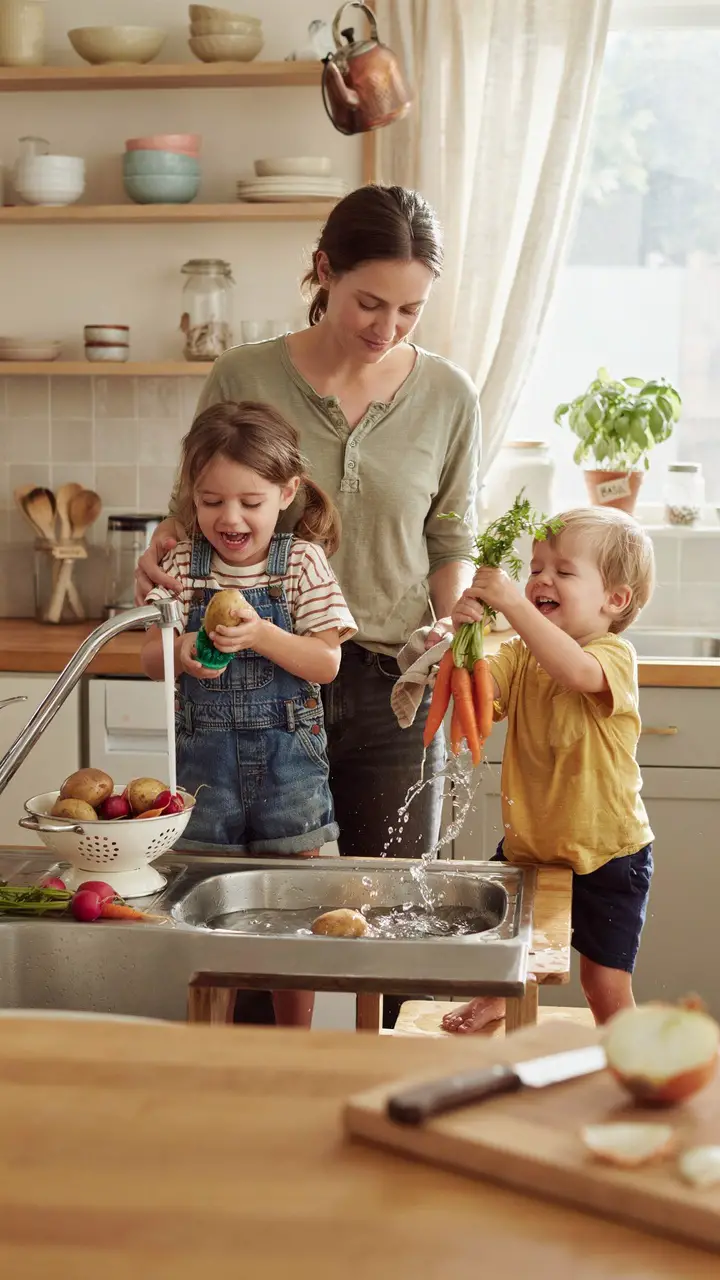
Water play + real kitchen work + snack proximity = toddler paradise. The veggie washing station is one of those magical activities where your LO genuinely believes they are a professional chef’s assistant, and honestly, they kind of are.
How to Set This Up
- Materials needed:
- A shallow sink or large bowl of lukewarm water
- Small produce brushes (these are cheap and widely available)
- A colander for rinsed items
- Hardy vegetables that can withstand enthusiastic scrubbing: potatoes, carrots, cucumbers, sweet potatoes, zucchini
- Age appropriateness: 18 months–6 years (younger kids splash and rinse; older kids scrub with brushes)
- Setup time: 5 minutes
- Play duration: 20–40 minutes — water extends everything
- Cleanup time: 10 minutes (floors will be wet)
- Mess level: 🔴 High — embrace it
- Developmental benefits:
- Sensory exploration (water temperature, texture of vegetables)
- Fine motor skills (scrubbing, gripping, rinsing)
- Food familiarity (kids who handle vegetables are statistically more likely to eat them — worth noting!)
- Real contribution to meal preparation
- Parent tip: Put a towel on the floor before you start. You’ll thank yourself later.
8. Laundry Transfer Mission — From Washer to Dryer
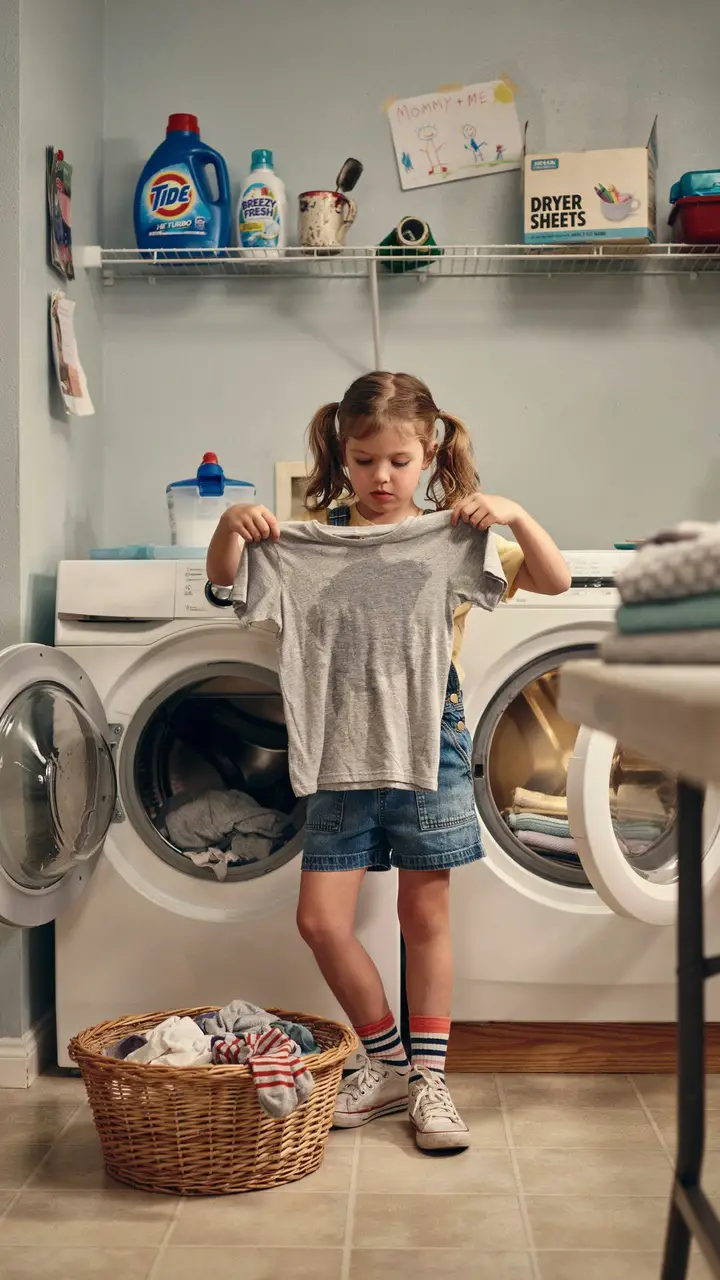
The laundry transfer mission is wonderfully satisfying for young children — there’s the physical challenge of pulling damp clothes from the washer, the warmth of the dryer, and the deeply pleasing click of closing the door at the end. It’s an activity that requires real effort and delivers real results.
How to Set This Up
- Materials needed:
- Front-loading washer and dryer (or a top-loader with a step stool)
- A small laundry basket for transferring items
- No extra materials needed
- Age appropriateness: 3–6 years with close supervision
- Mess level: 🟢 Low — damp clothes at worst
- Setup time: 0 minutes
- Developmental benefits:
- Gross motor strength (pulling, lifting, carrying damp laundry)
- Sequencing understanding (wash → dry → fold)
- Real household responsibility
- Pride in completing a multi-step task
- Safety notes: Always supervise closely near appliances. Keep detergent pods completely out of reach — they are a serious safety hazard for young children. Ensure dryer is off before any activity near it.
9. The Big Toy Sort — Tidying as a Classification Game
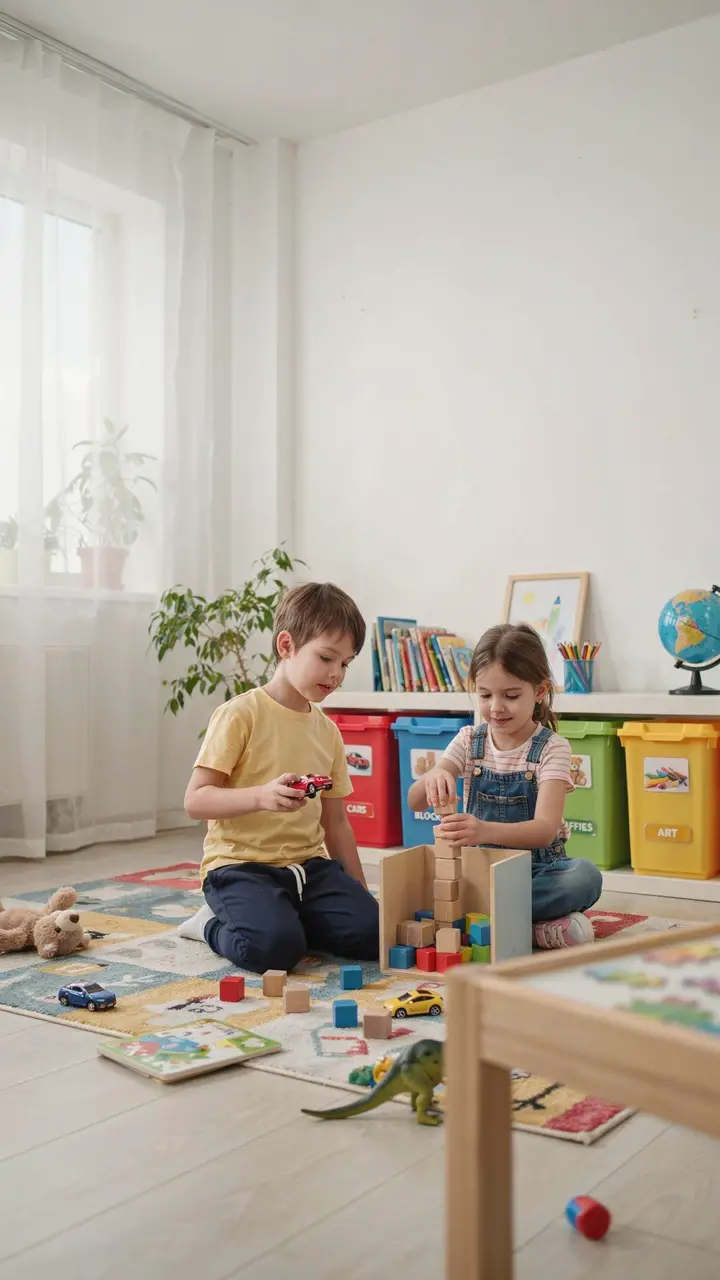
Okay, real talk: asking a toddler to “tidy up” and expecting a clean room is a beautiful fantasy. But sorting toys into picture-labeled bins? That’s a completely different — and far more successful — request.
Framing cleanup as a classification challenge (“Let’s find all the animals!” or “Can you fill the red bin?”) shifts it from a chore into a game that actually works.
How to Set This Up
- Materials needed:
- Bins or baskets with picture labels (print and laminate images of what belongs inside — animals, vehicles, blocks, etc.)
- A clear, low storage system kids can physically access
- Optional: a timer for “beat the clock” motivation for ages 4+
- Age appropriateness:
- 18–30 months: Puts one category of toys away when asked (“Put the balls in!”)
- 2.5–4 years: Sorts 2–3 categories independently
- 4–6 years: Full room tidy with category bins and minimal prompting
- Developmental benefits:
- Categorization and classification (early math and logic)
- Following multi-step instructions
- Sense of order and environmental responsibility
- Cooperation when done with siblings
- Parent tip: Fewer bins = more success. IMO, three or four broad categories beat ten specific ones every time.
10. The Helper Chart Jobs — Building Routine, Ownership, and Pride
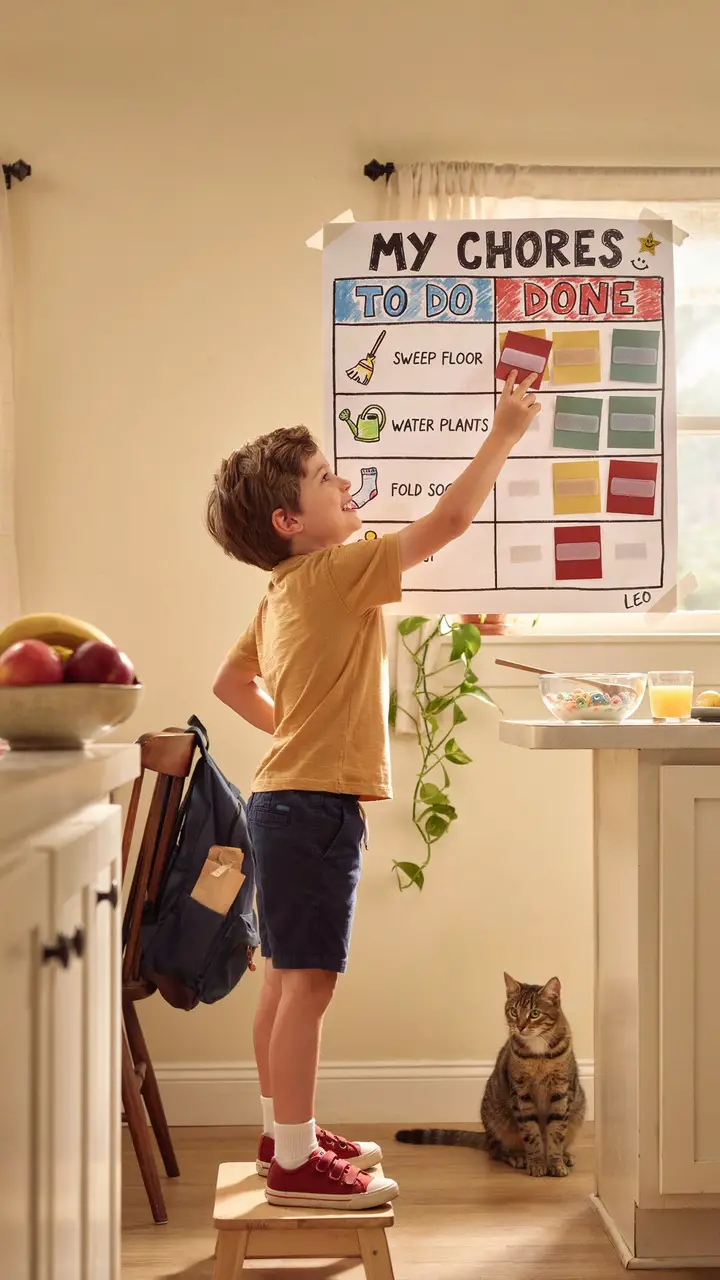
The secret to making chore-based activities stick isn’t any single activity — it’s routine and ownership. When children have designated jobs that are genuinely theirs, something shifts. They stop asking “do I have to?” and start saying “it’s my turn!”
A simple visual helper chart — even a handmade one — gives young children the structure they crave and the independence they’re desperately working toward.
How to Set This Up
- Materials needed:
- A piece of card, corkboard, or whiteboard at child height
- Picture icons for each job (hand-drawn or printed — free printables are everywhere online)
- Velcro dots or clothespins for moveable “done/not done” sections
- Optional: sticker reward chart alongside it
- Age appropriateness: 2–7 years
- Setup time: 20–30 minutes to create; 0 minutes daily after that
- Mess level: 🟢 None
- Developmental benefits:
- Routine and predictability (hugely important for toddler emotional regulation)
- Autonomy and self-direction
- Reading readiness (connecting pictures to words)
- Responsibility and follow-through
- Family belonging and contribution
- Chart ideas by age:
- 2–3 years: Feed the pet, put shoes away, put dirty clothes in hamper
- 3–4 years: Set napkins on table, water one plant, help unpack snack bag
- 4–6 years: Set the table, sweep under chair, empty small wastebaskets, sort recycling
- Parent tip: Resist the urge to redo their jobs perfectly. A slightly messy set table or a partially swept floor is still a win. The habit matters far more than the result right now. <3
Raising Helpers, One Cheerful Chore at a Time
Here’s the thing about chore-based activities: they’re not about having a perfectly clean house or raising some impossibly productive super-child. They’re about letting your kid stand beside you in the everyday rhythms of family life and feel genuinely useful.
The moment your toddler beams because they carried the grocery bag, set the forks on the table, or watered their plant without being asked — that’s not a small moment. That’s the foundation of a confident, capable person being built in real time.
You don’t need elaborate setups, expensive materials, or Pinterest-worthy presentation. You need a dustpan, a spray bottle, a pile of socks, and a child who’s already following you around asking to help. Trust those instincts — yours and theirs. Simple, imperfect helpfulness is exactly what they need, and you’re already doing it beautifully.

Greetings, I’m Alex – an expert in the art of naming teams, groups or brands, and businesses. With years of experience as a consultant for some of the most recognized companies out there, I want to pass on my knowledge and share tips that will help you craft an unforgettable name for your project through TeamGroupNames.Com!