
There’s something magical about walking into a child’s bedroom that genuinely feels like theirs.
Not just a room with a bed and a dresser, but a space that sparks imagination, supports how they actually live, and somehow survives the daily chaos of childhood.
If you’ve been staring at your son’s bedroom thinking, “We can do so much better than this,” you’re in the right place.
Designing a contemporary boys bedroom doesn’t mean you have to hire an interior designer or spend a fortune.
It means making thoughtful choices—about color, furniture scale, storage, and personality—that grow with your kid and hold up against the very real realities of Legos on the floor and muddy sneakers at the door.
Let’s get into it.
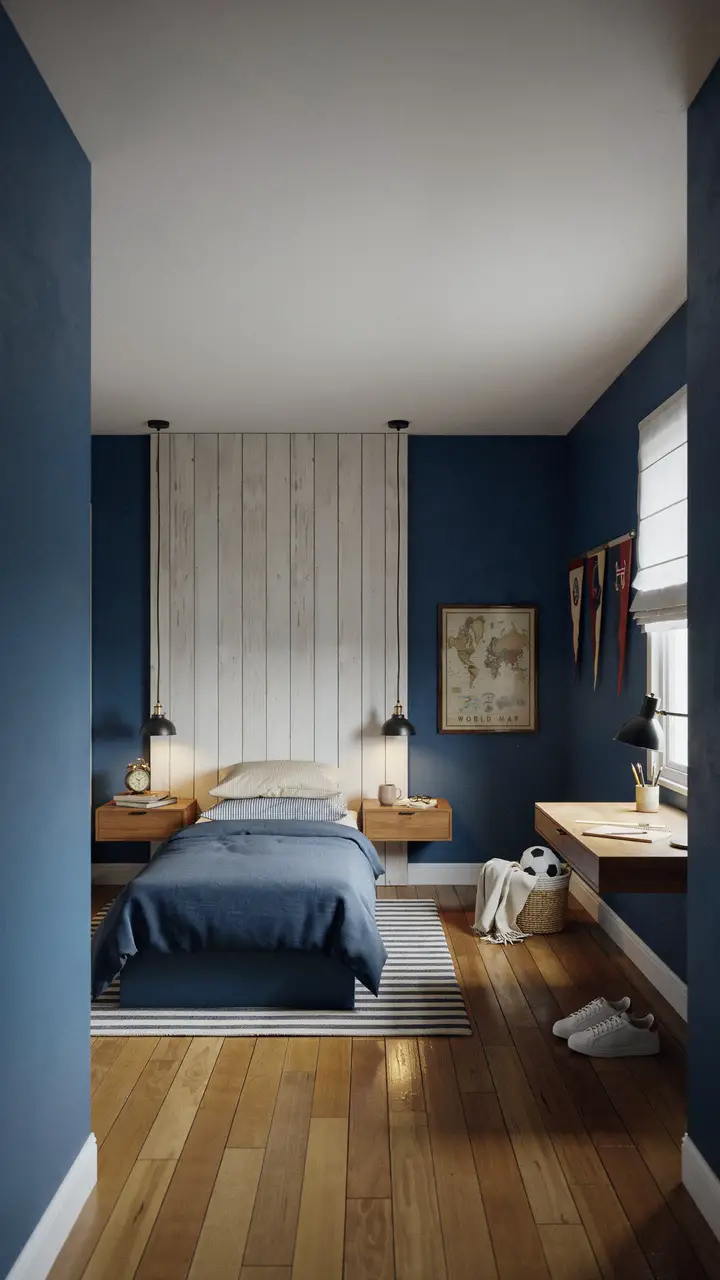
Navy blue walls are genuinely one of the most timeless choices you can make for a boys bedroom—and they’ve gotten a serious modern update. Pair deep navy with warm natural wood tones (think light oak or walnut) and you instantly get that sophisticated-but-still-a-kid’s-room balance that’s really hard to mess up.
The key here is keeping the furniture low and simple. A platform bed with clean lines does all the heavy lifting without making the room feel busy or babyish.
How to Recreate This Look
Shopping List:
- Navy paint (try Sherwin-Williams’ “Naval” or Benjamin Moore’s “Hale Navy”) — $60–$90 per gallon
- Low-profile platform bed frame (IKEA BRIMNES or Wayfair finds) — $150–$400
- Floating walnut nightstands — $80–$200 each
- Striped navy and cream area rug (Amazon, Rugs USA) — $80–$250
- World map framed art print — $20–$60
Step-by-Step:
- Paint three walls in a soft greige or white, and commit navy to just the accent wall behind the bed—this makes the room feel bigger while keeping the drama.
- Install two floating shelves in lieu of nightstands if floor space is tight.
- Layer textures: a linen duvet, a woven throw, and a cotton rug prevent the room from feeling flat.
Budget Breakdown:
- Budget-friendly (under $100): Navy accent wall + thrifted bed frame + striped Target rug
- Mid-range ($100–$500): Platform bed + navy wall + floating shelves
- Investment-worthy ($500+): Custom built-in shelving + quality mattress + solid wood furniture
Difficulty Level: Beginner. Painting one accent wall and styling simple furniture is very achievable over a weekend.
Common Mistake: Going too dark with navy on all four walls in a small room. One accent wall is plenty—trust me on this one.
2. The Industrial Loft Vibe (Minus the Actual Loft)
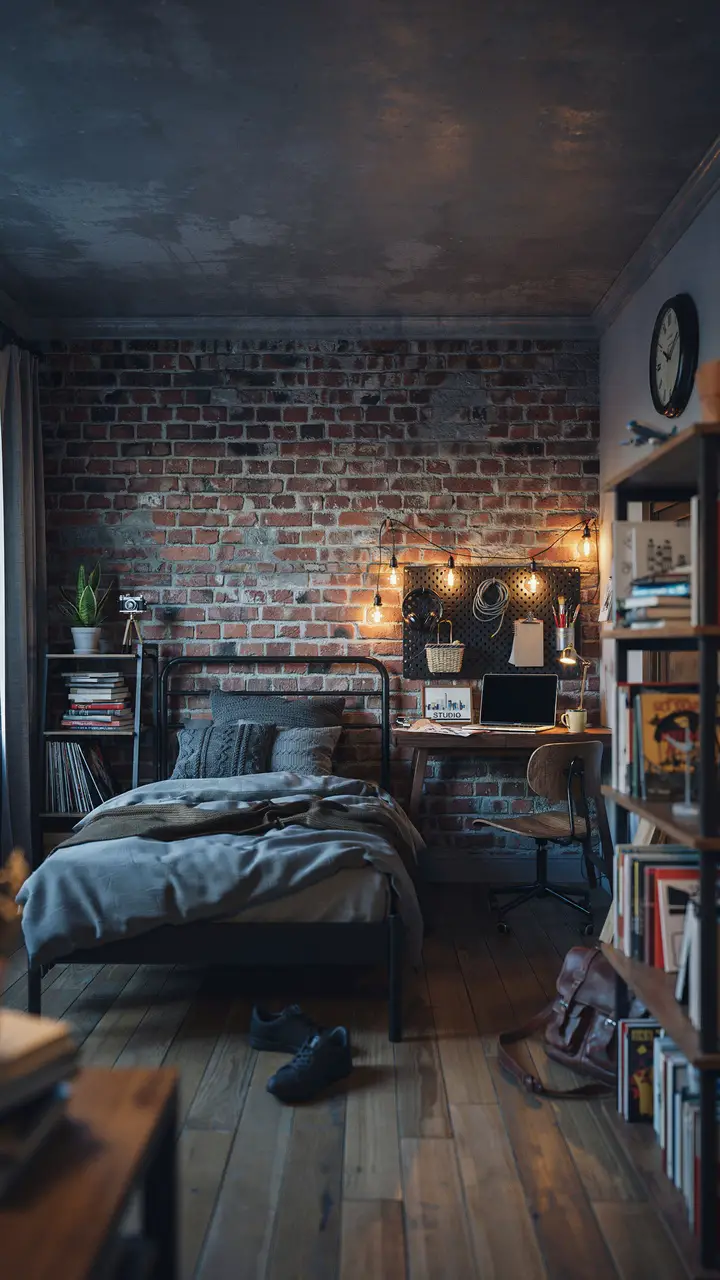
This one’s for the kid who thinks he’s already fourteen (even if he’s nine). The industrial look is surprisingly easy to pull off without ripping out walls or spending a fortune, and it ages incredibly well as boys grow into teenagers.
Exposed brick wallpaper—yes, peel-and-stick—does an absurd amount of the heavy lifting here. Pair it with matte black metal fixtures and warm Edison bulb lighting, and suddenly you’ve got a room that looks designed.
How to Recreate This Look
Shopping List:
- Peel-and-stick brick wallpaper (Amazon, Wayfair) — $30–$80 per roll
- Black metal bed frame — $120–$300
- Metal pegboard + accessories — $40–$100
- Edison bulb string lights — $15–$35
- Metal pipe shelving kit (DIY or pre-made) — $60–$180
Step-by-Step:
- Apply brick wallpaper to the wall behind the bed only—full-room brick can feel oppressive in smaller spaces.
- Swap out generic hardware (drawer pulls, hooks) for matte black metal versions for under $20 total.
- Build or buy a simple pipe shelf above the desk for serious visual impact.
Durability with Kids: Metal furniture holds up extremely well. Avoid fabric-covered headboards in this aesthetic—they’ll clash and they’re harder to clean.
Seasonal Swap: Swap the gray quilted duvet for a rust-orange or army green one in fall. Same room, completely different energy.
For more bold, personality-forward room ideas for active kids, check out these kids room design for boys ideas that cover everything from sporty themes to adventure-inspired spaces.
3. The Nature-Inspired Adventure Room
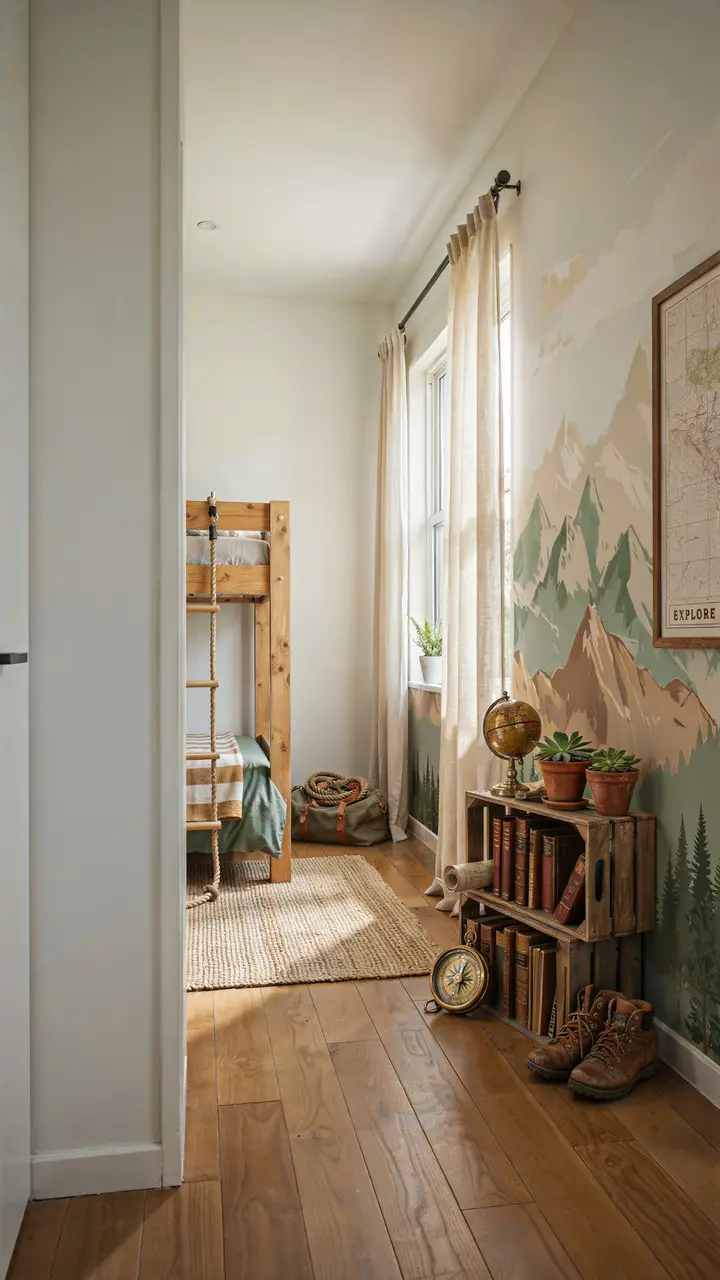
Boys who love the outdoors deserve a bedroom that speaks their language. And here’s the good news: you don’t need to go full “camping theme with plastic tent decor” to make this work. A nature-inspired contemporary bedroom can look genuinely sophisticated.
The mural is the star. A mountain range mural—either painted DIY or ordered as removable wallpaper—transforms a plain wall into a visual adventure. Everything else stays simple and earthy so the mural can breathe.
How to Recreate This Look
Shopping List:
- Mountain mural peel-and-stick wallpaper (Etsy, Murals Your Way) — $80–$200
- Solid pine bunk bed — $300–$700
- Jute area rug — $60–$150
- Terracotta succulent pots + plants — $5–$15 each
- Wooden crate shelves — $20–$50 each (or DIY for under $10)
Style Compatibility: This look pairs beautifully with existing warm wood furniture. It also works well with Montessori-style low furniture if you’re designing for a younger child transitioning out of a toddler room.
Rental-Friendly Alert: The peel-and-stick mural is completely removable—no landlord drama required.
Space Requirements: Works in rooms as small as 10×10 feet. The bunk bed actually frees up floor space that a standard bed setup would consume.
4. The Minimalist Monochrome Setup
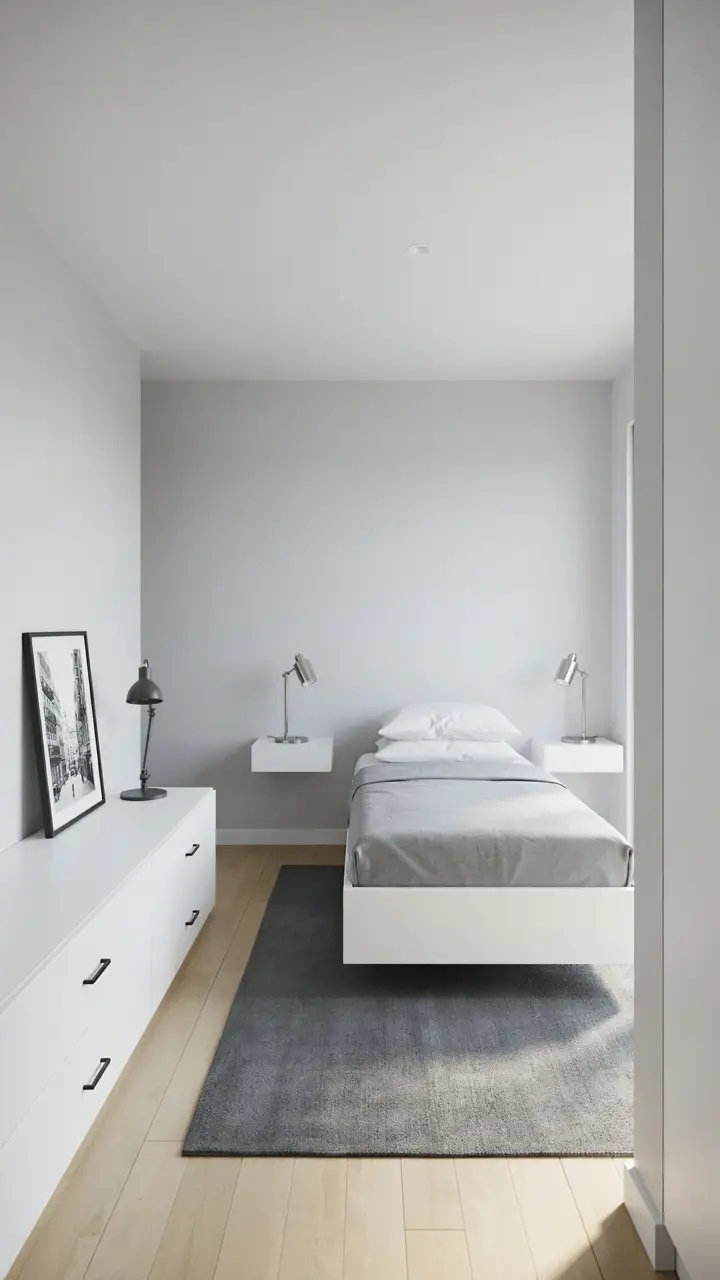
Some kids just want calm. No rockets, no dinosaurs, no chaos—just a space that feels clean and orderly. (And if your son is this kid, you’re probably relieved, honestly.) The minimalist approach works best when you invest in quality over quantity: one great bed, one solid dresser, matching nightstands.
The trick with monochrome rooms for kids is adding subtle personality. A geometric print here, a textured rug there. It shouldn’t feel sterile—just intentional.
How to Recreate This Look
Shopping List:
- White platform bed — $200–$500
- Light gray wall paint (Benjamin Moore “Pale Smoke” or Behr “Silver Drop”) — $50–$80
- Geometric duvet cover (Target, H&M Home) — $40–$80
- Matching white floating nightstands — $60–$120 each
- Black-and-white framed art prints — $15–$50
Common Mistake: Monochrome doesn’t mean boring, but it can go that way quickly if you don’t add texture. The rug, the duvet texture, and different materials (wood, metal, fabric) are what keep a minimalist room feeling warm rather than clinical.
Maintenance Tip: White bedding looks gorgeous but requires a protective mattress pad and weekly washing with active kids. Light gray is a far more forgiving alternative for the duvet.
For younger boys who aren’t quite ready for full minimalism, boys toddler room ideas offer a great bridge between playful and polished that grows with them.
5. The Sports-Modern Fusion Room
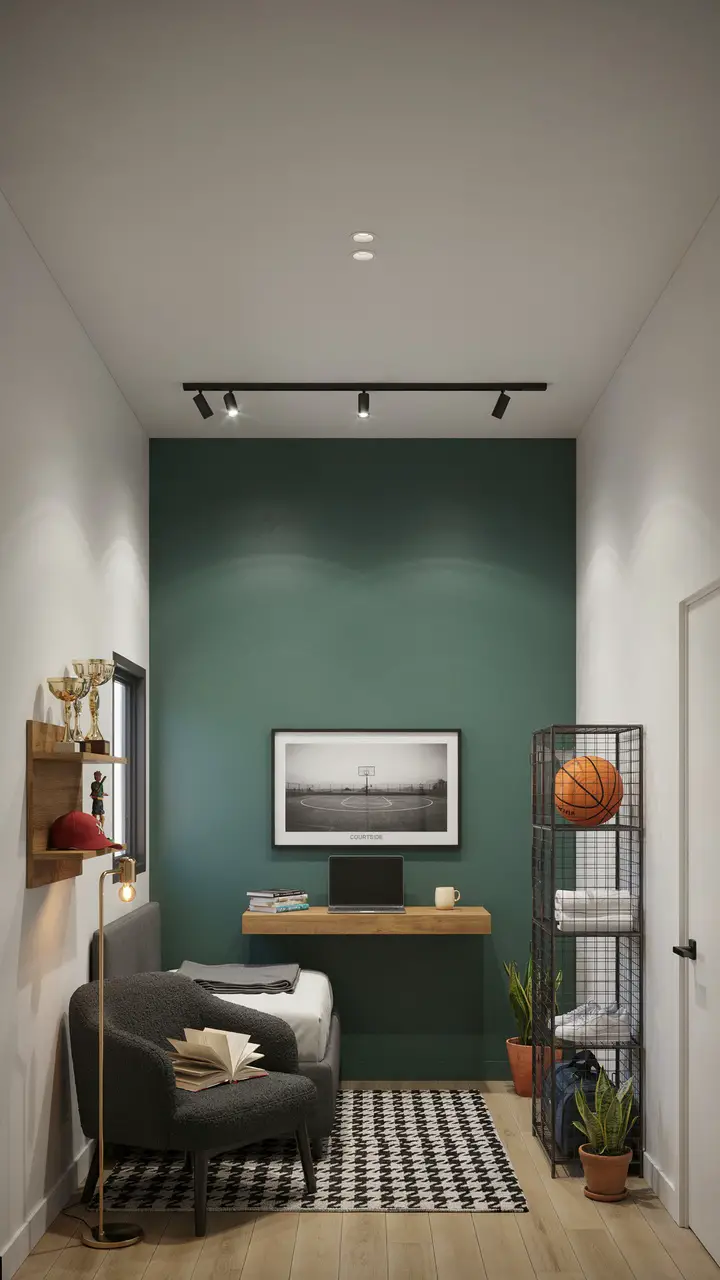
Sports-themed bedrooms have a bad reputation—and honestly, fair enough. Nobody wants a room that looks like it was wallpapered in team merch from 2008. But you can honor a kid’s love of sports with a space that feels genuinely contemporary.
The secret is abstracting the theme. A basketball court photograph instead of player posters. A locker-style organizer instead of actual locker wallpaper. The nods are there—they’re just grown up.
How to Recreate This Look
Shopping List:
- Large framed sports court photography print (Society6, Etsy) — $30–$80
- Wire mesh locker organizer (IKEA, Container Store) — $40–$120
- Forest green accent wall paint — $60–$90
- Track lighting fixture — $80–$200
- Trophy display shelf (DIY wooden backboard shape) — $15–$40 in materials
DIY Highlight: The backboard-shaped display shelf is genuinely easy to DIY. Cut a simple plywood backboard silhouette, sand it, paint it white, and mount it to the wall with two brackets. It takes about two hours and costs under $25. Your kid will love it.
Lifestyle Consideration: This look handles heavy use well—especially if you choose performance fabric for the bedding (easy to wash, quick-dry, wrinkle-resistant).
6. The Gamer’s Den Done Right
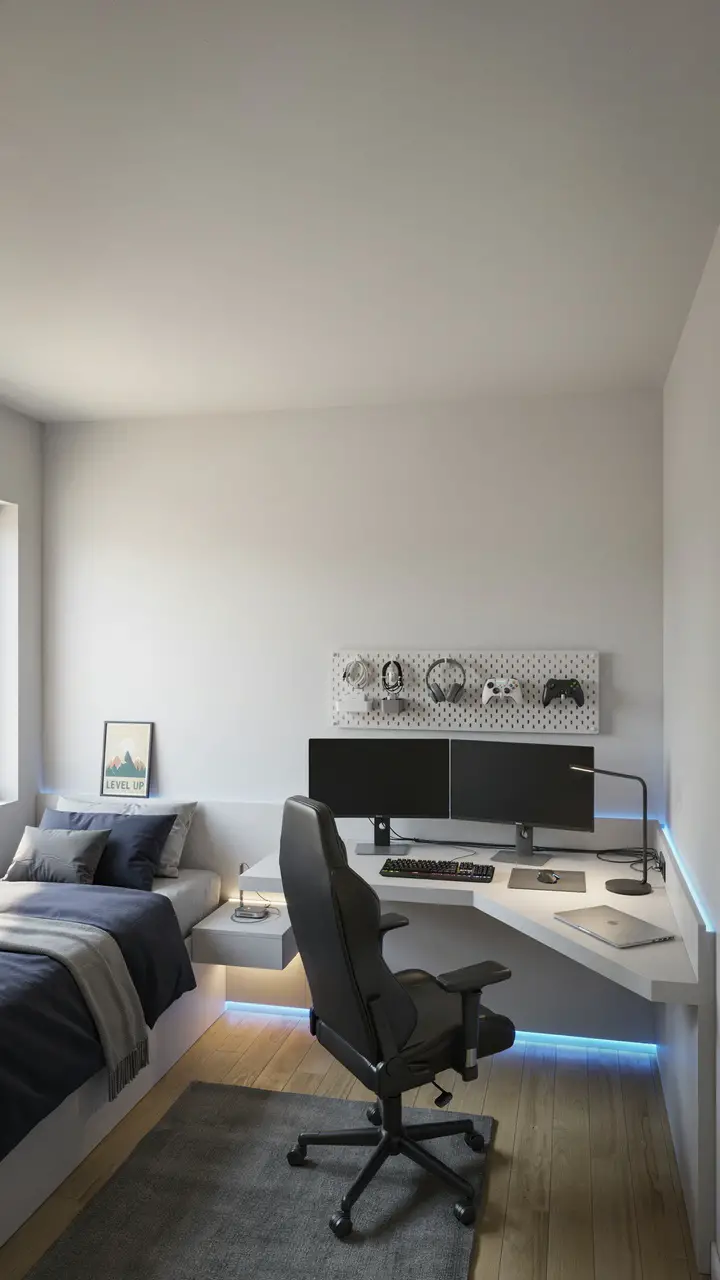
Let’s be real—a lot of boys want a gaming setup, and fighting it is a losing battle. The question is how to integrate it without the room looking like a Best Buy exploded. The answer is organization infrastructure first, gear second.
Built-in or modular desk systems from IKEA (the ALEX and KALLAX combinations are legendary in the DIY community) give you a clean, intentional gaming space that actually contains the chaos rather than contributing to it.
How to Recreate This Look
Shopping List:
- IKEA ALEX desk + KALLAX shelf combo — $200–$400
- Pegboard + accessories — $30–$80
- Cable management clips and sleeves — $10–$20
- LED ambient light strips (Govee or Philips Hue) — $25–$80
- Performance fabric duvet (Target, IKEA) — $40–$80
FYI: LED strip lights are the single most impactful, least expensive thing you can add to a gaming room. Stick them behind the desk or under the bed frame for that ambient glow effect—under $30 and completely removable for renters.
Common Mistake: Letting the gaming gear become the decor. The equipment should sit within a designed space, not replace it. Choose one wall for the setup and keep the rest of the room clean and calm.
For families navigating the balance between functional study spaces and play areas, kids room study table designs offer brilliant ideas for creating dedicated zones within a single room.
7. The Bold Color Block Statement Room
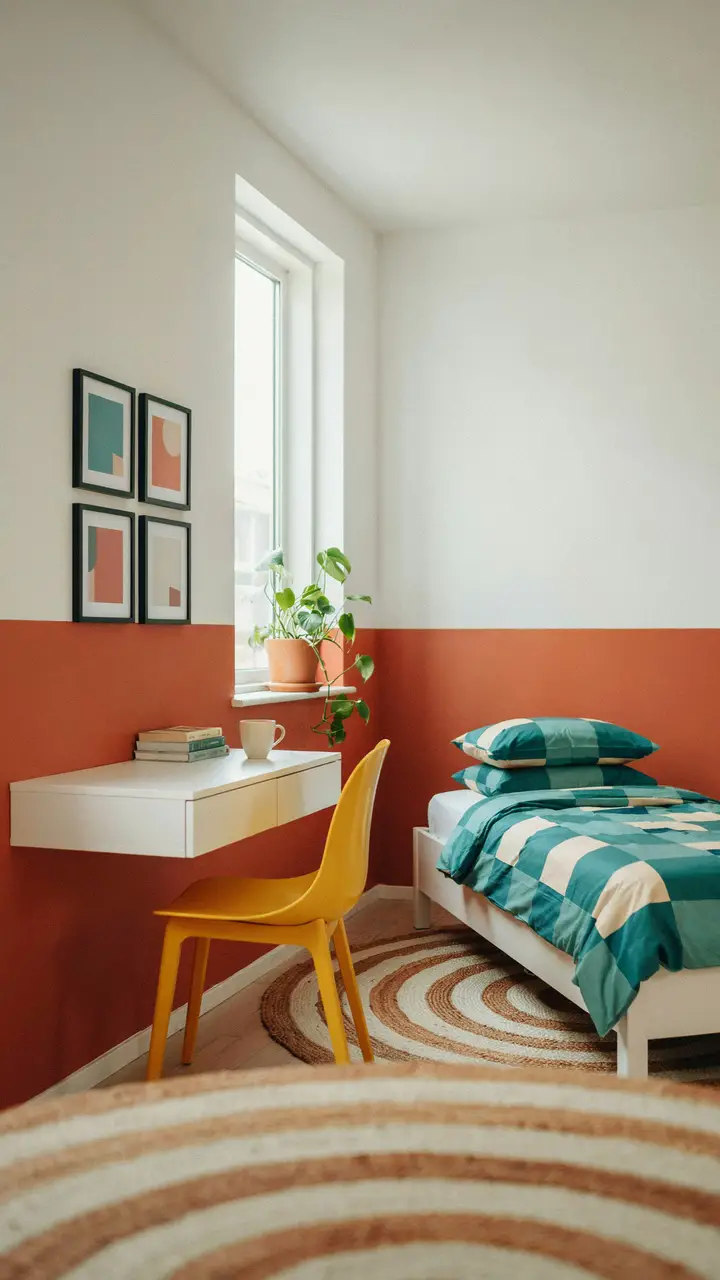
Color blocking is one of those techniques that sounds intimidating but is actually quite forgiving—because the whole point is contrast, not perfection. You paint the lower half of your walls in a bold color, keep the top white, and suddenly the room looks like it was designed by someone who actually knew what they were doing. (Even if that someone is you, on a Saturday morning, in your pajamas.)
The key is choosing two colors that genuinely complement each other and then not adding a third. Terracotta and teal. Navy and mustard. Forest green and rust orange. Pick your pair and commit.
How to Recreate This Look
Shopping List:
- Two complementary paint colors — $60–$90 each
- Painter’s tape (FrogTape for clean lines) — $10–$15
- Geometric duvet in accent color — $40–$80
- Abstract art prints (Society6, IKEA BILD range) — $15–$60 total
- Woven cream rug — $60–$150
Step-by-Step:
- Decide your split point—typically chair rail height (32–36 inches from the floor) works beautifully.
- Paint the upper portion white first. Let it dry completely.
- Apply FrogTape along the split line. Paint the lower half your bold color.
- Peel tape while paint is still slightly wet for the sharpest possible line.
Difficulty Level: Intermediate. The painting itself is straightforward, but getting a clean color-block line takes patience and the right tape.
8. The Space Explorer’s Sanctuary
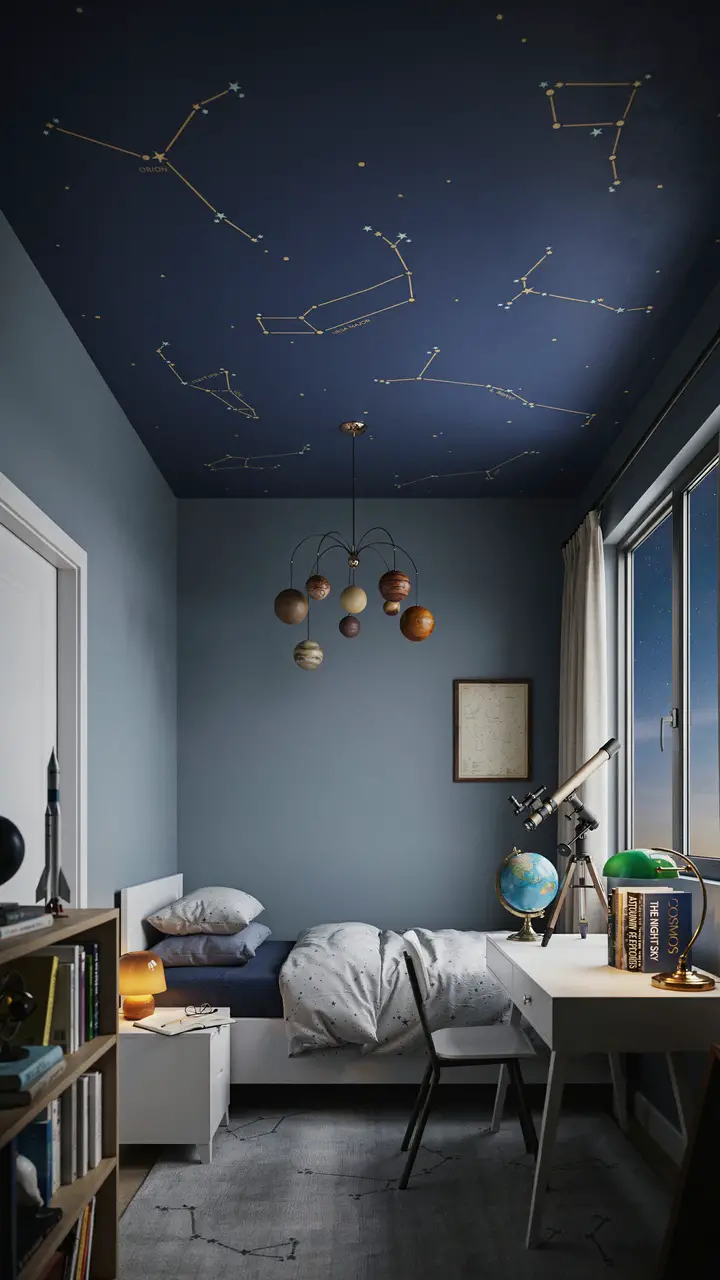
Space themes have experienced a serious glow-up in recent years, and I am here for it. Gone are the plastic rocket stickers—today’s space-inspired rooms lean into actual astronomy, real constellation patterns, and the kind of wonder that honestly never gets old.
An accurate glow-in-the-dark constellation ceiling (mapped using a real star chart) is one of those things that kids will genuinely remember forever. It takes about three hours to install properly—and the result is extraordinary.
How to Recreate This Look
Shopping List:
- Midnight blue ceiling paint — $50–$80
- Metallic gold paint for constellation lines — $8–$15
- Glow-in-the-dark star stickers (accurate constellation sets) — $15–$30
- Wooden solar system mobile — $25–$60
- Small beginner telescope — $50–$150
- Astronomy books for kids — $10–$25 each
Personal Note: I’ve seen this done in a 10×12 room with a $40 ceiling paint job and $20 of constellation materials—and it looked genuinely stunning. Sometimes the most memorable design ideas are the least expensive ones. 🙂
Durability: This look holds up beautifully as kids age. An astronomy room at age seven feels equally appropriate at fourteen. That’s rare in kids’ bedroom design.
9. The Reading Nook Bedroom (For the Book-Loving Kid)
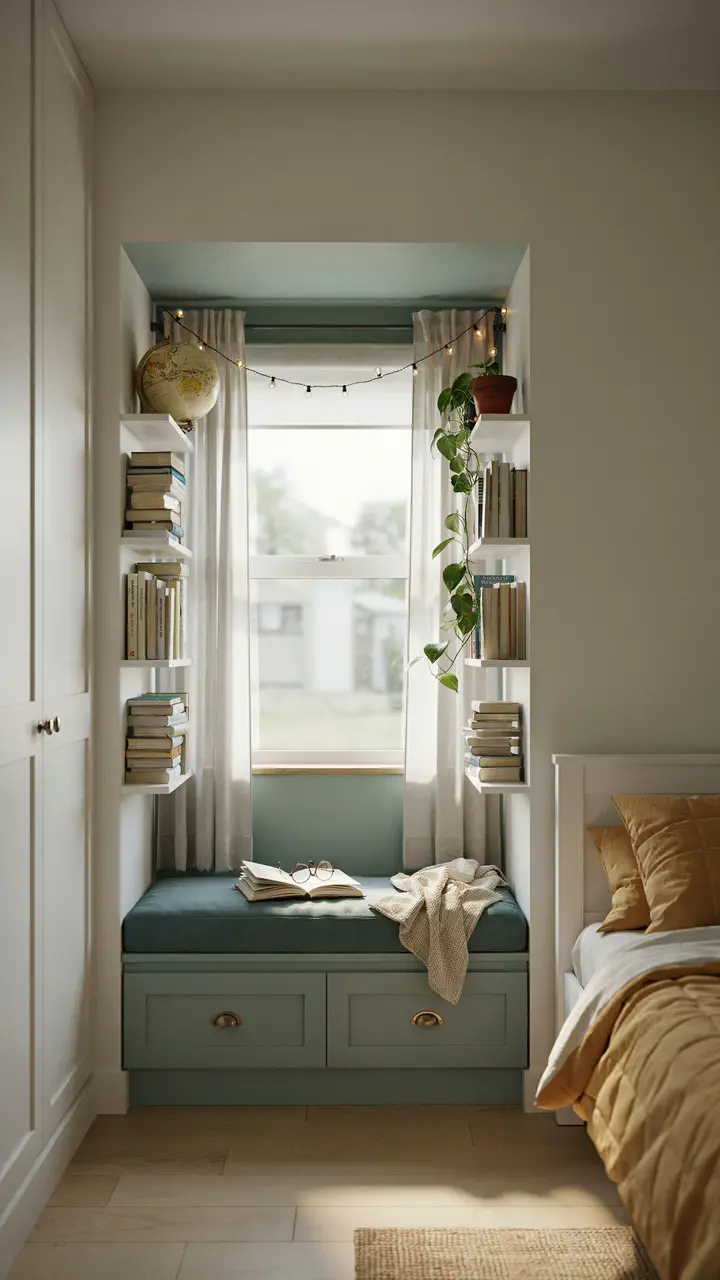
Not every kid wants a gaming setup or a sports theme—some just want somewhere quiet to lose themselves in a book. And those kids deserve the absolute best reading nook you can possibly build for them.
The built-in window seat with storage underneath is a brilliant solution because it solves three problems at once: it creates a dedicated reading space, adds significant storage (for books, toys, extra blankets), and gives the room an architectural feature that looks like it cost way more than it did.
How to Recreate This Look
Shopping List:
- Ikea KALLAX units as built-in base — $80–$160
- Custom cut foam cushion + fabric — $40–$100
- String lights — $10–$25
- White MDF shelf boards + L-brackets — $30–$60
- Sage green accent paint for nook interior — $30–$50
DIY Level: Intermediate. The IKEA hack approach (using KALLAX units as the nook base) makes this achievable for a confident beginner with a free weekend.
Space Requirements: An alcove, bay window, or even a simple corner works beautifully. Minimum width for a comfortable reading nook: 36 inches.
Seasonal Adaptability: Swap the cushion cover seasonally—a crisp linen for summer, a velvet or chunky knit cover for winter. Same nook, completely different feel.
For more inspiration on creating functional zones within a child’s bedroom that grow with them beautifully, explore these modern kids room design ideas that balance practicality with genuine style.
10. The Creative Studio Bedroom
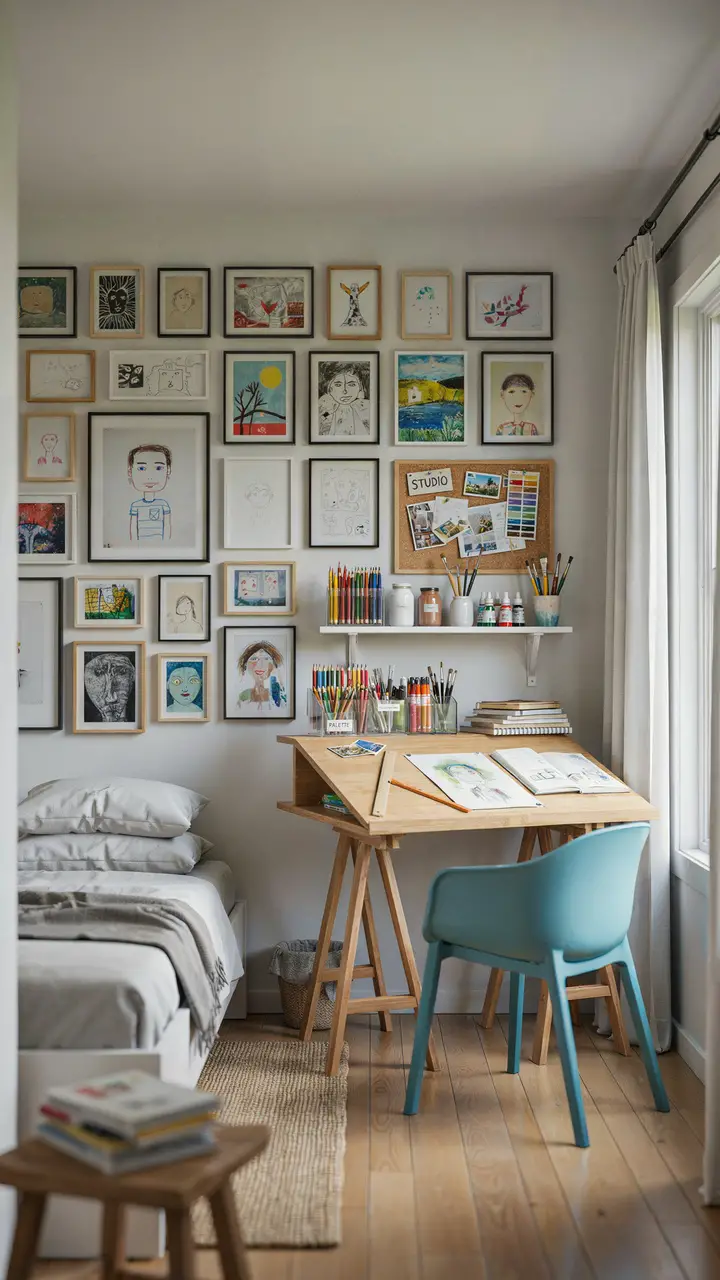
For the kid who is always drawing, always building, always creating—this is the room that will change everything. The creative studio bedroom says “I see you and I take your creativity seriously,” and that message matters more than any theme.
The art display wall is the heart of this room. Frame your kid’s actual work—real frames, real mats, hung in a proper gallery arrangement. It’s one of the most powerful things you can do for a child’s confidence, and it costs almost nothing if you use IKEA RIBBA frames.
How to Recreate This Look
Shopping List:
- IKEA RIBBA frames (multi-pack) — $20–$50
- Tilting drafting desk (Amazon, Wayfair) — $80–$200
- Clear acrylic art supply organizers — $15–$40
- Natural cork bulletin board — $20–$50
- Accent desk chair in bold color — $60–$150
Step-by-Step for the Gallery Wall:
- Lay all frames on the floor first and arrange until you love the composition.
- Photograph the arrangement on your phone before hanging a single nail.
- Use paper templates (trace each frame) to plan placement on the wall before committing.
- Hang the center piece first, then work outward symmetrically.
Common Mistake: Only hanging purchased art. Your kid’s own drawings, paintings, and sketches should absolutely be included—framed and matted like the real art they are.
Maintenance: Rotate displayed artwork every few months to keep the wall fresh and to give the kid something to look forward to. It becomes a ritual they’ll genuinely love.
Making It All Come Together: The Principles Worth Remembering
Here’s what I’ve noticed across every boys bedroom transformation that actually works: the room always serves the kid, not the other way around. The best contemporary kids rooms aren’t the ones that look most like a magazine spread—they’re the ones where the kid can’t wait to spend time.
A few guiding principles worth keeping as you plan:
- Invest in the bed and storage first. Everything else is decorative, but these two things affect daily life directly.
- Build in flexibility. Avoid anything so theme-specific that it has to be completely redone in two years. Contemporary design ages gracefully; rocket-ship wallpaper does not.
- Let your kid have a genuine voice. Even a six-year-old can tell you whether they prefer blue or green, calm or colorful. That input makes the space theirs in a way no design decision you make alone ever will.
- Don’t underestimate lighting. A warm bedside lamp, a task light at the desk, and ambient accent lighting do more to make a room feel intentional than almost any furniture choice.
The goal was never a perfect room. It was a room that makes a kid feel like he belongs in it, like it was made specifically for him—because it was. And that, honestly, is worth every hour you spend planning it. <3

Greetings, I’m Alex – an expert in the art of naming teams, groups or brands, and businesses. With years of experience as a consultant for some of the most recognized companies out there, I want to pass on my knowledge and share tips that will help you craft an unforgettable name for your project through TeamGroupNames.Com!