
Picture this: you’ve just hauled the last box up four flights of stairs, your roommate’s lofted bed is approximately two inches from your desk, and someone down the hall is already blasting music at noon on a Tuesday.Welcome to dorm life.
Now — what if I told you that this tiny, fluorescent-lit box of a room could actually feel like yours? Like, genuinely cozy, organized, and personality-filled?
That’s exactly what a dorm room command center can do. It’s not just a corkboard with a few sticky notes (though, no judgment on that either).
A real command center pulls together your study zone, your daily organization, your personal aesthetic, and your sanity — all in one intentional wall setup.
And the best part? You can pull this off with Command strips, a weekend afternoon, and less than $50 if you plan smart.
Let’s get into 10 ideas that are actually doable, genuinely useful, and way better-looking than the default beige walls you were handed.
1. The Pegboard Powerhouse
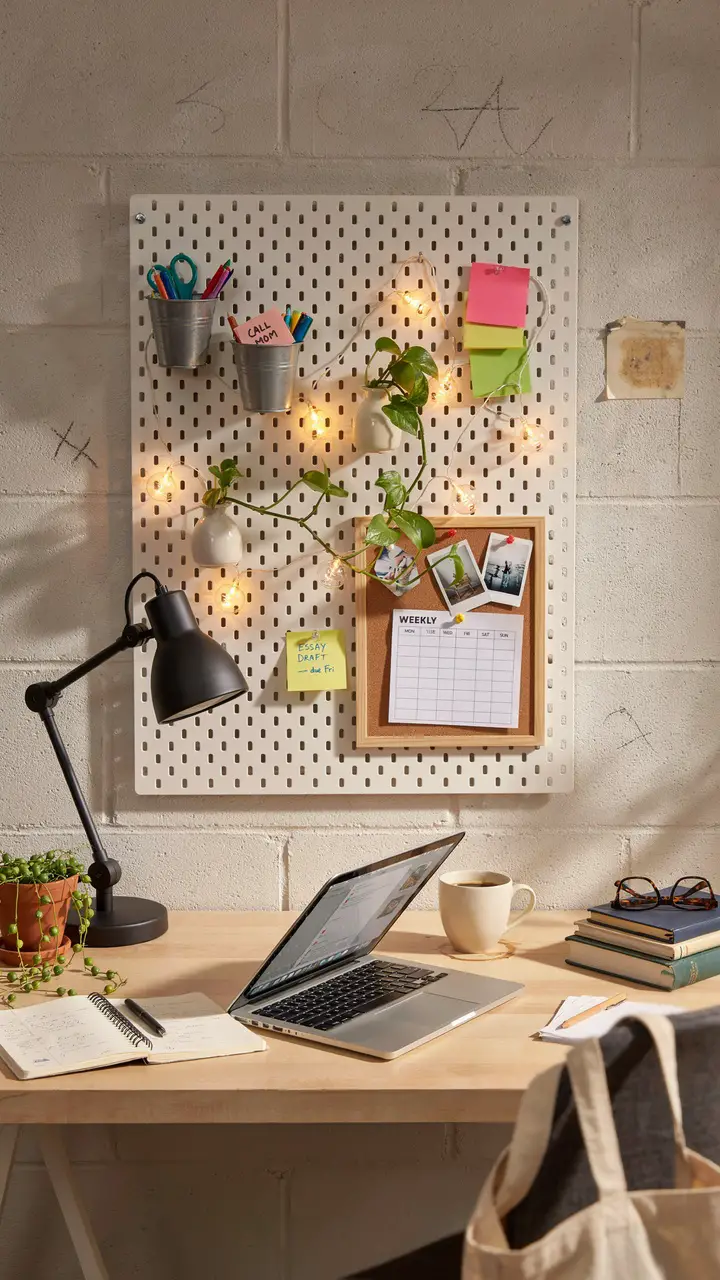
How to Recreate This Look
The pegboard is the MVP of small-space organization because it goes vertical — which means it uses wall space instead of stealing precious desk real estate. Mount a white or black pegboard panel (usually 24″x24″ or 24″x48″) using heavy-duty Command picture hanging strips — no drilling required, which your RA will appreciate.
Shopping list:
- White or black pegboard panel, 24″x48″ — $20–$35 at Home Depot, Lowe’s, or Amazon
- Pegboard hooks and small metal baskets (usually sold as a kit) — $12–$18 on Amazon
- Command Picture Hanging Strips (large, weight-rated to 16 lbs) — $10–$14 at Target or Walmart
- Warm white fairy lights, battery-operated or USB-powered — $8–$15
- 2–3 ceramic bud vases for small plant cuttings — $3–$8 each at IKEA, thrift stores, or Amazon
- Small corkboard insert (fits standard pegboard holes) — $6–$10 on Amazon
Step-by-step:
- Plan your layout on the floor before mounting anything — this saves you from that “I’ll just figure it out as I go” trap that always ends with holes in the wrong places.
- Attach four large Command strips to the back of the pegboard, pressing firmly for 60 seconds each.
- Wait the full recommended 1 hour before hanging anything on it — yes, really.
- Start with functional items first: hooks for headphones, baskets for supplies, a corkboard section for your schedule.
- Layer in the personality: fairy lights, small plants, a polaroid or two.
Budget breakdown:
- Under $50: Buy a plain pegboard and basic hook kit from Amazon, repurpose jars you already have as organizers.
- $50–$150: Add a small corkboard insert, ceramic vases, and a quality desk lamp to complete the zone.
- $150+: Invest in a custom-painted pegboard, matching accessories, and a plant grow light for low-light dorms.
Difficulty level: Beginner. If you can peel a sticker and press firmly, you can do this.
Lifestyle note: This setup holds up well with daily use. The baskets keep things from falling off your desk, and the vertical design means you can see everything without digging through drawers. Just avoid overloading the pegboard past its weight rating — a toppled pegboard at 2am mid-finals week is a special kind of disaster.
Seasonal swap: Swap out polaroids for holiday cards in December, add a small paper chain or dried citrus garland for a cozy autumn feel, or pin up a summer bucket list in May.
Common mistake: Mounting the pegboard too high. Your eye level when sitting at your desk is what matters — not when standing. Adjust accordingly.
2. The Magnetic Memo Board Magic Wall
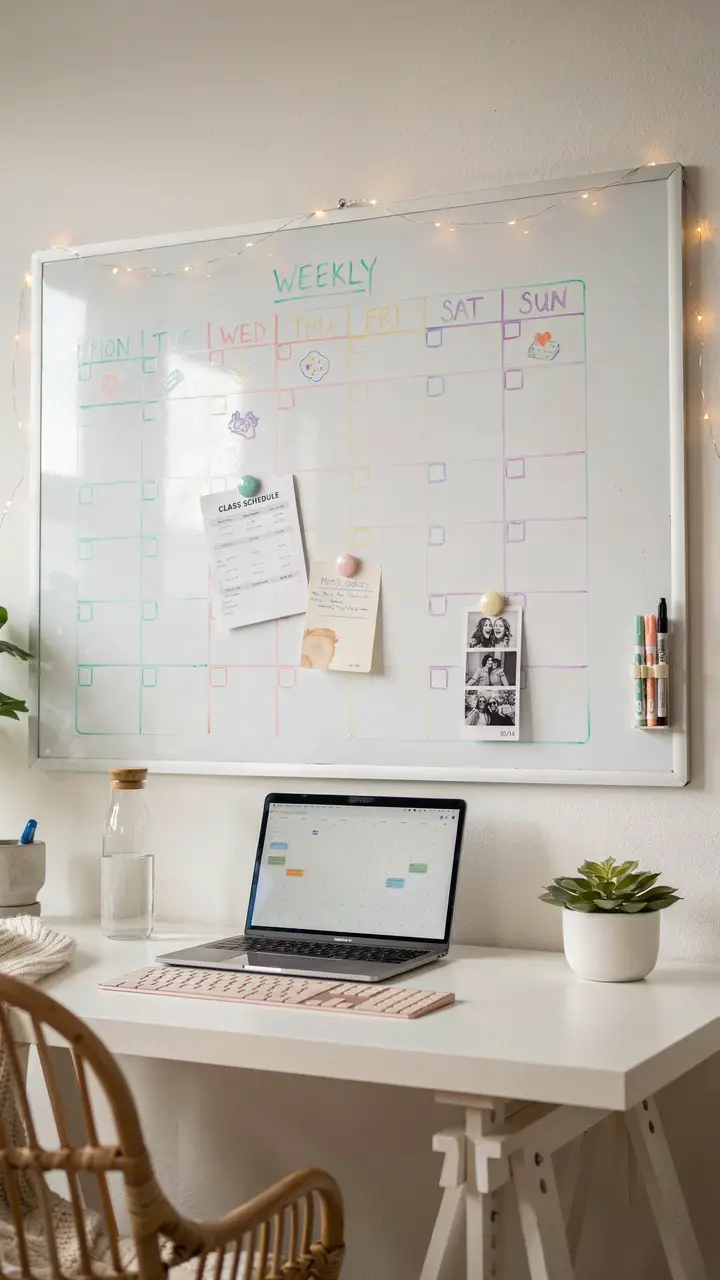
How to Recreate This Look
A magnetic whiteboard is honestly a better investment than a standard corkboard for most students because it pulls double duty — dry-erase planning AND magnetic display. You get your brainstorming surface and your “wall of important things” in one.
Shopping list:
- Magnetic whiteboard, 24″x36″ — $25–$45 at Amazon, Walmart, or Target
- Chalk markers (pastel set) — $8–$12
- Assorted small magnets or magnetic clips — $5–$10
- Magnetic pen/marker holder — $6–$10 on Amazon
- Command Velcro strips (for lighter boards) or heavy-duty picture strips — $8–$12
Budget breakdown:
- Under $50: Go with a basic glass-look whiteboard from Amazon and regular dry-erase markers.
- $50–$150: Upgrade to a frameless magnetic glass board in white or black for a cleaner, more editorial look.
- $150+: A custom-cut frosted glass magnetic board is genuinely stunning and basically indestructible.
Difficulty level: Beginner. Hang, draw, done.
Common mistake: Using permanent markers instead of dry-erase ones. It happens more often than anyone admits. FYI — rubbing alcohol on a cotton ball can actually lift most permanent marker from whiteboards. You’re welcome.
Want even more command center inspiration? Check out these DIY command center ideas for clever setups you can customize to any space.
3. The Floating Shelf Study Station
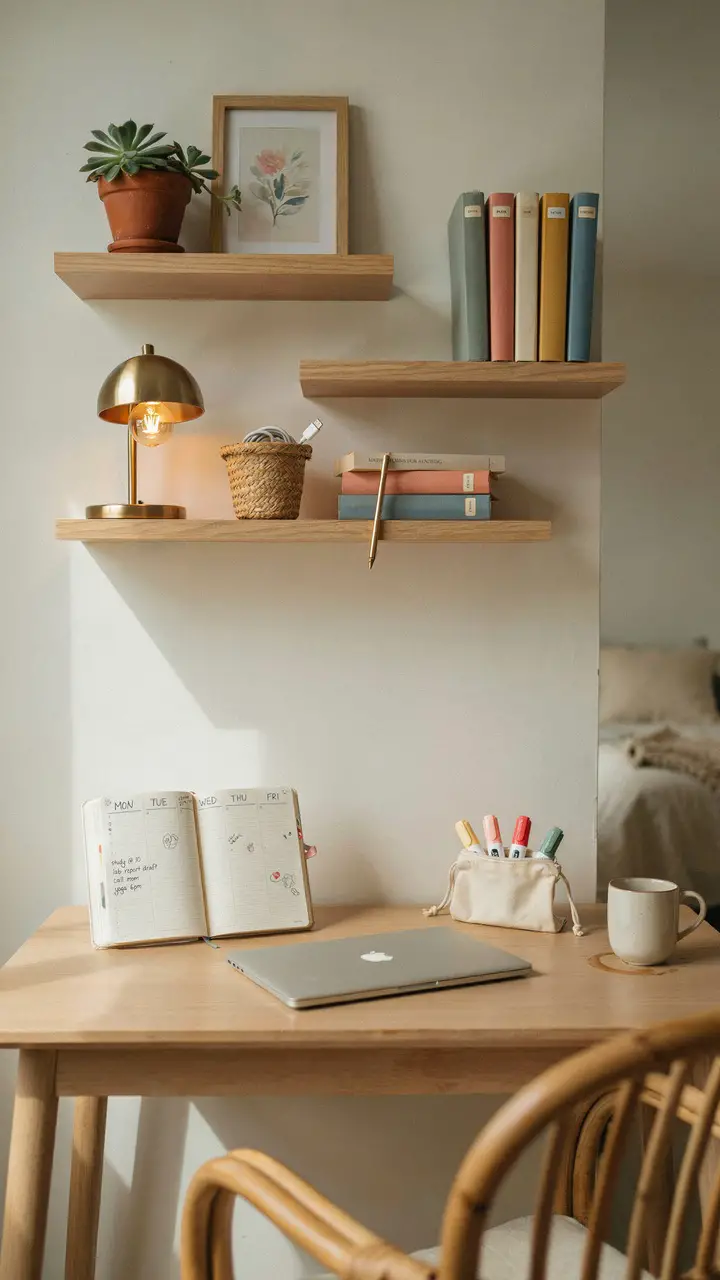
How to Recreate This Look
Floating shelves are transformative in dorm rooms because they take your “stuff” and make it look like a display. The key is treating each shelf like a little scene — not a dumping ground.
Shopping list:
- Floating wall shelves (set of 2), 12″–18″ wide — $15–$30 at IKEA (Lack shelf), Target, or Amazon
- Command Large Picture Hanging Strips (rated to 16 lbs each) — $10–$14
- Terracotta pots (3″ or 4″ size) with small succulents — $4–$8 each at Home Depot or grocery stores
- Woven or rattan mini baskets — $5–$12 at HomeGoods, TJ Maxx, or Amazon
- A few paperback books you genuinely love (they double as decor AND entertainment :))
Step-by-step:
- Decide your shelf heights before mounting — hold them at various heights against the wall and take a phone photo to preview the look.
- Use a level app on your phone (it’s free and already there) to make sure your shelves hang straight. A tilted shelf looks charmingly rustic for about two days, then it’s just annoying.
- Style in threes: one plant, one functional item, one decorative item per shelf. This rule alone prevents the “cluttered catch-all” look.
- Mix heights in your objects — a tall vase next to a short stack of books next to a small trailing plant creates visual rhythm.
Budget breakdown:
- Under $50: Two IKEA Lack shelves plus a couple of small plants and a basic basket.
- $50–$150: Add a warm-toned desk lamp and a small framed print for a more intentional vignette.
- $150+: Invest in a custom stained wood floating shelf with built-in USB charging ports — yes, these exist and they’re incredible for a multi-year dorm setup.
Difficulty level: Beginner. The hardest part is deciding what to put on them (and then not piling textbooks on every surface immediately after).
Lifestyle note: Succulents are genuinely the best dorm plant — they survive neglect, they look great, and they don’t need much light. A trailing pothos on the higher shelf is also magical because it grows fast and makes any space feel warmer.
Seasonal swap: Swap in a small pumpkin or cinnamon pine cone basket for fall, a mini fairy light strand draped over the shelf edge for winter, fresh tulips in a bud vase for spring.
4. The Corkboard Vision Wall
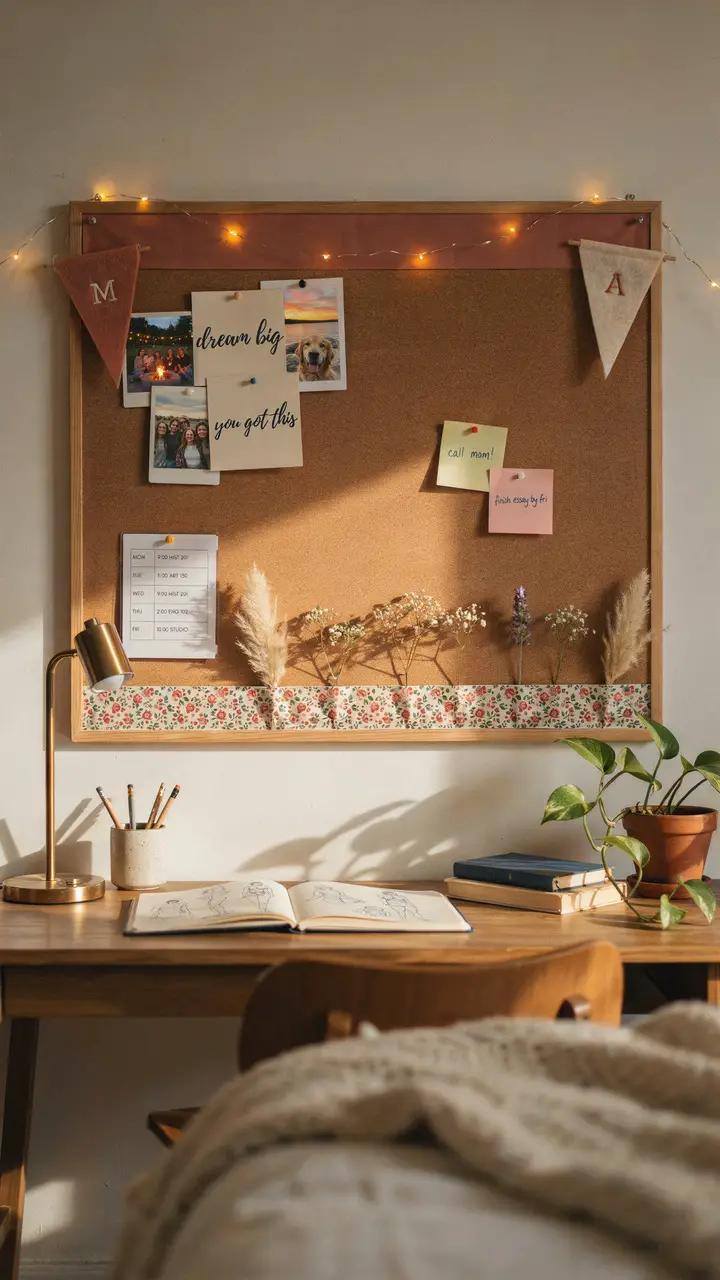
How to Recreate This Look
Corkboards got a bad reputation somewhere around 2015, but they’re having a full comeback — and honestly, the customization potential is unbeatable. Cover your corkboard in fabric (just stretch it tight and pin or hot glue the back) to immediately transform it from “office supply room” to “intentional design choice.”
Shopping list:
- Corkboard, 36″x24″ — $20–$35 at Target, Staples, or Amazon
- Fabric for covering (½ yard of any pattern you love) — $5–$10 at a fabric store or Walmart
- Hot glue gun and sticks — $8–$12 if you don’t already own one
- Thumbtacks or map pins in a coordinating color — $4–$8
- Polaroid camera or printing app for photos — varies
- Dried flower stems — $6–$15 at a craft store or thrift store
Budget breakdown:
- Under $50: Plain corkboard plus fabric scraps from a remnant bin plus photos printed at a drugstore.
- $50–$150: Add a fabric-wrapped corkboard kit, a polaroid printer, and coordinated pin sets.
- $150+: Commission a custom fabric-covered cork wall panel with built-in small shelves or a mirror insert.
Difficulty level: Beginner-to-intermediate. Covering the corkboard in fabric sounds intimidating but takes about 20 minutes once you watch one YouTube video.
Common mistake: Pinning items before you’ve finished styling. Lay everything out on your desk or floor first to plan your arrangement, then pin. Trust me — I once spent three hours reorganizing a vision board only to realize the original layout I’d dismissed in the first five minutes was actually the best one. Don’t make my mistake. 🙂
Need more organization inspo beyond the dorm? These command center organization ideas have something for every type of space and budget.
5. The Tension Rod Curtain Room Divider Meets Command Wall
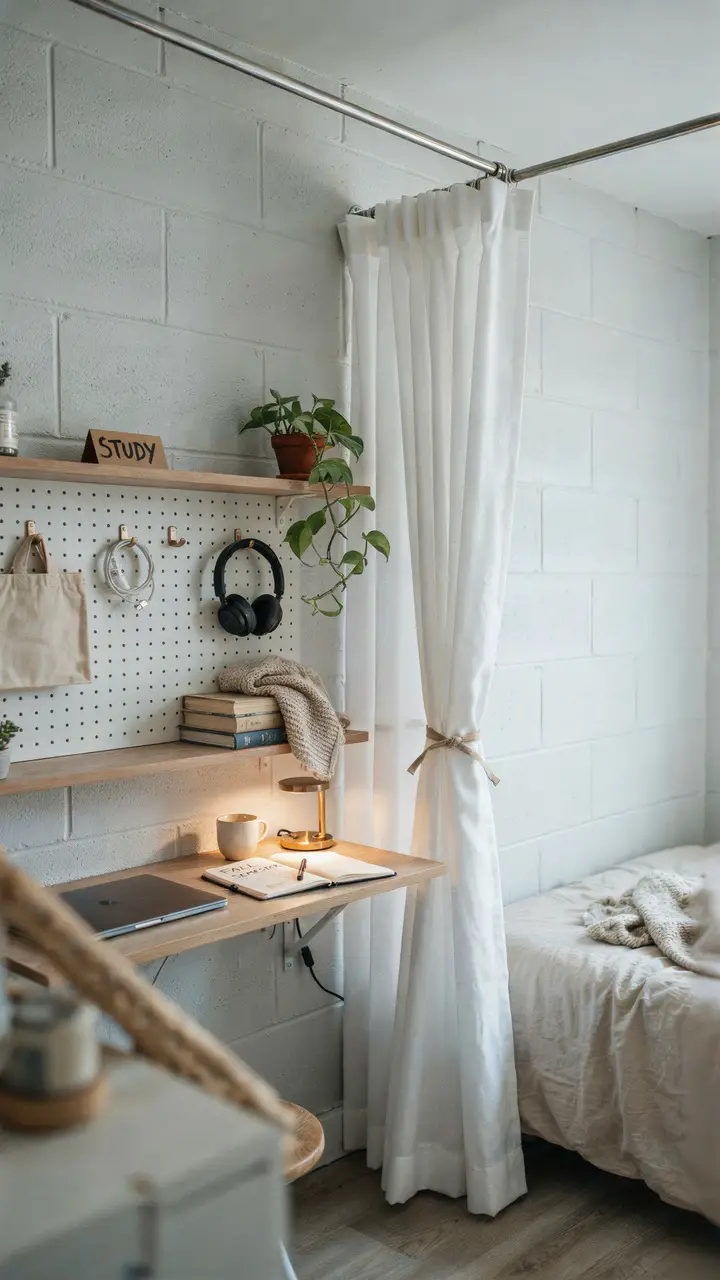
How to Recreate This Look
This one’s for the dorm dwellers who share a room and desperately need some visual boundary between their zone and their roommate’s. A ceiling tension rod with a lightweight curtain panel creates a soft visual divide — and your command center becomes the “back wall” of your little nook.
Shopping list:
- Ceiling tension rod (no drill needed), 72″–108″ — $15–$30 at Amazon or Target
- Sheer white or natural linen curtain panels — $12–$25 per panel at IKEA or Amazon
- Curtain rings or hooks that match your rod — $5–$10
- All of your command center supplies from any of the above setups
Difficulty level: Beginner. Tension rods are pressure-mounted, so zero damage to walls or ceilings.
Space requirement: Works best in rooms with at least 10 feet of open ceiling-to-floor height and enough floor space for a 6+ foot divide.
Lifestyle note: This setup is especially powerful if you and your roommate have different sleep schedules. The curtain doesn’t block sound (nothing but earplugs does that), but it creates enough visual privacy to feel like your own space. That actually matters more than people expect.
6. The Aesthetic Study Zone With LED Ambiance
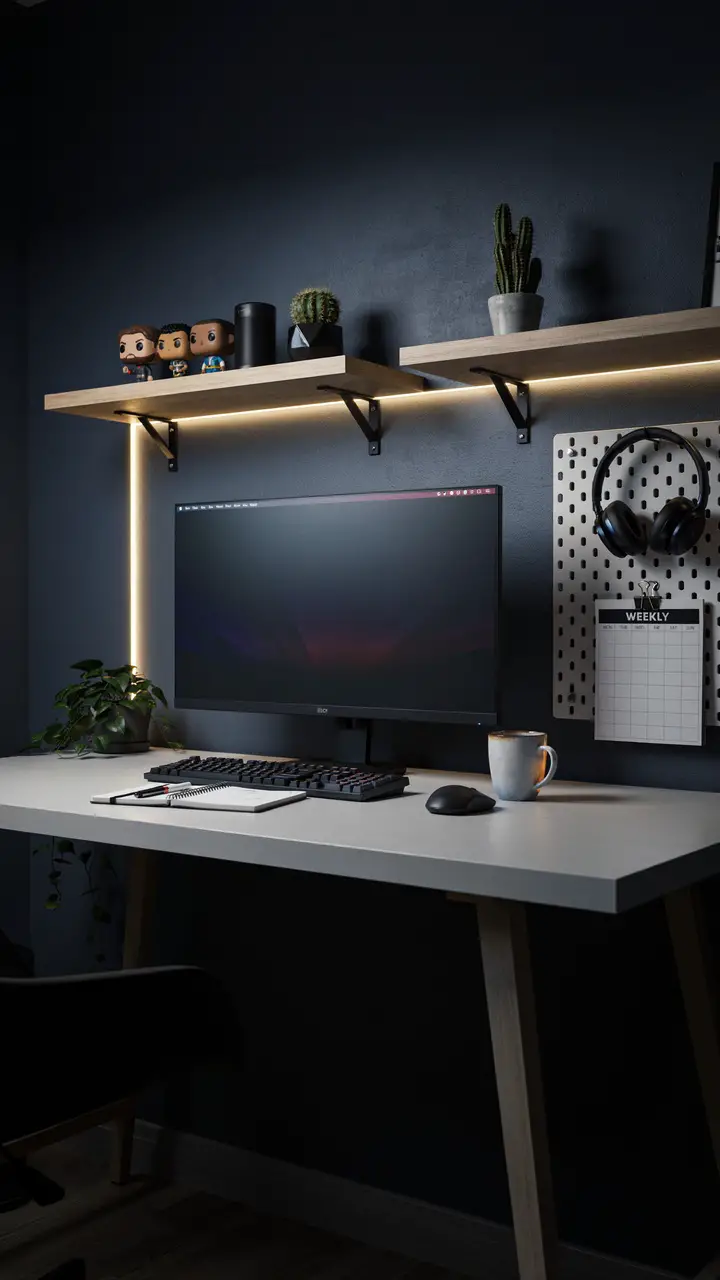
How to Recreate This Look
LED strip lights get a bad reputation because of the aggressively neon RGB setups plastered everywhere circa 2020 — but used thoughtfully, they genuinely transform a dorm room atmosphere. Warm white or soft amber LED strips behind a monitor or under shelf edges add dimension and warmth without looking like a nightclub.
Shopping list:
- Warm white LED strip lights (USB-powered, with adhesive backing) — $10–$18 on Amazon
- Dimmer remote or app-controlled model for flexibility — look for “tunable white” options — $15–$25
Budget breakdown:
- Under $50: Basic warm white USB LED strip — pure and simple.
- $50–$150: App-controlled “Govee” or “Philips Hue” light strip with multiple scene presets.
- $150+: Full smart desk lighting setup with a bias light, LED strips, and a desk lamp on a smart plug for one-tap study/relax mode switching.
Difficulty level: Beginner. Peel the adhesive backing, press along the shelf underside or wall edge, plug in. Done.
Common mistake: Choosing neon colors that look great for photos but make studying nearly impossible. Your eyes will thank you for choosing warm white for actual work hours. Save the color modes for when you’re winding down.
Looking for more creative ways to organize your space? These home command center ideas work just as brilliantly in dorm rooms as they do in full houses.
7. The Plant Parent Command Wall
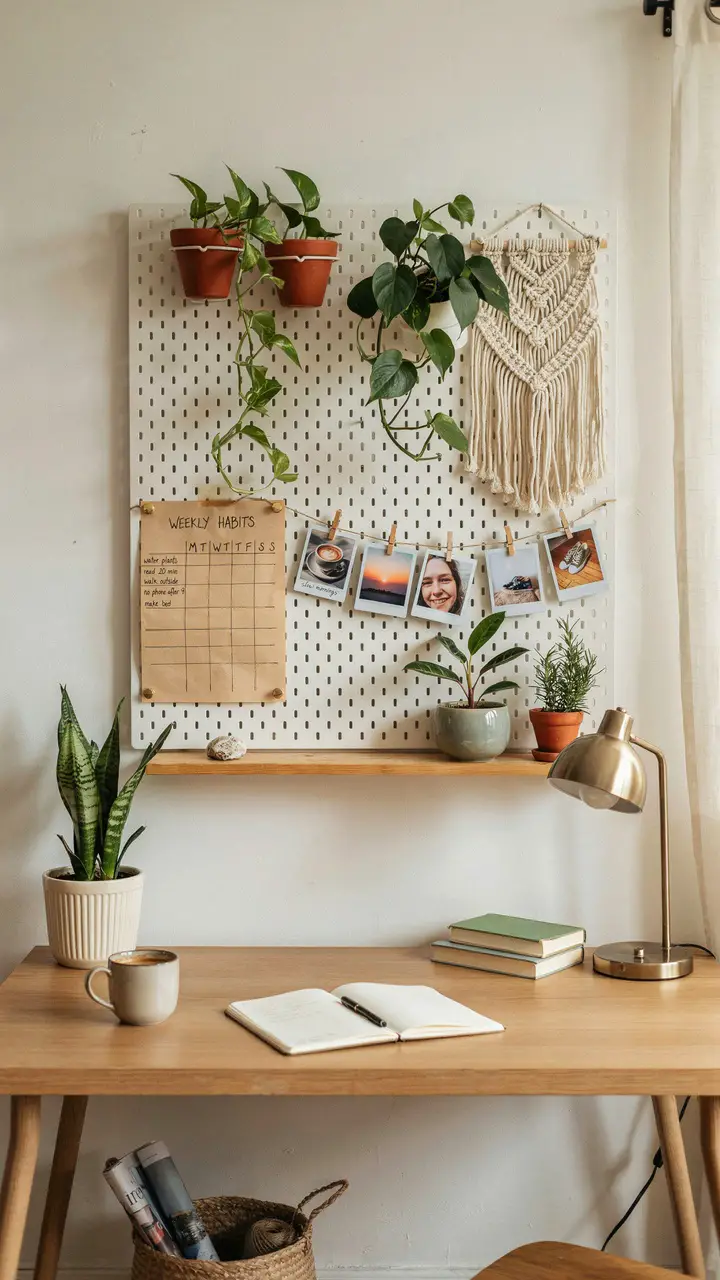
How to Recreate This Look
Plants make everything better. Not a controversial opinion. Even in a dorm room with minimal natural light, a few strategically chosen low-light plants on your command wall add life, color, and genuine joy to what might otherwise be a pretty grim wall of cinder block.
Best low-light dorm plants:
- Pothos — trails beautifully off shelves, impossible to kill, propagates in water on your windowsill
- ZZ plant — survives neglect, drought, and even you forgetting it exists for two weeks
- Snake plant — architectural and striking, nearly indestructible
- Heart-leaf philodendron — fast-growing, velvety-leaved, and very Instagram-friendly (not that that’s the only metric, but still)
Shopping list:
- 2–3 small nursery plants — $4–$8 each at Home Depot, grocery stores, or a local nursery
- Pegboard hanging planters (small, fits standard pegboard holes) — $8–$15 for a set on Amazon
- Macramé wall hanging — $12–$30 at TJ Maxx, HomeGoods, or Etsy
- Self-watering pots or small ceramic pots with drainage — $5–$12 each
Budget breakdown:
- Under $50: One trailing pothos in a thrifted pot, a pegboard plant hook, and a handmade macramé knot (YouTube tutorial, string from a craft store, 30 minutes of your time).
- $50–$150: Add two more plants, a set of matching ceramic pots, and a pre-made macramé hanging.
- $150+: A custom macramé plant hanger with multiple pockets, grow light strip under the shelf for low-light rooms, and a matching ceramic planter collection.
Difficulty level: Beginner. If you can remember to water something once a week, you’ve got this.
Maintenance tip: Bottom-watering (setting the pot in a tray of water for 20–30 minutes) works better than top-watering for most dorm situations — it avoids spills on your desk and encourages roots to grow downward.
8. The “Analog Life” Aesthetic — No Screens Allowed
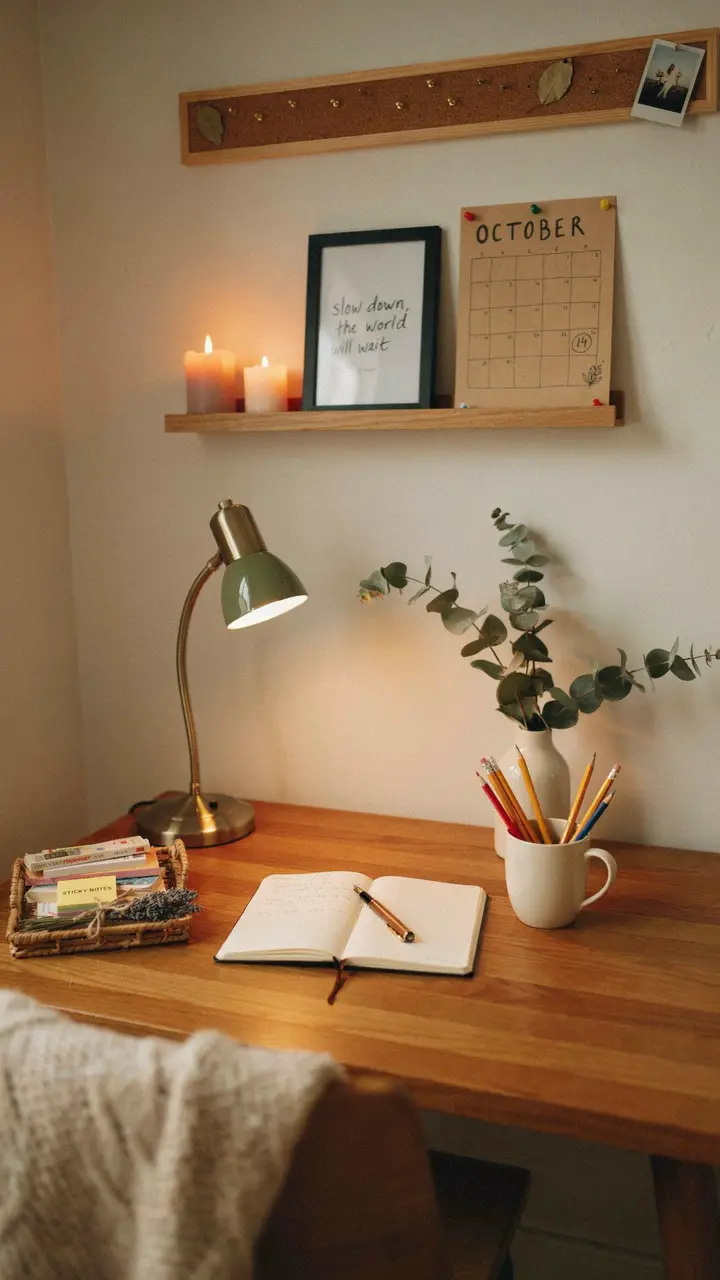
How to Recreate This Look
Not every command center needs to be digital. In fact, for a lot of students, building one section of their space that’s explicitly analog — paper planner, handwritten habit tracker, real books — becomes a genuine mental health tool during high-stress semesters.
Shopping list:
- Kraft paper roll for custom calendars and trackers — $8–$12 at craft stores
- Fine-point black markers or a fountain pen — $10–$25
- Dried lavender bundle or eucalyptus stems — $5–$10 at craft stores or Trader Joe’s
- 3 coordinating candles (for decoration; check dorm rules before lighting them!) — $5–$15
- A journal or planner you genuinely love writing in — $15–$30 at Target or Appointed
Difficulty level: Beginner. The only skill here is committing to actually writing things down.
Common mistake: Building this space then never using it because your laptop is right there. Consider keeping your laptop in your bag when you’re at this desk. The physical separation genuinely helps.
Also decorating a shared space? These kids command center ideas have brilliant approaches to shared-space organization that translate perfectly to dorm room roommate situations.
9. The Rental-Friendly Gallery Wall Command Hybrid

How to Recreate This Look
A gallery wall is the fastest way to transform a blank dorm wall from “institutional” to “this is absolutely my space.” The secret is anchoring it with one larger piece at the center, then building outward with smaller frames in an organic arrangement.
Gallery wall planning steps:
- Lay all frames on your floor (or the bed) and photograph the arrangement from above.
- Cut kraft paper or newspaper templates of each frame and tape them to the wall with washi tape — this lets you preview placement without making holes (or Command strip marks).
- Space frames 2–3 inches apart consistently — this is what separates a gallery wall from a random collection of things nailed to a wall.
- Mix frame sizes but coordinate colors: all black frames, or all wood tones, or a mix of black and natural wood. Three or more frame finishes usually starts to feel chaotic.
Budget breakdown:
- Under $50: Print photos at CVS or Walgreens ($0.10–$0.25 each), frame them in matching frames from the dollar section at Target.
- $50–$150: Add 2–3 quality art prints from Society6, Etsy, or Desenio, framed in coordinating frames from IKEA.
- $150+: Commission a custom print or art piece as your anchor, surrounded by a curated print collection.
Difficulty level: Intermediate. Not because it’s technically hard, but because the layout decisions take some patience.
10. The Multitasking Command Corner — Organization Meets Personality
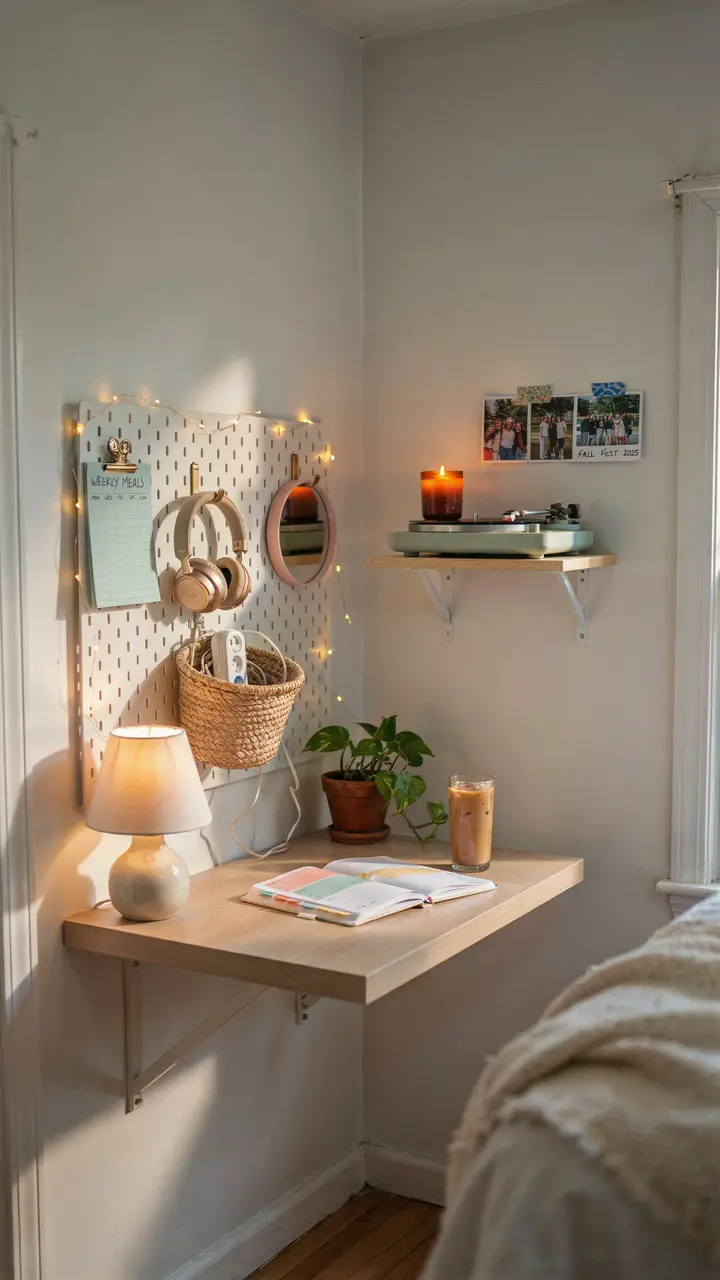
How to Recreate This Look
This final setup is the one I’d honestly recommend for most students because it acknowledges the full truth of dorm life: you need to be organized AND you need your space to make you happy when you walk in at the end of a long day.
Key elements that make this work:
- A charging station — a power strip in a woven basket with cable ties keeping cords organized — is genuinely the most transformative practical addition to any desk zone. Under $25 to set up.
- A small mirror on the pegboard lets you do a quick appearance check without crossing the room, and visually expands the space.
- A scented candle or a diffuser on the personality shelf signals that this isn’t just a study space — it’s yours. Check your dorm’s open flame policy; electric wax warmers are a fully valid alternative.
- A color-coded planner (physical, on the desk, always visible) costs $15–$30 and single-handedly helps most students stay on top of deadlines better than any app.
Budget breakdown:
- Under $50: Pegboard + power strip basket + a few organizational accessories.
- $50–$150: Add the floating shelf, a personality item or two, and a quality lamp.
- $150+: Full curated setup with matching accessories, quality art, and a smart lighting system.
Difficulty level: Beginner. You’re essentially combining the best elements from each idea above into a cohesive corner.
Wrapping It Up: Your Dorm Room, Your Rules
Here’s what I want you to take away from all of this: a dorm room command center isn’t about achieving some flawless Pinterest aesthetic. It’s about building a little zone in your 120-square-foot world that makes you feel organized, calm, and genuinely at home.
The best command center is the one you’ll actually use. Maybe that’s a minimalist magnetic board with three things on it. Maybe it’s a maximalist corkboard covered in photos, dried flowers, and color-coded sticky notes. Both are completely valid.
Start with one wall. One pegboard, one set of floating shelves, one gallery arrangement. Add to it over a semester as you figure out what you actually need. Because the truth is, your space should grow and change with you — and the imperfect, evolving, genuinely-yours version of your dorm room is infinitely more meaningful than any perfectly styled setup that doesn’t actually reflect who you are.
You’ve got this. Go make it yours. <3
Want to take your organization further? Check out these office command center ideas and modern command center ideas for even more inspiration to carry with you beyond graduation.

Greetings, I’m Alex – an expert in the art of naming teams, groups or brands, and businesses. With years of experience as a consultant for some of the most recognized companies out there, I want to pass on my knowledge and share tips that will help you craft an unforgettable name for your project through TeamGroupNames.Com!