
There’s something genuinely magical about walking into a child’s bedroom and seeing everything in its right place — clothes neatly tucked away, toys not staging a hostile takeover of the floor, and a little corner that somehow manages to look both adorable and actually functional.
If you’ve been staring at that awkward bedroom corner wondering what on earth to do with it, you’re in the right place.
Corner wardrobes for kids are one of the most underrated storage solutions out there.
They make smart use of space that usually collects dust bunnies and forgotten socks, and — done right — they can completely transform how a child’s room feels and functions.
Whether you’re designing a nursery, refreshing a toddler’s space, or giving a tween some real organizational independence, these 10 kids corner wardrobe ideas will give you plenty to work with.
1. The Classic L-Shaped Corner Wardrobe
How to Recreate This Look
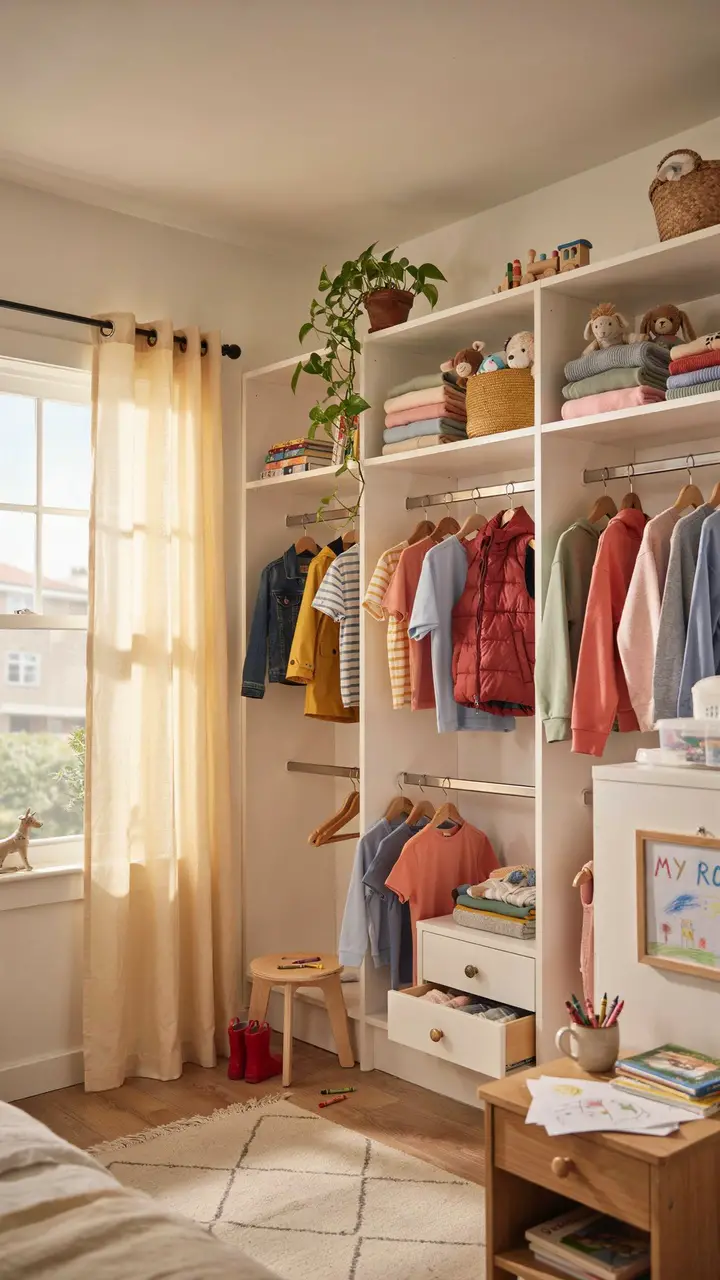
The L-shaped corner wardrobe is the gold standard for kids’ rooms because it maximizes two full walls of dead corner space while giving you incredible flexibility in how you organize the interior.
- Shopping list: Flat-pack wardrobe system (IKEA PAX corner unit works brilliantly here, around $300–$600), child-height hanging rail ($15–$30), fabric storage baskets ($8–$15 each), a small wooden step stool ($20–$40)
- Step-by-step: Install the corner unit first, then customize interior shelving based on your child’s current clothing mix — more hanging space for school uniforms, more cubbies for little ones who live in folded tees and leggings
- Difficulty level: Intermediate — the corner fitting requires patience and a second pair of hands
- Budget breakdown:
- Budget-friendly (under $100): Repurpose two second-hand wardrobes placed at right angles
- Mid-range ($100–$500): IKEA PAX with custom inserts
- Investment-worthy ($500+): Custom built-in carpentry
- Common mistake to avoid: Don’t make the hanging rail adult-height. Kids who can’t reach their own clothes will never hang anything up — and that’s a hill you don’t want to die on daily
2. Open Shelving Corner Units with Fabric Bins
How to Recreate This Look
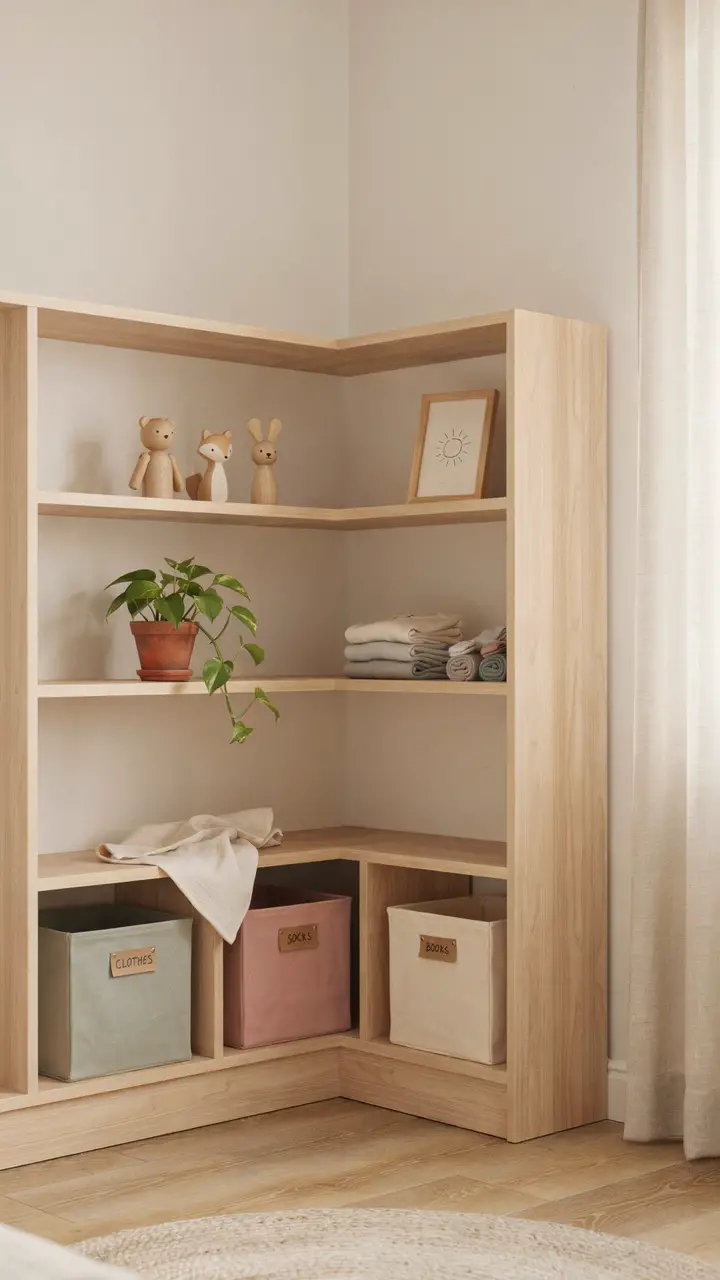
Open shelving units are fantastic for toddlers following a Montessori approach — when kids can see their clothes, they’re far more likely to choose and put them away independently.
- Shopping list: Corner bookshelf or cube unit ($40–$120), fabric storage bins ($6–$12 each), printable picture labels or a label maker ($15–$25)
- Key tip: Keep it to 3–4 cubbies maximum for actual clothing — the rest can hold books and small toys so the corner does double duty
- Space requirements: Works in rooms as small as 8×8 ft — this look is specifically designed for compact spaces
- Seasonal adaptability: Swap out bin colors for autumn/winter tones (rust, navy, forest green) versus spring/summer pastels — a $30 swap that completely refreshes the room
- Durability with kids: Very honest answer here — open shelving will get messy. The trick is building a “10-minute tidy” habit rather than expecting it to stay photo-ready all week
For more smart small-space kids’ room layouts, check out these kids room design ideas for small spaces.
3. The Wardrobe-Plus-Desk Corner Combo
How to Recreate This Look
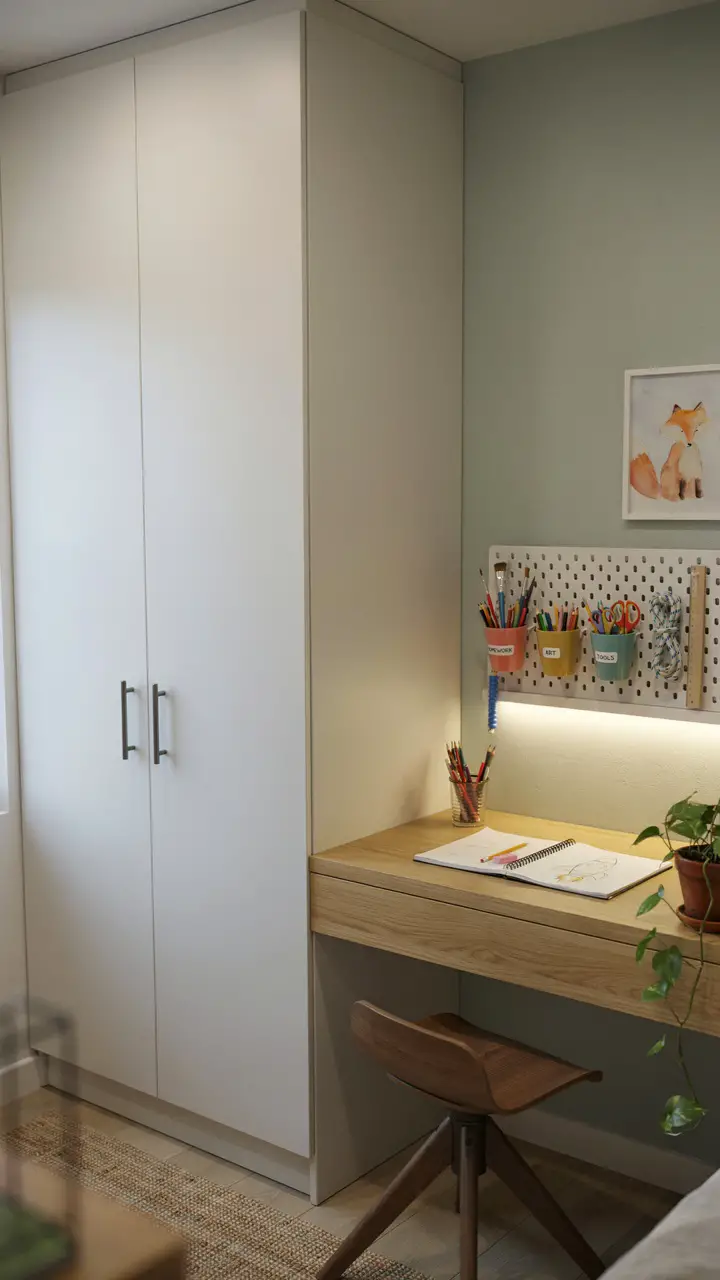
Want two problems solved at once? A wardrobe-and-desk combo corner is one of the smartest uses of a children’s bedroom corner, especially for school-age kids who need a proper homework setup.
- Shopping list: Modular wardrobe with space for a desk extension ($200–$800 depending on custom vs. flat-pack), floating desk surface ($60–$150), pegboard ($20–$40), LED strip lighting ($15–$30)
- Difficulty level: Intermediate to advanced — proper wall anchoring is non-negotiable for safety
- Style compatibility: Works beautifully with Scandi, modern minimalist, and contemporary farmhouse aesthetics
- Budget tip: IKEA’s STUVA range was literally designed for exactly this scenario — it’s worth every penny for the versatility
- Common mistake: Skipping proper cable management for desk lighting. One small cable tidy box ($8) saves the whole look
4. The Whimsical Themed Wardrobe Corner
How to Recreate This Look
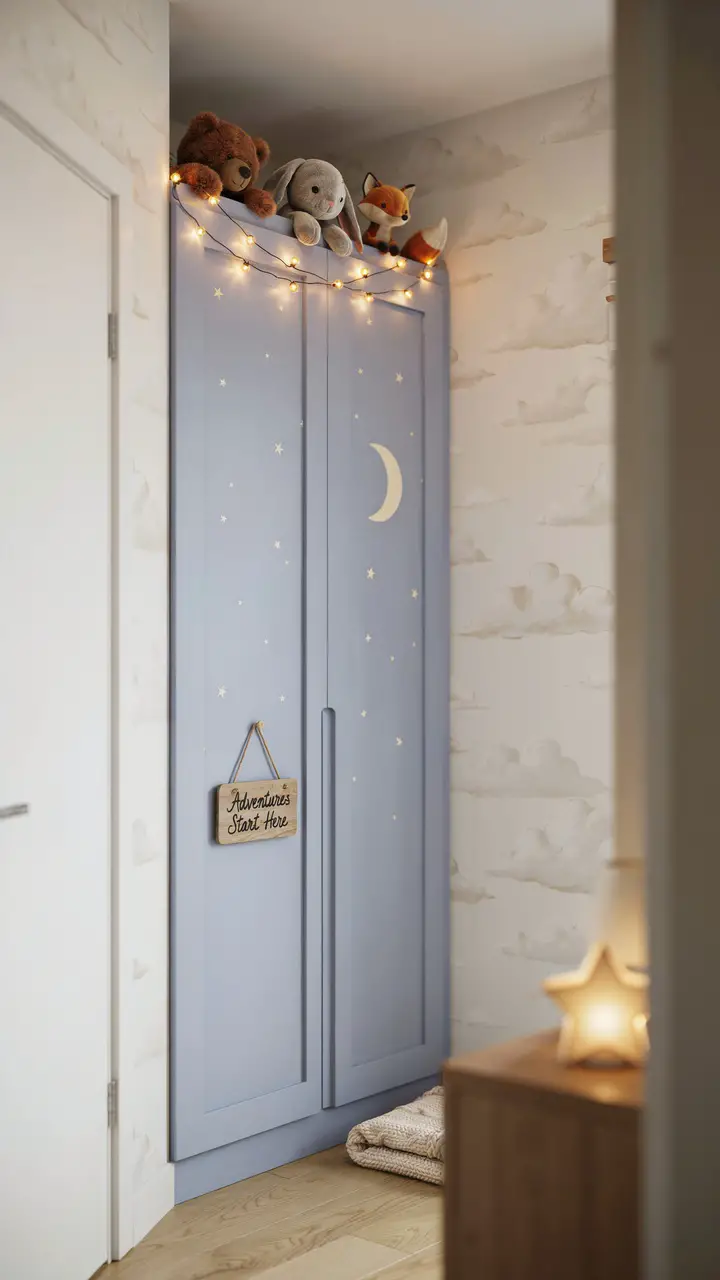
This is the idea that makes kids love their wardrobe — and anything that makes a child want to put their own clothes away deserves a medal.
- Shopping list: Plain flatpack wardrobe as your base ($80–$200), chalk or furniture paint in your chosen theme color ($20–$35), small stencils or stickers ($10–$20), battery-operated fairy lights ($12–$18)
- DIY difficulty: Beginner to intermediate — the painting is genuinely easy with the right prep. Lightly sand the surface first and use a primer so the paint actually sticks
- FYI: This approach works brilliantly for renters too — just stick to removable stickers and peel-off contact paper rather than permanent paint if you need to restore the wardrobe when you move
- Seasonal adaptability: Swap fairy lights for themed string lights (stars in winter, suns in summer) without touching the paint
5. Built-In Corner Wardrobe with Hidden Nook
How to Recreate This Look
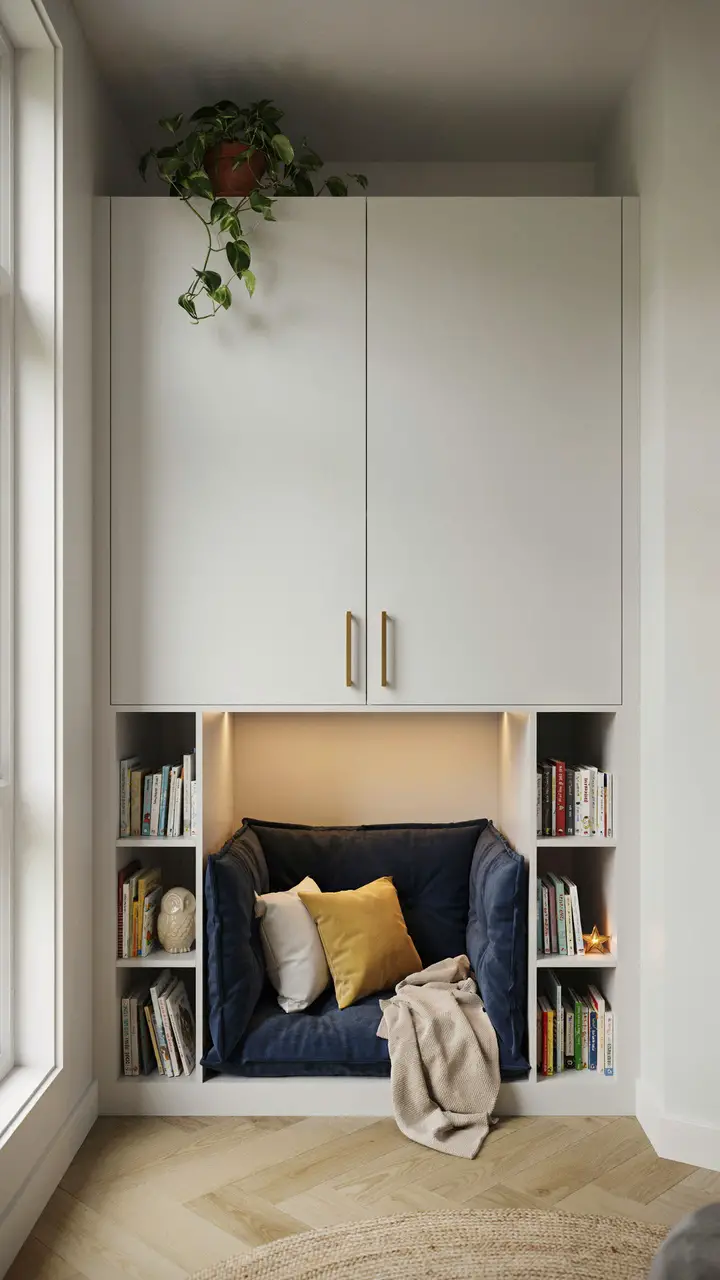
Okay, this one made me genuinely excited when I first saw it done in a friend’s daughter’s room — a wardrobe with a built-in reading nook underneath is the kind of thing that will make your child think you’re the coolest parent alive.
- Shopping list: This is a custom build — budget $800–$2,500 depending on your carpenter, or a brave DIY weekend warrior with solid carpentry skills can tackle it for $300–$600 in materials
- Space requirements: You need at least a 10×10 ft room for this to feel comfortable rather than cramped
- Difficulty level: Advanced DIY or professional installation recommended
- Lifestyle consideration: Built-in cushioned nooks and kids with muddy shoes are a real combination — choose a performance velvet or outdoor-grade fabric for the cushion cover so you can wipe it down
For more creative reading and play spaces, explore these kids play corner ideas.
6. The Mirrored Corner Wardrobe
How to Recreate This Look
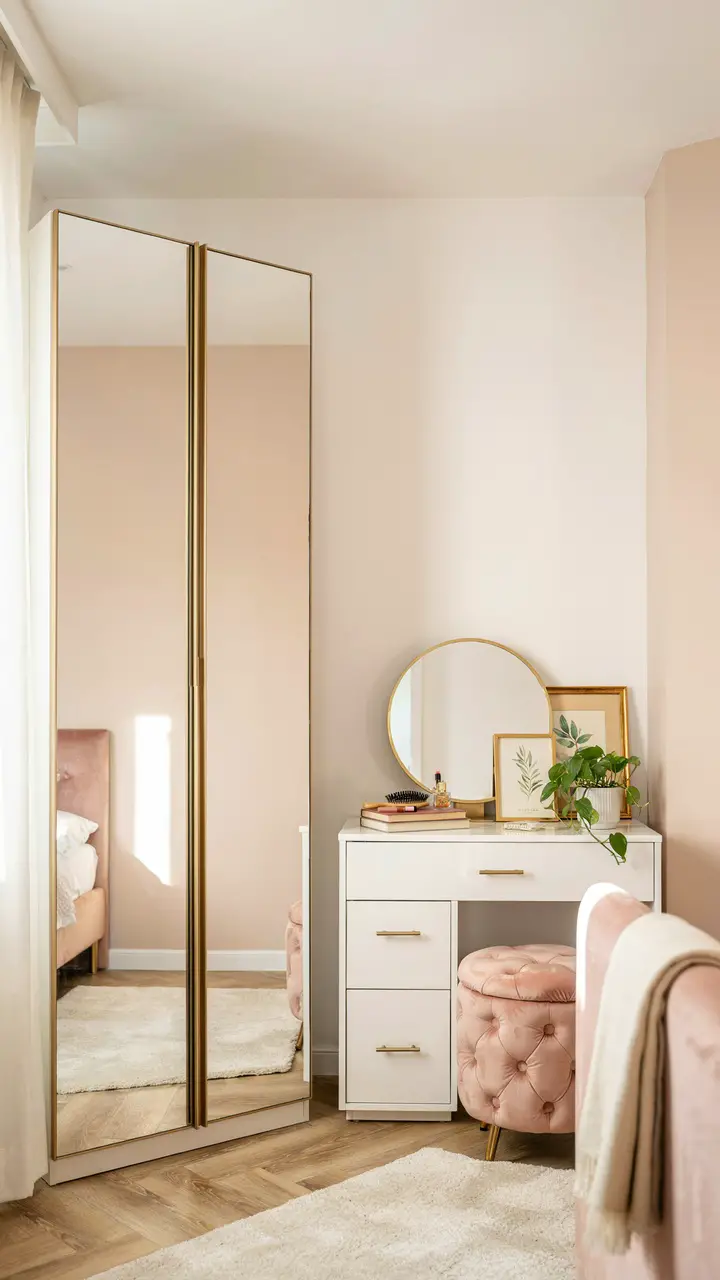
Mirrored corner wardrobes are absolute champions for smaller bedrooms because they create the illusion of a much bigger space. This is the budget decorator’s secret weapon.
- Shopping list: Wardrobe with mirrored sliding doors ($200–$600), mirror-safe cleaning spray ($8), felt furniture pads for door edges ($5)
- Space requirement: Works in rooms as small as 7×9 ft — the mirror does the heavy lifting spatially
- Style compatibility: Perfect for tween and teen rooms; also works in Scandinavian and contemporary aesthetics
- Key tip: Position the wardrobe so the mirror reflects a window — this doubles the natural light in the room, not just the visual space
- Common mistake: Choosing a frame colour that clashes with the rest of the room. Mirror frames in white, white oak, or matte black work with virtually everything
7. The Dual-Child Corner Wardrobe System
How to Recreate This Look
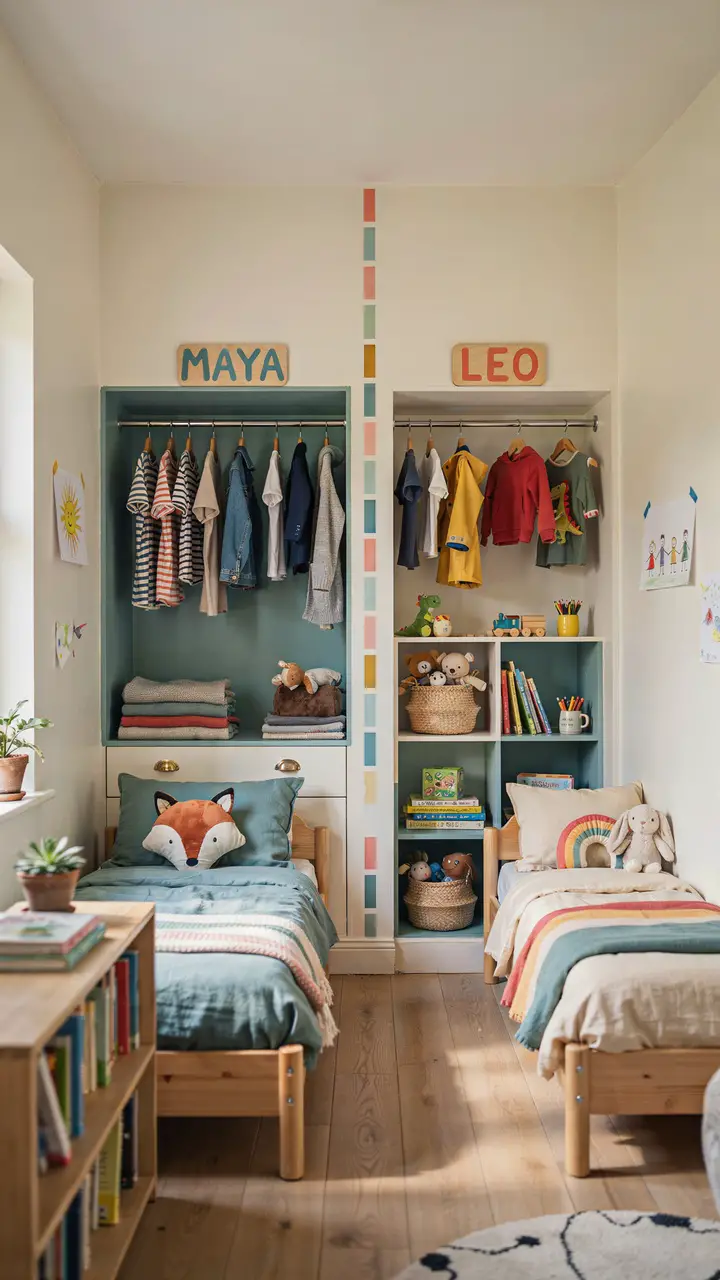
If you have two kids sharing a room (solidarity to you — truly), a divided corner wardrobe system lets each child have their own territory without World War Three breaking out over shelf space. This is a real concern in real homes.
- Shopping list: Two complementary modular wardrobe units ($80–$250 each), personalized name labels ($10–$20), two different coloured fabric storage bins to designate ownership ($8–$15 per set)
- The golden rule: Give each child equal hanging rails and shelf space — perceived fairness is everything
- Difficulty level: Beginner — it’s mostly about smart product selection and placement
- Durability: Choose scuff-resistant finishes (matte lacquer or laminate) — shared kids’ rooms are high-traffic zones
8. The Freestanding Armoire in a Corner
How to Recreate This Look
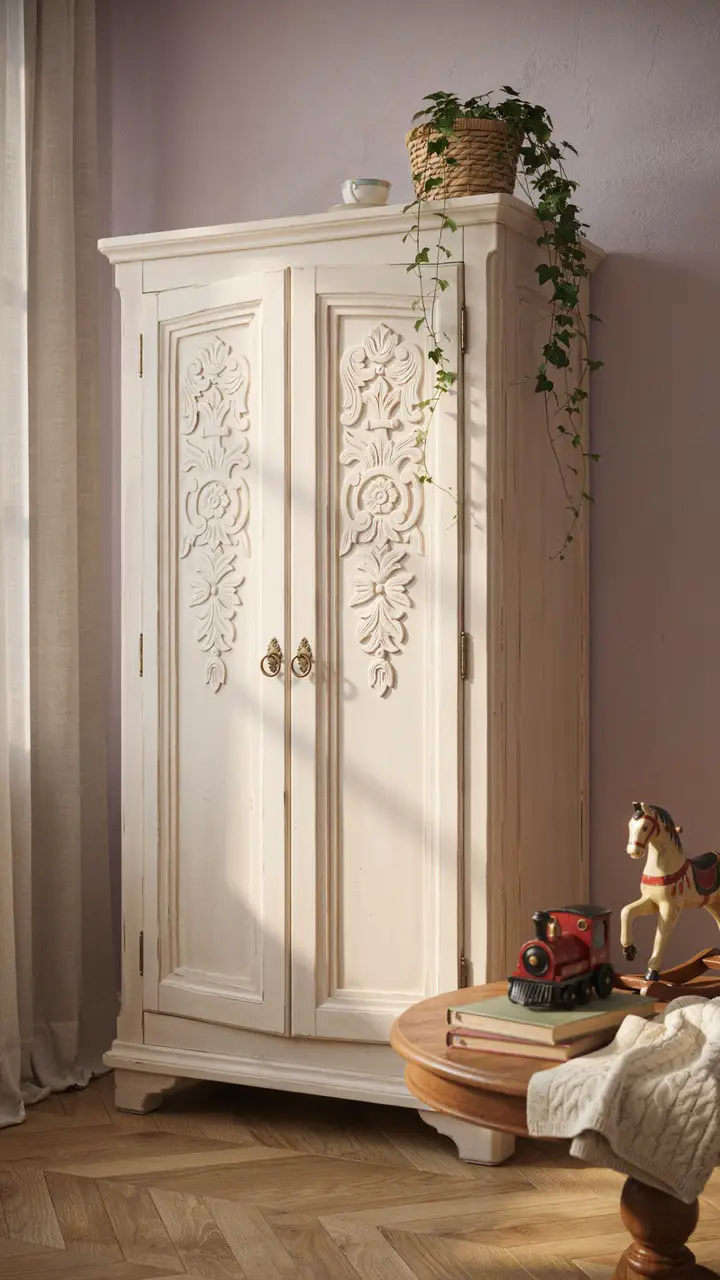
Not every room needs a built-in or a flat-pack solution. A well-chosen freestanding armoire tucked into a corner can be one of the most beautiful storage solutions in a child’s room — and it moves with you when you do.
- Shopping list: Vintage or vintage-style armoire (thrift stores, Facebook Marketplace, $40–$200; new reproduction pieces run $300–$700), furniture wax or chalk paint if refinishing ($20–$35)
- FYI for renters: This is your ideal solution — completely freestanding, no installation required, and it goes with you
- Safety essential: Always anchor freestanding wardrobes to the wall with an anti-tip strap ($8–$15). Non-negotiable with kids in the house
- Seasonal swap: Change the interior lining paper seasonally — contact paper in new patterns takes 30 minutes and costs under $15
Check out these kids bedroom closet ideas for more styling inspiration across different wardrobe styles.
9. The Low-Profile Corner Wardrobe for Toddlers
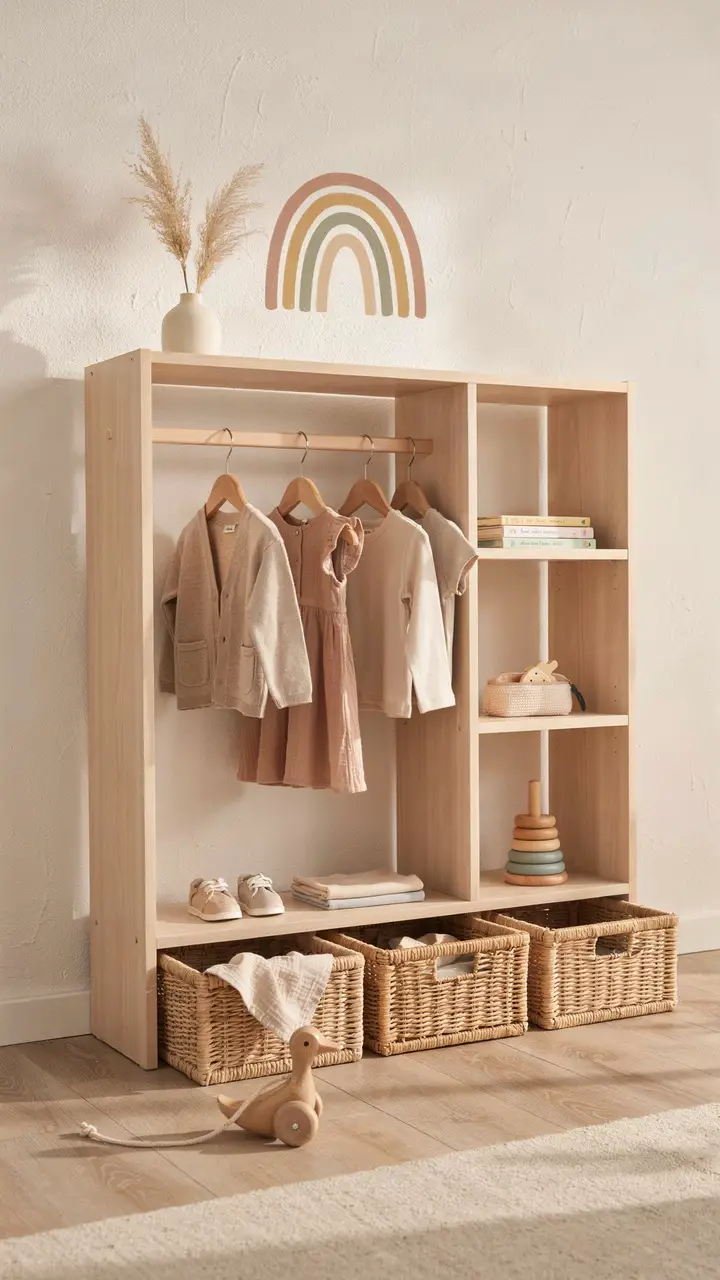
How to Recreate This Look
For toddlers specifically, everything being within their reach is the whole point. A low-profile corner wardrobe means your two-year-old can actually get involved in getting dressed — which, I know, takes seventeen times longer but is genuinely worth the independence it builds.
- Shopping list: Low modular storage unit repurposed as a wardrobe ($60–$180), child-size wooden hangers ($10 for a pack of 20), wicker drawer baskets ($12–$18 each), a small tension rod for the hanging rail if your unit doesn’t include one ($8–$12)
- Difficulty level: Beginner — this is mostly creative repurposing of existing furniture
- Space requirement: Works in rooms as small as 7×8 ft
- Grow-with-them tip: As your toddler grows, add a taller section above — you build upward rather than replacing the whole thing
10. The Colorful Maximalist Corner Wardrobe
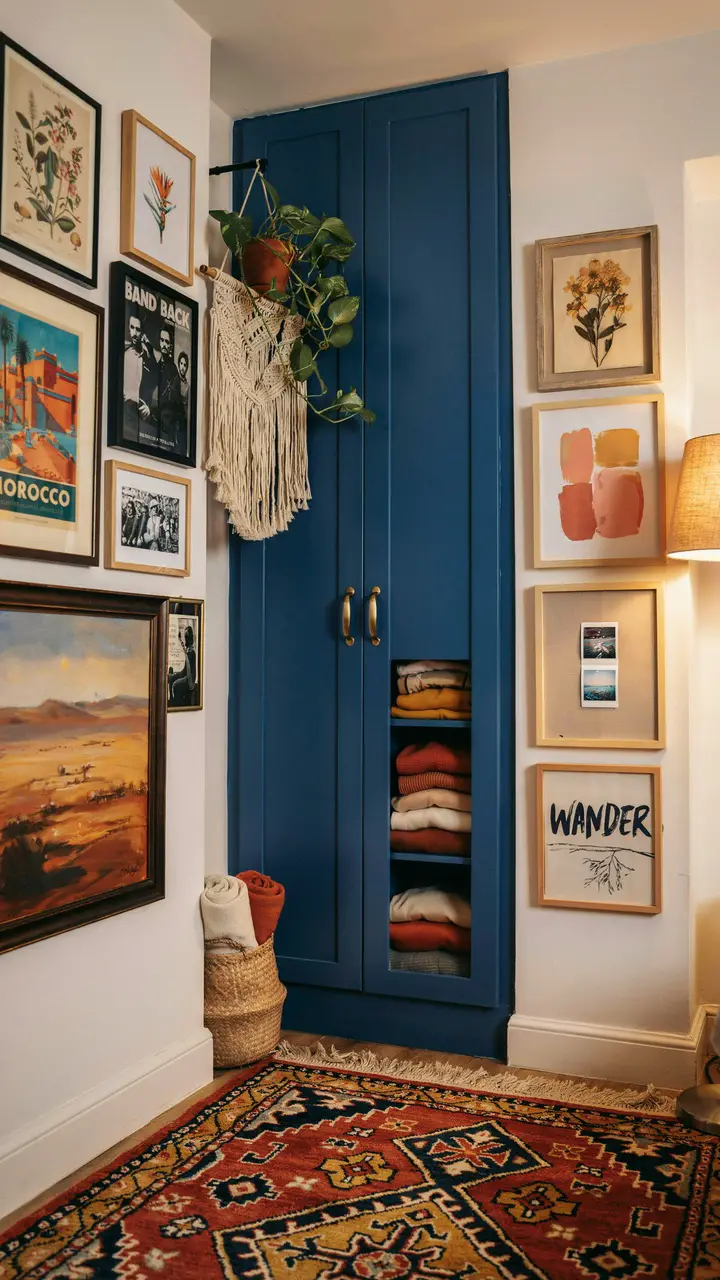
How to Recreate This Look
For the child who has strong opinions about everything — their room should absolutely reflect that. A maximalist corner wardrobe celebrates personality rather than suppressing it.
- Shopping list: Plain wardrobe base ($80–$250), furniture paint in your chosen bold shade ($25–$40), brass or statement handles ($4–$12 each), gallery wall frames ($5–$20 each)
- Difficulty level: Beginner — bold paint and new handles genuinely transform a basic wardrobe completely
- Style compatibility: Maximalist, eclectic, Boho, and modern vintage aesthetics all work here
- Budget breakdown:
- Under $100: Paint an existing wardrobe and swap the handles
- $100–$500: New flat-pack base plus full paint and styling treatment
- $500+: Custom painted built-in with glass panel inserts
- Common mistake: Going bold on the wardrobe and every wall. Let the wardrobe be the statement and keep surrounding walls calmer — one strong focal point is always more intentional than everything competing for attention
For even more kids’ room design inspiration, browse these kids room wardrobe design ideas and modern kids room design ideas.
Final Thoughts: The Corner That Changes Everything
Here’s what I’ve come to believe after thinking deeply about kids’ room design: the wardrobe corner is the room’s backbone. When storage works — when there’s a genuinely logical place for every piece of clothing, every school bag, every beloved stuffed animal — the rest of the room has a fighting chance of staying livable.
You don’t need to blow your entire budget on a custom built-in to make it work. A thrifted armoire with a coat of paint, a low Montessori shelf thoughtfully placed, a clever flat-pack corner unit — all of these can completely transform how a child’s bedroom functions and feels.
The real magic isn’t in the wardrobe itself. It’s in how a well-organized, beautifully considered corner teaches a child that their space — and by extension, themselves — is worth caring for. That’s worth every hour of planning, every coat of chalk paint, and even the inevitable afternoon when the whole carefully folded pile gets dumped on the floor in the search for one specific t-shirt. 🙂
Start with the corner. The rest of the room will follow.

Greetings, I’m Alex – an expert in the art of naming teams, groups or brands, and businesses. With years of experience as a consultant for some of the most recognized companies out there, I want to pass on my knowledge and share tips that will help you craft an unforgettable name for your project through TeamGroupNames.Com!