
You know that moment when you open a door at someone’s house and realize the entire wall is secretly a closet?
That mix of shock, envy, and immediate need to do this in your own home? Yeah, that’s exactly the energy we’re bringing today.
Whether you’re working with a tiny apartment bedroom, a hallway that wastes its potential, or a living room that desperately needs to hide the chaos — hidden wall closets are one of the smartest, most satisfying things you can do to a space.
And here’s the thing: you don’t need a massive renovation budget or a contractor on speed dial to pull off most of these ideas. Some of them cost less than a fancy dinner out.
So grab your coffee, pull up your floor plan (or just walk around your place eyeballing walls like I know you do), and let’s talk about ten hidden wall closet ideas that are genuinely worth your time and money.
1. The Bookcase Door: A Classic That Never Gets Old

If there’s a hidden closet hall of fame, the bookcase door is its founding member. A floor-to-ceiling bookshelf that swings open to reveal a walk-in closet, a home office nook, or a storage room is the kind of thing that makes guests genuinely gasp. It looks incredibly intentional and architectural — basically the opposite of a random door interrupting your wall.
The magic is in the pivot hinge hardware, which carries the weight of the shelves and lets them swing smoothly without sagging over time. You can buy pre-built bookcase door kits or DIY the whole thing from flat-pack shelving units with some clever modification.
How to Recreate This Look
Shopping List:
- Pivot hinge bookcase door kit (e.g., Murphy Door brand): $400–$1,200 depending on size and finish, available on Amazon or murphydoor.com
- Flat-pack bookshelf units (IKEA Billy, for example): $60–$120 each for budget DIY builds
- Recessed pull handle (so nothing sticks out): $15–$40 at hardware stores or Amazon
- Shims, drill, wood filler, paint or stain: $30–$60 total
- Bookshelf styling accessories (books, plants, small objects): $20–$80 sourced from thrift stores and HomeGoods
Step-by-Step Styling Instructions:
- Identify which wall your hidden space sits behind — the bookcase door needs at least a 30-inch opening behind it
- Install the pivot hardware or bookcase door kit according to manufacturer instructions (this part is intermediate-level DIY — confident beginners can manage it with a full weekend)
- Mount the bookcase securely to the pivot system, ensuring it swings without dragging on the floor
- Fill shelves using the “thirds rule”: one-third books, one-third decorative objects, one-third negative space — resist the urge to cram every shelf
- Position the recessed pull handle at a comfortable height (roughly waist-to-hip level feels natural)
- Paint or stain the bookcase to match surrounding walls or woodwork so it visually blends in
Budget Tiers:
- 💰 Under $100: DIY with repurposed IKEA Billy units, basic pivot hinges, and paint — takes skill and patience
- 💰💰 $100–$500: Mid-range DIY kit plus styling accessories; clean, polished result
- 💰💰💰 $500+: Pre-built Murphy Door-style kit or custom carpenter build — absolutely worth it for a permanent home
Space Requirements: Minimum 8-foot wall width and 7-foot ceiling height for full visual impact. Works in studies, living rooms, bedrooms, and hallways.
Difficulty Level: Intermediate — the hinge installation requires precision; one misaligned screw and the door won’t swing properly.
Durability: Extremely durable once installed correctly. Avoid overloading the top shelves — keep heavy items low to prevent the door from warping over time.
Seasonal Adaptability: Swap out styled shelf accessories by season — fresh greenery in spring, warm candles and textured objects in winter.
Common Mistakes to Avoid: Don’t mount heavy objects on the door-side shelves. Uneven weight distribution makes the door swing on its own or stick. Also, don’t forget to check floor levelness before installation — an uneven floor turns this project into a nightmare.
2. Flush Panel Wall Doors: The Minimalist’s Dream
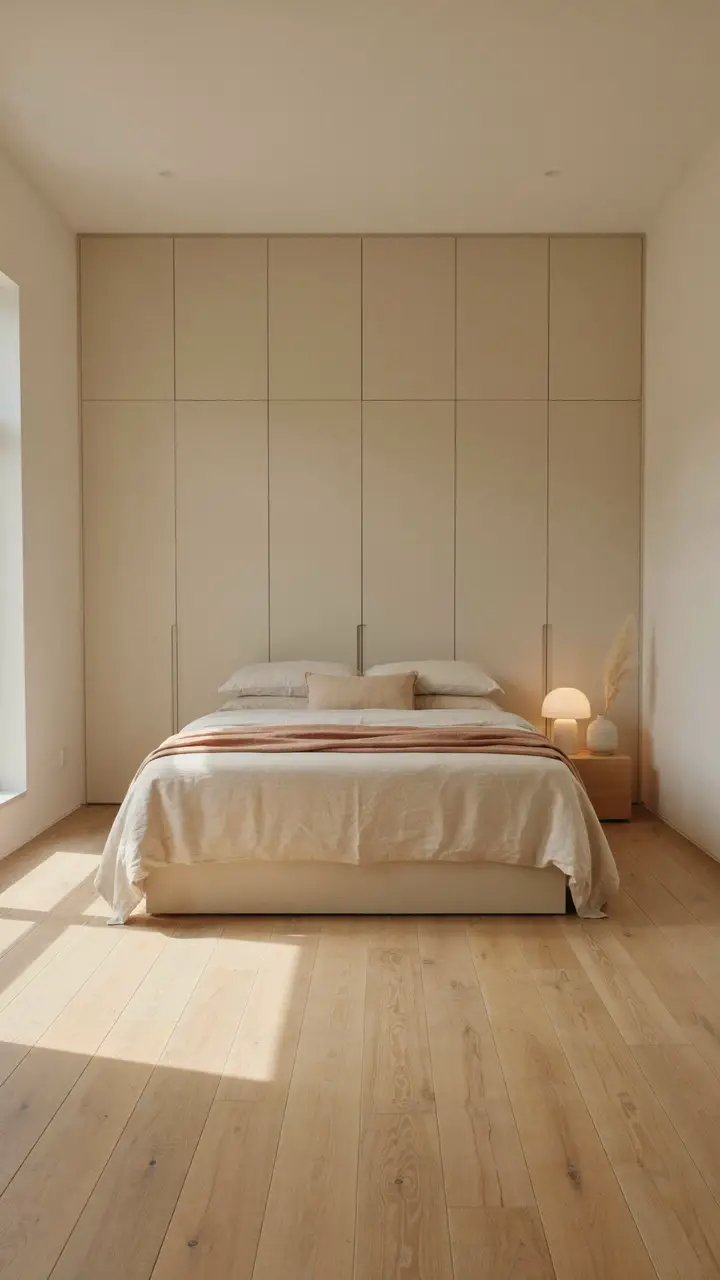
You’ve seen this look in architecture magazines and thought, “that must cost a fortune.” Sometimes it does — but the core concept is more achievable than you’d think. Flush panel doors are simply closet or storage doors that sit completely flush with the surrounding drywall, painted or finished identically to the wall so they visually disappear.
The key is touch-latch hardware — small magnetic mechanisms that release the door when you push it, so you need zero visible handles. That unbroken wall surface is what creates that jaw-dropping, “wait, where’s the closet?” effect.
How to Recreate This Look
Shopping List:
- Touch-latch push-to-open cabinet hardware: $8–$25 per door at hardware stores or Amazon
- Solid-core door (flush style, no panels): $80–$200 at lumber yards or big box stores
- Door frame trim (or eliminate trim entirely for truly seamless look): $20–$50
- High-quality wall paint in eggshell or satin finish (one unified color throughout): $40–$70 per gallon
- Fine sandpaper and wood filler to eliminate gap lines: $15–$20
Step-by-Step Styling Instructions:
- Choose or install a solid, flat-front door — no raised panels, no decorative molding
- Reduce the door frame to the bare minimum, or go frameless entirely with careful drywall finishing
- Install touch-latch hardware so the door opens with a gentle push
- Fill any gaps or imperfections with paintable caulk and sand until the transition is glass-smooth
- Paint everything — wall, door, and any remaining trim — in one unified color using the same sheen level (this step is absolutely non-negotiable for the disappearing effect)
- Repeat if you have multiple closet doors along the same wall — three flush-panel doors in a row looks genuinely architectural
Budget Tiers:
- 💰 Under $100: Apply this technique to an existing flat closet door with touch latches and matching paint
- 💰💰 $100–$500: New solid-core door plus professional-level paint finishing
- 💰💰💰 $500+: Custom-built floor-to-ceiling panel system with integrated storage — stunning in primary bedrooms
Space Requirements: Works in any room, any size. Especially transformative in small bedrooms where a standard door feels bulky and intrusive.
Difficulty Level: Beginner-to-intermediate. Painting is easy; getting the gap-filling and caulking perfectly smooth takes patience.
Durability: Outstanding — solid-core doors last decades. Touch latches occasionally need adjustment but are inexpensive to replace.
Common Mistakes: Using different paint sheens on the door versus the wall immediately kills the seamless effect. Match. The. Sheen. (FYI this is the number one thing people get wrong.)
3. Under-Stair Hidden Closets: Waste Not a Single Cubic Foot
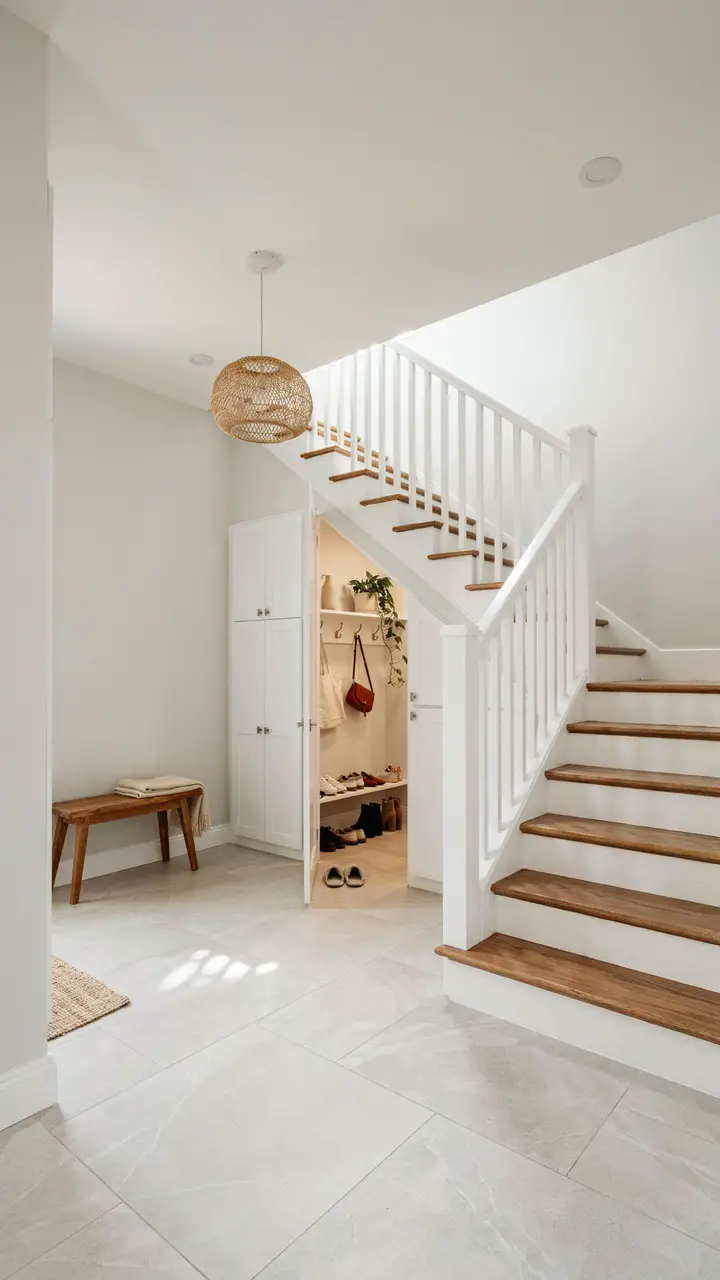
If your home has a staircase, you’re potentially sitting on one of the most underused storage opportunities in residential design. The triangular cavity under most staircases is pure dead space in the majority of homes — but it doesn’t have to be. Converting it into hidden closet storage is one of those projects that feels wildly satisfying, like you found free square footage you didn’t know you owned.
The real win here is that under-stair closets can do triple duty: coat and shoe storage near the front door, cleaning supplies tucked in the middle section, and a small wine rack or seasonal storage in the deepest, lowest point.
How to Recreate This Look
Shopping List:
- Framing lumber for door rough openings: $40–$100
- Pre-hung interior doors (or custom-cut flush panels): $60–$150 each
- Interior door hardware (knobs or touch latches): $10–$30 per door
- Paint (matching existing staircase or entryway wall): $30–$60
- Interior storage organizers (tension rods, hooks, small shelving units): $40–$100
Step-by-Step Styling Instructions:
- Map the staircase cavity carefully — measure the total depth, ceiling height at various points, and width before planning any door openings
- Plan multiple door openings at different heights to match the angled ceiling — typically two or three access points work better than one large awkward door
- Hire a carpenter or confident DIYer to frame out the rough openings and hang the doors
- Organize the interior by zone: shoes and everyday bags near the front access point, deeper storage toward the back
- Install a slim battery-operated LED strip inside (motion-activated ones cost around $15–$25 and are worth every penny — that closet gets dark fast)
- Paint all doors and surrounding trim in one unified color matching the entryway walls
Budget Tiers:
- 💰 Under $100: Add organization to an existing under-stair door with hooks, bins, and LED strips
- 💰💰 $100–$500: Cut and frame one new access door in currently closed drywall
- 💰💰💰 $500+: Full multi-door under-stair conversion by a carpenter — genuinely transforms the home’s functionality
Difficulty Level: Intermediate to advanced. Cutting into existing drywall requires care around any wiring that might run through those walls — always check before cutting.
Durability: Incredibly durable. This is essentially permanent architecture, not a decorating project that fades.
Rental Note: This one requires landlord approval and is best suited for homeowners.
4. Mirror-Fronted Hidden Closets: Two Problems, One Beautiful Solution
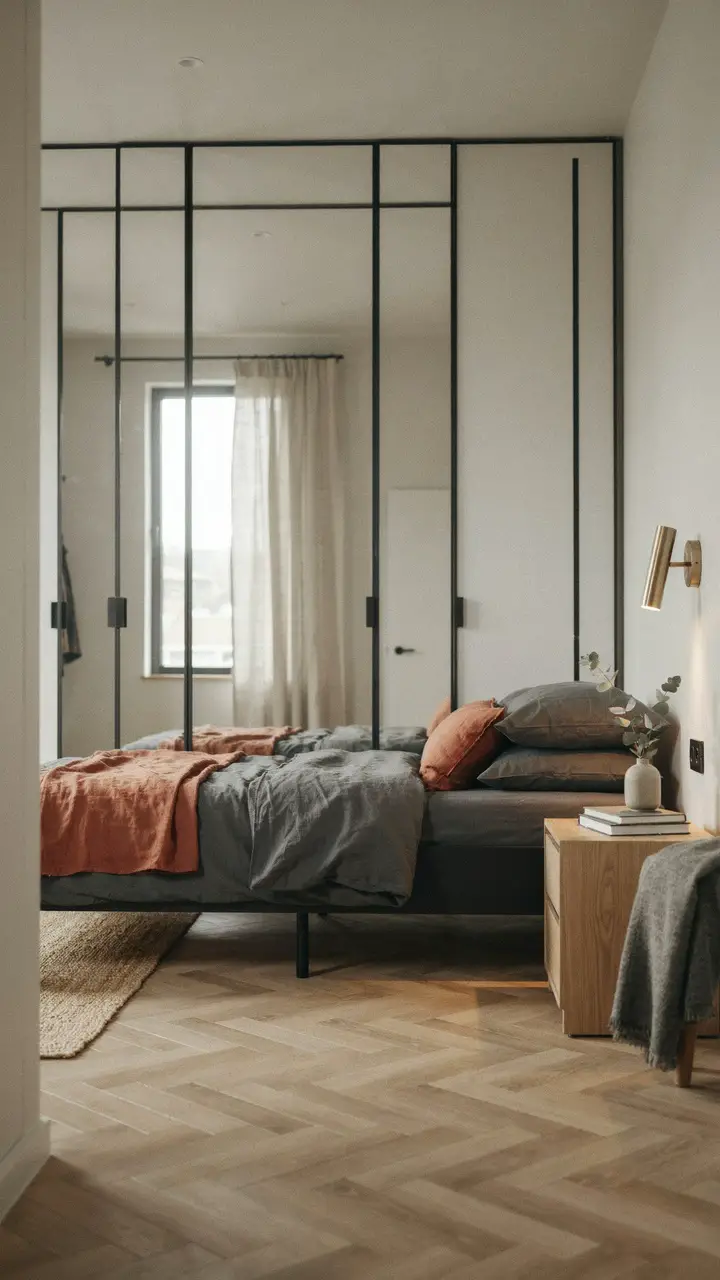
Here’s a scenario: you need more closet space AND your small bedroom feels cramped and dark. Mirror-fronted closet doors solve both problems simultaneously — they hide your entire wardrobe behind a reflective surface that makes the room feel genuinely larger and brighter. It’s one of the most efficient design decisions you can make in a small bedroom. 🙂
The trick to making mirrored closet doors look sophisticated rather than dated (we’ve all seen those old gold-framed sliding mirrors from the 80s) is in the framing. Slim matte black, brushed brass, or frameless options read completely modern and intentional.
How to Recreate This Look
Shopping List:
- Sliding mirror door kit (bifold or bypass style): $200–$800 depending on width, at IKEA, Home Depot, or specialty door retailers
- Track and hardware installation kit (often included): included or $30–$60 separately
- Level, drill, and measuring tape: tools you likely already own
- Optional: custom frame finish (matte black spray paint works on metal frames): $8–$15
Step-by-Step Styling Instructions:
- Measure your closet opening precisely — width, height, and depth of the track recess if applicable
- Order or purchase sliding mirror panels sized to your opening (many retailers cut to size)
- Install the top track first using a perfectly level line — a crooked track means doors that slide with that infuriating wobble forever
- Hang the door panels and adjust the roller height until the doors glide smoothly and sit plumb
- Position a light source (lamp or sconce) beside or above the mirror section — the reflection amplifies light beautifully
- Style the area in front of the mirrored wall with a small plant or sculptural object for an editorial, intentional look
Budget Tiers:
- 💰 Under $100: Adhesive mirror panels on existing closet doors — temporary and surprisingly effective
- 💰💰 $100–$500: Standard sliding mirror door kit from IKEA or Home Depot
- 💰💰💰 $500+: Frameless custom-cut mirror panels with integrated soft-close hardware — genuinely beautiful
Rental-Friendly Version: Freestanding mirror panels (not mounted) placed in front of an existing closet create a similar visual effect without permanent installation.
Common Mistakes: Don’t place mirrored closet doors directly across from a window with an ugly view — the mirror will reflect it faithfully all day. Angle matters.
5. Built-In Wardrobe with Painted Camouflage
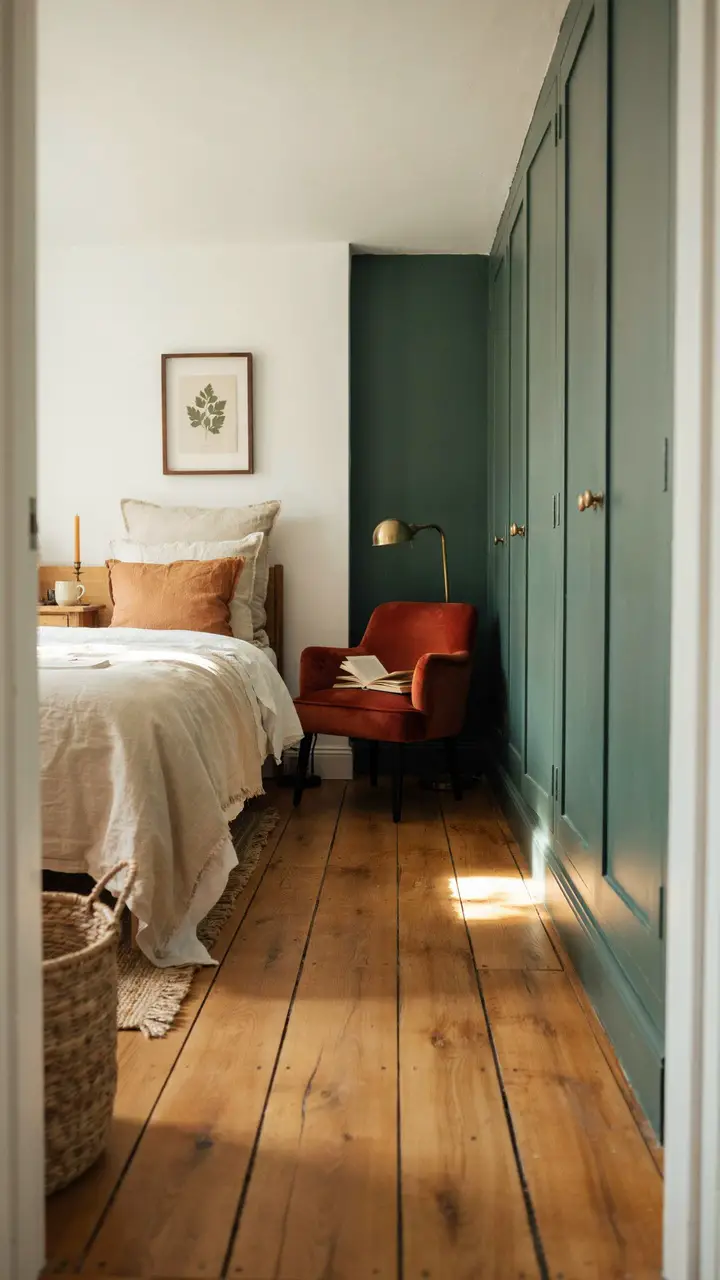
This might be the most rental-friendly option on the entire list — and it’s brilliant in its simplicity. The concept: build (or install) a standard wardrobe or closet unit and paint the entire wall, including the wardrobe front panels, in one bold, unified color. The wardrobe disappears into the architecture. What looks like a beautiful, intentionally colored accent wall is actually hiding your entire wardrobe.
Bold, saturated colors work best for this technique — forest green, deep navy, charcoal, rich terracotta. Light neutral walls make the wardrobe panels more obvious; a strong color camouflages them completely.
How to Recreate This Look
Shopping List:
- IKEA PAX wardrobe system (highly customizable): $200–$700 depending on configuration
- Interior paint in a deep, saturated tone (Benjamin Moore Newburyport Green, Farrow & Ball Hague Blue, etc.): $50–$80 per gallon
- Small brass or matte black cup pulls: $3–$12 each, available at hardware stores and Amazon
- Paint primer for furniture surfaces (ensures paint adheres to wardrobe panels): $20–$35
- 2-inch angled paint brush for clean edges: $8–$15
Step-by-Step Styling Instructions:
- Assemble and install your wardrobe unit against the chosen wall, anchoring it to wall studs for safety
- Fill any gaps between the wardrobe and wall with paintable caulk and sand smooth
- Prime all wardrobe exterior surfaces that will receive paint (skipping primer means peeling within months — don’t skip this)
- Paint the entire wall — wardrobe and all — in your chosen color using a roller for flat surfaces and an angled brush for edges and panel details
- Apply two to three coats for full, even coverage, especially over laminate wardrobe panels
- Install cup pulls or knobs after final paint coat dries fully (48 hours minimum)
Budget Tiers:
- 💰 Under $100: Paint an existing freestanding wardrobe to match your wall color — transformative and reversible
- 💰💰 $100–$500: IKEA PAX plus paint and hardware
- 💰💰💰 $500+: Custom built-in carpentry finished in paint — seamlessly architectural
Rental-Friendly Rating: High — freestanding wardrobes require no permanent modification and move with you.
Difficulty Level: Beginner. Paint is always beginner-friendly if you’re patient with prep work.
Seasonal Adaptability: Swap interior organization inserts seasonally — hanging space in winter, more shelving for folded summer items.
6. Sliding Barn Door Closets: Hidden in Plain Sight
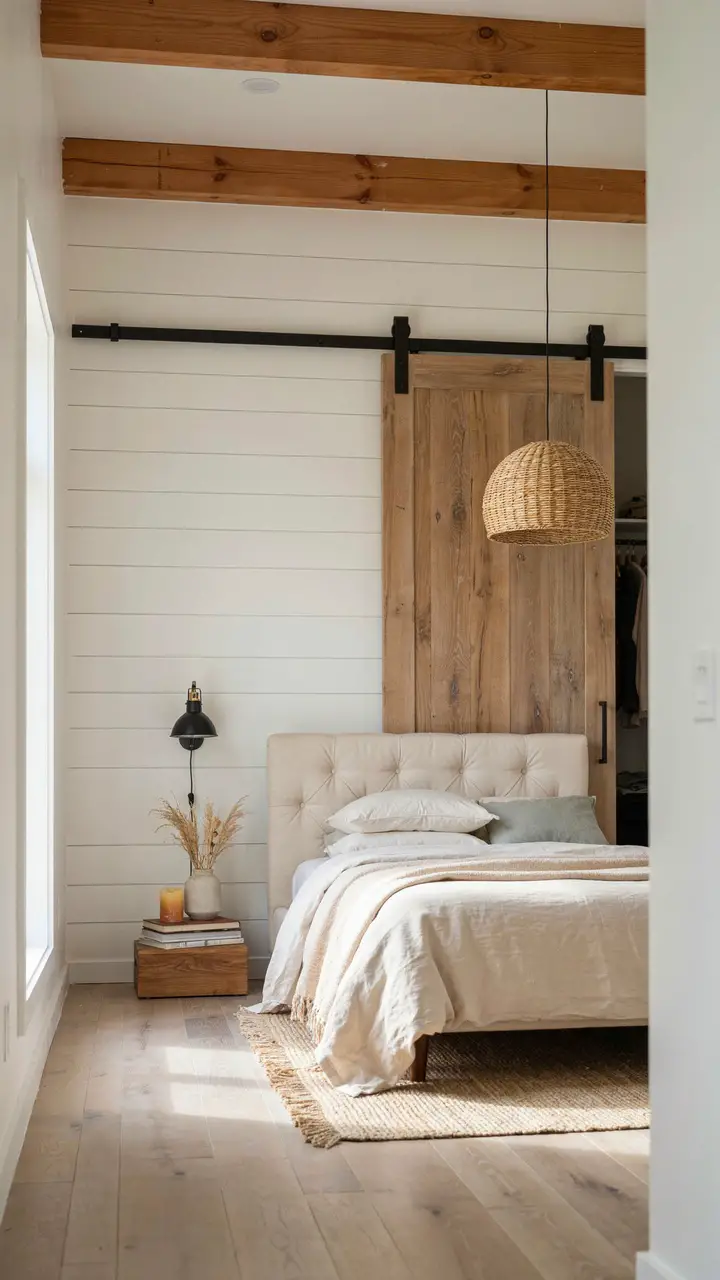
Sliding barn doors are having a very long moment in home design — and honestly, they deserve it. A single large barn door on a wall track conceals a closet or storage area while adding a substantial piece of visual interest to the room. When the door slides to cover the opening, what was a closet becomes a design feature. When it slides open, you access your wardrobe without any swinging door eating into your floor space.
This works especially well in small bedrooms where a traditional swinging closet door forces you to leave clearance space that a sliding door completely eliminates.
How to Recreate This Look
Shopping List:
- Barn door hardware kit (track, rollers, floor guide): $80–$250 on Amazon or at specialty hardware stores
- Solid wood barn door (pre-made): $150–$600 at lumber yards, Wayfair, or Etsy sellers
- OR solid wood board-and-batten DIY door: $60–$120 in materials
- Wall anchor hardware (doors hang from the wall, not the door frame — studs are essential): included or $10–$20 additional
- Finishing oil or wax for wood door: $20–$40
Step-by-Step Styling Instructions:
- Locate wall studs above the doorway — the track mount must hit at least two studs to bear the door weight safely
- Install the track at a consistent height (typically 1–2 inches above the door opening) using a level line
- Hang the door on the rollers and adjust until it sits plumb and rolls without wobble
- Install the floor guide to prevent the bottom of the door from swinging away from the wall
- Treat or finish the wood surface to protect against humidity and handling (a matte finishing oil looks particularly warm and natural)
- Style the adjacent wall simply — a barn door is a strong visual element and doesn’t need competition
Budget Tiers:
- 💰 Under $100: DIY board-and-batten door from pine boards plus basic hardware kit
- 💰💰 $100–$500: Pre-made barn door plus quality hardware kit
- 💰💰💰 $500+: Custom hardwood door with soft-close hardware — smooth, quiet, and stunning
Common Mistakes: Buying a door that’s too narrow — the door must overlap the opening by at least 1–2 inches on each side when closed. Measure twice before ordering.
Durability with Kids and Pets: Solid-core doors are extremely durable. Just install a soft floor guide that prevents the door from slamming shut.
7. Curtain-Concealed Wall Closets: The Renter’s Best Friend
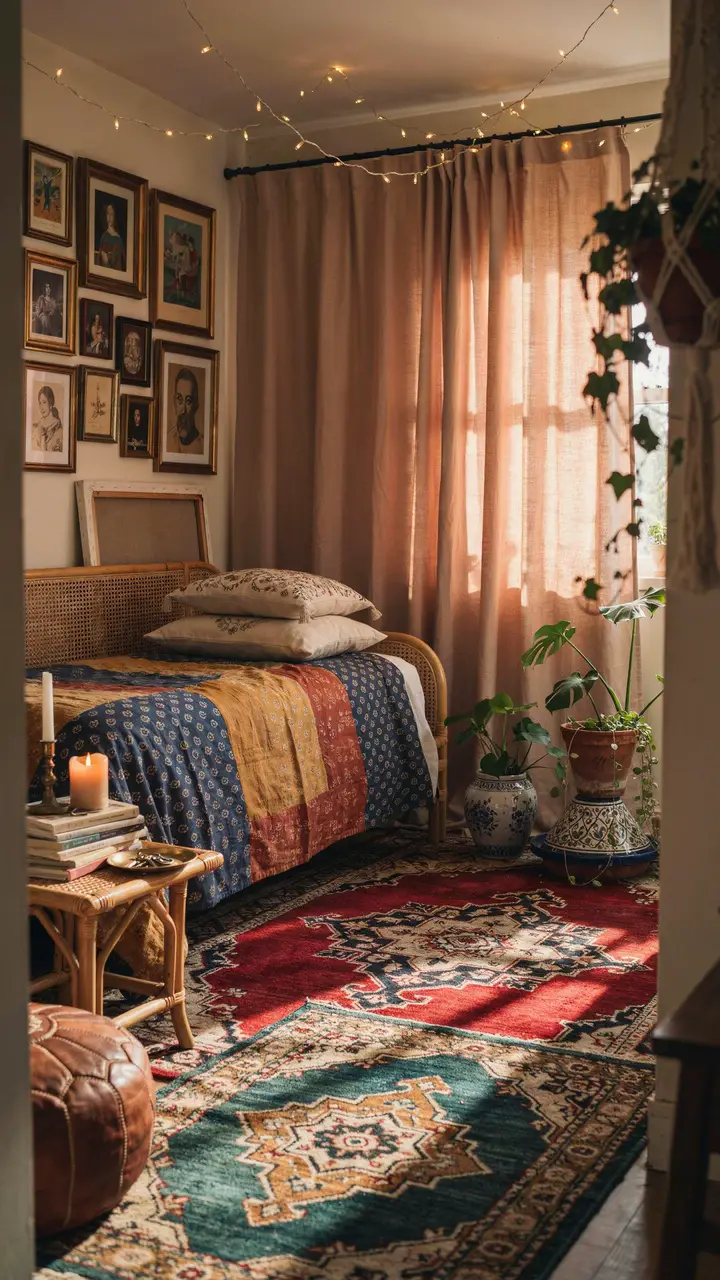
Okay, this one is the move for renters who can’t install anything permanent but desperately need more storage and a cleaner-looking bedroom. A ceiling-mounted curtain track (the kind that uses small clips or hooks rather than drilling a rod into the wall) lets you hang floor-to-ceiling curtains that conceal an entire wall of open shelving, hanging clothes, or storage cubes behind a beautiful fabric panel.
BTW — this trick also works as a room divider in studio apartments. One curtain track, infinite possibilities.
How to Recreate This Look
Shopping List:
- Ceiling-mounted curtain track system (KVARTAL from IKEA is a classic): $40–$100
- Curtain panels in floor-to-ceiling length (linen, velvet, or cotton canvas work beautifully): $30–$80 per panel at IKEA, H&M Home, or Amazon
- Open shelving units or clothing racks to organize behind the curtain: $30–$120 depending on what you use
- Curtain hooks or rings: $10–$20 for a full pack
- Optional: LED strip lighting inside the curtained storage area: $15–$25
Step-by-Step Styling Instructions:
- Map out exactly which wall section you want to conceal and measure the total width and ceiling-to-floor height precisely
- Install the ceiling track according to manufacturer instructions — most ceiling tracks use toggle bolts or ceiling anchors that don’t leave large holes
- Hang curtain panels with enough overlap (at least 6 inches beyond the storage area on each side) so nothing peeks out at the edges
- Organize everything behind the curtain in a way that makes daily access easy — clothes you reach for constantly at the front, seasonal items at the back
- Style the visible curtain side as a design feature: let the fabric pool slightly on the floor for a luxurious effect, or keep it hemmed clean for a neater look
- Install a motion-sensor LED strip inside the storage area so you’re not blindly rummaging around in the dark
Budget Tiers:
- 💰 Under $100: Tension curtain rod plus two panels from IKEA — minimal but effective
- 💰💰 $100–$500: Proper ceiling track plus quality linen panels plus organized shelving behind
- 💰💰💰 $500+: Custom upholstered or tailored curtain panels in a designer fabric — genuinely beautiful as a room feature
Rental-Friendly Rating: Maximum — this is about as non-permanent as it gets.
Seasonal Adaptability: Swap curtain panels by season — heavy velvet in winter, sheer linen in summer — for an instant room refresh.
8. Recessed Niche Closets: Building Into the Wall
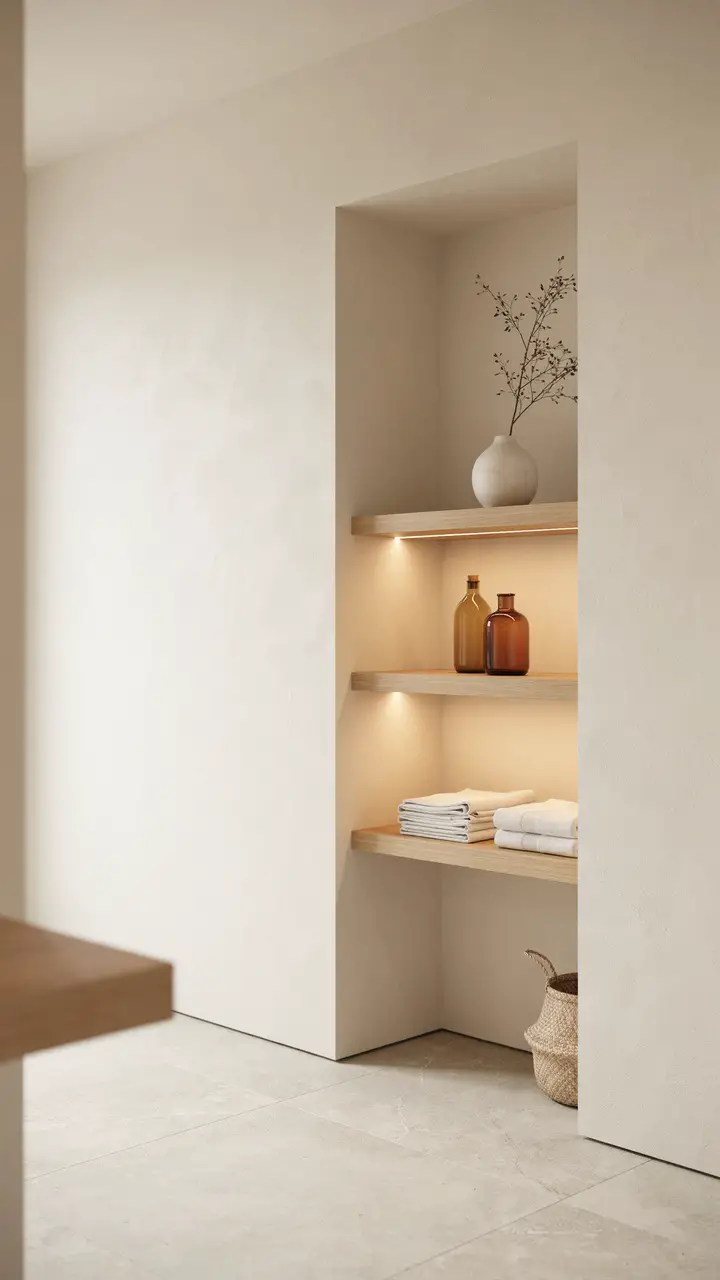
If you want to feel like you have genuinely gained square footage without adding square footage, a recessed niche closet is the move. By building into the wall cavity between studs — or deeper, if you have a non-load-bearing wall with enough depth — you create storage that takes up zero floor space. Zero.
In hallways, this is transformative. A recessed floor-to-ceiling niche can hold a full linen closet, a mudroom’s worth of hooks and baskets, or an entire entryway storage system, all within the plane of the wall.
How to Recreate This Look
Shopping List:
- Drywall supplies (if cutting into an existing wall): $30–$60
- Framing lumber for niche structure: $40–$80
- Plywood or MDF shelving to fit inside the niche: $30–$70
- Skim coat plaster or joint compound to finish niche walls: $20–$40
- Integrated LED strip lighting for interior niche illumination: $15–$40
- Paint matching surrounding walls: existing supply or $20–$40
Step-by-Step Styling Instructions:
- Identify a non-load-bearing wall with sufficient depth — standard 2×4 framing gives you about 3.5 inches of depth (good for shallow display niches); 2×6 framing gives about 5.5 inches
- Map the stud locations carefully with a stud finder — your niche opening will sit between studs
- Cut the drywall opening, frame the niche cavity with lumber, and add a backing panel
- Install shelving at whatever heights serve your storage needs
- Skim coat all interior niche surfaces with joint compound, sand smooth, and paint to match the surrounding wall
- Install LED strip lighting along the top interior edge for that soft, glowing effect
Budget Tiers:
- 💰 Under $100: Deepen an existing recessed area (behind a door, between studs) with minimal materials
- 💰💰 $100–$500: Full niche build with proper framing, shelving, and lighting
- 💰💰💰 $500+: Custom plaster-finish niche with integrated lighting and bespoke shelving
Difficulty Level: Advanced DIY or hire a contractor. Cutting into walls requires stud locating, electrical awareness, and proper finishing skills.
Important: Always confirm a wall is non-load-bearing and free of electrical wiring before cutting. When in doubt, consult a contractor.
9. Murphy Bed with Hidden Wardrobe Panels
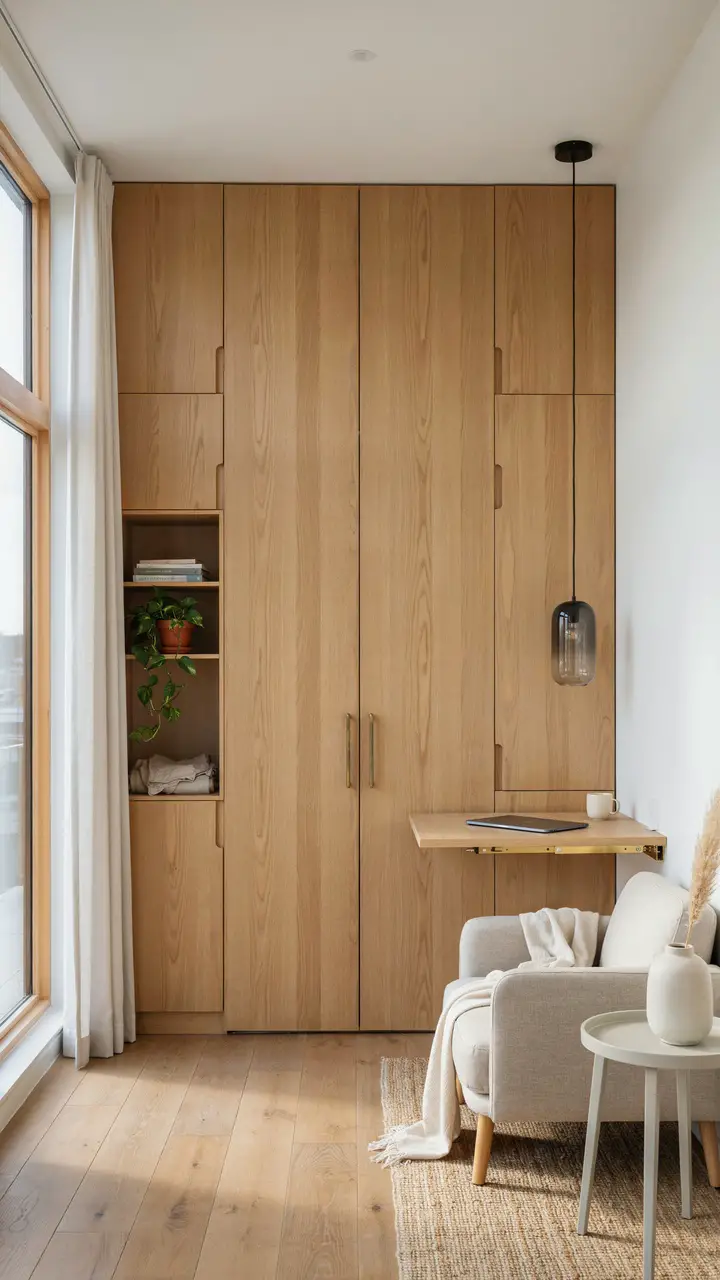
If you’re living in a studio, a guest room that doubles as a home office, or any small space that asks too much of itself, a Murphy bed with flanking hidden wardrobe panels is the most efficient thing you can do with a single wall. The bed folds up and disappears. The wardrobe panels on either side look like built-in cabinetry. The room becomes a completely different, fully functional space within 30 seconds.
Modern Murphy bed systems (Murphy Bed Depot, Resource Furniture, IKEA’s SVALNAS-adjacent solutions) have evolved enormously from those creaky, falling-on-your-head versions from 80s sitcoms. The hardware is genuinely smooth and safe now.
How to Recreate This Look
Shopping List:
- Murphy bed mechanism and frame kit: $400–$1,500 depending on size and brand
- Side wardrobe panels (custom or flat-pack adapted): $200–$600 in materials
- Matching door fronts or panel facades: $100–$400
- Hardware, drill, level, and basic tools: $50–$100 if you don’t already own them
- Mattress (Murphy bed-compatible, typically 8–10 inch profile): $200–$600
Step-by-Step Styling Instructions:
- Measure the wall carefully — width, height, and the floor-to-ceiling space needed to ensure the bed folds flat
- Choose a Murphy bed kit with side cabinet integration (most quality kits include this option)
- Build and mount the central bed mechanism first according to manufacturer instructions — this is the most critical, precision-dependent step
- Add flanking wardrobe cabinet panels with doors that match the overall panel facade
- Choose door finishes that read as beautiful built-in furniture, not “hidden bed” — solid wood veneer, painted MDF, or frosted glass all work
- Style the room with furniture at a comfortable scale — if the room must function as both bedroom and living area, choose pieces that serve both uses
Budget Tiers:
- 💰 Under $100: Not feasible for a full Murphy bed — budget options start higher
- 💰💰 $100–$500: Murphy bed mechanism only; add wardrobe panels in a future phase
- 💰💰💰 $500+: Full integrated Murphy bed plus wardrobe wall system — transformative for small spaces
Difficulty Level: Advanced. Murphy bed mechanisms must be installed precisely for safe operation. Many people hire a carpenter for this one, which is completely reasonable.
10. Pegboard and Panel Closet Walls: The Organized Creative’s Dream
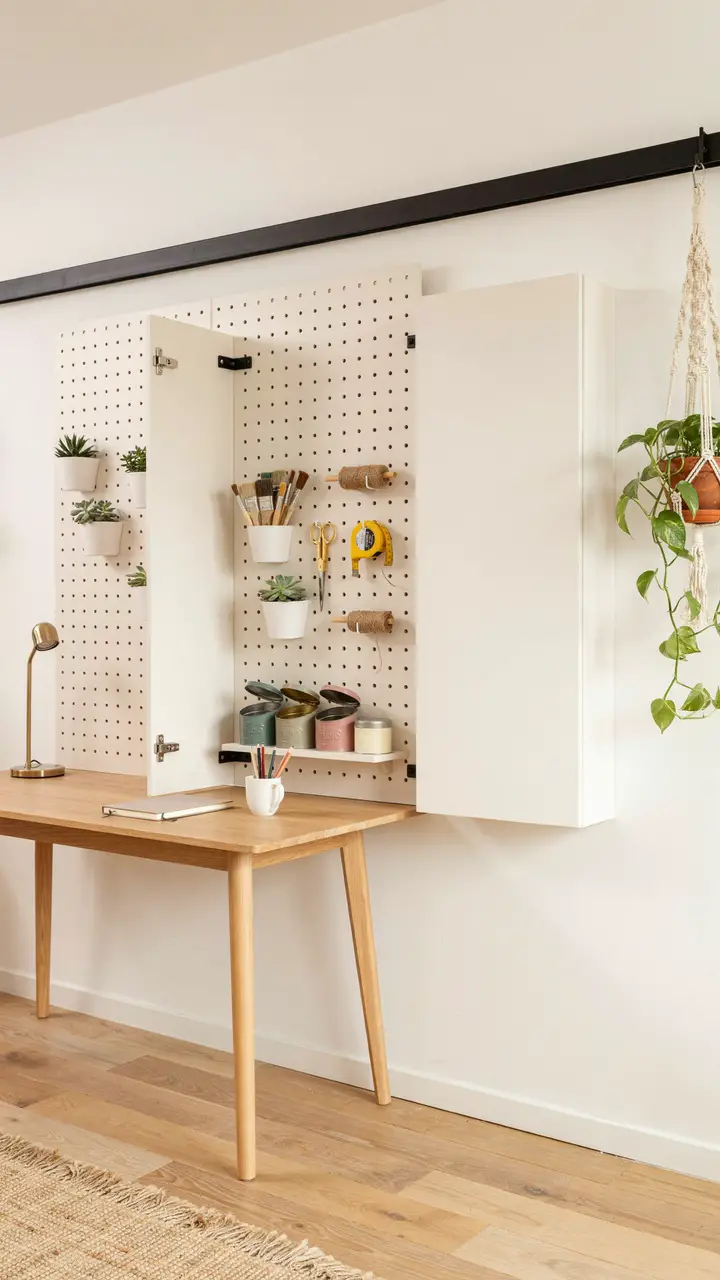
This final idea is for the organizer, the maker, the person who needs a functional storage wall that can disappear when company comes over. A full wall of pegboard — fitted with fold-out or sliding panel doors that close over it — gives you infinitely customizable everyday storage that hides completely behind clean door panels when you want the room to look polished.
IMO this is criminally underused in home offices, craft rooms, and kitchens. The pegboard itself costs almost nothing, and you can reconfigure it endlessly as your storage needs change.
How to Recreate This Look
Shopping List:
- 4×8-foot pegboard panels (standard or tempered hardboard type): $15–$35 each at any hardware store
- Pegboard hook and accessory kit: $20–$50 on Amazon
- Furring strips to mount pegboard off the wall (creates space for hooks to work): $10–$20
- Bifold or sliding panel doors to cover the pegboard: $60–$200 depending on size
- Paint for pegboard and door panels (same color = seamless): $30–$60
Step-by-Step Styling Instructions:
- Mount furring strips horizontally across the wall at 16-inch intervals — these create the standoff gap that pegboard hooks require
- Screw pegboard panels to the furring strips, butting panels edge-to-edge for a seamless surface
- Prime and paint the pegboard in your chosen color before adding hooks — paint after installation and you’ll clog every hole
- Install bifold or sliding door panels on a track that covers the pegboard when closed
- Organize the pegboard intentionally: group like items together, mix functional tools with small plants or decorative objects so the open pegboard looks good, not chaotic
- Use the “close-the-doors” test — if the doors close and look like a clean, flat wall, you’ve succeeded completely
Budget Tiers:
- 💰 Under $100: Two pegboard panels plus hooks plus basic paint — wildly functional for under $80
- 💰💰 $100–$500: Full wall pegboard system plus door panels
- 💰💰💰 $500+: Custom cabinetry doors in a premium finish over a fully fitted pegboard wall
Rental-Friendly: Moderately — pegboard mounts with screws and leaves small holes, but most landlords accept this with security deposit coverage. Using Command strips on very lightweight pegboard sections is possible but limits load capacity significantly.
Your Hidden Closet Awaits
Here’s what all ten of these ideas share: they treat storage as something worth designing, not just something to hide in shame. Whether you’re going full bookcase-door-with-a-secret-room (honestly, the dream) or simply hanging a beautiful linen curtain in front of an open clothing rack, you’re making a conscious choice to let your home work harder for you.
The best part? You don’t need a massive renovation budget or a blank-check contractor to pull off most of these. You need good measurements, a bit of patience, and the willingness to see potential in a wall that’s currently just… sitting there.
Start with one wall. One idea. Your hidden storage solution is already there — it’s just waiting for you to find it. <3

Greetings, I’m Alex – an expert in the art of naming teams, groups or brands, and businesses. With years of experience as a consultant for some of the most recognized companies out there, I want to pass on my knowledge and share tips that will help you craft an unforgettable name for your project through TeamGroupNames.Com!