
You know that feeling when you open your closet and everything just works?
Clothes organized by color, shoes displayed like a boutique, and enough light to actually tell navy from black?
If your current walk-in closet is more “chaotic storage room” than “personal dressing suite,” you’re in the right place.
Whether you’re working with a generous 10×12 footprint or squeezing every inch out of a narrow 5×8 space, a well-designed walk-in closet genuinely changes your mornings.
I’ve seen people spend thousands on wardrobe upgrades without touching their closet, only to realize that the organization system was the real problem all along. Let’s fix that.
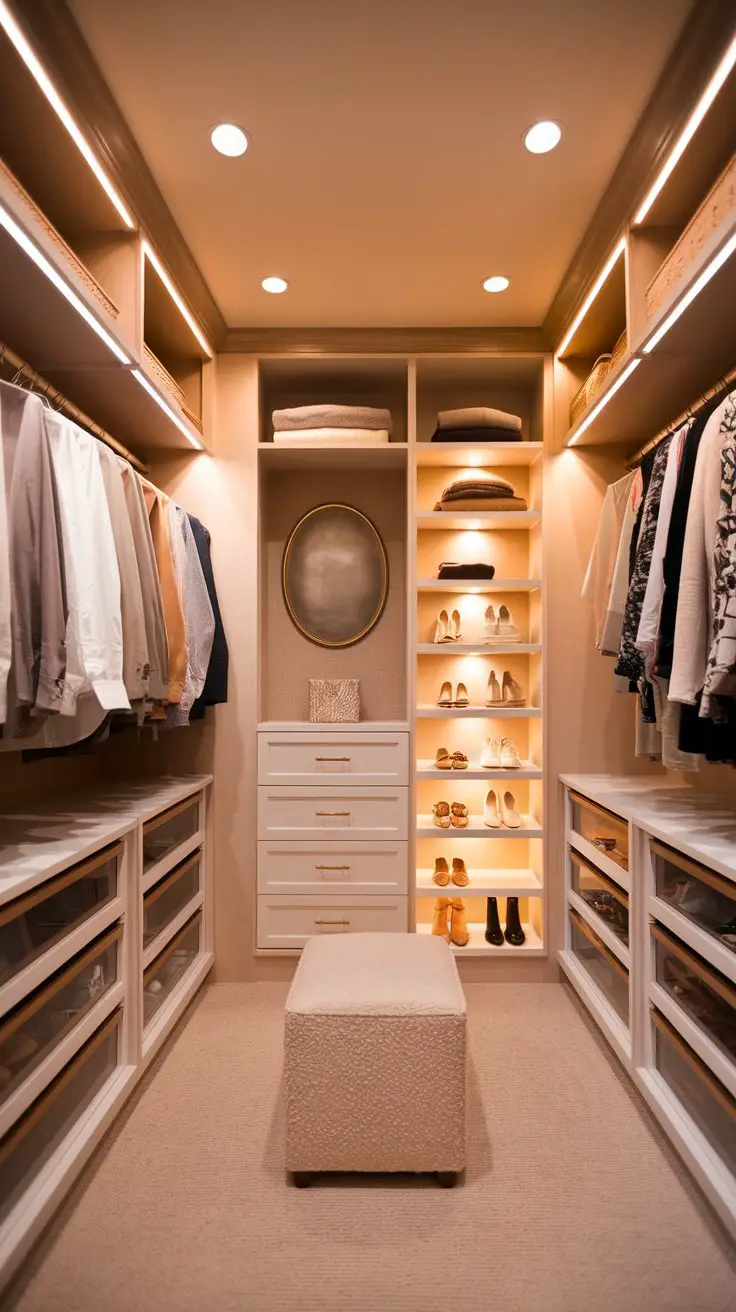
1. The Floor-to-Ceiling Custom Built-In System
How to Recreate This Look
The floor-to-ceiling built-in system is the gold standard of walk-in closet design—and for good reason. It eliminates dead wall space, creates visual consistency, and makes even a modest closet feel intentional and polished.
Shopping List:
- Modular closet system (IKEA PAX, California Closets, or The Container Store’s Elfa system): $300–$3,000+ depending on size and finish
- Brushed gold or matte black cabinet hardware: $2–$8 per pull, sourced from Amazon, Home Depot, or Etsy
- LED strip lighting or puck lights for shelf underlighting: $25–$80
- Upholstered ottoman or bench (thrifted and reupholstered is a fantastic budget option): $40–$300
- Round or full-length mirror: $30–$250 from IKEA, TJ Maxx, or Wayfair
Step-by-Step Styling Instructions:
- Measure your wall space and map out zones: long hang (dresses, coats), double hang (shirts, jackets), folded shelving, and drawers
- Install your modular system starting with the anchor wall (usually the longest)
- Add under-shelf LED lighting before loading in clothes—trust me, you’ll thank yourself later
- Organize clothes by category first, then by color within each category
- Place folded items (sweaters, denim) in open cubbies at eye level for easy grabbing
- Use matching velvet hangers throughout—this single change makes everything look 80% more intentional
Budget Breakdown:
- Under $100: IKEA tension rod systems + shelf risers + matching hangers
- $100–$500: IKEA PAX wardrobe units configured as open built-ins
- $500+: Custom California Closets or semi-custom Elfa system with drawer towers
Difficulty Level: Intermediate — the installation requires precise measuring and some carpentry confidence, but modular systems come with detailed instructions and most people manage a weekend install just fine.
Lifestyle Consideration: Built-ins are obviously ideal for homeowners. Renters, don’t worry — freestanding modular units achieve nearly the same look without touching a single wall.
Common Mistake to Avoid: Don’t over-plan hanging space if you’re mostly a folded-clothes person. Audit your wardrobe before designing your system so the proportions actually match how you dress.
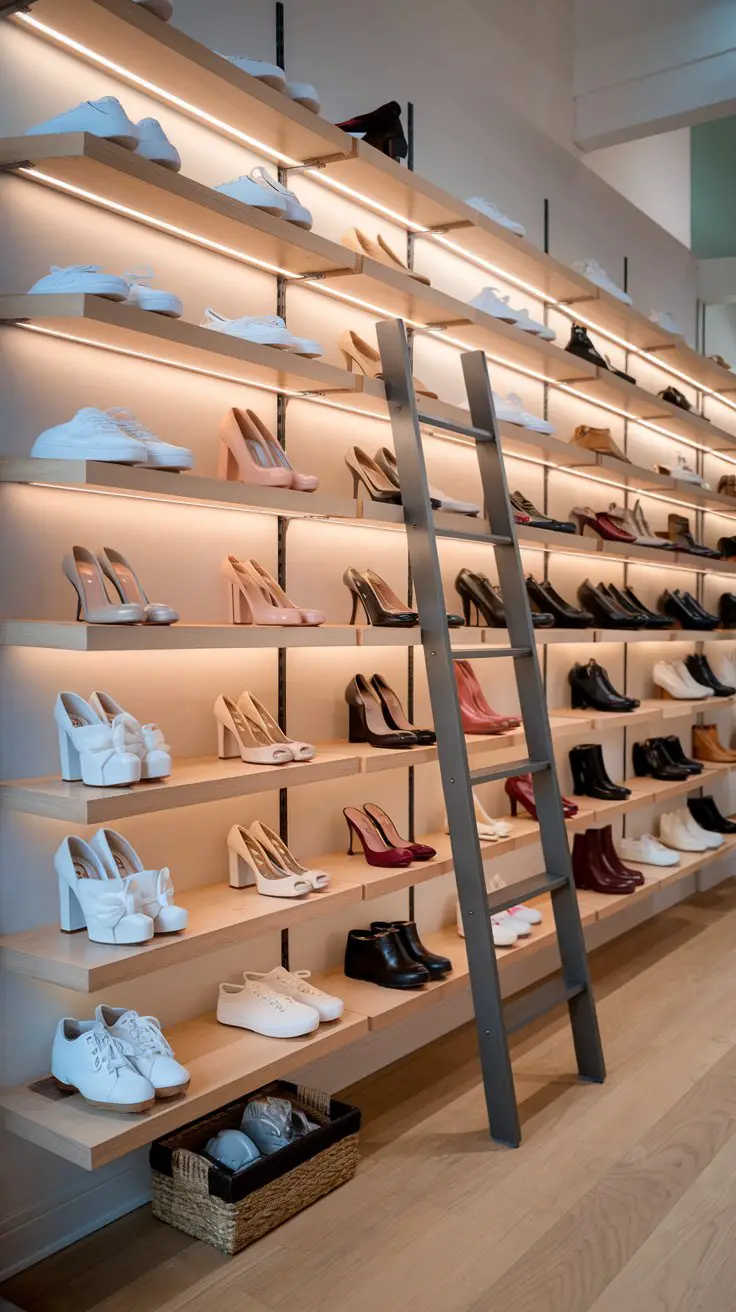
2. The Boutique Shoe Wall
How to Recreate This Look
Want to make your shoe collection feel like the star of your closet rather than a pile on the floor? A dedicated shoe wall does exactly that—and it genuinely makes getting dressed faster because you can actually see everything you own.
Shopping List:
- Floating wall shelves (IKEA LACK, Umbra, or custom cut MDF painted to match): $15–$50 per shelf
- LED strip lights (warm white, adhesive-backed): $20–$60 for a full wall
- Decorative folding ladder: $40–$120 from Amazon or Target
- Woven baskets for everyday shoes: $12–$35 each
- Level, drill, and wall anchors: already in most toolkits or under $20
Step-by-Step Styling Instructions:
- Count your shoe pairs and calculate how many shelves you need (plan for 2–3 pairs per linear foot)
- Space shelves 8–10 inches apart for flats and sneakers; 12–14 inches for boots and heeled shoes
- Install your lowest shelf 6 inches from the floor to leave room for tall boots standing upright
- Apply LED strips to the underside of each shelf before mounting adjacent shelves (much easier this way)
- Arrange shoes toe-out and organize by category or color gradient for that magazine-worthy effect
- Reserve bottom basket storage for flip-flops, slippers, and shoes you grab without looking
Budget Breakdown:
- Under $100: Over-door shoe organizers + a small freestanding shoe rack styled together
- $100–$500: IKEA floating shelves + LED strip lighting for a full wall
- $500+: Custom-built shelving with integrated lighting and a matching ladder rail system
Space Requirement: Works in closets as narrow as 4 feet wide — the shoe wall only needs one flat wall surface.
Seasonal Adaptability: Rotate off-season shoes to clear bins on the top shelves and bring current-season footwear to eye level. Simple swap, massive daily convenience.
3. The Island Dresser — Your Closet’s Centerpiece
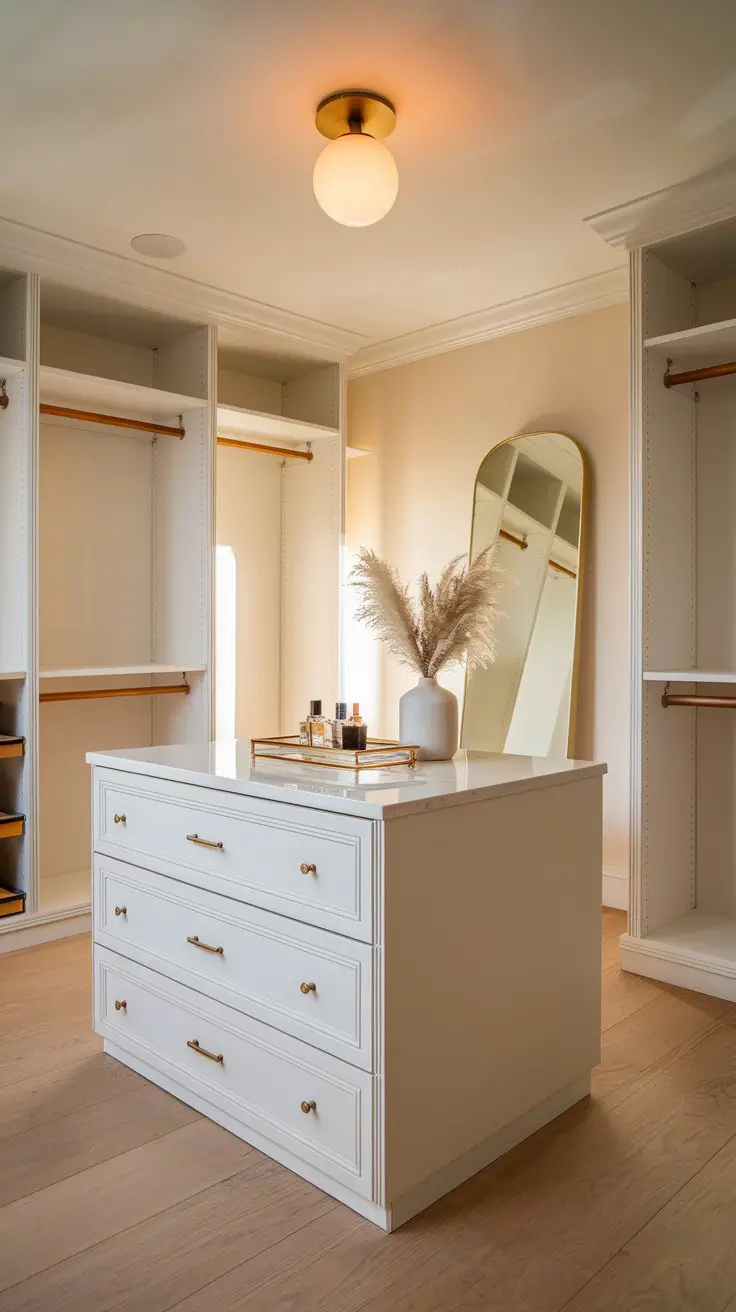
How to Recreate This Look
An island dresser transforms a walk-in closet from “big storage room” into a genuine dressing room. Functionally, it gives you a surface for laying out outfits, storing folded items, and housing jewelry and accessories—all in one central piece.
Shopping List:
- Freestanding dresser with 4–6 drawers (look for dressers with solid tops): $150–$800 from IKEA, Wayfair, or a furniture consignment shop
- Replacement hardware in brushed brass or matte black: $3–$10 per pull
- Small decorative tray for top styling: $15–$45 from TJ Maxx, HomeGoods, or Amazon
- Dried pampas grass or eucalyptus stem: $10–$25
- Ring dish or small jewelry tray: $8–$30
Step-by-Step Styling Instructions:
- Measure your closet floor space and confirm at least 24–30 inches of clearance on all four sides of the island for comfortable movement
- Choose a dresser that sits 36 inches tall — this is counter height and far more functional than a shorter chest
- Swap out factory hardware immediately — this is a $20–$40 upgrade that makes an enormous difference in how polished the piece looks
- Style the top surface with restraint: one tray, one small plant or vase, one decorative object — resist the urge to pile things on
- Dedicate drawers by category: top drawers for jewelry and accessories, middle for folded tees and workout wear, lower drawers for heavier knits
Budget Breakdown:
- Under $100: Repurpose an existing dresser from another room, swap the hardware, and relocate it to your closet
- $100–$500: IKEA HEMNES or Wayfair dresser with upgraded hardware
- $500+: Custom-built island with deep drawers and integrated electrical outlet for phone charging
Lifestyle Consideration: With pets or kids who explore the closet, weighted drawer organizers inside the island keep everything tidy even after little hands dig through. Bold this: velvet drawer dividers ($15–$25) are genuinely worth every penny.
4. The Moody Dark-and-Dramatic Closet
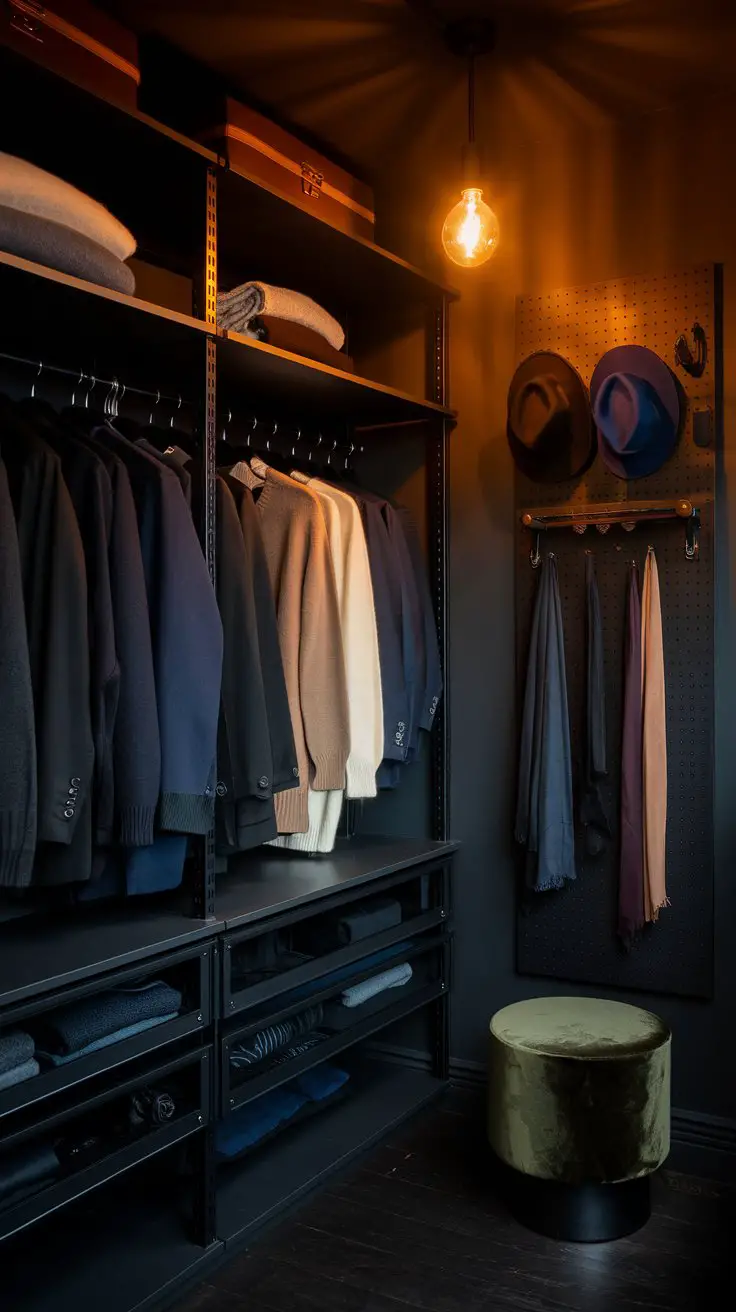
How to Recreate This Look
Dark closets are having a serious moment—and honestly, if your wardrobe trends toward neutrals and classics, a dark-painted closet wall makes your clothes look incredible by contrast. The key is committing to the drama rather than hedging toward beige.
Shopping List:
- Deep-toned wall paint (try Benjamin Moore’s Wrought Iron, Kendall Charcoal, or Sherwin-Williams Urbane Bronze): $50–$80 per gallon
- Black metal closet rod hardware (brackets + rods): $40–$120
- Grid pegboard panel in black: $25–$60 from IKEA (SKÅDIS) or Amazon
- Edison bulb pendant light fixture: $30–$90 from Amazon, Home Depot, or vintage shops
- Velvet stool or small upholstered bench: $45–$180
Step-by-Step Styling Instructions:
- Paint all four walls and ceiling the same dark color — painting only an accent wall in a small closet looks incomplete and cuts the drama in half
- Let walls dry completely (48 hours minimum) before reinstalling shelving or rods
- Install your black metal rod hardware at 66–68 inches for full-length hang and 40 inches for double-hang sections
- Mount the pegboard panel at the end wall to handle accessories — this keeps small items from disappearing into dark shelving
- Choose warm-toned bulbs (2700K) specifically — cool white lighting will fight the warm paint tones and ruin the mood
Budget Breakdown:
- Under $100: Dark paint + new rod hardware transforms the entire space
- $100–$500: Add pegboard, pendant light, and upholstered stool
- $500+: Custom black metal shelving units + integrated dimmable lighting
Common Mistake to Avoid: Don’t use bright white lighting in a dark closet. It creates a harsh, unflattering effect that undermines everything the paint is doing. Warm white bulbs only.
Rental Note: This look requires painting, so it’s better suited for homeowners or renters with landlord approval. If that’s not an option, dark removable wallpaper (check Tempaper or Chasing Paper) achieves a surprisingly similar effect.
5. The Glass-Front Cabinet Display Wall
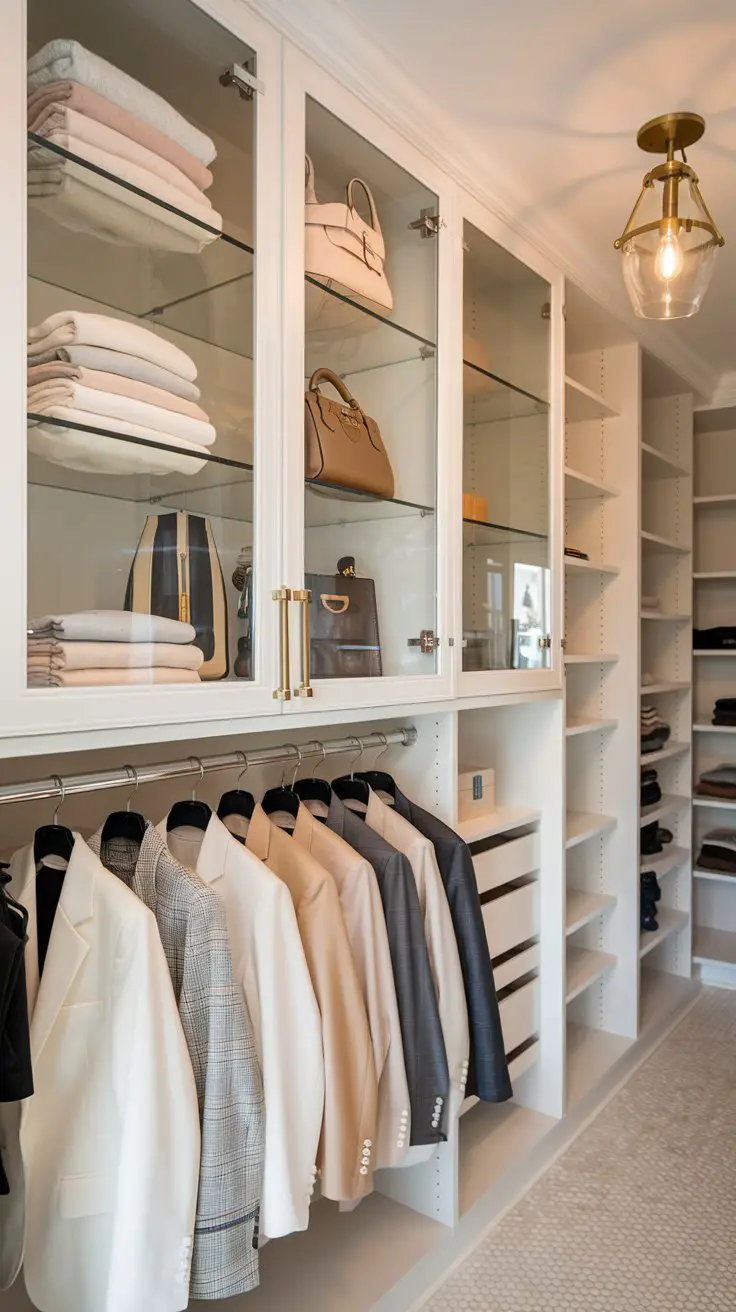
How to Recreate This Look
Glass-front cabinets belong in the kitchen—until you put them in a walk-in closet and realize they’re actually perfect for displaying items you love while protecting them from dust. Handbags, folded cashmere, sentimental scarves, hats — behind glass, they look collected rather than cluttered.
Shopping List:
- Glass-front upper cabinets (IKEA SEKTION or BILLY with glass doors): $120–$500 depending on configuration
- Cabinet lighting (interior LED strips or puck lights): $20–$50
- Small purse stands or acrylic risers for bag display: $10–$35 from The Container Store or Amazon
- Brass or chrome cabinet hardware: $3–$12 per pull
- Matching hangers in wood or velvet finish: $20–$45 for a set of 30
Step-by-Step Styling Instructions:
- Plan your cabinet placement at upper-wall height (60–84 inches) with open hanging below — this configuration maximizes both display and functional storage
- Inside each cabinet, limit yourself to three items max per shelf — glass-front display works best when it shows off rather than hides
- Line cabinet shelves with a complementary wallpaper liner or velvet shelf liner to add depth and visual interest behind the glass
- Place handbags with the logo or interesting hardware facing forward, just like a boutique would
- Add interior cabinet lighting — the difference between lit and unlit glass cabinets is remarkable, especially in evenings
Budget Breakdown:
- Under $100: Repurpose glass-front kitchen cabinets (check Facebook Marketplace for kitchen renovation leftovers)
- $100–$500: IKEA BILLY bookcase with glass doors, styled intentionally
- $500+: Custom semi-inset glass-front cabinetry with interior lighting
Style Compatibility: This look pairs beautifully with transitional, traditional, glam, and maximalist aesthetics. It feels slightly too formal for a truly minimalist or industrial closet — in those contexts, open shelving serves better.
6. The Minimalist Open-Shelf System
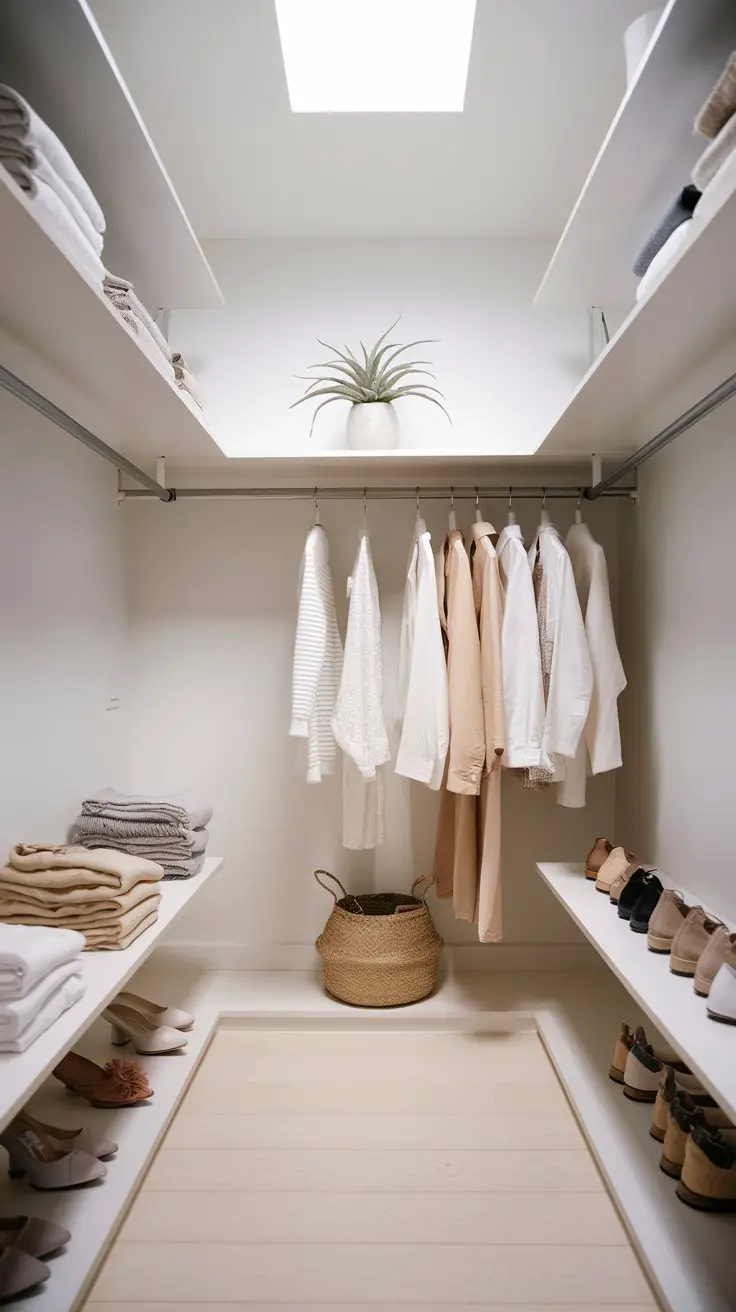
How to Recreate This Look
The minimalist closet works on one essential principle: ruthless editing. The shelves don’t look serene because they’re empty — they look serene because every item earned its place. FYI, this approach forces the best closet audit of your life, and your mornings will genuinely improve.
Shopping List:
- Simple white laminate or melamine shelving with basic brackets: $30–$150
- Single sturdy hanging rod with ceiling-mount brackets: $20–$60
- Woven seagrass baskets in matched sizes: $12–$28 each from IKEA, TJ Maxx, or World Market
- Matching slim velvet hangers in a single color (white or natural): $18–$35 for a set of 30
- Small ceramic or clay pot for air plant: $8–$20
Step-by-Step Styling Instructions:
- Before you install anything, do a full wardrobe purge — the minimalist look physically cannot work with too many clothes
- Install shelves at 12-inch intervals for folded items and leave one wider gap (16 inches) for bulkier knits and folded denim
- Fold clothes using the KonMari vertical fold method so items stand upright in stacks — this makes shelves look tidy even when fully loaded
- Use the “one basket for miscellaneous” rule — every closet needs exactly one basket where real life can hide without ruining the aesthetic
- Leave intentional blank space on at least one shelf — white space in a minimalist closet is a feature, not wasted storage
Budget Breakdown:
- Under $100: IKEA bracket shelves + velvet hangers + one quality woven basket
- $100–$500: Elfa freestanding shelving column + coordinating baskets
- $500+: Built-in floating shelf system with a concealed hanging rod
Common Mistake to Avoid: Buying into the minimalist look visually without doing the editing work first. A minimalist shelf holding 40 items you’re ambivalent about still looks cluttered. The edit comes first.
7. The Glamour Closet with Vanity Integration
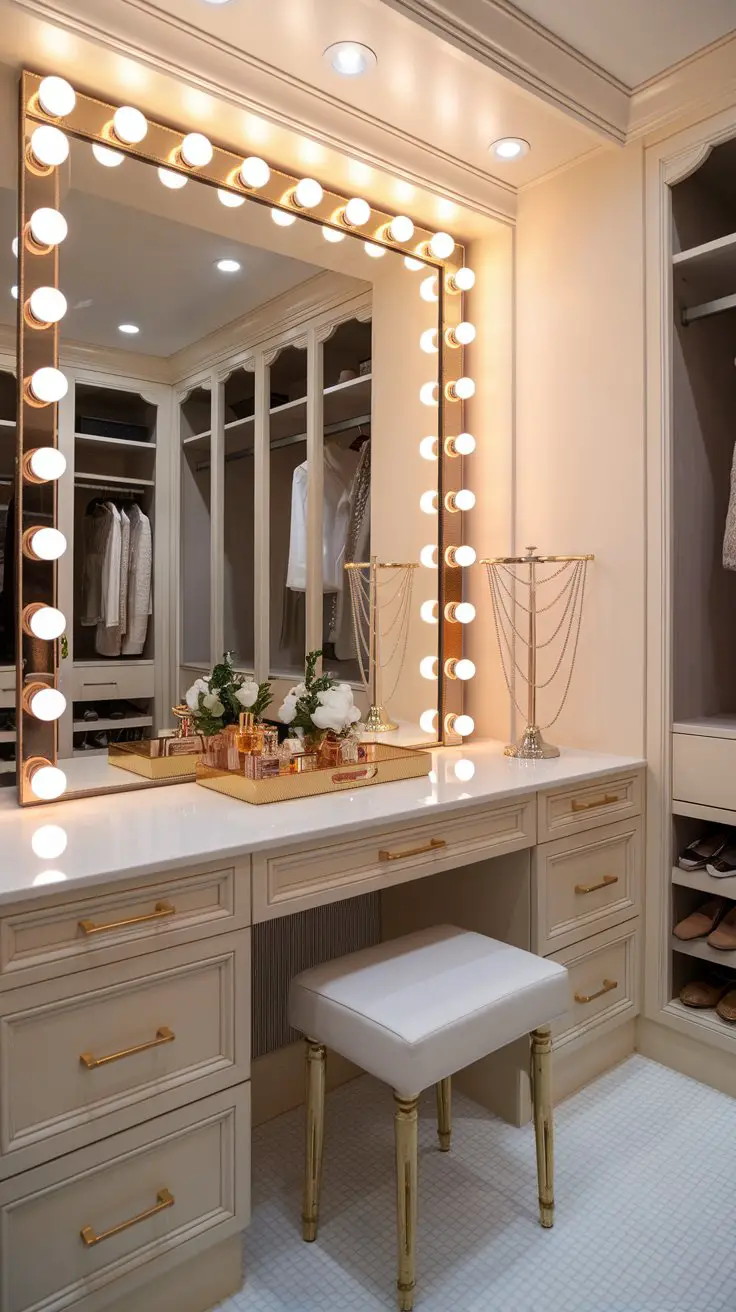
How to Recreate This Look
Integrating a vanity into your walk-in closet is genuinely one of the smartest design moves you can make — not just aesthetically, but practically. Getting dressed and putting on makeup in the same room where your clothes live eliminates the morning shuffle between rooms entirely.
Shopping List:
- Hollywood vanity mirror with globe bulbs: $60–$250 from Amazon, IKEA, or boutique lighting stores
- Floating vanity shelf or small desk surface: $40–$200
- Vanity stool (upholstered seat with metal legs): $45–$200 from Target, TJ Maxx, or CB2
- Mirrored tray for perfume/makeup display: $15–$45
- Gold bud vase: $10–$25 from HomeGoods or Amazon
- Small jewelry stand or tree: $12–$40
Step-by-Step Styling Instructions:
- Designate a corner or end wall for your vanity station — it needs outlet access, so choose a wall close to existing electrical
- Mount your Hollywood mirror at eye level when seated (roughly 55–60 inches from floor to mirror center)
- Install a floating shelf below the mirror at 30 inches — this is standard desk height and comfortable for seated use
- Style the vanity surface in zones: a beauty/makeup zone, a fragrance display zone, and a clear working zone for actually getting ready
- Under the shelf or in an adjacent small cabinet, store the everyday makeup and tools — the surface display is for beautiful objects only
Budget Breakdown:
- Under $100: Vintage vanity table sourced from a thrift store + clip-on ring light mirror
- $100–$500: IKEA ALEX drawer unit topped with a floating shelf + Hollywood mirror
- $500+: Built-in vanity counter with integrated lighting and custom storage below
Lifestyle Consideration: If you share a closet with a partner, position the vanity in your dedicated zone of the closet rather than the shared center space. Boundaries, even in walk-in closets, make for happier mornings. 🙂
8. The Rental-Friendly Freestanding Closet System
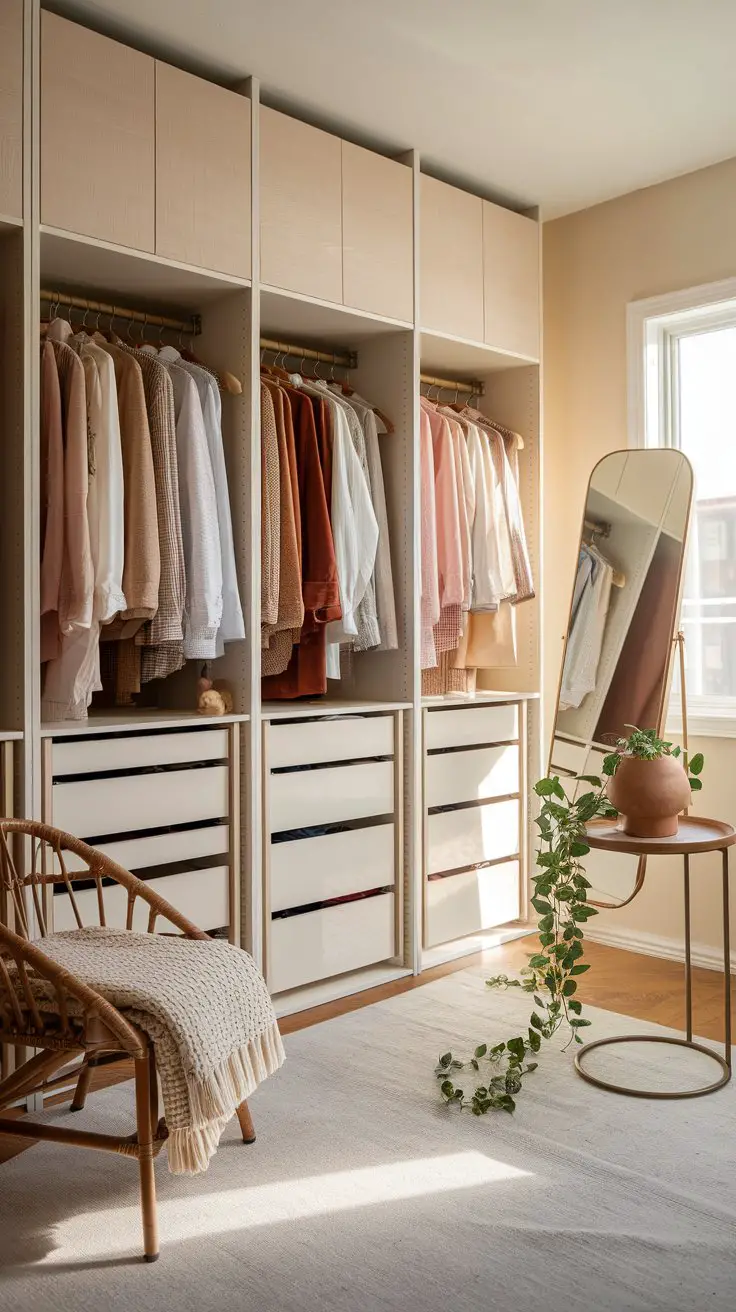
How to Recreate This Look
Renting doesn’t mean resigning yourself to builder-grade closet chaos. The freestanding closet system is arguably the smartest investment a renter makes — it moves with you, never requires a security deposit conversation, and looks every bit as intentional as built-ins when styled well.
Shopping List:
- Freestanding wardrobe modules (IKEA PAX without mounting, or standalone armoires): $200–$800
- Freestanding full-length mirror in brass or wood frame: $40–$200
- Trailing pothos in matte terracotta pot: $15–$35 (pothos from any garden center; pot from HomeGoods or Etsy)
- Rattan accent chair: $80–$300 from World Market, Target, or Facebook Marketplace
- Cream throw blanket: $20–$60
- Small side table: $25–$80
Step-by-Step Styling Instructions:
- Map your wall space and order modular units in complementary widths — mix hanging, shelving, and drawer configurations to cover all your storage needs
- Push units flush against the wall and, if connecting multiple units, use IKEA’s included side-panel connectors or simple L-brackets between units for stability
- Don’t push units into corners — leave 2–3 inches between a unit and a corner wall to prevent scratching painted walls
- Place the freestanding mirror adjacent to (not between) the wardrobe units so you have a clear sightline to your full outfit
- Add the plant, chair, and throw as the “lived-in” layer that shifts the space from storage room to dressing room
Budget Breakdown:
- Under $100: Secondhand freestanding wardrobe from Facebook Marketplace + matching hangers + one plant
- $100–$500: IKEA PAX unit (single bay) + freestanding mirror + basic accessories
- $500+: Multiple IKEA PAX units configured across two walls + coordinated styling accessories
Rental Bonus: When you move, these units disassemble completely. You’re essentially taking your entire closet system with you to the next place — which is a fantastic return on investment compared to built-ins you’ll leave behind.
9. The Color-Coded Capsule Wardrobe Closet
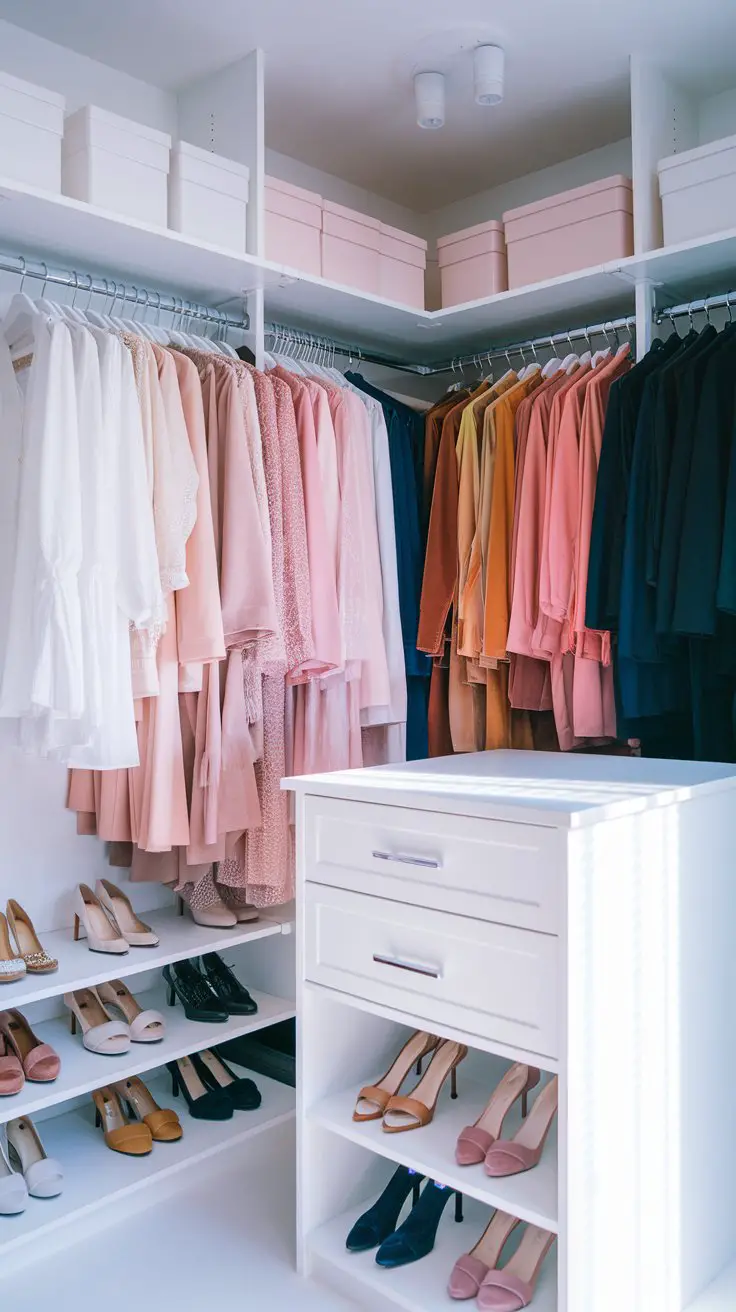
How to Recreate This Look
Color-coding your wardrobe sounds like one of those Pinterest ideas that only works in theory — until you try it and realize you can now locate a specific blouse in approximately 4 seconds. It also makes a powerful visual statement that turns your everyday closet into something genuinely beautiful.
Shopping List:
- Matching slim velvet hangers in one consistent color (white is most versatile): $18–$35 for a set of 30, from Amazon, IKEA, or The Container Store
- Clear acrylic shelf dividers to separate folded color sections: $15–$30
- Label maker for drawer fronts (optional, but useful): $15–$30
- Small step stool for upper-shelf access: $20–$45
Step-by-Step Styling Instructions:
- Start by transferring every hanging item to matching velvet hangers — do this first, before organizing, because it immediately transforms the look of any closet
- Sort all hanging clothes into color groups: white/cream → blush/pink → yellow/orange → green → blue → purple → red → brown/tan → gray → black
- Within each color group, organize by garment type (tanks → tees → blouses → jackets) so similar silhouettes cluster together
- Apply the same color logic to your shoe shelves — the visual continuity across hanging clothes and shoes is what makes the entire look feel intentional
- For folded items in drawers or on shelves, use the vertical fold method and arrange by color left-to-right within each drawer
Budget Breakdown:
- Under $100: New matching hangers + 3-4 hours of sorting — that’s genuinely all this transformation costs
- $100–$500: Hangers + clear shelf dividers + drawer organizers + label system
- $500+: Full closet reorganization including new shelving units designed around your specific wardrobe proportions
Time Commitment: The initial sort takes 3–5 hours depending on wardrobe size. Maintenance takes approximately 30 seconds per item — you just return things to their color zone when you hang them back up.
Common Mistake to Avoid: Trying to force every single item into a rigid color category. That one indeterminate gray-green sweater doesn’t need to derail your entire system. Pick a side and commit. 🙂
10. The Bookshelf-Style Accessory Display Wall
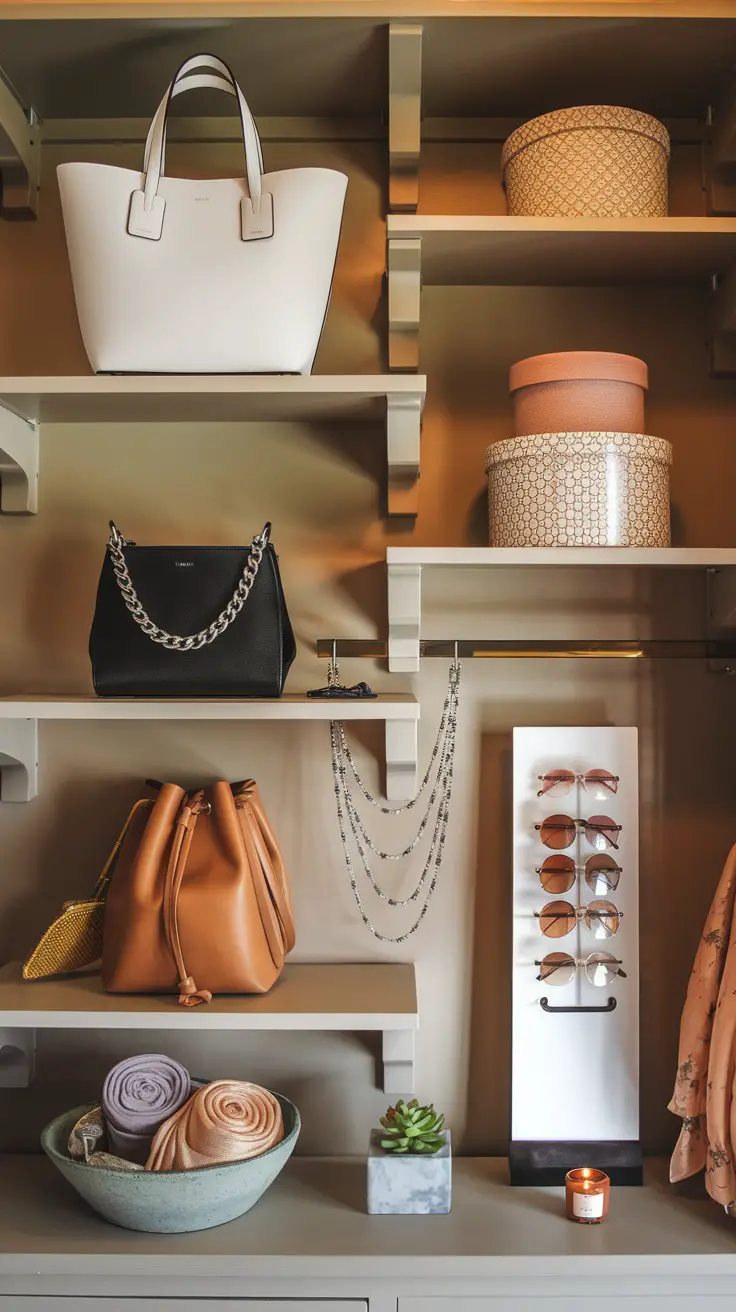
How to Recreate This Look
Here’s the thing about accessories: most of us own far more beautiful things than we realize, because they’re stuffed in drawers and tangled in boxes where we forget they exist. The accessory display wall solves this by making your collection visible — which means you’ll actually use what you own.
Shopping List:
- Adjustable open shelving (floating shelves or an open bookcase unit): $30–$200
- Wooden jewelry display stand or bust form: $15–$45 from Amazon or Etsy
- Wide ceramic bowl for rolled scarves: $15–$35 from HomeGoods, TJ Maxx, or a local ceramics shop
- Hat boxes in complementary patterns (thrifted or decorative storage boxes): $8–$25 each
- Sunglasses display stand (acrylic tower or hanging frame style): $15–$40
- Small sculptural objects for visual breathing room: $5–$30 each (sourced from thrift stores, HomeGoods, or Amazon)
- Small succulent in concrete pot: $10–$20
Step-by-Step Styling Instructions:
- Plan shelf spacing intentionally — handbags need 10–14 inches of vertical clearance, stacked hat boxes need 16–20 inches, and jewelry stands need about 10–12 inches. Sketch your layout before installing
- Apply the “rule of three” to each shelf section: one functional item (bag, hat box), one display item (jewelry stand, scarves bowl), one decorative object (plant, marble sphere). This prevents the display from looking like a merchandise pile
- Vary the heights of objects within each shelf — a mix of tall, medium, and low items creates visual rhythm and prevents the shelf from reading as flat
- Leave 20% of each shelf empty — that negative space is what separates “beautifully curated display” from “crowded shelf”
- Rotate accessories seasonally — move off-season bags and hats to the upper shelves and bring current-season pieces to eye level
Budget Breakdown:
- Under $100: Repurpose an existing bookcase from another room + thrifted accessories display pieces
- $100–$500: New floating shelves + a mix of display stands + coordinated decorative objects
- $500+: Custom built-in display wall with varied shelf heights designed specifically around your accessory collection
Lifestyle Consideration: This display wall works best for adults-only spaces or rooms with enforced “no touching” rules around small children — candles, marble spheres, and delicate jewelry stands aren’t compatible with curious little hands. For households with kids, mount the lower two shelves with lidded baskets and keep the open display to shelves above four feet.
Maintenance Tip: Once a month, take everything off one shelf, wipe it down, and restyle it. This prevents the display from becoming invisible background noise — which happens to even the most beautiful spaces when we stop actually seeing them.
Your Walk-In Closet Can Genuinely Change Your Day
Here’s what I’ve come to believe after watching people transform everything from tiny apartment closets to sprawling dressing suites: the space where you start your morning sets the tone for how the whole day feels. A closet that functions beautifully — where you can find things, see what you own, and move through your routine without frustration — isn’t a luxury. It’s a genuine daily gift to yourself.
You don’t need a massive budget. The color-coded wardrobe costs almost nothing beyond an afternoon and a set of matching hangers. The shoe wall transforms a wall of IKEA floating shelves into something that feels boutique-worthy. And the rental-friendly freestanding system proves that not owning your space doesn’t mean you can’t make it completely and beautifully yours.
Start with one idea that made you stop scrolling. Order the hangers, paint the walls, mount the floating shelves. The closet you’ve always wanted is genuinely one weekend project away — and your future morning self will appreciate every single minute you invest in it. <3

Greetings, I’m Alex – an expert in the art of naming teams, groups or brands, and businesses. With years of experience as a consultant for some of the most recognized companies out there, I want to pass on my knowledge and share tips that will help you craft an unforgettable name for your project through TeamGroupNames.Com!