
There’s something almost magical about walking into a garden that stops you in your tracks—not because it looks like something from a glossy magazine, but because it feels like somewhere you genuinely want to stay.
A sensory garden does exactly that. It invites you to slow down, breathe deeper, and actually be somewhere instead of just passing through it.
Whether you’re working with a sprawling backyard, a narrow side passage, or a humble collection of pots on a balcony, you can absolutely create an outdoor space that engages all five senses.
I’ve pulled together ten sensory garden ideas that range from weekend DIY projects to longer-term investments—all designed to help you build a garden that’s beautiful to look at, delightful to touch, soothing to hear, wonderful to smell, and yes, even edible in the best possible ways.
1. A Fragrance Border That Greets You at the Gate
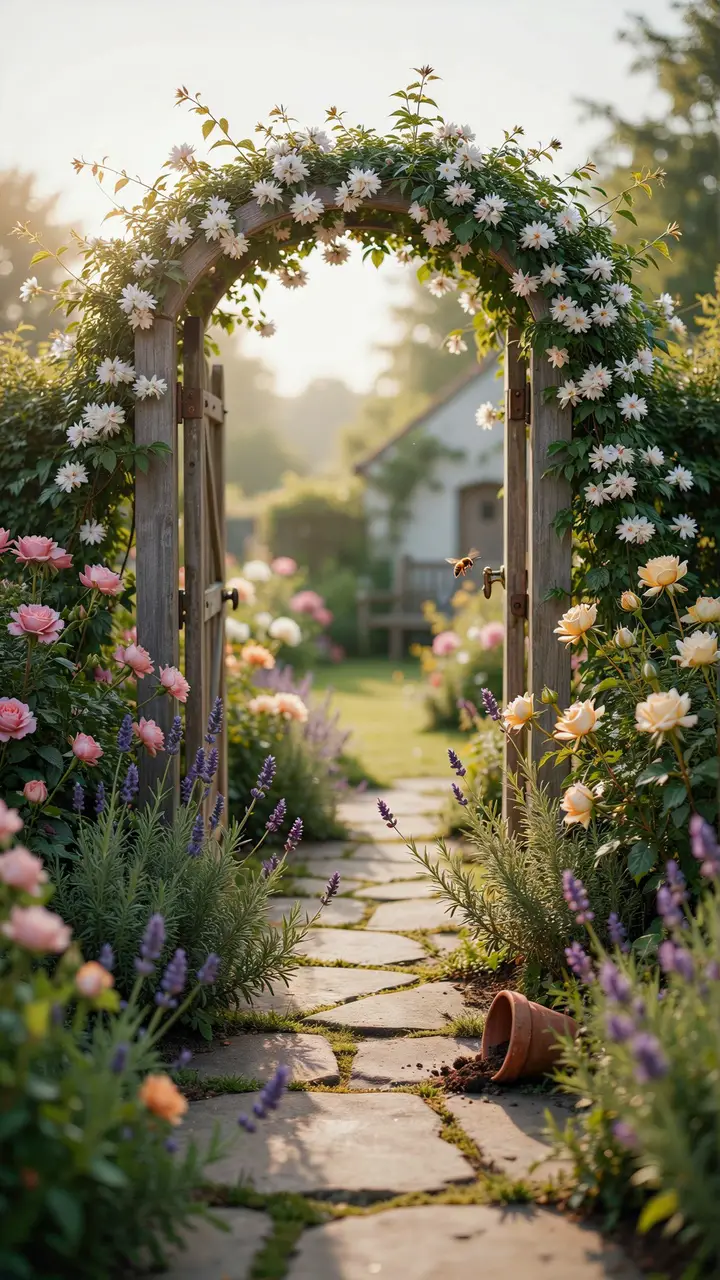
How to Recreate This Look
Nothing announces “this garden was designed with intention” quite like hitting a wall of gorgeous fragrance the moment you open your garden gate. A fragrance border running along a path or fence line puts scent right where people walk, so every brush against the foliage releases another wave of perfume.
Shopping List:
- Lavender (Lavandula angustifolia ‘Hidcote’) — $4–$8 per plant at garden centers or in multipacks online; plant in clusters of 3–5 for impact
- Rosemary — $3–$6 per plant; doubles as a culinary herb, which is frankly a win-win
- Climbing jasmine (Jasminum officinale) — $12–$20 per plant; needs a fence, trellis, or arch to climb
- Old-fashioned roses — $15–$35 per bare-root plant; look for David Austin varieties like ‘Gertrude Jekyll’ or ‘Gentle Hermione’ for the strongest fragrance
- Sweet alyssum — $2–$4 per seed packet; use as a fragrant low edging that fills gaps beautifully
- Compost and mulch — $10–$25 per bag depending on quantity
Step-by-Step Styling:
- Mark out your border width—minimum 60cm (2 feet) deep to create any real visual impact; 90cm is better.
- Prepare the soil with compost worked in at least 30cm deep. Fragrant plants like lavender and rosemary want well-drained soil more than rich soil, so skip heavy clay without amending first.
- Plant tallest at the back (roses, rosemary), medium height in the middle (lavender), and sweet alyssum or creeping thyme at the very front edge.
- Position plants along pathways and gates specifically so brushing contact is unavoidable—that accidental contact is the whole point.
- Mulch around plants to retain moisture and suppress weeds.
Budget Breakdown:
- Under $100: Seed-grown sweet alyssum, one rosemary, three lavender plants, and a packet of night-scented stock seeds planted in gaps
- $100–$500: Add two climbing jasmines, five lavender plants, two old-fashioned roses, and proper trellis or obelisk supports
- $500+: Full border installation with a mix of roses, jasmine over an arch, established lavender hedging, and a garden designer’s consultation for placement
Difficulty Level: Beginner — Lavender and rosemary are remarkably forgiving plants. The only real mistake people make is overwatering them (they genuinely prefer being slightly neglected).
Durability Notes: Lavender and rosemary are extremely tough once established. Roses need annual pruning but reward you generously. Avoid this planting scheme directly under large trees where competition for water and nutrients gets brutal.
Seasonal Adaptability: Spring brings rose blooms and jasmine; summer peaks with lavender; autumn, cut lavender back by a third to keep plants tidy. In winter, the structural rosemary keeps the border looking intentional rather than abandoned.
Common Mistakes: Planting lavender in heavy, wet soil is the number one killer. If your soil stays soggy, raise the bed by even 15cm—it makes an enormous difference.
2. A Water Feature That Actually Sounds Like Nature
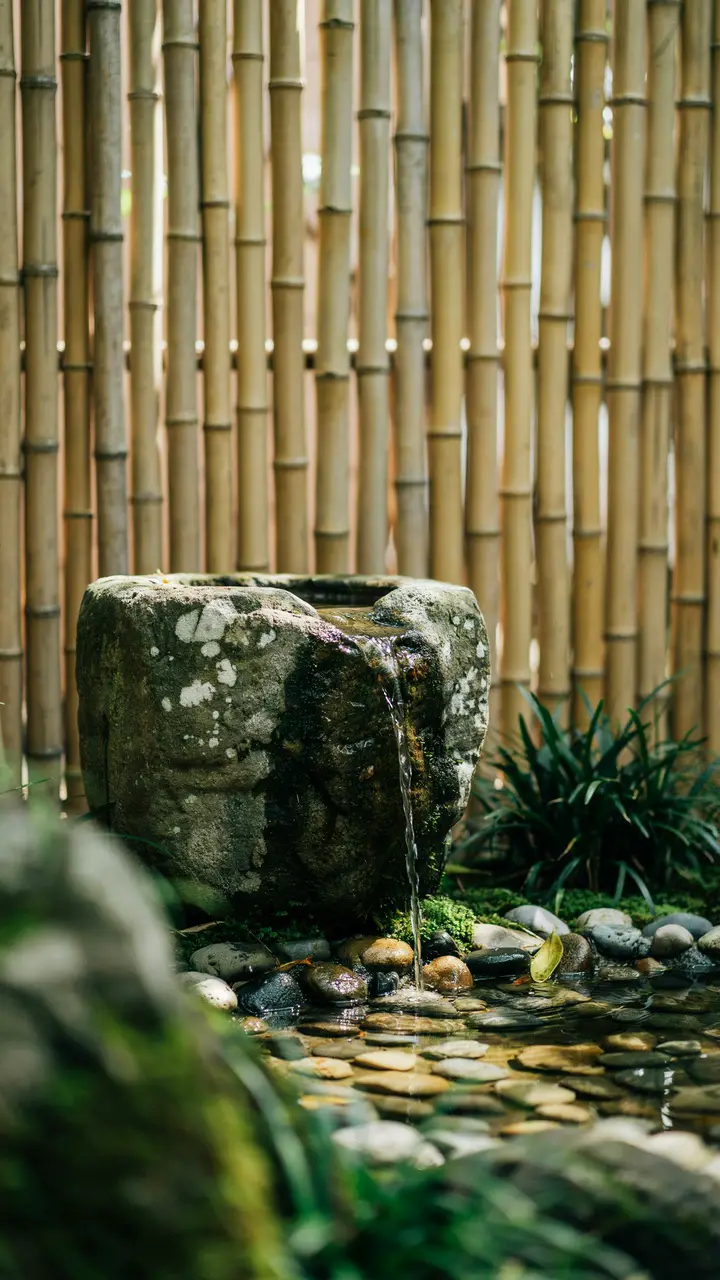
How to Recreate This Look
Running water transforms a garden’s entire atmosphere. Not the aggressive fountain-in-a-municipal-park way—the quiet, barely-there trickle that your brain registers as “nature” and immediately starts relaxing in response to. The key is choosing a feature where the water moves gently rather than splashes noisily.
Shopping List:
- Solar-powered submersible pump — $25–$60 online; choose one rated for your chosen container’s volume
- Large glazed ceramic pot or stone basin — $40–$150 at garden centers or thrift stores (check for crack-free bases)
- Waterproof sealant if using terracotta — $10–$15
- River pebbles for base and surrounding area — $15–$30 per bag
- Aquatic oxygenating plants like water crowfoot — $5–$10; keeps the water healthier and reduces algae
- Bamboo spout kit — $20–$40 online for a naturalistic finish
Step-by-Step Styling:
- Choose a location where you’ll actually sit nearby—the sound only works for you if you’re within about 3 metres of it.
- Seal any porous containers before filling. Two coats, full drying time between each.
- Install your pump at the bottom of the container according to manufacturer instructions.
- Thread tubing up through a bamboo spout or decorative stone, positioned so water falls back into the container with a gentle arc.
- Surround the base with river pebbles extending outward in a natural-looking radius—avoid a perfectly circular arrangement, which reads as artificial.
- Add aquatic plants to the container to naturally balance water chemistry.
Budget Breakdown:
- Under $100: A thrifted large pot, basic solar pump, and pebbles from a landscape supplier
- $100–$500: A quality glazed ceramic container, bamboo spout kit, surrounding planting of bamboo or grasses
- $500+: Professionally installed natural stone water feature with recirculating pump and surrounding Japanese garden planting scheme
Difficulty Level: Beginner to Intermediate — Sealing the container properly is the step most people skip and later regret. Don’t skip it.
Common Mistakes: Positioning the feature in full sun without shade planting around it leads to rapid algae growth. A little dappled shade keeps things balanced.
3. A Tactile Plant Pathway Begging to Be Touched
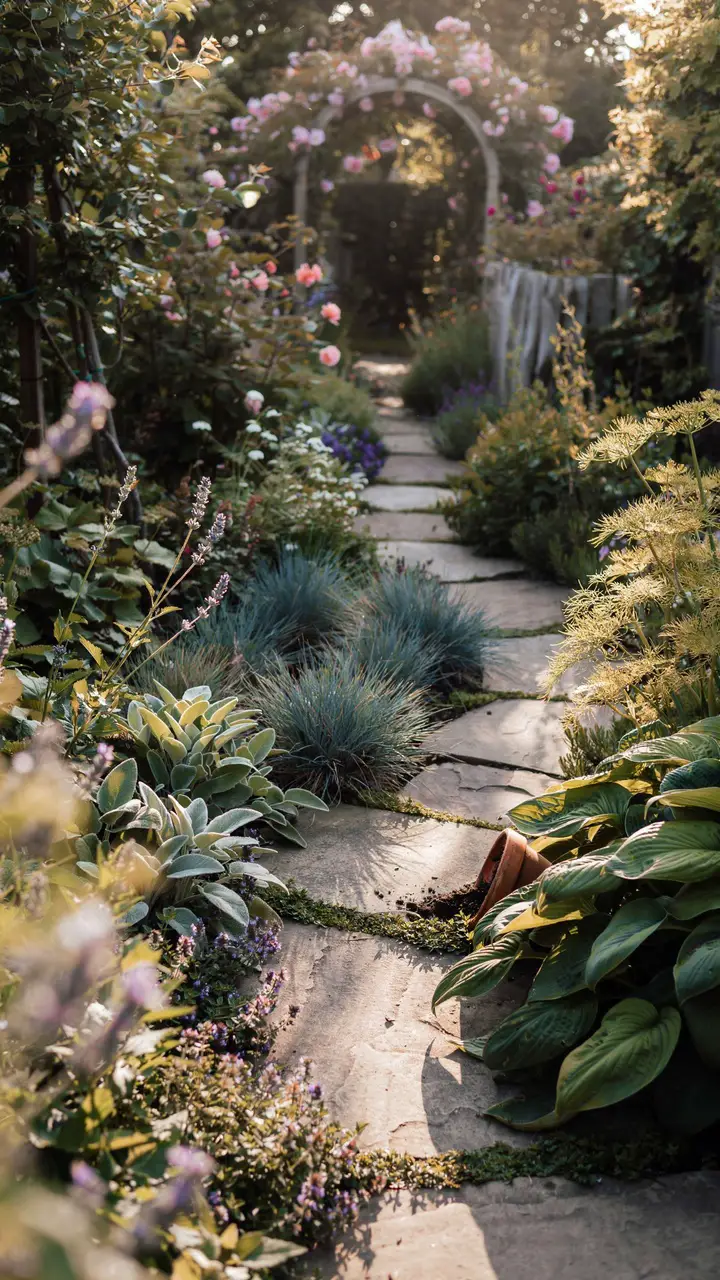
How to Recreate This Look
Kids do this instinctively—they touch everything in a garden. Somewhere along the way, adults decide they shouldn’t, which is genuinely a shame because running your hand along a bank of lamb’s ears or ruffling a feathery ornamental grass is one of those small, quietly joyful experiences that a well-designed garden hands you for free.
A tactile pathway lines your walking route with plants specifically chosen for interesting texture: furry, spiky, silky, ribbed, papery, and rubbery. The invitation to touch should feel irresistible.
Shopping List:
- Lamb’s ears (Stachys byzantina) — $4–$8 per plant; incredibly soft, silver-grey, impossible to walk past without touching
- Blue fescue grass (Festuca glauca) — $5–$8 per plant; spiky and architectural, lovely contrast to soft plants
- Hostas — $8–$20 per plant depending on variety; enormous textural leaves in rich greens
- Creeping thyme for path gaps — $3–$6 per plant; releases fragrance when stepped on, extremely satisfying
- Bronze fennel — $4–$6 per plant; feathery, wispy, gorgeous backlit by afternoon sun
- Irregular stepping stones — $3–$8 each at landscape suppliers or salvage yards
Step-by-Step Styling:
- Lay stepping stones first in a slightly irregular pattern—avoid military-straight lines, which kill the naturalistic feeling immediately.
- Plant creeping thyme in gaps between stones at the planting stage; it establishes between the stones over one season.
- Position soft plants like lamb’s ears and hostas closest to the path edge—literally within arm’s reach or brush-contact range.
- Use spiky blue fescue as contrast punctuation between softer plants—the visual and tactile contrast makes both feel more interesting.
- Add height variation with bronze fennel toward the back of borders.
Budget Breakdown:
- Under $100: Lamb’s ears from a garden-sharing app (they divide freely and gardeners are endlessly generous with them), thyme seeds, and salvaged stepping stones
- $100–$500: Full planted pathway with stepping stones, hostas, fescue, and lamb’s ears
- $500+: Professionally laid irregular stone path with mature specimen hostas and complete border planting
Difficulty Level: Beginner — These are all tough, low-maintenance plants. Hostas are the only diva of the group, needing slug protection in spring.
Lifestyle Considerations: This look works brilliantly with kids—it’s genuinely designed to be touched and explored. Pets love lying in the lamb’s ears, which, honestly, same.
4. An Edible Corner That Delights the Taste Sense
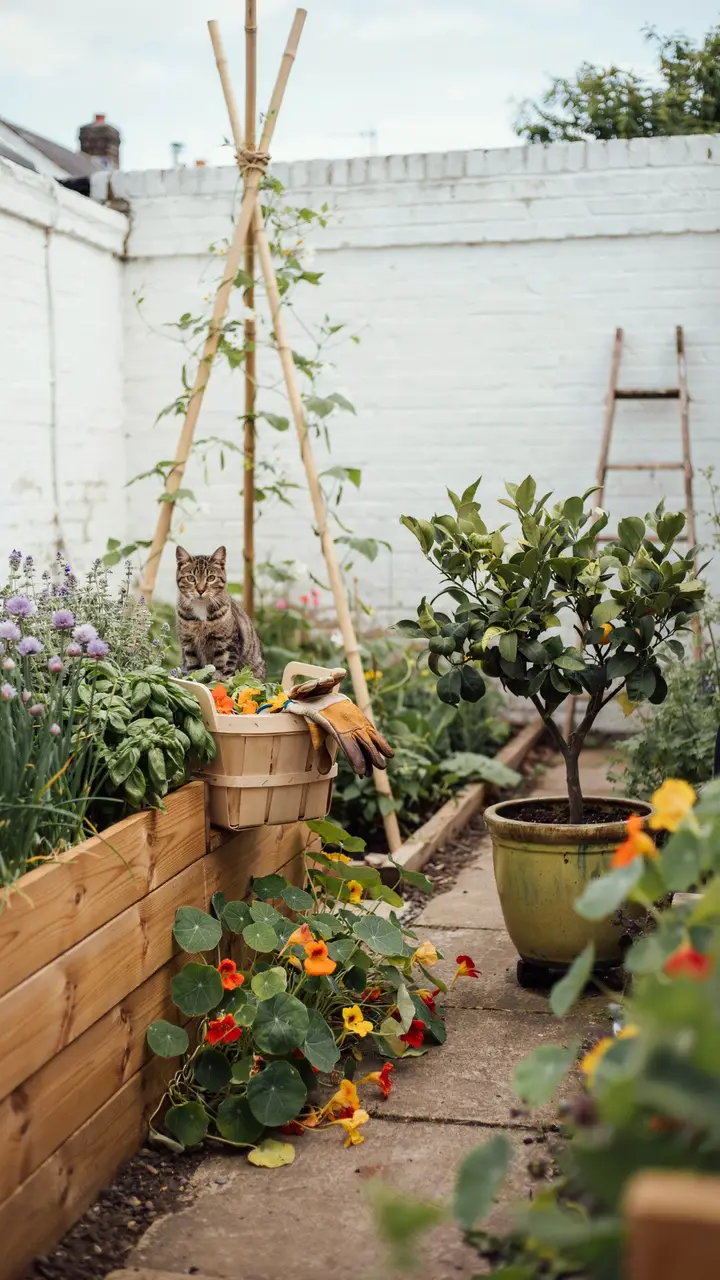
How to Recreate This Look
Taste is the most underused sense in garden design, which is genuinely baffling when you consider that a garden full of things you can actually eat creates more engagement than almost any purely decorative space. Edible gardens aren’t just productive—they’re extraordinarily sensory. The smell of tomato leaves, the bitter hit of a nasturtium petal, the cool snap of a freshly picked sugar snap pea.
Shopping List:
- Nasturtiums — $2–$3 per seed packet; edible flowers in vibrant orange, yellow, and red that taste peppery and look beautiful
- Chives — $3–$5 per plant or seed packet; purple pompom flowers are edible and stunning
- Basil, sage, rosemary, thyme herb collection — $3–$6 per plant; buy as starter plants for speed
- Compact lemon or lime tree — $25–$50 in a large pot; satisfying on every sensory level
- Sugar snap peas or climbing beans — $3–$4 per seed packet; fast-growing, rewarding, and delicious straight from the vine
- Raised bed timber kit — $60–$150 depending on size; or build your own from untreated hardwood
Step-by-Step Styling:
- Position your edible corner in the sunniest spot available—minimum 6 hours of direct sun for most vegetables and herbs.
- Fill raised beds with quality vegetable compost mixed 50/50 with topsoil.
- Plant herbs toward the front and edges where you’ll brush them as you harvest.
- Allow nasturtiums to trail over the front edges of beds—they fill gaps, suppress weeds, and provide a continuous harvest of edible flowers.
- Add a bamboo teepee for climbers: push six bamboo canes in a circle and tie at the top with garden twine. Plant bean seeds around the base after your last frost date.
Budget Breakdown:
- Under $100: Three herb plants, two packets of seeds (nasturtiums and sugar snap peas), and a couple of large repurposed containers
- $100–$500: One raised bed, full herb collection, citrus tree in pot, and climbing frame
- $500+: Multiple raised beds, established fruit trees, irrigation system, and full planting
Difficulty Level: Beginner — Nasturtiums and herbs are genuinely hard to kill. Start there and build confidence before adding more demanding vegetables.
5. A Wind Garden Designed to Move and Murmur
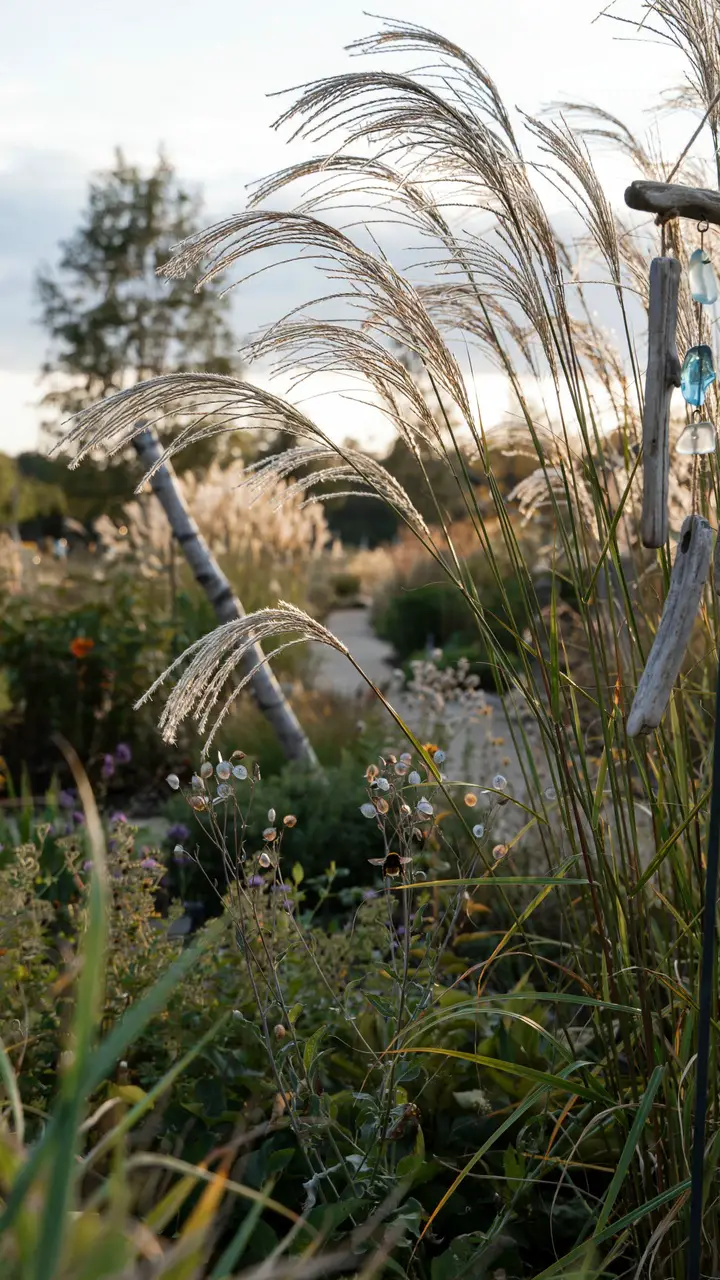
How to Recreate This Look
Most gardens are designed purely for visual impact, which means they look completely dead on a still day and equally dead in a breeze. A wind garden flips this entirely—it’s designed specifically to move, shimmer, and make gentle sound whenever the air stirs. On a breezy day, a well-planted wind garden becomes genuinely hypnotic.
Shopping List:
- Miscanthus sinensis ‘Morning Light’ — $15–$25 per plant; tall, graceful, shimmering silver-edged blades that catch wind beautifully
- Feather reed grass (Calamagrostis acutiflora ‘Karl Foerster’) — $12–$20 per plant; upright, architectural, stunning seed heads
- Honesty (Lunaria annua) — $3–$4 per seed packet; papery silver seed discs that rattle in wind
- Bamboo grove (clumping, not running variety) — $25–$50 per plant; creates that quintessential soft rustling sound
- Quality wind chimes — $20–$60; choose ceramic or bamboo for a gentler sound than metal
- Driftwood hanging frame — DIY from beach-gathered wood and garden twine
Step-by-Step Styling:
- Position taller grasses toward the back of borders but not against solid walls—air needs to move through the planting for the kinetic effect to work.
- Plant in naturalistic drifts rather than single specimens—groups of three or five of the same grass read as intentional; single plants look lonely and lost.
- Allow space between clumps for wind to move through rather than around.
- Hang wind chimes at varying heights from a simple overhead structure—difference in height creates more complex sound patterns.
- Add honesty as an annual filler that provides sound (rattling pods) and beautiful light effects (translucent silver discs).
Budget Breakdown:
- Under $100: Honesty seeds, a packet of ornamental grass seeds started in spring, and DIY driftwood wind chimes
- $100–$500: Three established ornamental grasses, quality wind chimes, and bamboo planting
- $500+: Full prairie-style border installation with multiple grass species, mature bamboo, and custom-made wind features
Difficulty Level: Beginner — Ornamental grasses are extraordinarily low-maintenance. Cut them back hard in late winter, and they return reliably every spring.
6. A Colour Therapy Border for Visual Delight
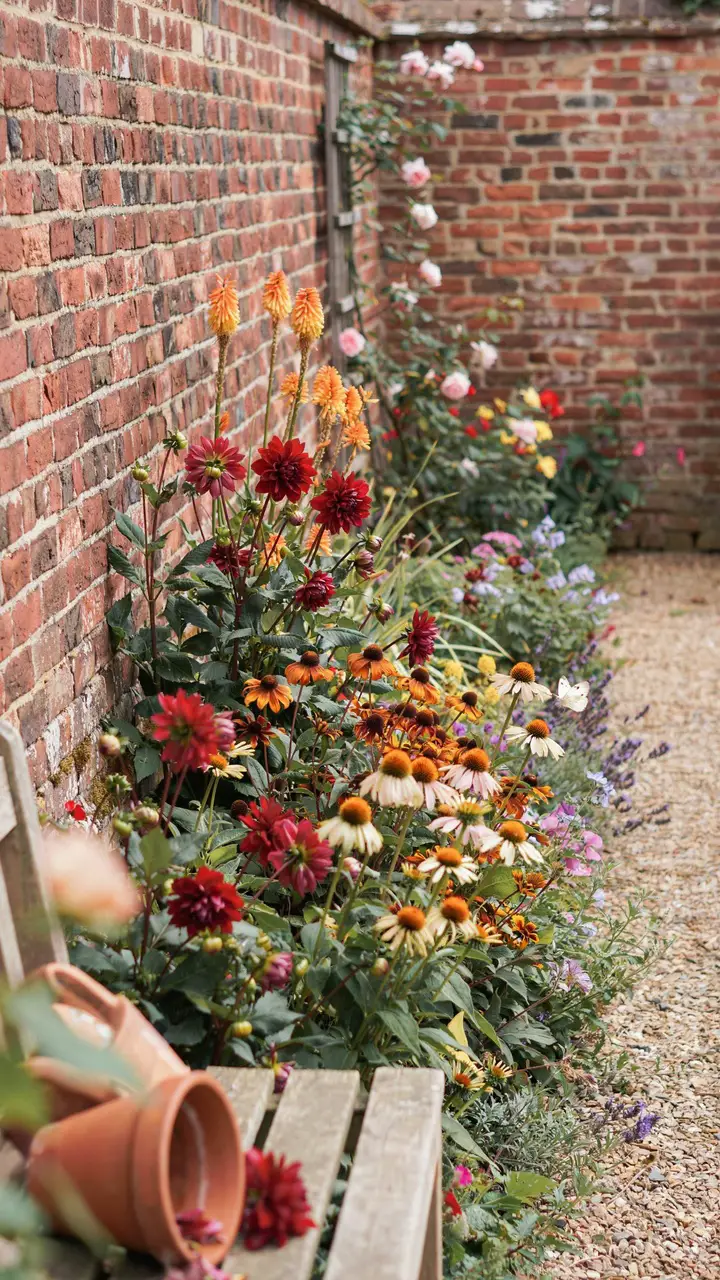
How to Recreate This Look
Colour in a garden isn’t just decoration—it’s genuinely physiological. Warm tones (reds, oranges, yellows) are energizing; cool tones (blues, purples, silvers) are calming. Designing a border around a deliberate colour story rather than just planting whatever looked nice at the garden center results in something that feels cohesive and intentional rather than cheerfully random.
Shopping List:
- Dahlias (dinner plate varieties) — $5–$15 per tuber; store-buy in spring, plant after last frost, reward you with extraordinary blooms
- Rudbeckia (Black-eyed Susan) — $4–$8 per plant; tough, reliable, warm golden yellow from July through October
- Echinacea (coneflower) — $6–$10 per plant; architectural seed heads persist through winter beautifully
- Kniphofia (red hot poker) — $8–$15 per plant; spiky and dramatic, bridges orange and red tones
- Colour-scheme planning app — free (try Adobe Color or simply pull a palette from a favourite photo)
Step-by-Step Styling:
- Choose a colour temperature before you plant—warm (red/orange/yellow) or cool (blue/purple/white). Mixing temperatures without intention creates visual noise.
- Use the rule of repetition: plant the same colour in three or more places along the border so the eye travels and the scheme reads as planned.
- Add one neutral (cream, white, silver, or bronze foliage) to prevent the palette reading as overwhelming.
- Position a bench or chair at one end of the border, aligned to look down its length—this is the single most transformative positioning decision you can make for a colour-therapy garden.
Budget Breakdown:
- Under $100: Rudbeckia and echinacea seeds started indoors, three dahlia tubers, and one kniphofia plant
- $100–$500: Full planted border with established perennials, six dahlia varieties, and a simple wooden bench
- $500+: Mature planting with specimen dahlias, statement bench, and a garden designer’s colour consultation
Difficulty Level: Beginner to Intermediate — Dahlias need lifting in colder climates over winter, which intimidates people but takes about 20 minutes once you know what you’re doing.
7. A Nighttime Sensory Garden for Evening Hours
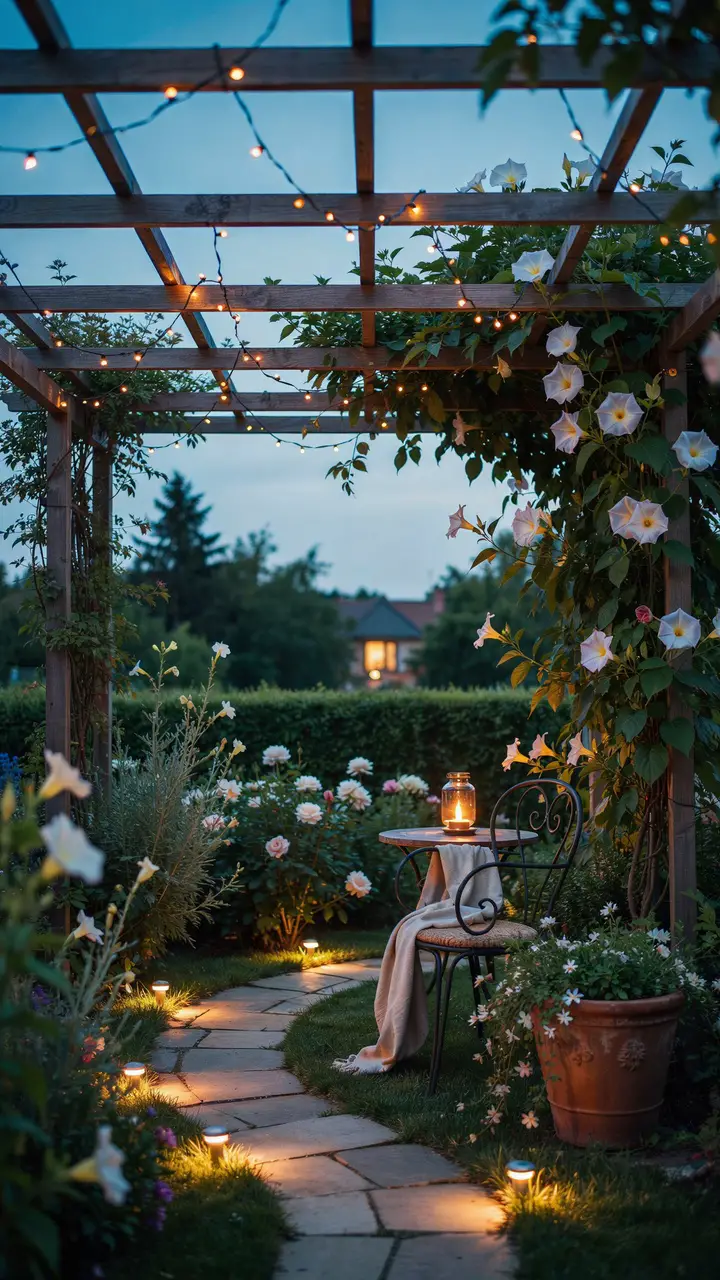
How to Recreate This Look
Most gardens are designed for people who spend time outdoors in daylight—which is only half the story. A nighttime sensory garden is specifically designed for the hours after dinner, when outdoor lighting transforms spaces completely and white flowers practically phosphoresce in the dusk.
Shopping List:
- White jasmine (Jasminum polyanthum) — $12–$20; intensely fragrant, especially at night, grows readily in pots
- Moonflowers (Ipomoea alba) — $3–$5 per seed packet; white trumpet flowers that literally open at dusk
- Nicotiana (flowering tobacco) — $2–$4 per seed packet; white varieties release intense fragrance at night
- Artemisia ‘Silver Mound’ — $5–$8 per plant; silver foliage reflects moonlight and path lighting beautifully
- Solar LED path lights — $15–$40 for a set of 6–8; stake along pathways and around seating areas
- Outdoor string lights — $20–$50 for a 10-metre length; warm white (2700K) looks infinitely more romantic than cool white
Step-by-Step Styling:
- Build your nighttime palette around white and very pale cream flowers—they reflect available light in ways that coloured flowers simply don’t.
- Add silver and grey foliage plants as companions—artemisia, lamb’s ears, and stachys all work beautifully as light-catching companions.
- Layer lighting: path lights at ground level, string lights overhead, and one or two candle lanterns at table height.
- Position strongly fragrant plants (jasmine, nicotiana) near the seating area—the warmth retained by surrounding walls and paving amplifies fragrance release in the evening.
- Keep hardscaping light-coloured (pale stone, white gravel) to maximize the reflective quality of the space.
Budget Breakdown:
- Under $100: White flower seed collection, three solar path lights, and one jasmine plant in a pot
- $100–$500: Full white border planting, solar lighting scheme, string lights on simple structure, and outdoor candle lanterns
- $500+: Professional garden lighting scheme (low-voltage), mature planting, and pergola with integrated lighting
Difficulty Level: Beginner — White flowers are widely available and mostly easy to grow. The lighting installation is entirely plug-free if you use solar.
8. A Soundscape Garden with Living Acoustics
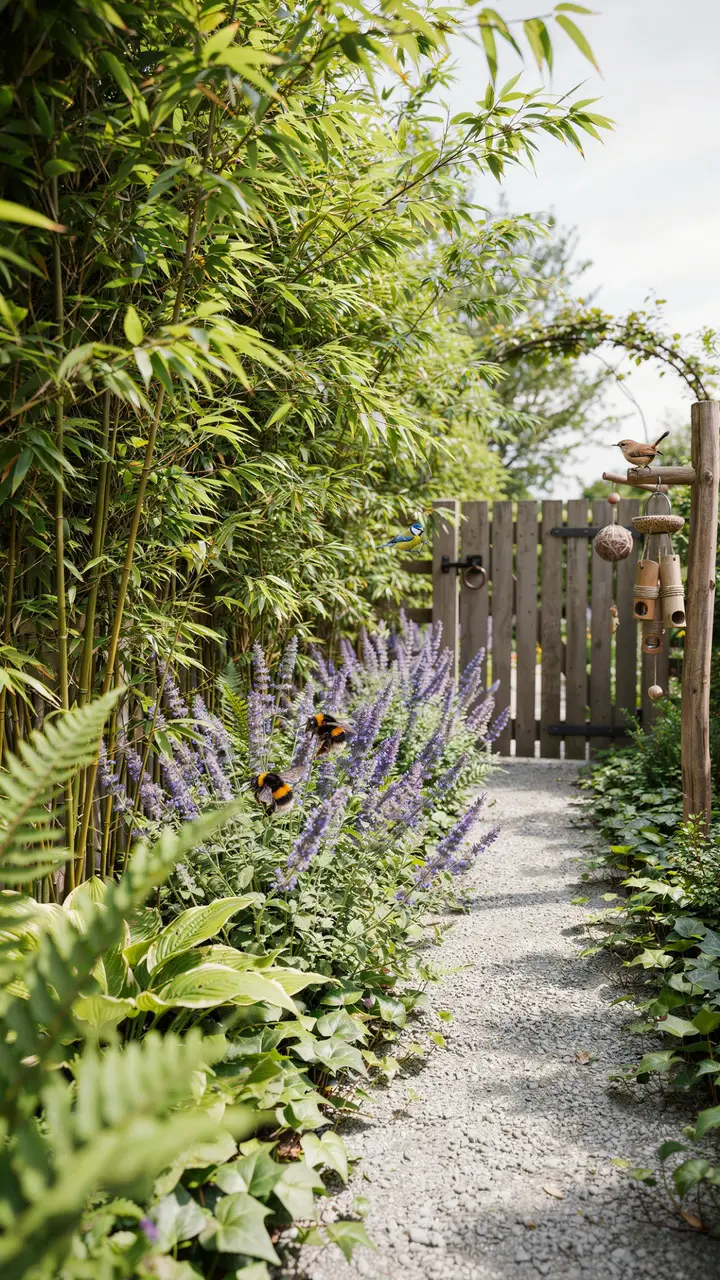
How to Recreate This Look
Sound design for gardens is an underrated art. You’re essentially creating a natural acoustic environment—layering the sounds of moving water, rustling plants, bees, birdsong, and footstep materials—to create a space that feels alive rather than static.
Shopping List:
- Clumping bamboo (Fargesia murielae) — $20–$40 per plant; creates extraordinary rustling sound without the invasive nightmare of running bamboo (FYI: always choose clumping, never running)
- Bee-friendly planting: nepeta, salvia, lavender — $4–$8 each; the sound of bees working through a planting is genuinely soothing
- Gravel (pea shingle or crushed slate) — $30–$60 per bag; for pathways specifically chosen for their footstep sound quality
- Bird feeders and seed mix — $15–$40; positioned in sight lines from seating areas
- Clay or ceramic wind chimes — $20–$50; gentler and more natural-sounding than metal versions
Step-by-Step Styling:
- Use gravel or crushed stone on paths intentionally—the crunch of footsteps adds a satisfying layer of sound that flat paving completely eliminates.
- Plant bee-attractive species in large drifts—a single lavender plant gets one bee; twenty plants get a whole chorus.
- Install bird feeders within sightline of your primary seating position so you benefit from both sound and the visual enjoyment of birds visiting.
- Position bamboo on your garden’s windiest side—it catches and amplifies even gentle breezes into that wonderful whisper-and-clatter sound.
Budget Breakdown:
- Under $100: Gravel path refresh, bee-friendly seed packet collection, and one bird feeder
- $100–$500: Two bamboo plants, full bee-garden planting, gravel for pathways, and quality bird-feeding station
- $500+: Professional bamboo screening installation, complete soundscape garden design
Difficulty Level: Beginner — Growing bee-friendly plants and setting up bird feeders are genuinely beginner-level gardening tasks with immediate, rewarding results.
9. A Children’s Sensory Garden That Grows Wonder
How to Recreate This Look
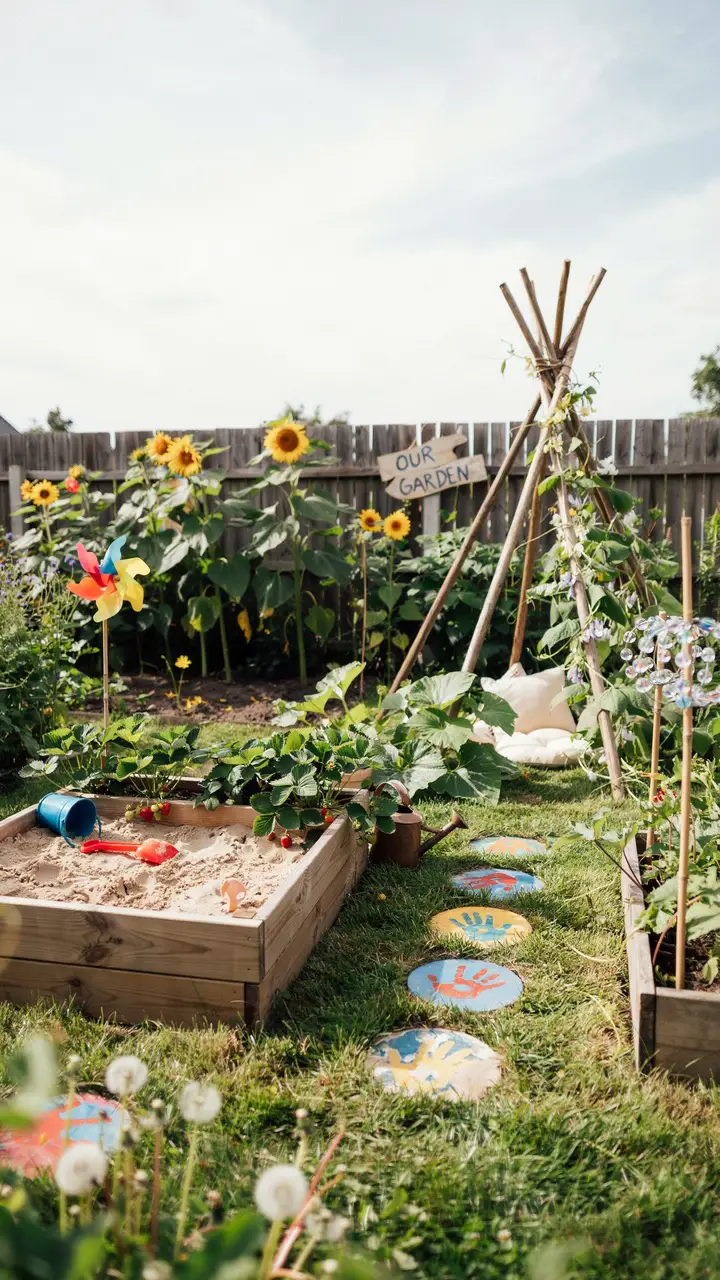
A children’s sensory garden has one primary design goal: to make kids feel like the garden is fundamentally theirs. Not a space they’re allowed to be in carefully, but a space that belongs to them. The design philosophy here is deliberate wildness with safety built in—not child-proofed into sterility.
Shopping List:
- Sunflower seeds (giant varieties) — $2–$3 per packet; nothing creates more childlike wonder than a flower that grows taller than you are
- Strawberry plants — $3–$5 per plant; edible, accessible, and children will monitor them with extraordinary diligence
- Runner bean seeds — $3–$4 per packet; fast-growing, genuinely exciting for children to watch
- Bamboo teepee kit — $15–$30 or DIY with canes and twine; creates the den every child wants
- Wind spinners — $8–$20 each; visual movement and gentle sound combined
- Non-toxic paint for stepping stones — $10–$15; let children paint their own handprint stones for genuine ownership
Step-by-Step Styling:
- Give children their own defined patch—even 1m x 2m is enough. Ownership is the entire emotional foundation of this idea.
- Plant fast-rewarding crops: sunflowers, radishes (ready in 4 weeks), and strawberries for patience-appropriate payoffs.
- Build a teepee den with climbing plants over it—this single structure transforms children’s engagement with a garden more than almost anything else.
- Resist the urge to tidy children’s garden areas. A well-loved, slightly chaotic children’s patch means the space is working exactly as intended.
Budget Breakdown:
- Under $100: Seed collection, DIY bamboo teepee, handprint stepping stones, wind spinners
- $100–$500: Raised bed, full planting, proper teepee structure, sandbox border
- $500+: Professionally built children’s garden area with built-in sandbox, planting, and weather-resistant structures
Difficulty Level: Beginner — The entire design principle is robust simplicity. If a child can’t participate in maintaining it, it’s too complicated.
10. A Meditation Garden Designed for Pure Stillness
How to Recreate This Look
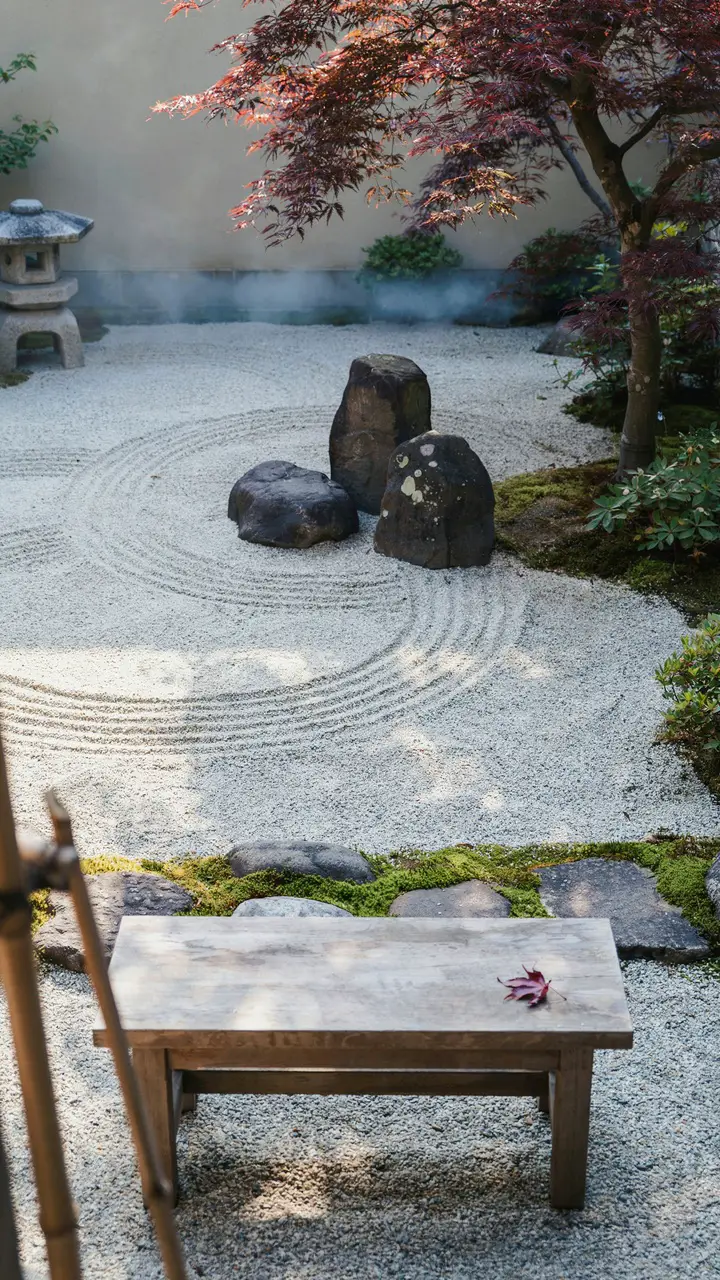
The meditation garden is perhaps the most countercultural of sensory garden ideas because its entire design principle is removal rather than addition. You’re creating a space of deliberate emptiness—not absence of care, but careful curation of what’s present so what remains carries genuine weight.
Shopping List:
- Pale raked gravel or granite chippings — $30–$60 per bag; white or pale grey reads as water in the Zen garden tradition
- Landscape fabric (weed-suppressing) — $20–$40 for a roll; critical under gravel areas for long-term maintenance sanity
- 3–5 large statement stones or boulders — $50–$200 depending on size and type; natural weathered basalt, granite, or limestone all work beautifully
- Japanese maple (Acer palmatum) — $40–$120 for a young specimen; worth the investment as the garden’s single focal plant
- Bamboo rake for gravel patterns — $15–$25; the act of raking is itself a meditative practice
- Moss starter/transplant — forage from damp shaded areas in your garden or buy moss mats ($15–$30)
- Simple wooden bench — $80–$300; choose clean lines, no ornamentation, proportional to your space
Step-by-Step Styling:
- Begin by removing—this garden is built by editing, not adding. Clear the space completely before introducing a single element.
- Lay landscape fabric across the entire gravel area before laying stone, and secure edges under stepping stones.
- Place stones before adding gravel—position 3, 5, or 7 stones (odd numbers read as natural; even numbers read as arranged). Resist the urge to place more.
- Pour gravel and rake into gentle wave or concentric circle patterns around stones, suggesting water movement.
- Position your bench to face the garden’s primary stone arrangement—the viewing experience is as designed as the space itself.
- Encourage moss on stone surfaces with a simple application of buttermilk blended with gathered moss spores, painted onto stones in a shaded area.
Budget Breakdown:
- Under $100: Raked gravel in a single defined area, three stones gathered from a landscaping supplier, and a DIY bamboo rake
- $100–$500: Full gravel garden with stones, landscape fabric, moss cultivation, and a simple wooden bench
- $500+: Japanese maple as specimen plant, professional stone placement, quality wooden bench, and integrated stepping stone path
Difficulty Level: Intermediate — Not because the tasks are technically complex, but because restraint is psychologically difficult. The hardest part of building a meditation garden is resisting the urge to add one more thing.
Maintenance: Rake gravel weekly. Remove leaves from the gravel surface in autumn—a leaf blower on its lowest setting makes this effortless. Re-edge the gravel border each spring. That’s genuinely all this garden needs. 🙂
Common Mistakes: Overcrowding. One extra plant, one extra stone, one extra element—and the entire feeling of deliberate emptiness collapses. When in doubt, take something away rather than adding something new.
Growing a Garden That Genuinely Moves You
The most beautifully designed sensory gardens have one thing in common: they were built by someone who paid attention to how spaces feel, not just how they look in photographs. You don’t need a large plot, an enormous budget, or years of gardening experience to create an outdoor space that engages your senses and slows your breathing the moment you step into it.
Start with one idea that genuinely appeals to you—not the one that looks best on Instagram, but the one that made you feel something when you read about it. A single fragrance border. A small water feature. A gravel corner with three beautiful stones and nothing else. Build from there, slowly, with intention.
The best sensory gardens aren’t finished gardens. They’re living, growing, seasonally shifting spaces that reward you differently in June than they do in October, differently at 7am than at 9pm. That’s not a design flaw—it’s the entire point.
Your garden doesn’t need to look like a magazine spread. It needs to feel like yours <3.

Greetings, I’m Alex – an expert in the art of naming teams, groups or brands, and businesses. With years of experience as a consultant for some of the most recognized companies out there, I want to pass on my knowledge and share tips that will help you craft an unforgettable name for your project through TeamGroupNames.Com!