
There’s something almost magical about a sunflower. One day you press a seed into the soil, step back, and within weeks you’re looking up — literally — at a golden-faced giant nodding cheerfully in the breeze.
Whether you’ve got a sprawling backyard, a narrow side yard, or just a few containers on a sunny balcony, sunflowers have a way of making any outdoor space feel alive, generous, and joyful.
Maybe you’ve admired them in someone else’s garden and thought, “I could never grow those.” Spoiler: you absolutely can.
Sunflowers are arguably the most forgiving, enthusiastic plants in the gardening world.
They want sun, decent soil, and a little water — and in return they give you weeks of color, wildlife activity, and that warm, look-what-I-grew feeling that never gets old. 🙂
So let’s talk about ten genuinely creative ways to grow and style sunflowers in your garden — from dramatic statement borders to charming DIY kid’s garden projects — with real tips on varieties, spacing, and how to make each idea work beautifully in your specific space.
1. The Classic Sunflower Border
How to Recreate This Look
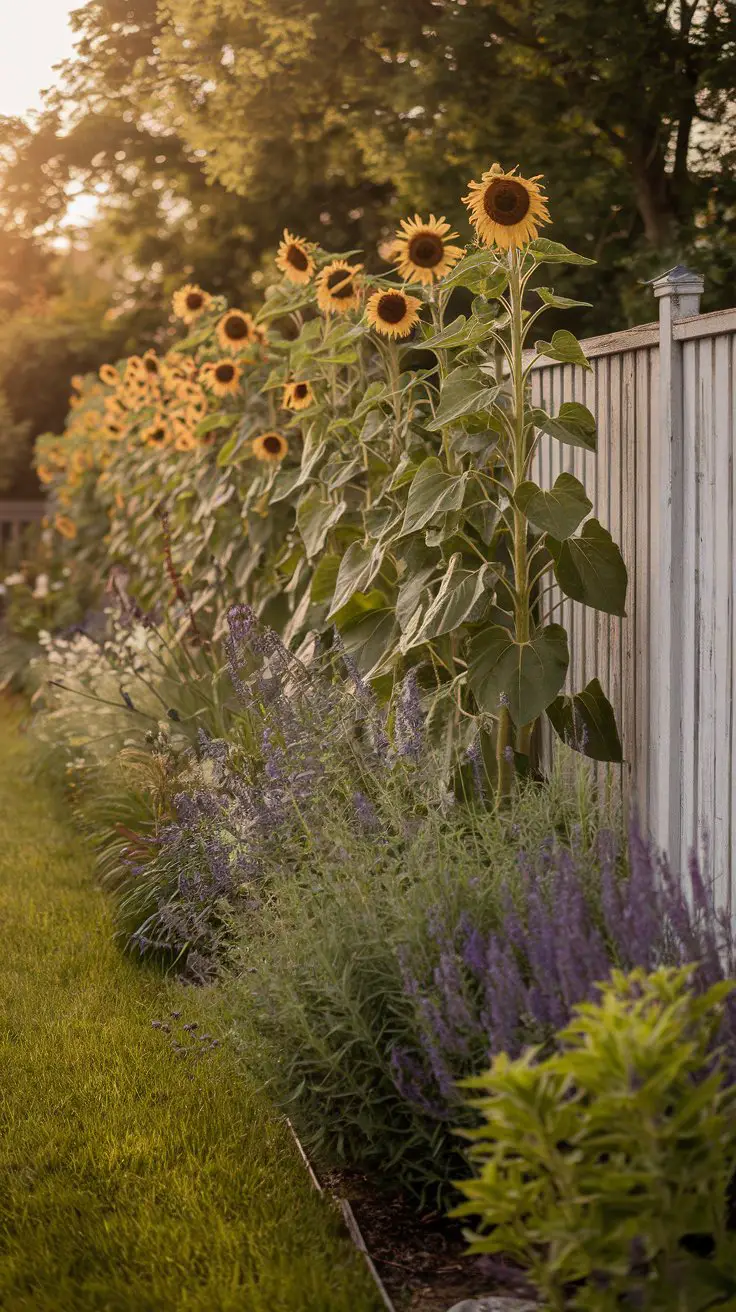
The classic sunflower border is the entry point for most first-time sunflower gardeners — and there’s a reason it never goes out of style. A solid row of tall sunflowers along a fence or wall creates instant vertical drama and a natural privacy screen through summer.
Shopping List:
- ‘Russian Giant’ or ‘Mammoth’ sunflower seeds — $3–$5 per packet (widely available at garden centers, Home Depot, or online at Burpee.com)
- Lavender or salvia starts for layering — $4–$8 each at nurseries
- Slow-release granular fertilizer (balanced 10-10-10) — $12–$18 at any big box store
- Garden stakes and soft twine for taller varieties — $8–$15
Step-by-Step Styling Instructions:
- Choose a fence line or wall that receives at least 6–8 hours of direct sunlight daily — this is non-negotiable for tall varieties
- Amend the soil with compost before planting — sunflowers love nutrient-rich, well-draining beds
- Sow seeds directly 1 inch deep and 6 inches apart, then thin to 12–18 inches once seedlings reach 3 inches tall
- Plant shorter companion flowers (lavender, salvia, or echinacea) in front to create a layered cottage border effect
- Water deeply but infrequently — 1 inch per week at the base, not overhead
Budget Breakdown:
- 🌻 Under $100: Seeds + compost + stakes. Total investment around $30–$50 for a 10-foot border
- 🌻 $100–$500: Add pre-started companion plants, decorative edging, and a drip irrigation setup
- 🌻 $500+: Hire a landscape gardener to prepare a raised bed border with premium soil mix and automatic irrigation
Difficulty Level: Beginner — if you can dig a shallow trench and water once a week, you can absolutely nail this look.
Common Mistakes to Avoid: Don’t plant too close to large trees — sunflowers genuinely struggle in root competition. And resist the urge to over-water; soggy roots are the fastest way to lose a sunflower.
2. A Sunflower Cutting Garden for Fresh Bouquets
How to Recreate This Look
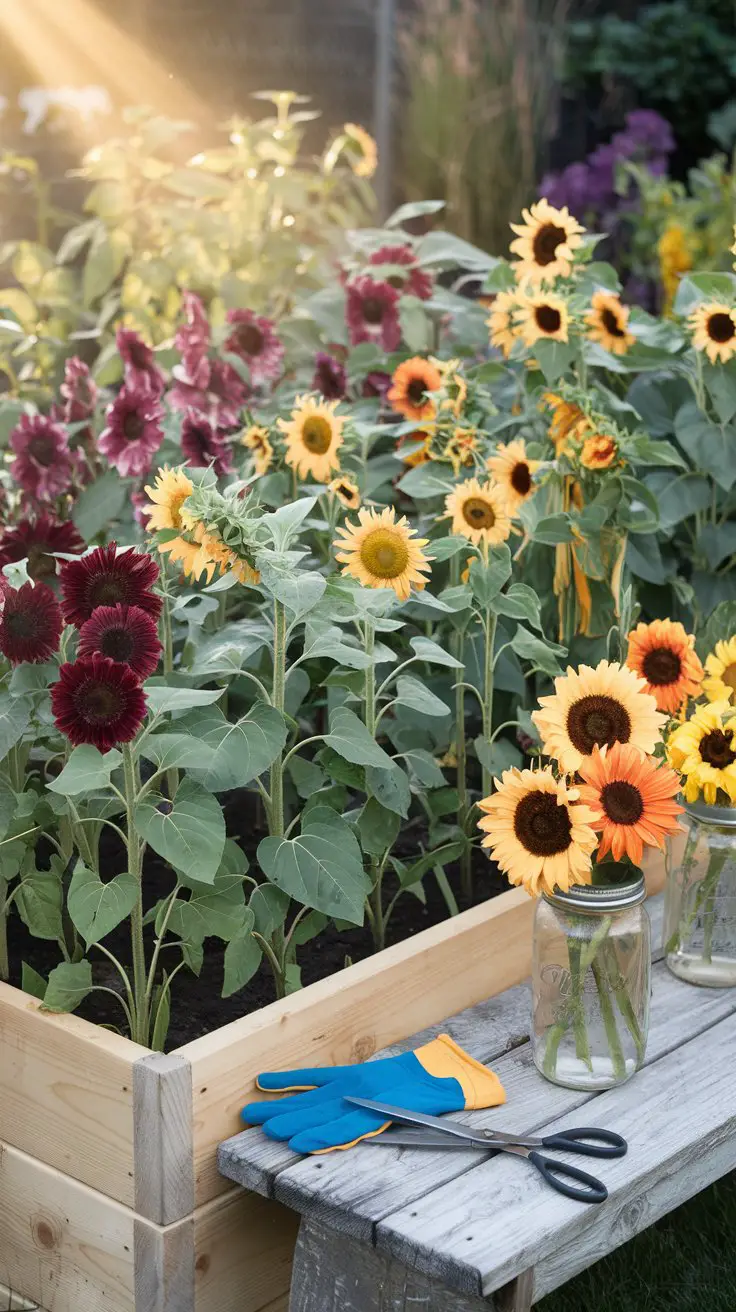
A dedicated cutting garden is one of the most satisfying things you can do for your home — both indoors and out. The idea is simple: grow sunflowers specifically to cut and bring inside, freeing you from ever spending $15 on a grocery store bouquet again.
Key Varieties for Cutting:
- ‘Lemon Queen’ — pale yellow, branching habit, produces multiple stems ($4/packet)
- ‘Velvet Queen’ — rich burgundy and copper tones, stunning in arrangements ($4/packet)
- ‘Chocolate Cherry’ — deep red-brown with a dark center, incredibly dramatic ($5/packet)
- ‘Sunrich Orange’ — pollen-free variety, perfect for bouquets (no yellow dust on tablecloths!)
Step-by-Step Instructions:
- Stagger your plantings every 2 weeks from late spring through early summer — this gives you a continuous supply of blooms rather than a single overwhelming flush
- Cut stems in the early morning when the outermost petals are just beginning to unfurl — they’ll last longest this way
- Immediately place cut stems in cool water and re-cut at an angle after bringing indoors
- Strip any leaves that would fall below the waterline in your vase
Budget Breakdown:
- Under $100: 4–5 seed packets + raised bed with basic lumber scraps — full cutting garden under $60
- $100–$500: Pre-built cedar raised bed kit + seed assortment + drip irrigation line
- $500+: Custom built cedar or composite raised bed with integrated trellis and automatic watering
Durability Note: This garden handles summer heat beautifully but needs replanting each season — sunflowers are annuals, so embrace the ritual of starting fresh each spring.
3. The Sunflower Children’s Garden (A Hidden Fort Idea)
How to Recreate This Look
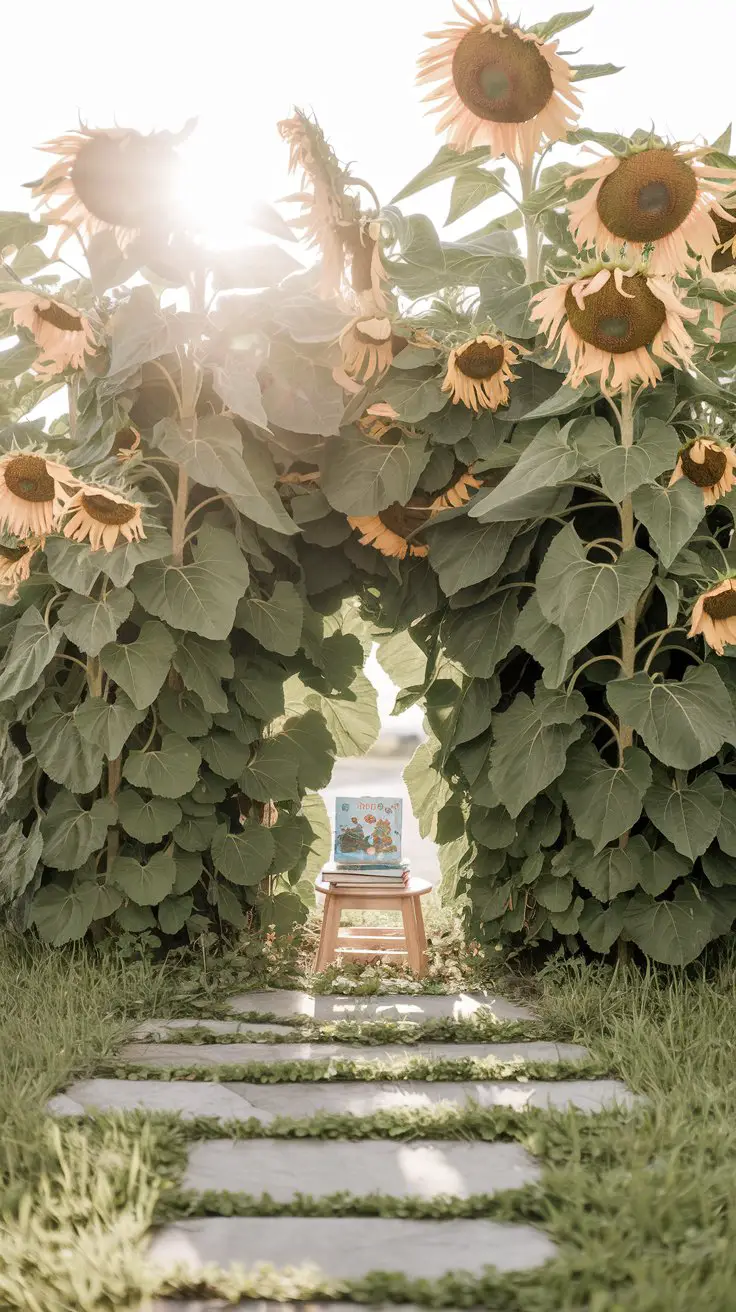
This is the project that will make you the most popular adult in the neighborhood — full stop. A sunflower house takes about 10 minutes to plan and plant, and by midsummer you’ll have a genuine living fort that kids (and honestly, adults) want to disappear into.
How to Build a Sunflower House:
- Mark a circle approximately 6–8 feet in diameter using a stake and string
- Plant ‘Mammoth’ or ‘Russian Giant’ seeds every 12 inches around the circle’s perimeter, leaving a 2-foot gap for the “doorway”
- As plants grow, gently tie the tallest stems inward at the top using garden twine to form a canopy arch
- Plant fast-growing vines (like morning glory or scarlet runner beans) between sunflower stems for even denser walls
Shopping List:
- ‘Mammoth’ sunflower seeds — $4/packet
- Garden stakes + natural jute twine — $10
- Morning glory vine seeds (optional walls) — $3/packet
- Small stepping stones for the floor — $15–$30 at garden centers
Budget Breakdown:
- Under $100: Seeds + twine + a bag of mulch for the floor — total around $25
- $100–$500: Add a small wooden gate for the doorway, stepping stones, and wind chimes
- $500+: Commission a carpenter to build a small wooden bench or reading nook inside
Difficulty Level: Beginner. Kids can plant this themselves — which makes it even more meaningful when the walls grow up around them.
4. Sunflowers in Containers for Patios and Balconies
How to Recreate This Look
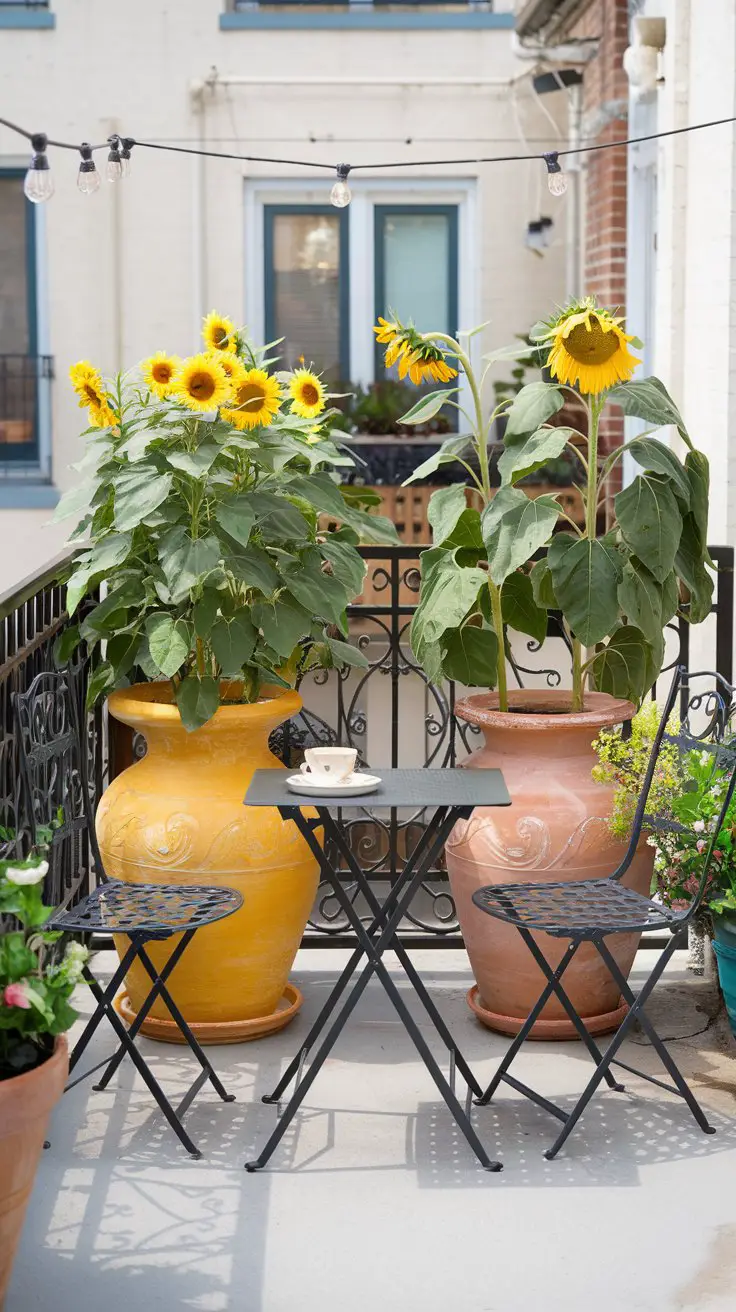
No yard? No problem. Dwarf sunflower varieties were practically invented for container gardening, and a few well-placed pots on a balcony or patio deliver that full summer-garden feeling even in the smallest outdoor footprint.
Best Dwarf Varieties for Containers:
- ‘Big Smile’ — stays at 12–15 inches tall, classic yellow blooms, perfect for 12-inch pots
- ‘Sundance Kid’ — multi-stemmed branching variety, 18–24 inches, spectacular in larger containers
- ‘Elf’ — tiny 16-inch plants with proportionally large blooms, adorable and space-efficient
- ‘Sunspot’ — produces large 10-inch flowers on compact 2-foot plants
Container Requirements:
- Use pots at least 12 inches deep — sunflowers develop surprising root systems even in dwarf varieties
- Choose terracotta or fabric grow bags for best drainage
- Use a premium potting mix blended with 20% perlite for drainage — never garden soil in containers
- Water daily in summer heat; containers dry out much faster than garden beds
Budget Breakdown:
- Under $100: 3–4 terracotta pots + seeds + premium potting mix — around $50–$70
- $100–$500: Larger decorative ceramic containers + slow-release fertilizer spikes + coordinating plant saucers
- $500+: Custom built planter boxes with built-in drip irrigation and weather-treated cedar frames
FYI: Container sunflowers need fertilizing every 2 weeks with a balanced liquid fertilizer — potting mix nutrients exhaust quickly.
5. The Wildflower-and-Sunflower Meadow Look
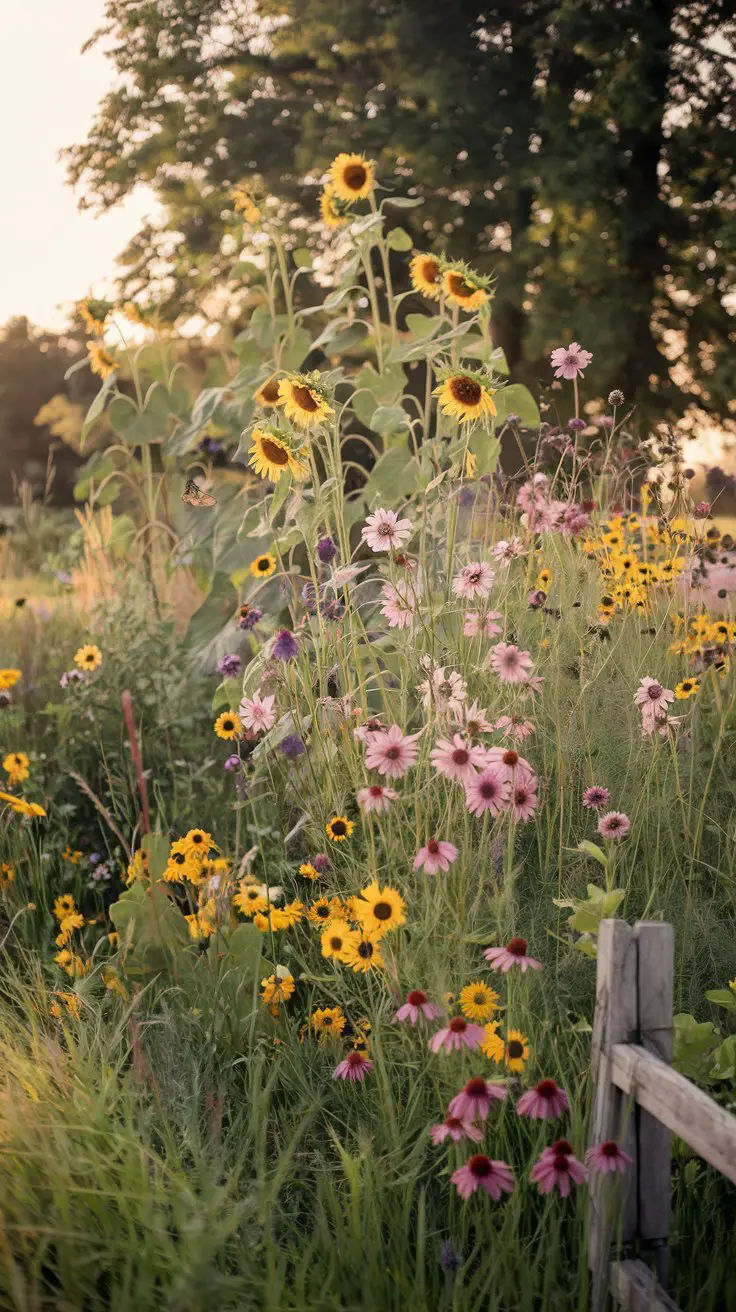
How to Recreate This Look
If you’ve ever driven past a roadside wildflower meadow and thought, “I want that in my backyard,” — this is your moment. The sunflower-and-wildflower meadow look celebrates abundance, encourages pollinators, and requires surprisingly little fuss once established.
Best Companion Flowers to Mix with Sunflowers:
- Cosmos — airy and delicate, beautiful contrast to sunflowers’ bold faces
- Zinnias — share sunflowers’ love of heat and direct sun, riot of color
- Black-eyed Susans — native wildflower, echoes the sunflower’s yellow-and-dark-center palette
- Purple coneflower (echinacea) — perennial that returns yearly, gorgeous with yellow sunflowers
- Bachelor’s button — rich blue provides stunning color contrast
Step-by-Step Meadow Planting:
- Clear the area of existing grass and weeds — a no-dig lasagna mulch method works beautifully here
- Broadcast-sow a mixed wildflower-and-sunflower seed blend by hand across the prepared surface
- Rake lightly to barely cover seeds — most need light to germinate
- Water gently daily until germination, then transition to weekly deep watering
- Resist the urge to weed too aggressively in early weeks — those “weeds” might be your wildflowers germinating
Budget Breakdown:
- Under $100: Pre-made wildflower + sunflower seed blend (covers up to 200 sq ft) — $20–$40 from American Meadows or Botanical Interests
- $100–$500: Add compost soil amendment + drip soaker hose for a larger meadow patch
- $500+: Full landscape prep with a no-dig raised meadow bed and custom seed mix
6. Sunflowers as a Natural Privacy Screen
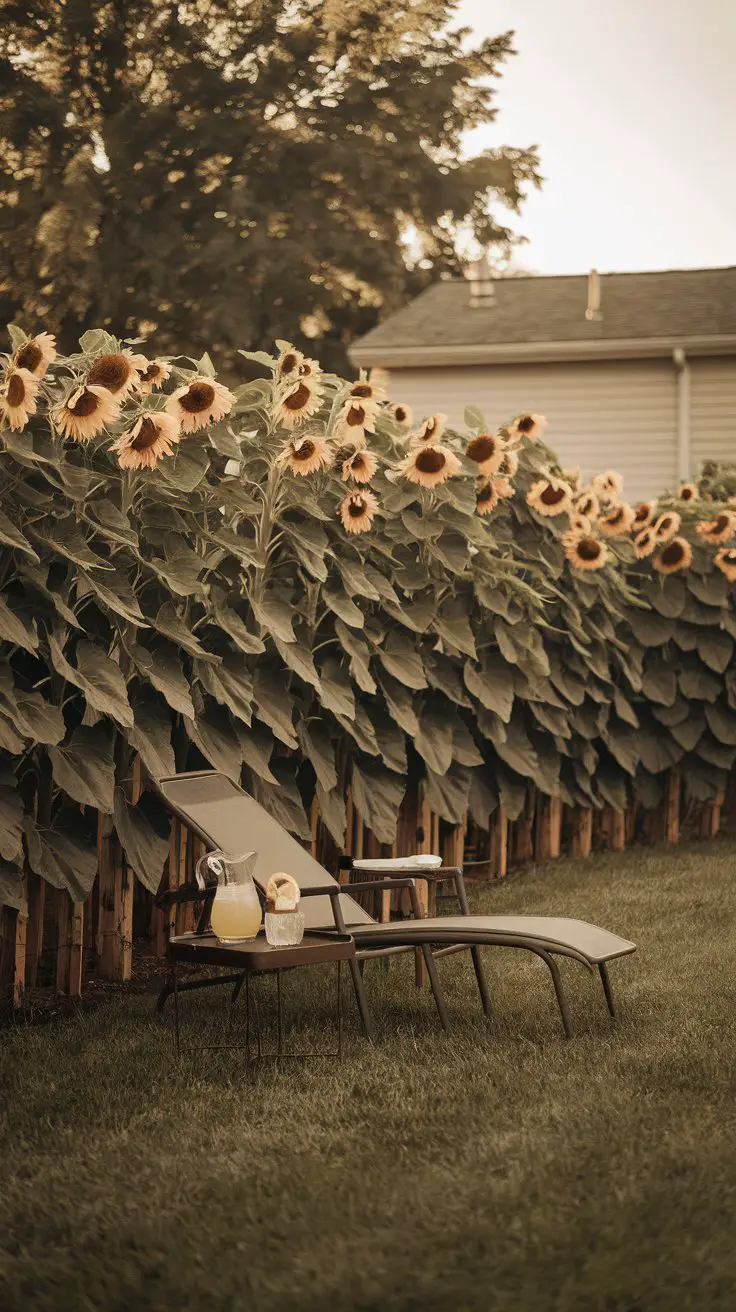
How to Recreate This Look
Here’s a decorating trick that works outdoors just as brilliantly as it does in interiors: use tall vertical elements to create intimacy and enclosure. A double row of giant sunflowers along a property line creates a seasonal privacy screen that costs a fraction of fencing — and looks infinitely more beautiful.
Best Varieties for Privacy Screens:
- ‘Skyscraper’ — reaches 10–12 feet, single large bloom per stem
- ‘American Giant’ — 10–15 feet tall, enormous dinner-plate blooms
- ‘Mongolian Giant’ — reportedly reaches 14+ feet in rich soil (a genuine conversation starter)
Planting a Privacy Screen:
- Plant two staggered rows 18 inches apart for a denser screen effect
- Space plants 12 inches apart within each row
- Minimum bed depth: 3 feet from the fence line to allow root development without fence competition
- These giants need staking in windy locations — use 6-foot bamboo stakes and soft garden ties
Budget Breakdown:
- Under $100: Seeds for a 20-foot privacy border — approximately $15–$25
- $100–$500: Add decorative edging, bamboo stakes, and drip irrigation
- $500+: Combine with a lattice trellis for year-round screening beyond sunflower season
Seasonal Adaptation: When sunflowers finish in fall, replace with tall ornamental grasses (like miscanthus) to maintain the screening effect through winter.
7. The Cottage Garden Sunflower Bed
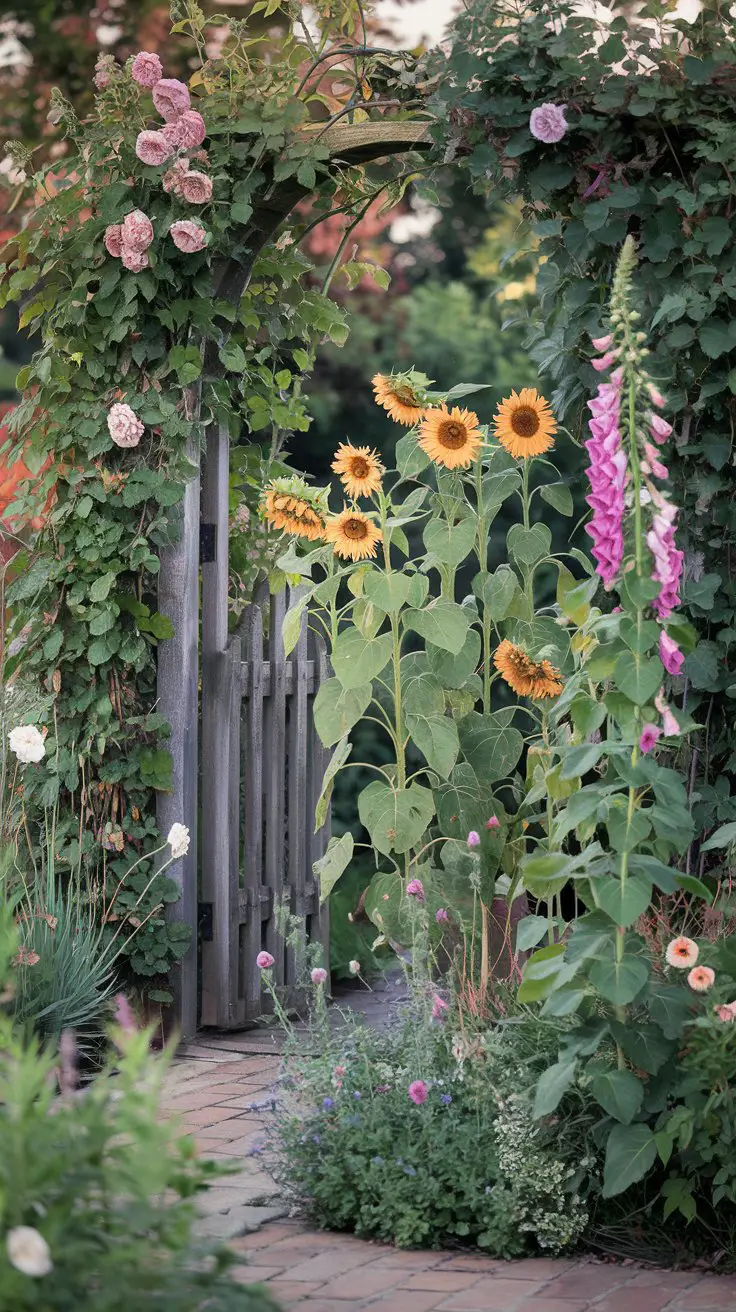
How to Recreate This Look
The cottage garden style is arguably the most forgiving garden aesthetic you can attempt — it celebrates happy accidents, self-seeding volunteers, and the slightly untamed quality that formal gardens try so hard to suppress. Sunflowers belong here completely.
Key Design Principles for Cottage Style:
- Layer heights dramatically — tall sunflowers at the back, medium hollyhocks and foxglove in the middle, low sweet William and violas at the front edge
- Mix colors warmly — the cottage palette leans into yellows, pinks, purples, and creams rather than stark contrasts
- Allow some self-seeding — cottage gardens get better each year as plants naturalize
- Include old-fashioned varieties — ‘Autumn Beauty’ sunflowers in rust, burgundy, and gold read as perfectly cottage-appropriate
Shopping List:
- ‘Autumn Beauty’ sunflower seeds — $4/packet
- Hollyhock seeds — $3/packet
- Foxglove starts — $5–$8 each at nurseries
- Sweet William seeds — $3/packet
- Climbing rose (own-root) — $15–$35 at nurseries
Budget Breakdown:
- Under $100: Full cottage seed mix + sunflower seeds — a generous bed under $40
- $100–$500: Add perennial starts (roses, echinacea) for a longer-lasting, multi-season cottage garden
- $500+: Invest in bare-root climbing roses, perennial foxglove, and a decorative garden arch
8. Sunflowers and Vegetables: The Kitchen Garden Combination
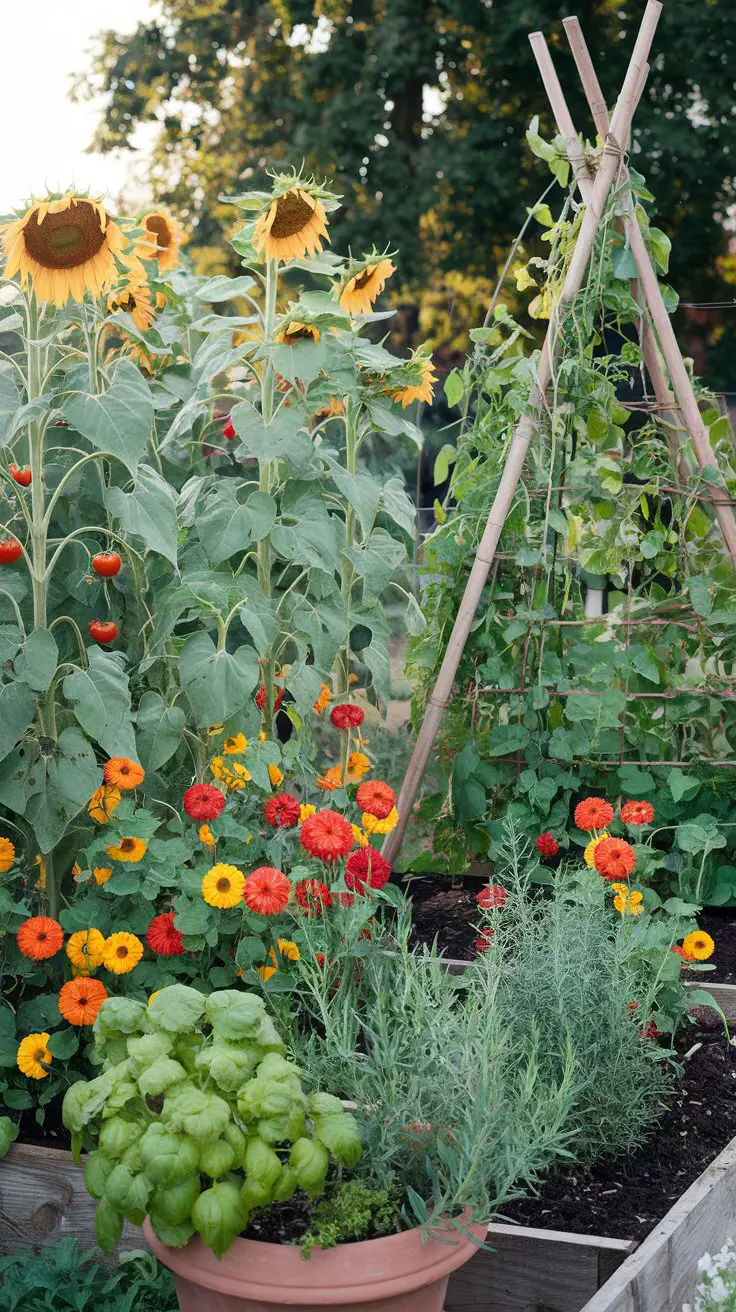
How to Recreate This Look
Here’s something experienced kitchen gardeners know that beginners often miss: sunflowers are fantastic companion plants for vegetables. They attract pollinators that benefit your entire edible garden, their tall stems support climbing beans, and their deep roots break up compacted soil for neighboring plants.
Best Sunflower-Vegetable Pairings:
- Sunflowers + pole beans — beans climb sunflower stems naturally (a modern “Three Sisters” variation)
- Sunflowers + cucumbers — pollinators attracted to sunflowers dramatically improve cucumber yields
- Sunflowers + tomatoes — sunflowers attract beneficial insects that prey on aphids and whiteflies
- Sunflowers + squash — shade from large sunflower leaves helps suppress weeds around squash plants
FYI: Keep sunflowers at least 12–18 inches from potatoes — they do inhibit potato growth when planted too closely. Every companion planting relationship has its limits!
Budget Breakdown:
- Under $100: Sunflower seeds + vegetable seeds + bamboo stakes — complete kitchen garden under $60
- $100–$500: Add one or two raised bed kits + premium vegetable compost
- $500+: Full custom raised bed system with drip irrigation and integrated trellis
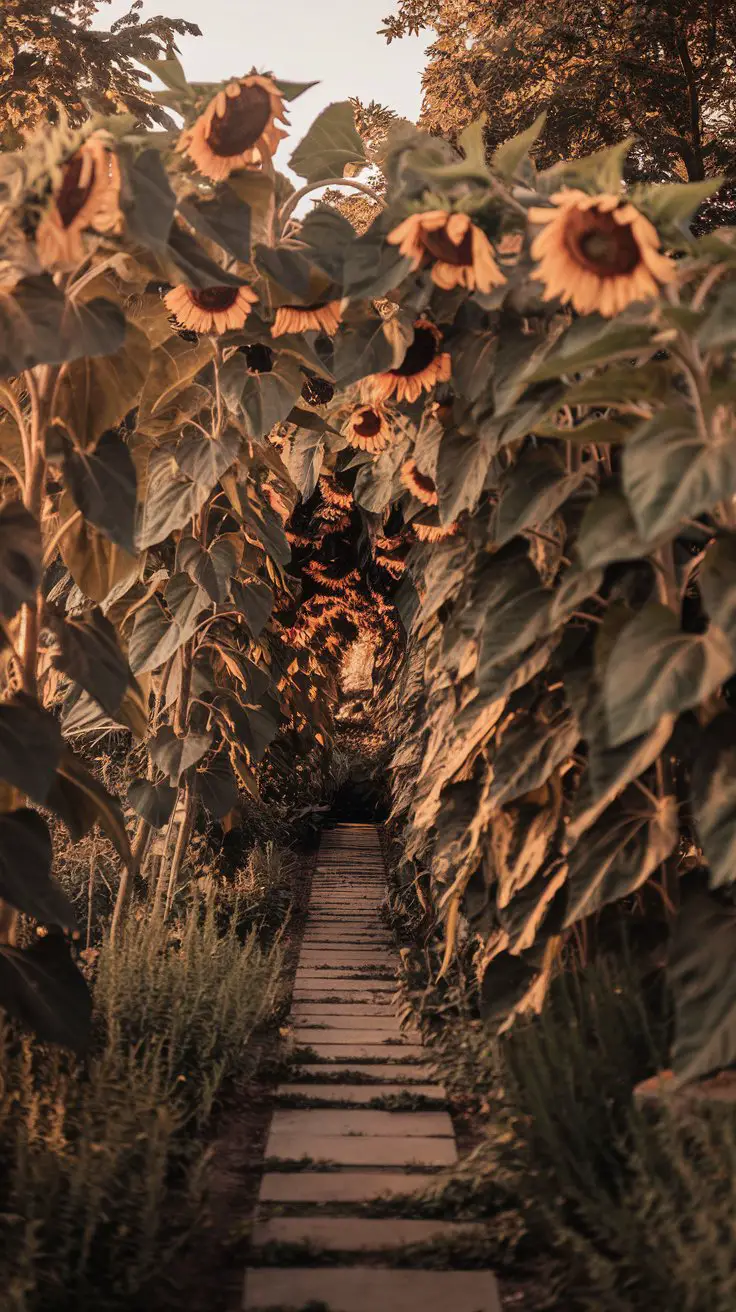
9. The Sunflower Arch or Tunnel
How to Recreate This Look
Want the single most dramatic garden feature you can create with seeds that cost under $10? The sunflower tunnel. This is the project people photograph, share, and remember for years — and it’s achieved by simply planting two parallel rows of the tallest varieties you can find and letting them do what sunflowers do naturally.
Building Your Sunflower Arch:
- Mark two parallel rows 4–5 feet apart (wide enough to walk between comfortably)
- Plant tall varieties (‘Kong,’ ‘Russian Giant,’ ‘Mammoth’) every 12 inches along both rows
- As plants reach 4–5 feet, begin gently tying tops of opposing plants together with soft garden twine, training them toward each other
- For a more structured arch, install cattle panel hoops between rows as a support structure — sunflowers will grow up and over naturally
Realistic Expectations:
- The full arch effect takes 10–14 weeks from planting — time your sowing accordingly
- Works best along a path at least 15–20 feet long for full impact
- Expect some variation in plant heights — nature doesn’t do perfectly uniform rows, and honestly that slightly wild quality makes it more beautiful
Budget Breakdown:
- Under $100: Seeds + garden twine — total around $15–$20
- $100–$500: Add cattle panel arch supports + stepping stone path + solar path lights
- $500+: Commission a permanent wooden arch framework with integrated planters at each base
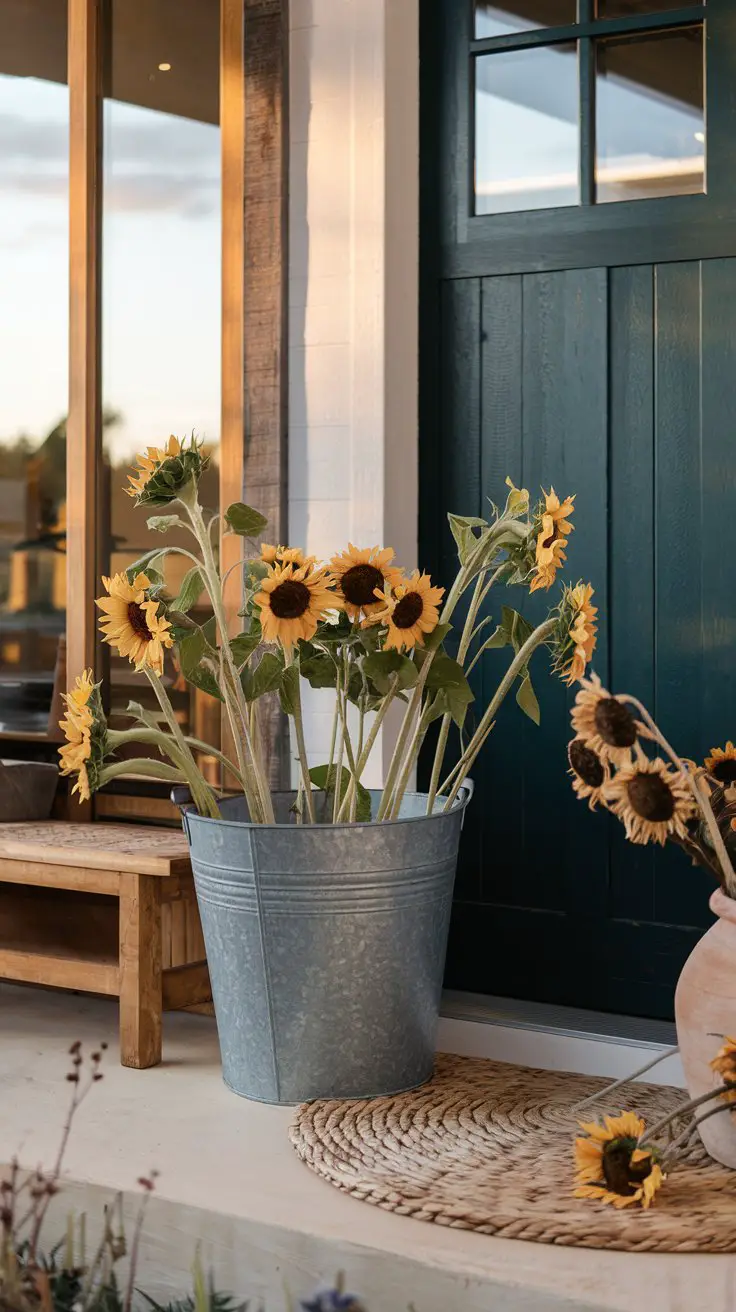
10. Seasonal Sunflower Decor: From Garden to Home
How to Recreate This Look
The sunflower garden doesn’t have to end at your back door. One of the greatest joys of growing your own sunflowers is the ability to bring them inside — and then, as the season winds down, to dry and preserve them for autumn and winter decorating.
From Fresh to Dried: The Full Sunflower Lifecycle:
- Fresh arrangements: Cut at dawn, re-cut stems at a 45-degree angle, change water every 2 days — fresh sunflowers last 7–12 days in a vase
- Dried stems: Hang cut sunflowers upside down in a warm, dry location for 2–3 weeks — dried heads hold their shape beautifully for fall wreaths and arrangements
- Seed harvesting: Let a few heads dry on the plant, then harvest seeds for next year’s garden (or for feeding birds through winter)
Seasonal Decor Ideas Using Sunflowers:
- Summer: Large mason jar bouquets on kitchen tables and windowsills
- Late summer/early fall: Mixed arrangements with sunflowers, dahlias, and eucalyptus
- Autumn: Dried sunflower heads wired into wreaths alongside dried cotton stems and preserved oak leaves
- Winter: Sunflower seed heads in bird feeders bring wildlife color to the winter garden
Budget Breakdown:
- Under $100: Dried sunflower wreaths + galvanized buckets as vases — total under $30 using homegrown flowers
- $100–$500: Add a dehydrator for faster, more consistent drying + decorative vessels + coordinating seasonal decor
- $500+: Commission a dried floral artist to create custom sunflower wreath arrangements from your garden harvest
Maintenance Tip: Dried sunflower arrangements last 3–4 months before fading. Lightly mist with hairspray to reduce petal shedding and extend their life.
Your Garden, Your Sunshine
The thing about sunflowers — and I genuinely mean this — is that they give back so generously for so little asked. Press a seed into warm soil, point it toward the sun, and it does the rest with this almost joyful determination that other plants simply can’t match. Whether you’re creating a towering privacy screen, a child’s magical fort, a cut-flower supply for your kitchen table, or just a single pot on a sunny balcony, sunflowers meet you exactly where you are.
Start small if you need to. Even one pot of ‘Big Smile’ dwarf sunflowers on a balcony railing will make you smile every single morning. Then next season, you’ll find yourself sketching out that tunnel arch on a napkin in February, impatient for the last frost to pass.
Your garden doesn’t need to look like the photos in this article to be perfect. It just needs to look like yours — sunny, intentional, and growing a little more beautiful every year. <3

Greetings, I’m Alex – an expert in the art of naming teams, groups or brands, and businesses. With years of experience as a consultant for some of the most recognized companies out there, I want to pass on my knowledge and share tips that will help you craft an unforgettable name for your project through TeamGroupNames.Com!