
There’s something genuinely magical about a Victorian garden.
Maybe it’s the way climbing roses drape over a wrought-iron arch, or how a stone pathway disappears into a tunnel of greenery.
Whatever it is, that lush, romantic, “secret garden” energy is absolutely achievable — even if your outdoor space is more “small suburban backyard” than “English country estate.”
Let’s talk about how to bring that timeless charm to life.
1. Install a Wrought-Iron or Wooden Garden Arch
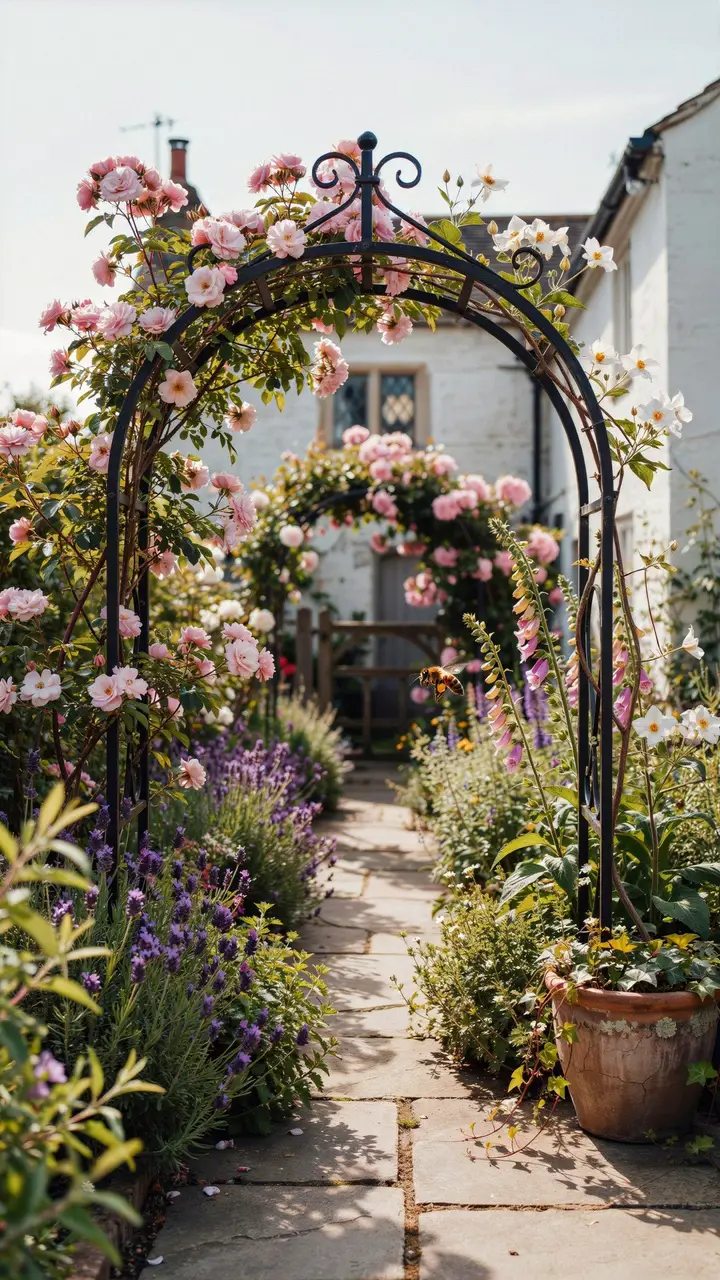
An arch is the quintessential Victorian garden feature, and honestly, it does more decorating work per dollar than almost anything else you can buy. It creates an instant sense of arrival — a signal that something beautiful lies beyond. Train a climbing rose like ‘New Dawn’ or ‘Cecile Brunner’ over a wrought-iron arch, and within two seasons you’ll have something that looks like it took a century to grow.
How to Recreate This Look
Shopping List:
- Wrought-iron or powder-coated steel arch: $80–$300 (Amazon, garden centers, or HomeDepot)
- Climbing rose (bare root or potted): $15–$40 per plant (local nurseries or David Austin Roses online)
- Clematis vine for layering: $12–$25
- Lavender border plants (4–6): $5–$10 each
- Stone or gravel pathway material: $30–$80 depending on length
Step-by-Step Styling:
- Anchor your arch securely at least 18–24 inches into the ground — Victorian gardens were built to last, and a toppling arch in a windstorm is decidedly un-romantic
- Plant one climbing rose on each side at the base, about 12 inches from the arch feet
- Add clematis on the same side as one rose — they famously love growing together (known as “Clematis through roses”)
- Edge the pathway leading through the arch with lavender, foxglove, or catmint for that overgrown, cottage-abundant look
- Mulch generously around the base of all plants
Budget Breakdown:
- Under $100: Wooden arch from a garden center + one bare-root climbing rose + seeds for foxglove and larkspur
- $100–$500: Powder-coated steel arch + two potted climbing roses + clematis + established lavender border plants
- $500+: Custom wrought-iron arch + David Austin heritage roses + professional installation + full stone pathway
Difficulty Level: Beginner — arches are straightforward to install and roses are more forgiving than their reputation suggests.
Common Mistakes to Avoid:
- Don’t plant too close to the arch feet — roots need room
- Avoid fast-growing, thorny varieties if the arch is near a walkway where people brush past
- Don’t skip the tying-in step — loose canes flop rather than climb
2. Create a Lush Cottage Border Bursting With Color
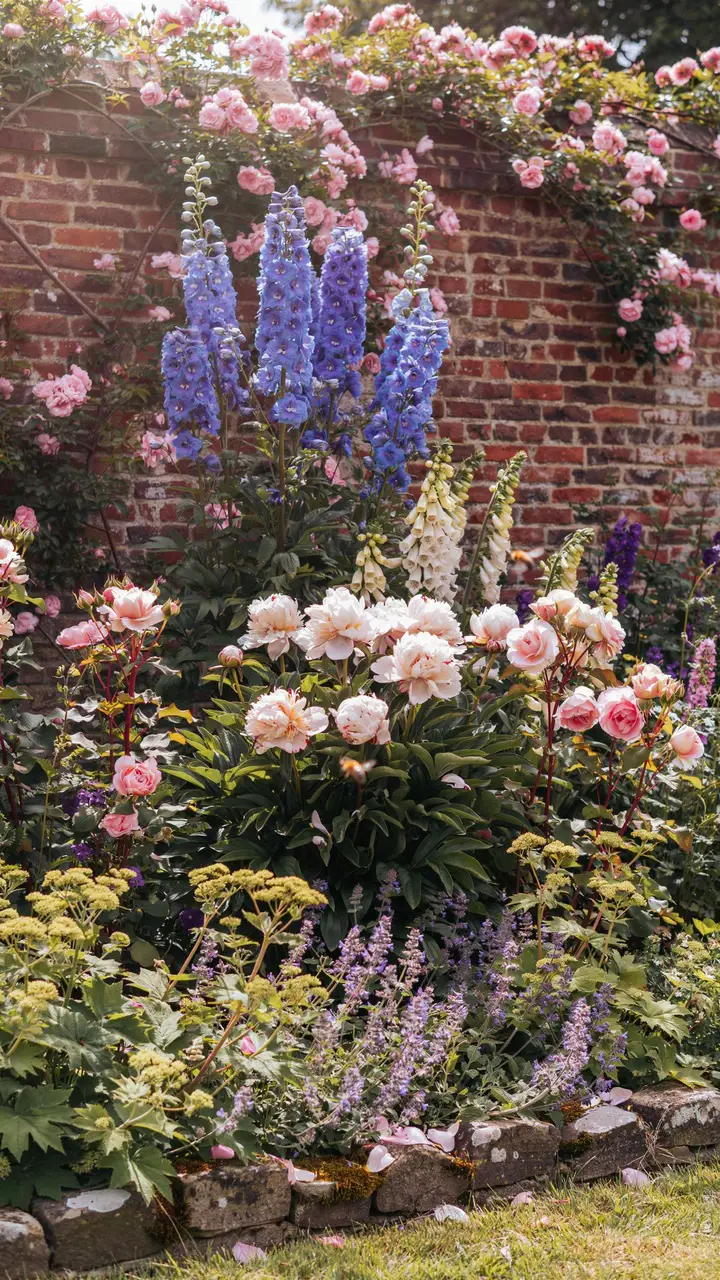
Victorian gardeners were not minimalists. They believed more was more — and in a garden border, they were absolutely right. The key to that signature Victorian abundance is layered planting: tall at the back, medium in the middle, low and spilling at the front. Think of it like arranging a really extravagant bouquet, except it comes back every year.
How to Recreate This Look
Shopping List:
- Delphiniums (back layer): $8–$15 per plant
- Peonies (mid-layer): $15–$30 per plant
- Foxglove (mid-layer, biennial): $4–$8 per plant or grow from seed for ~$3/packet
- Catmint ‘Walker’s Low’ (front edging): $8–$12 per plant
- Lady’s mantle (Alchemilla mollis, front edging): $8–$10 per plant
- Garden rose such as ‘Gertrude Jekyll’ or ‘Graham Thomas’: $20–$45
Step-by-Step Styling:
- Map your border in three tiers before buying a single plant — draw it out on paper
- Prepare the soil deeply (at least 12 inches) with well-rotted compost
- Plant tall specimens like delphiniums and hollyhocks at the back, 18–24 inches apart
- Fill the middle tier with peonies, roses, and foxglove in informal clusters of three or five (odd numbers always look more natural)
- Let catmint and lady’s mantle tumble over the border edge — the slightly “spilled” look is the whole point
Budget Breakdown:
- Under $100: Grow foxglove, larkspur, and sweet William from seed; buy one peony and one catmint as anchor plants
- $100–$500: A full mixed border with 15–20 established plants across all three tiers
- $500+: Mature, instant-impact plants including established roses and multiple peonies
Difficulty Level: Intermediate — the planting itself is easy, but the design layering takes a little planning to get the proportions right.
Seasonal Adaptability: Swap out spent summer perennials with autumn-blooming asters and Japanese anemones to keep the border performing into October.
3. Add a Vintage-Style Garden Bench
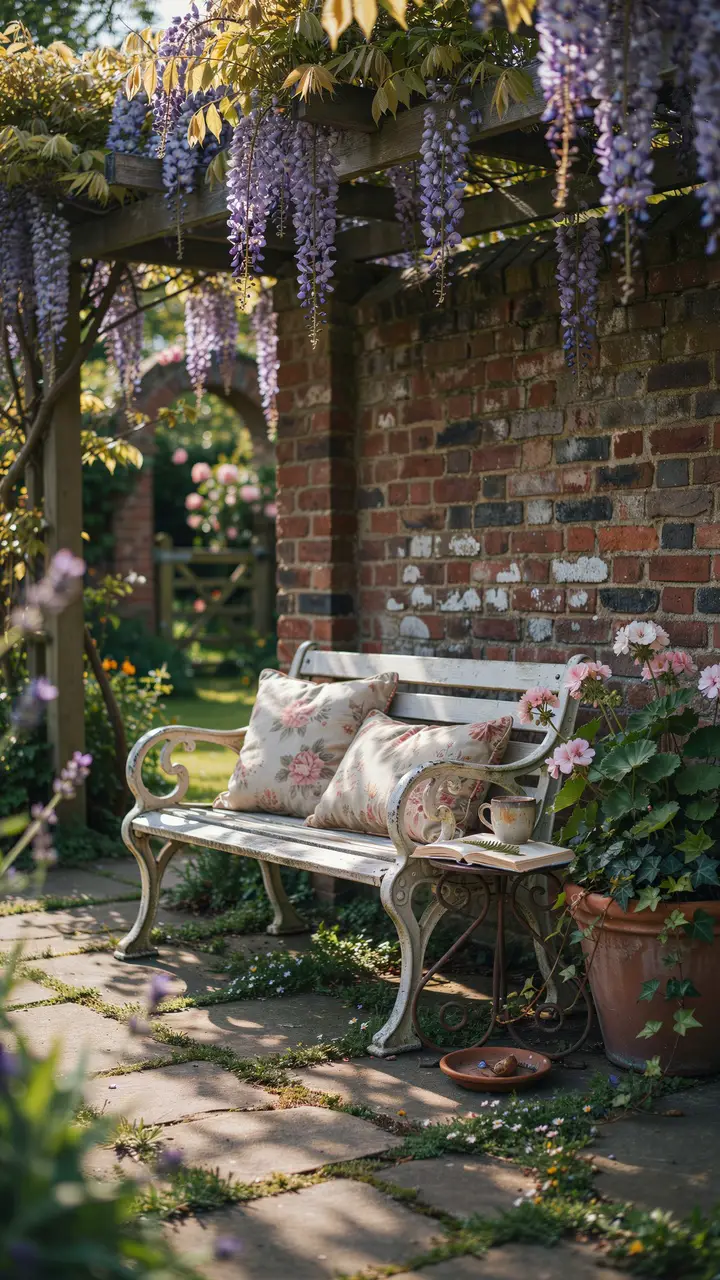
Every Victorian garden needs a proper sitting spot — not a plastic patio chair dragged out from the garage, but an actual bench with character. A cast-iron or hardwood bench tucked under a wisteria pergola or beside a rose bed transforms a garden from a space you walk through to one you actually inhabit.
How to Recreate This Look
Shopping List:
- Cast-iron or powder-coated bench: $150–$600 (antique markets, Wayfair, or specialist garden furniture retailers)
- Outdoor cushions in a vintage floral or stripe: $30–$80 per pair
- Small wrought-iron side table: $40–$120
- Wisteria (if training over a pergola): $20–$35 per plant
- Creeping thyme for ground cover: $5–$10 per plant (plant generously — you want that mossy, old-world effect)
Step-by-Step Styling:
- Position the bench to face something beautiful — a rose border, a water feature, or simply a view of the garden
- Layer cushions in complementary faded florals rather than matching sets — Victorian style celebrated eclecticism
- Place a small table within arm’s reach for the essential cup of tea
- Surround the base with creeping thyme or chamomile — it releases fragrance when brushed, which is deeply wonderful
Budget Breakdown:
- Under $100: A thrifted wooden bench repainted in heritage white or sage + DIY cushion covers from discounted fabric
- $100–$500: Quality powder-coated bench + coordinating outdoor cushions + side table
- $500+: Antique cast-iron bench (worth every penny, honestly) + high-quality weatherproof cushions
Difficulty Level: Beginner — this is largely a shopping and placement exercise. The wisteria training takes patience over a couple of seasons, but the bench itself is instant gratification.
4. Build or Install a Decorative Greenhouse or Cold Frame
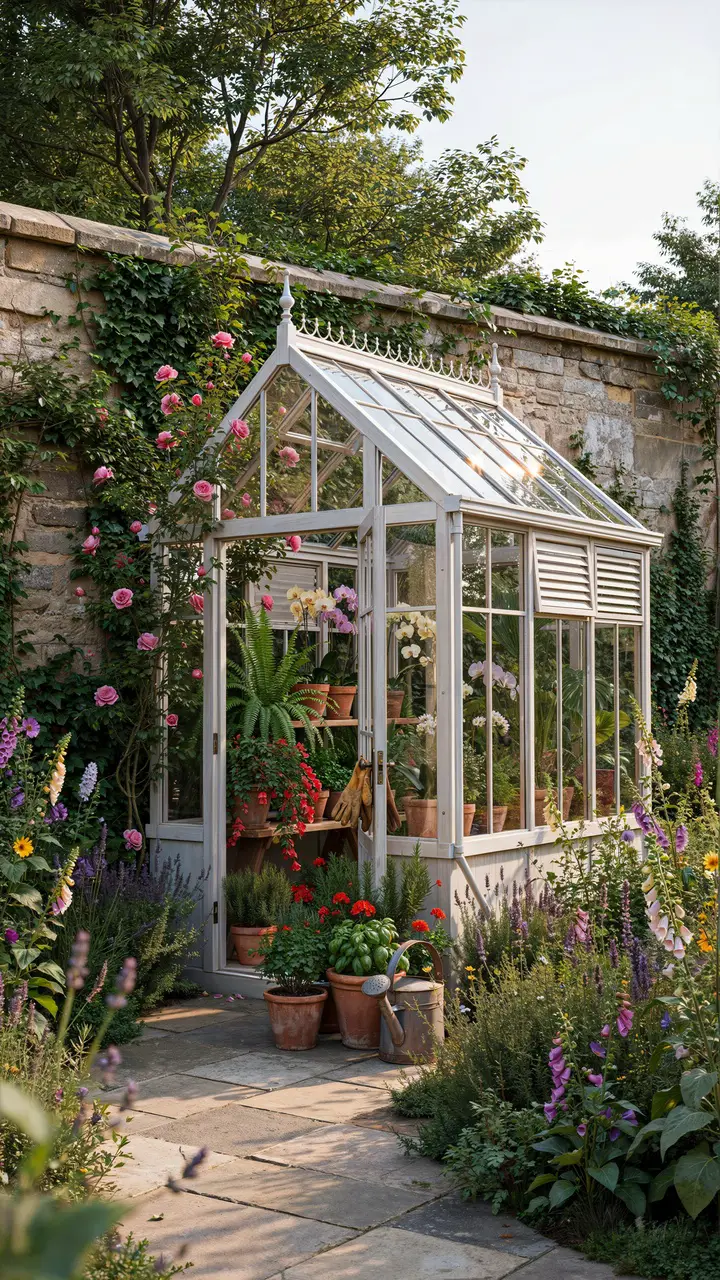
The Victorians were obsessed with glasshouses. They built grand ones to house exotic palms and orchids brought back from tropical expeditions. You don’t need anything quite so ambitious — a small lean-to greenhouse or even a decorative cold frame gives you that same beautiful, purposeful garden-room energy while actually being useful for starting seeds or overwintering tender plants.
How to Recreate This Look
Shopping List:
- Small freestanding greenhouse (6x4ft or 6x6ft): $200–$800 (Palram or Juliana brands are reliable)
- Vintage-style aluminum greenhouse (more authentic aesthetic): $600–$2,000+
- Tiered wooden staging for inside: $50–$150
- Terracotta pots in various sizes: $5–$30 each
- Begonias, ferns, or pelargoniums for inside staging: $5–$15 each
Step-by-Step Styling:
- Site the greenhouse against a south- or west-facing wall where possible for maximum warmth
- Paint any wooden staging or shelving in heritage green or cream
- Arrange pots in varying heights — this is where you channel your inner Victorian botanist
- Hang small fern baskets from the roof bars if the structure allows
- Place a cluster of terracotta pots outside the entrance to blur the line between inside and outside
Budget Breakdown:
- Under $100: A cold frame built from reclaimed timber and old window panes — genuinely achievable as a weekend DIY project
- $100–$500: Entry-level polycarbonate greenhouse with basic aluminum staging
- $500+: Glass-panel greenhouse with proper ventilation, hardwood staging, and ornamental cast-iron details
Difficulty Level: Intermediate for assembly; Advanced for a true DIY build from reclaimed materials.
5. Plant a Formal Victorian Knot Garden
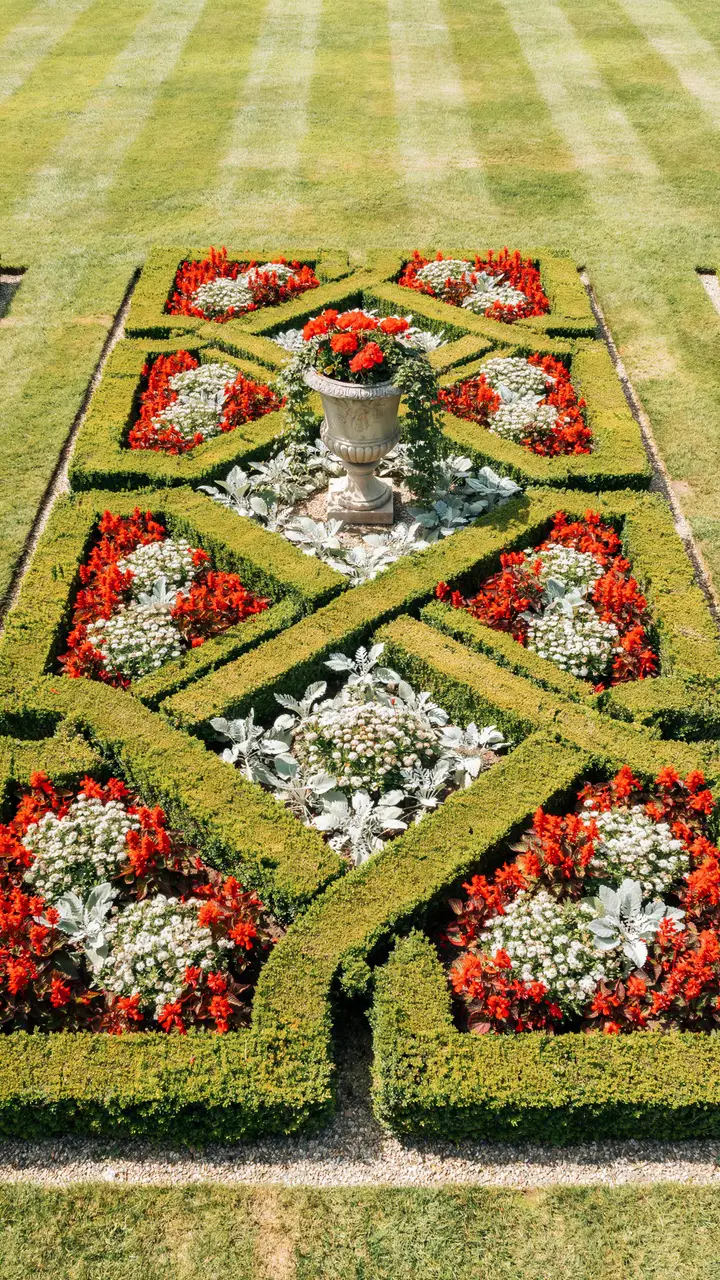
Knot gardens feel deeply Victorian, and with good reason — the Victorians revived and perfected the formal bedding scheme with characteristic enthusiasm. The good news is that you don’t need an acre of lawn to create one. A small geometric pattern in box hedging, even just six feet square, creates a genuinely impressive focal point.
How to Recreate This Look
Shopping List:
- Dwarf box hedging plants (Buxus sempervirens ‘Suffruticosa’): $5–$12 per plant (you’ll need 20–40 for a small knot)
- Annual bedding plants for infill — salvias, begonias, alyssum: $3–$8 per tray
- Dusty miller for silver contrast: $3–$6 per plant
- Central stone urn or plinth: $50–$300
- Pelargoniums for the urn: $5–$10 each
Step-by-Step Styling:
- Mark out your pattern on the ground using sand or string before planting a single thing
- Plant box at uniform spacing — 6 inches apart for a tight, formal hedge
- Clip box at least twice a year (late spring and late summer) to keep the pattern sharp
- Infill between the box “ribbons” with blocks of single-color annuals, refreshed each season
- Place a classical urn or sundial at the center as the focal point
Budget Breakdown:
- Under $100: A simplified two-color pattern using inexpensive annual bedding plants arranged geometrically (no box hedging needed for a temporary version)
- $100–$500: A small permanent knot in box with annual infill planting and a modest stone urn
- $500+: A fully established knot garden with multiple box varieties, a quality stone focal piece, and professional initial layout
Difficulty Level: Intermediate — the design planning is the hard part. Maintenance requires consistent clipping twice a year.
Common Mistakes to Avoid: Don’t plant box in waterlogged soil — it’s very susceptible to root rot. And FYI, box blight is a real concern in many areas; consider alternatives like Ilex crenata or Teucrium chamaedrys if blight is prevalent near you.
6. Introduce a Victorian-Style Water Feature
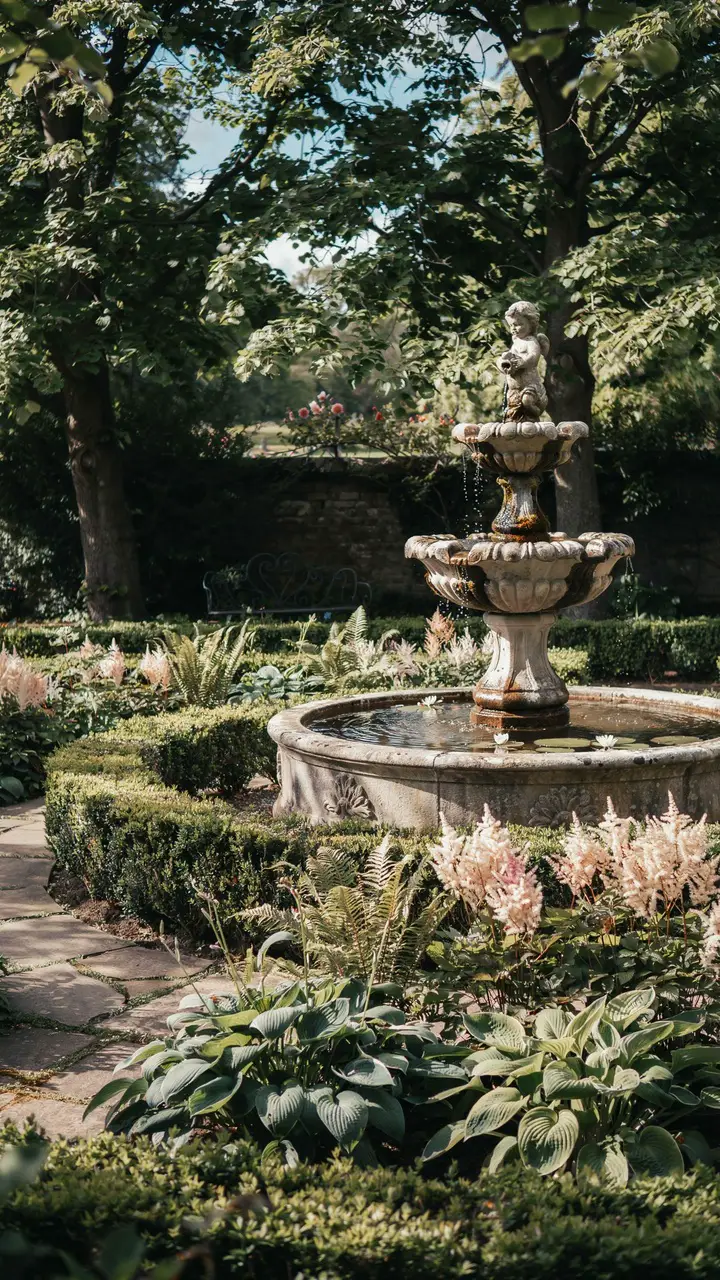
The Victorians understood that the sound of water in a garden is worth more than almost any visual decoration. A tiered stone fountain — even a compact one — instantly evokes that classic walled-garden atmosphere. Pair it with moisture-loving ferns, hostas, and astilbes, and you have a genuinely transportive corner of garden.
How to Recreate This Look
Shopping List:
- Tiered stone-effect resin fountain: $150–$500 (Wayfair, Amazon, or garden centers)
- Real carved stone fountain: $500–$3,000+
- Hostas (large variety): $10–$25 per plant
- Astilbes in pink or white: $8–$15 per plant
- Hardy ferns: $8–$15 per plant
- Aquatic pump for recirculation: often included, or $30–$60 separately
Step-by-Step Styling:
- Situate the fountain where you can hear it from a seating area — the sound is the entire point
- Surround with shade-tolerant planting: hostas, ferns, and astilbes thrive in the cooler, damper microclimate near water
- Let moss colonize the stone surface naturally — don’t scrub it off, it’s gorgeous and authentically aged
- Add a few water snails to the basin to keep algae under control without chemicals
Budget Breakdown:
- Under $100: A large glazed ceramic pot converted into a self-contained bubble fountain with a submersible pump
- $100–$500: A tiered resin or reconstituted stone fountain with recirculating pump
- $500+: Real carved limestone or sandstone fountain — a genuine investment that will outlast everything else in the garden
Difficulty Level: Beginner (for self-contained fountains) to Intermediate (for larger installed fountains requiring a power supply).
7. Use Climbing Plants to Soften Walls and Fences
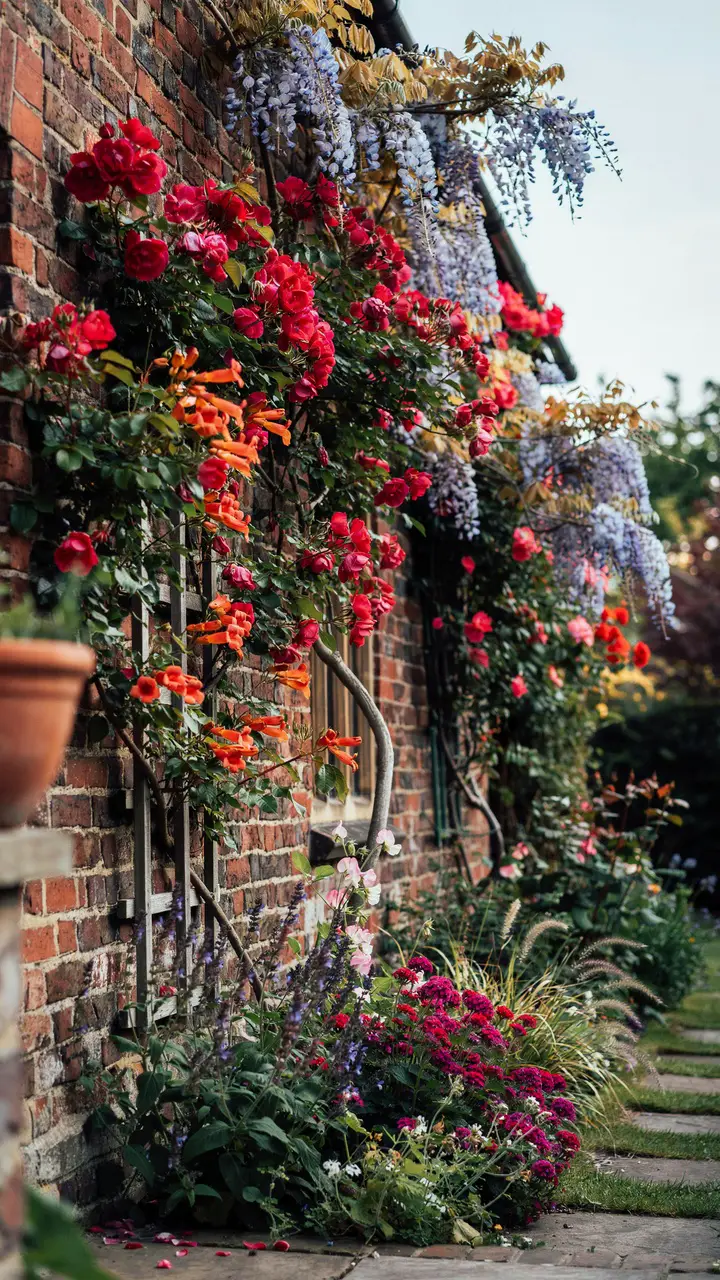
A bare fence or wall is, in a Victorian garden, simply a missed opportunity. The Victorians covered every vertical surface they could with climbing roses, wisteria, clematis, and sweet peas. The result was walls that bloomed and buildings that seemed to grow organically from the garden itself. It’s one of the easiest and most transformative things you can do.
How to Recreate This Look
Shopping List:
- Climbing rose (once-flowering heritage type like ‘Madame Alfred Carrière’ or repeat-flowering ‘Climbing Iceberg’): $20–$45
- Wisteria sinensis or floribunda: $20–$35
- Sweet peas (annual, from seed): $2–$4 per packet — extraordinary value
- Clematis in a complementary color: $12–$25
- Galvanized vine eyes and wire for training: $15–$30 total
- Trellis panels (if no wire system): $20–$60 per panel
Step-by-Step Styling:
- Install horizontal wires 18 inches apart using vine eyes screwed into the wall or fence — this is far more durable than trellis for permanent climbers
- Plant roses and wisteria at least 12–18 inches away from the wall base (the soil directly against a wall is often very dry)
- Train shoots horizontally along the wires — horizontal training encourages far more flowering than vertical
- Weave annual sweet peas through rose stems for instant color while the roses establish
Budget Breakdown:
- Under $100: Annual sweet peas grown from seed + a packet of nasturtiums for base planting — astonishing impact for almost nothing
- $100–$500: One climbing rose + one clematis + wire training system
- $500+: A full wall tapestry of rose, wisteria, and clematis, professionally planted and trained
Difficulty Level: Beginner for sweet peas; Intermediate for roses and wisteria (which require annual pruning know-how).
8. Create a Victorian Fernery or Shaded Grotto
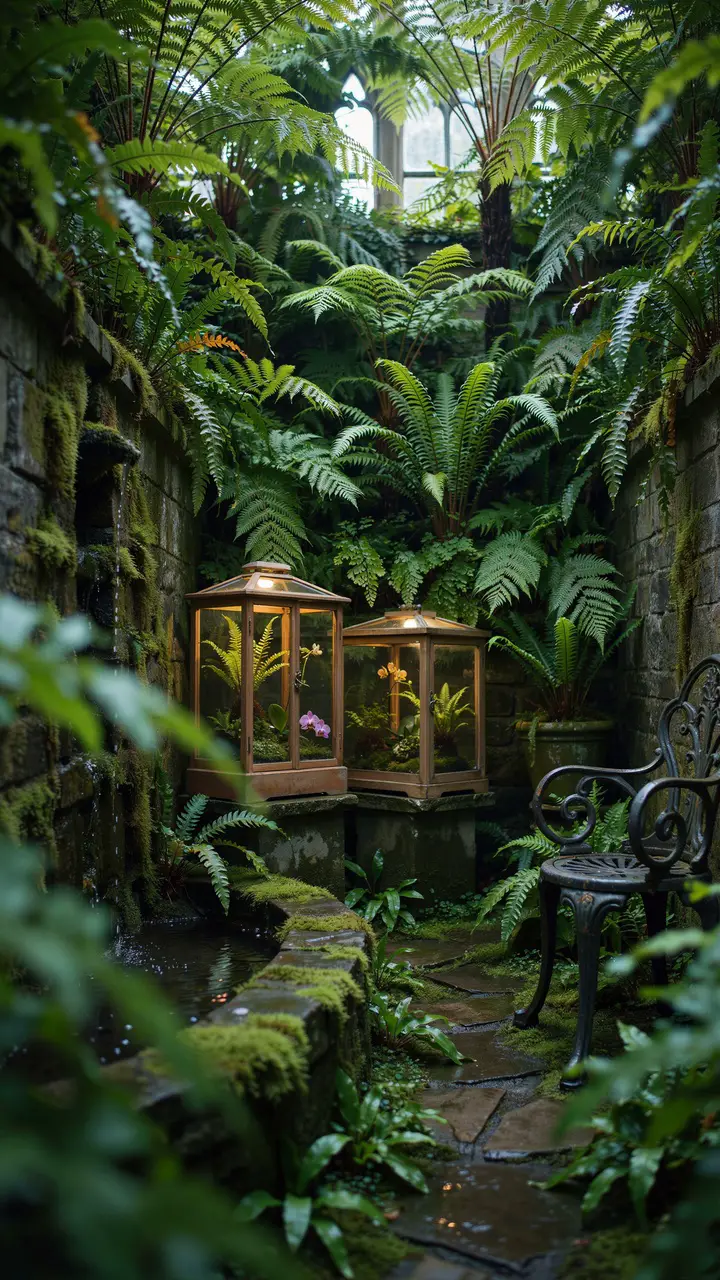
The Victorians were absolutely fern-mad — a craze historians literally call “pteridomania,” which is possibly the most Victorian word in existence. A shaded corner given over to ferns, mosses, and shade-tolerant ground covers becomes one of the most peaceful spots in any garden. It’s also perfect for those awkward, dark corners where nothing else seems to want to grow.
How to Recreate This Look
Shopping List:
- Assorted hardy ferns (Dryopteris, Polystichum, Athyrium, Osmunda): $8–$20 per plant
- Maidenhair fern (Adiantum) for pots or sheltered spots: $10–$20
- Mosses (can be transplanted from elsewhere in the garden or purchased): $10–$25 per tray
- Large terracotta pots for specimen ferns: $15–$50 each
- Reclaimed stone or reconstituted stone for a low grotto wall: variable
- Astilbes and hostas to complement: $8–$20 each
Step-by-Step Styling:
- Choose the shadiest, dampest corner of your garden — a fernery turns a problem area into a feature
- Build up levels using stacked stone or reclaimed brick to create visual interest and planting pockets
- Combine ferns of contrasting textures: bold and architectural alongside delicate and feathery
- Keep the soil consistently moist — a layer of leaf mould mulch holds moisture beautifully
- Let moss colonize any stone surfaces — encourage it with a brushing of diluted natural yogurt on the stone
Budget Breakdown:
- Under $100: Collect free fern divisions from gardening groups or neighbors + reclaimed stone
- $100–$500: A well-stocked fernery with 10–15 plants and terracotta pots
- $500+: A built stone grotto with a recirculating water trickle and full planting scheme
Difficulty Level: Beginner — ferns are extraordinarily forgiving once established in the right conditions.
9. Line Pathways with Victorian-Style Edging and Planting
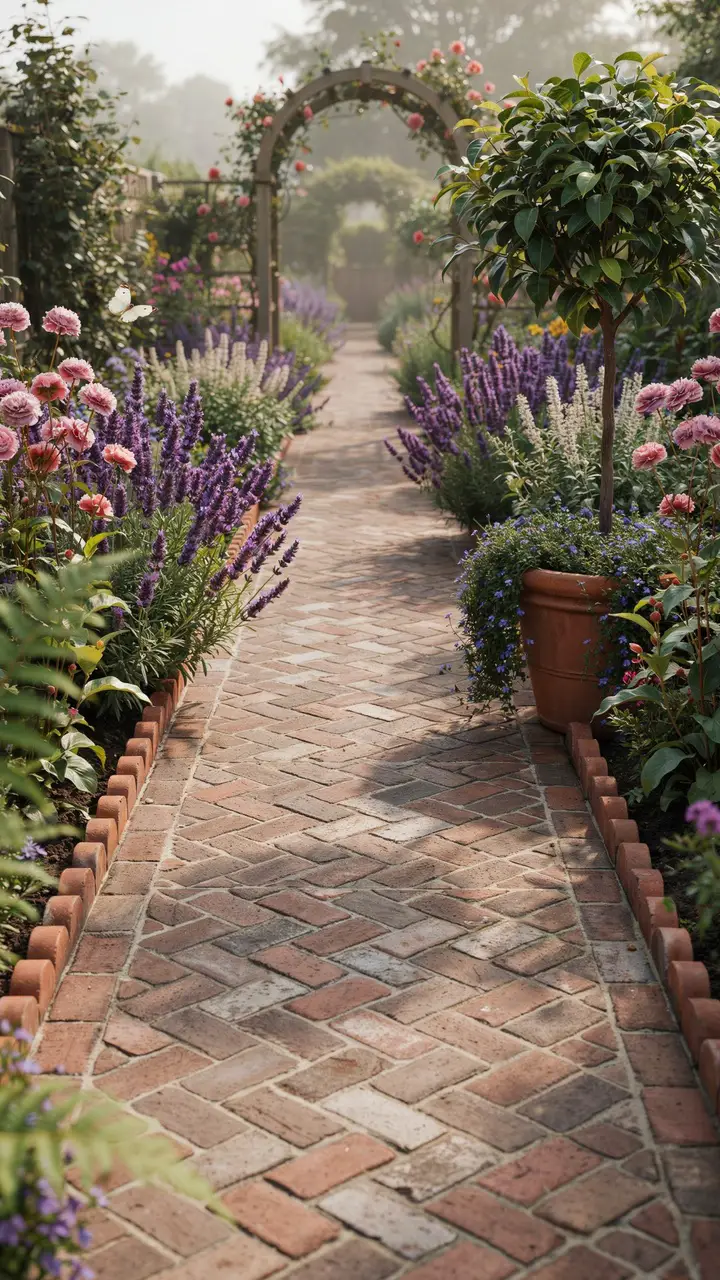
The path itself is part of the Victorian garden’s charm. That combination of herringbone brick, terracotta rope-edge tiles, and overflowing border planting creates the most characterful garden walkways imaginable. And the good news — reclaimed brick is relatively affordable and often available from architectural salvage yards.
How to Recreate This Look
Shopping List:
- Reclaimed red brick for path: $0.50–$2.00 per brick (architectural salvage yards, eBay local listings)
- Victorian-style rope-edge terracotta tiles: $3–$7 each (specialist suppliers or eBay)
- Lavender ‘Hidcote’ for edging: $5–$10 per plant
- Catmint ‘Walker’s Low’: $8–$12 per plant
- Sweet William (biennial, from seed): $2–$3 per packet
- Standard bay tree in pot: $40–$120
Step-by-Step Styling:
- Lay brick on a compacted sand and gravel base — proper preparation prevents the path from rocking and sinking
- Set rope-edge tiles vertically along both sides, pressed firmly into the soil
- Plant lavender and catmint directly against the rope edging — they’re meant to spill forward slightly
- Dot standard-trained bay, box, or rose trees in pots along the path at regular intervals for that formal Victorian rhythm
Budget Breakdown:
- Under $100: Gravel path with basic timber edging + sweet William and lavender from seed
- $100–$500: Reclaimed brick path + rope-edge edging + established lavender border
- $500+: Full professionally laid herringbone brick path with terracotta edging and mature planting
Difficulty Level: Intermediate — path laying requires some preparation work to do it properly and durably.
10. Decorate with Ornamental Victorian Garden Accessories
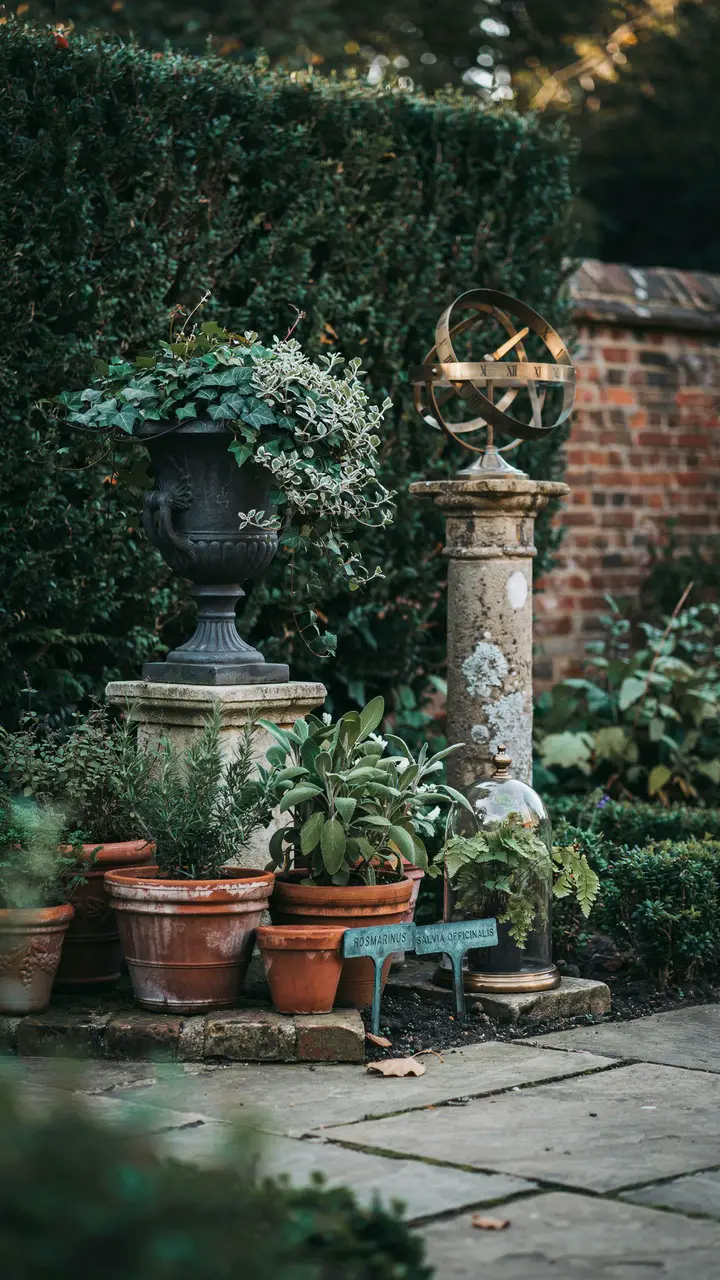
Victorian garden style absolutely sweats the details — and it’s the accessories that pull a garden from “nice” to “genuinely extraordinary.” Cast-iron urns, stone plinths, sundials, glass cloches, verdigris copper labels, terracotta long Toms — these are the finishing touches that signal a garden with genuine intention and character. 🙂
How to Recreate This Look
Shopping List:
- Cast-iron or stone-effect urn: $40–$300 depending on material and size
- Stone plinth or column: $60–$250
- Sundial (reproduction): $80–$400
- Glass cloches: $20–$80 each (various sizes available online)
- Copper or verdigris plant labels: $15–$40 for a set
- Terracotta long Tom pots: $8–$30 each
- Trailing ivy, silvery dichondra, or lotus vine for urns: $5–$15 per plant
Step-by-Step Styling:
- Group accessories rather than scattering them — a curated vignette reads as intentional; isolated objects read as random
- Vary heights using plinths, upturned pots, or old stone steps as staging
- Let patina and weathering develop naturally — a pristine, brand-new sundial looks slightly wrong; a mossy one looks magnificent
- Use glass cloches over small specimen plants to create that instant Victorian conservatory effect even outdoors
Budget Breakdown:
- Under $100: A collection of thrifted terracotta pots + DIY copper label markers made from copper tape + a planted urn made from a charity shop find
- $100–$500: A quality resin stone urn on a plinth + sundial + copper labels + glass cloche
- $500+: Authentic cast-iron or carved stone urns + antique or high-quality reproduction sundial
Difficulty Level: Beginner — this is almost pure styling and sourcing. The hunting for beautiful pieces is half the pleasure.
Maintenance Tips: Bring terracotta and cast-iron pieces inside or into a shed over winter if your climate gets hard frosts. Even “weatherproof” materials last significantly longer with minimal winter protection.
Bringing It All Together
A Victorian garden isn’t really about following rules — it’s about embracing a philosophy: that gardens should be abundant, personal, a little romantic, and richly detailed. You don’t need to implement all ten ideas at once (though wouldn’t that be something). Start with one arch, one overflowing border, one bench under a pergola, and you’ll immediately feel that shift in how the space feels.
The most important thing the Victorians understood is that a garden is never truly finished — it’s always in the process of becoming. And honestly? That’s the most liberating design philosophy there is. Your climbing rose won’t cover the arch in year one. Your knot garden won’t look perfectly crisp in its first season. But every year, it gets a little more beautiful, a little more itself.
That slow, patient, joyful process of growing something? That’s the real Victorian garden tradition worth inheriting. <3

Greetings, I’m Alex – an expert in the art of naming teams, groups or brands, and businesses. With years of experience as a consultant for some of the most recognized companies out there, I want to pass on my knowledge and share tips that will help you craft an unforgettable name for your project through TeamGroupNames.Com!