
So you’re staring at that awkward bedroom corner—you know the one.
It’s either collecting dust bunnies and forgotten gym bags, or it’s already home to a wardrobe that doesn’t quite play nicely with your TV setup.
Maybe you’ve scrolled through Pinterest for hours and everything either looks impossibly expensive or requires knocking down a wall (pass). I’ve been there.
That corner is either your bedroom’s biggest problem or its most underutilized superpower.
Spoiler: it’s almost always the second one. Let’s fix that.
Combining a corner wardrobe with a TV unit is one of the smartest dual-purpose design moves you can make in a bedroom—especially if you’re working with limited square footage, a rented space, or a budget that doesn’t exactly scream “hire an interior designer.”
The key is knowing which layout actually fits your room, your style, and your real life (yes, the one where laundry occasionally piles on top of the wardrobe, and yes, someone always leaves the wardrobe door open during a movie).
1. The Classic L-Shaped Built-In Corner Wardrobe with Floating TV Panel
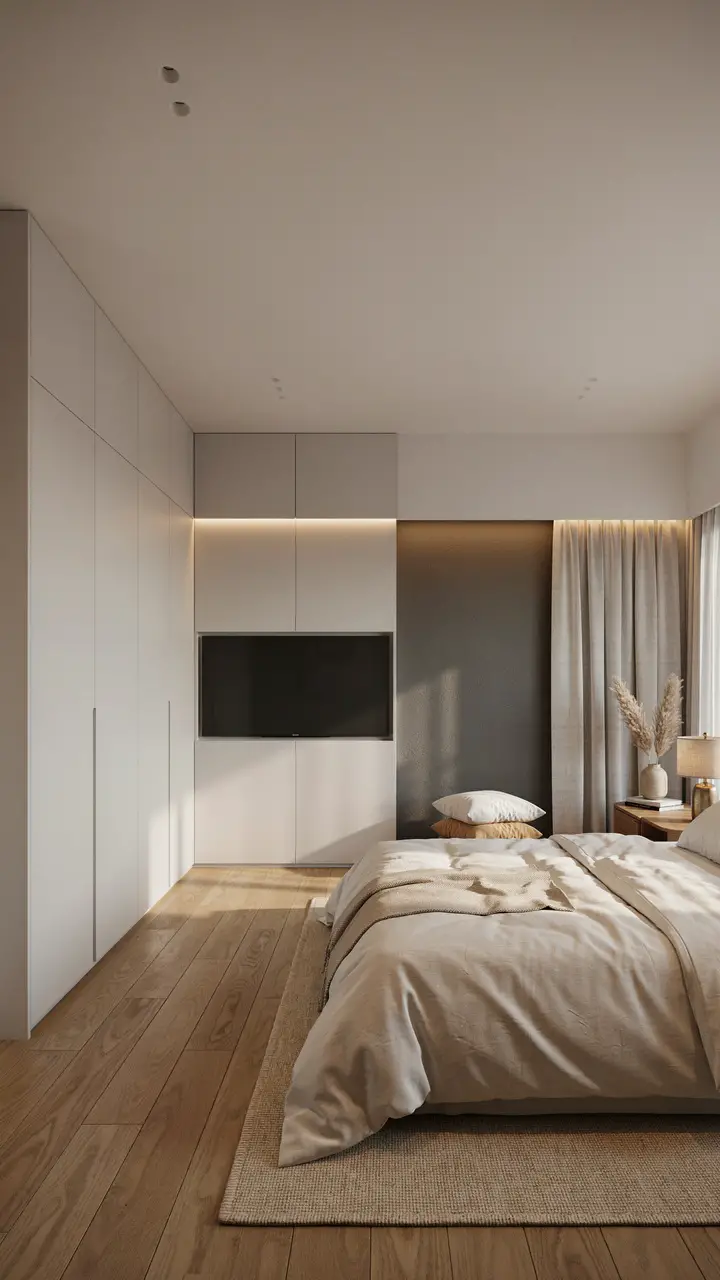
How to Recreate This Look
The L-shaped built-in with a floating TV panel is the gold standard of corner wardrobe + TV combinations. It uses every inch of a corner efficiently, and the floating panel means you’re not awkwardly balancing a TV on top of a wardrobe shelf (we’ve all seen that, and we’ve all cringed).
Shopping List:
- Flatpack wardrobe frames with modular panels (IKEA PAX system, Rs. 15,000–45,000 depending on configuration)
- Handleless push-to-open cabinet doors or slim bar handles
- Floating TV wall panel or media shelf (can be DIY with a plywood panel and wall brackets)
- LED strip lighting (warm white, 2700K–3000K, under Rs. 1,500 for a 5m roll)
- Cable management channel or raceway (Rs. 300–800)
Step-by-Step Styling:
- Measure your corner carefully—account for skirting boards and ceiling height before ordering any units
- Install the wardrobe frames first, securing both sides into wall studs
- Mount the TV panel or floating shelf at seated eye level (typically 100–120 cm from the floor to the centre of the screen)
- Route cables through the management channel before sealing the panel
- Add LED strips to the underside of upper wardrobe sections for ambient lighting
- Finish with matching or complementary door panels across both wardrobe wings
Budget Breakdown:
- Budget-friendly (under Rs. 8,000): Flatpack wardrobe frames with DIY floating plywood TV panel painted to match
- Mid-range (Rs. 8,000–40,000): IKEA PAX configuration with custom doors + a prefab floating media panel
- Investment-worthy (Rs. 40,000+): Fully custom carpentry with concealed hinges, integrated lighting, and matching veneer finish throughout
Space Requirements: Works best in rooms of at least 12×12 feet. The L-shape needs a full corner with minimum 90 cm on each arm for storage to be functional.
Difficulty Level: Intermediate to Advanced. The wardrobe assembly itself is beginner-friendly if you’re using flatpack systems, but wall-mounting the TV panel and managing cables cleanly requires some confidence with a drill and a spirit level.
Lifestyle Consideration: If you have young kids or pets, choose push-to-open doors without protruding handles—fewer things for small hands to grab (or cats to hang from).
Common Mistake to Avoid: Don’t mount the TV too high. Watching TV at a steep upward angle is uncomfortable and, over time, genuinely bad for your neck.
2. The Sliding Door Corner Wardrobe with Recessed TV Niche
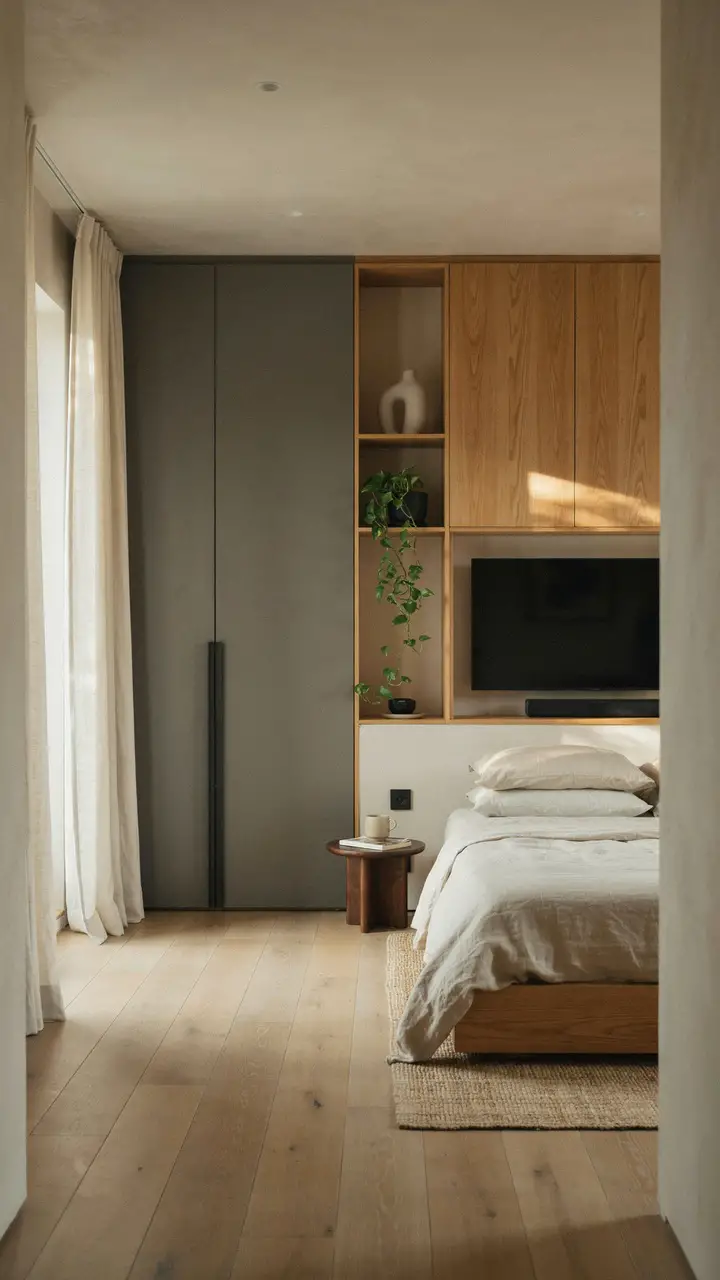
How to Recreate This Look
Sliding doors are a brilliant choice for corners because they never swing out into the room—a gift in a smaller bedroom. The recessed TV niche between the two wardrobe sections creates a clean, intentional look that feels custom even if it isn’t.
Shopping List:
- Sliding door wardrobe system (Hafele, Hettich, or local carpenter-built alternatives)
- Oak veneer panels or peel-and-stick wood-effect film for the niche finish (Rs. 800–2,500 per sqm)
- Wall-mount TV bracket (tilting or fixed, Rs. 700–2,500)
- Soundbar (optional but strongly recommended—TV speakers in a recessed niche can sound muffled)
- Small trailing pothos or devil’s ivy in a hanging or shelf pot
Style Compatibility: This look pairs beautifully with Japandi, Scandinavian, or modern minimalist bedroom aesthetics. It’s also surprisingly compatible with a mid-century modern vibe if you swap the charcoal for walnut tones throughout.
Seasonal Adaptability: The niche shelves are your seasonal swap zone. In winter, add a small diffuser with a warming scent and a chunky knit throw draped over a nearby chair. In summer, swap for a light ceramic vase with dried grasses and keep the space feeling breezy and open.
Maintenance Tip: Sliding door tracks collect dust aggressively. A quick once-a-month wipe with a slightly damp cloth keeps them gliding smoothly. Bold tip: Always choose bottom-rolling tracks over top-hanging systems for heavier doors—they’re more stable long-term.
For more inspiration on creating a cohesive built-in storage wall, check out these TV wall with closet ideas that show how integrated storage and media setups can completely transform a room.
3. The Open-Shelf Corner Unit with Hidden TV Cabinet
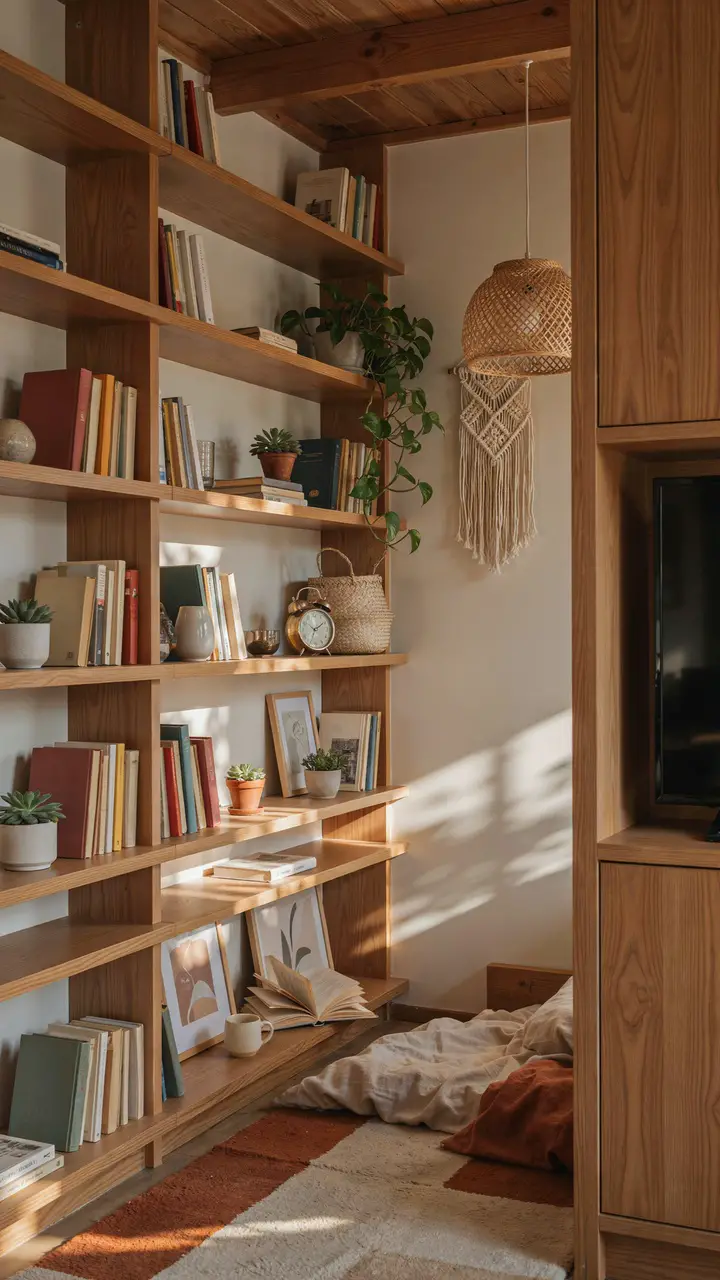
How to Recreate This Look
Not everyone wants the TV to be the focal point of a bedroom—fair enough! The hidden TV cabinet approach lets you enjoy watching without sacrificing the aesthetic when it’s off. Open shelves on the adjacent wardrobe wing give you display space that feels gallery-worthy without looking like IKEA just delivered everything yesterday.
The secret to great open shelving: Think in threes. Style each shelf with three elements—one tall, one medium, one small. Vary texture: something woven, something ceramic, something with words. Vary tone: light, medium, dark. This formula works every single time, and you’ll never again spend two hours rearranging a shelf wondering why it looks wrong.
DIY Option: A carpenter-built version of this unit can cost as little as Rs. 12,000–25,000 in India using pine or MDF with a lacquer finish. Tell your carpenter you want concealed hinges on the TV cabinet door so it closes flush and invisible—this is the detail that separates “custom” from “made-up.”
Budget Breakdown:
- Budget-friendly: Freestanding cube shelving units (like Hometown or Wakefit modular shelves) arranged in an L + a TV with a swing-arm wall mount that tucks the screen to the side when not in use
- Mid-range: Modular carpentry-built unit with combination open and closed sections
- Investment-worthy: Full custom joinery with push-to-open TV cabinet, integrated LED lighting inside shelves, and matching back panels
4. The Wardrobe-Width TV Wall: When One Wall Does Everything
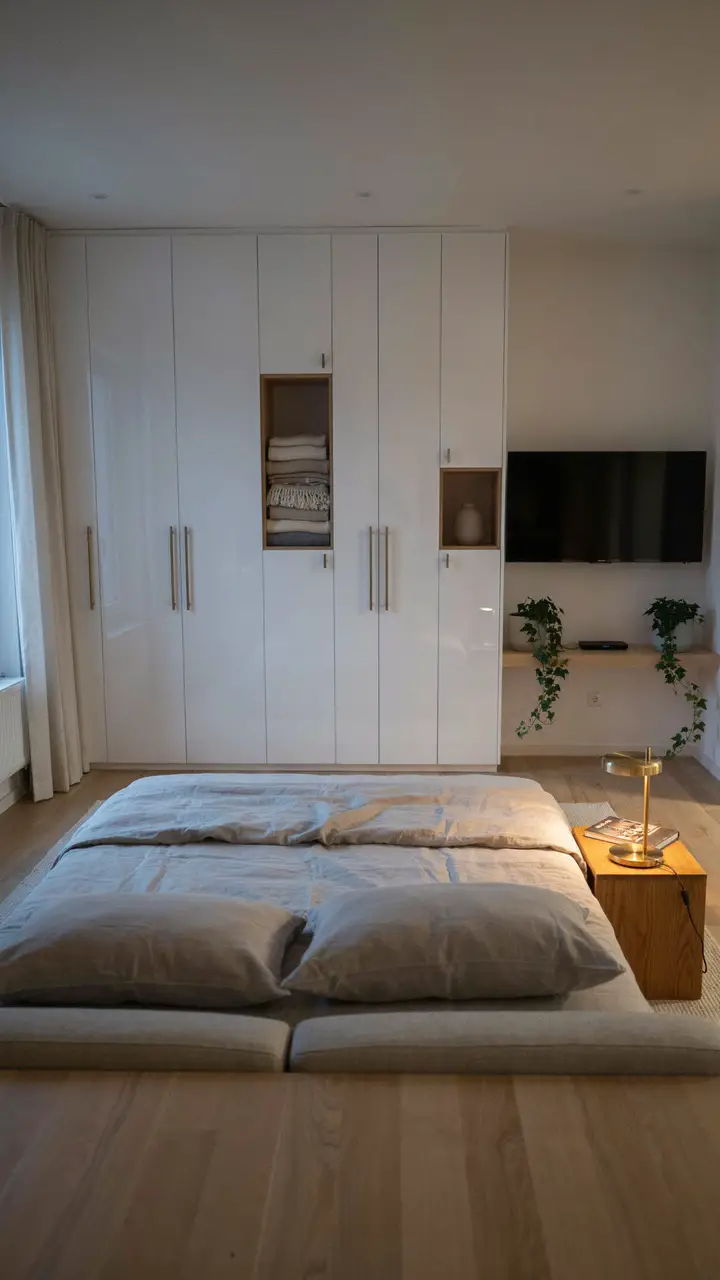
How to Recreate This Look
When your corner wardrobe expands to become a full media wall, you’ve unlocked one of the most satisfying small-bedroom solutions available. One wall handles storage, display, and entertainment—which means your other three walls get to stay beautifully clear.
The design trick that holds this look together: Use the same door material, colour, and hardware across both the wardrobe and the media console sections. When the elements share a design language, the room reads as intentional and custom—even if the wardrobe is flatpack and the media unit is a separate purchase you’ve styled to match.
FYI: This layout works especially well in bedrooms where the door opens opposite the main storage wall, meaning you don’t have to worry about wardrobe doors swinging into the walkway.
Want more ways to integrate your closet with your bedroom aesthetic? These bedroom built-in closet wall ideas with TV offer even more creative layouts worth exploring.
5. The Corner Wardrobe with TV Unit for Small Bedrooms
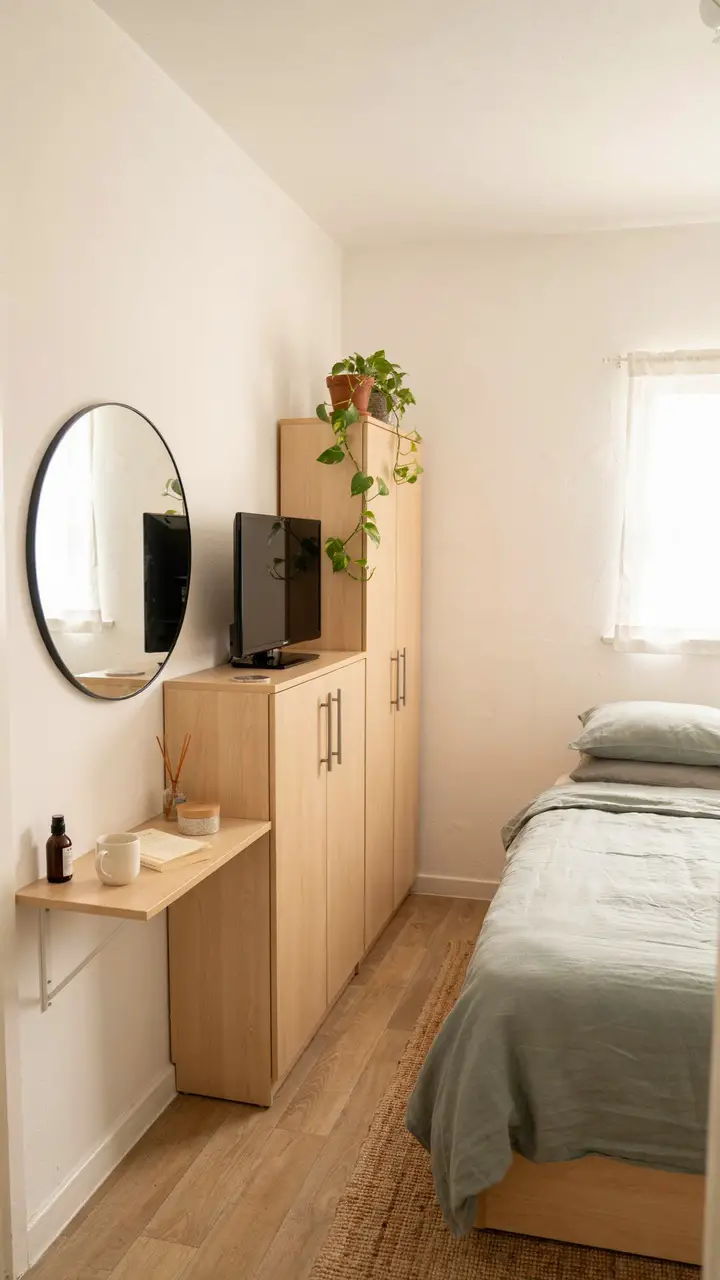
How to Recreate This Look
Small bedroom, meet your new best friend: the asymmetric L-shape. One tall wardrobe arm handles hanging clothes and shelves. The shorter arm becomes your media console—no extra furniture needed, no floor space sacrificed.
The swivel TV stand is the hero here. A good quality swivel stand (Rs. 800–2,500) lets you angle the screen toward the bed from a surface that sits naturally at the right height on top of a wardrobe unit. This costs a fraction of a wall-mounted setup and requires zero drilling.
Space Requirements: This configuration works in bedrooms as small as 10×10 feet. The key is keeping the taller wardrobe arm to the side that doesn’t block natural light or the room’s entry path.
Rental-Friendly Version: Both the wardrobe and the shorter media unit can be freestanding—no installation required, no landlord conversations needed, and you take it all with you when you move. 🙂
Common Mistake: Don’t style the top of the shorter unit with more than two or three items. The TV needs visual breathing room, and a cluttered surface next to a screen looks chaotic rather than cosy.
6. The Dark & Moody Corner Wardrobe with Integrated TV Wall
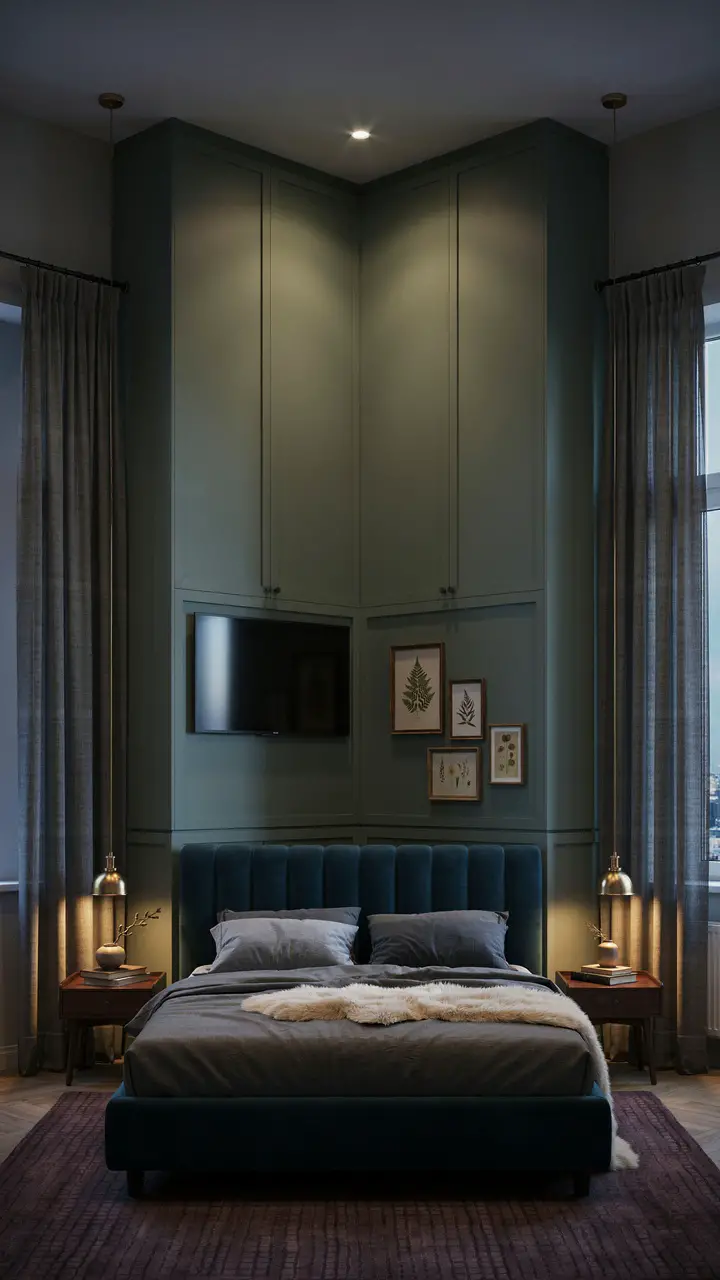
How to Recreate This Look
Dark cabinetry is having a serious moment, and for good reason—it grounds a room and makes every other element look intentional by contrast. This is IMO one of the most underutilised corner wardrobe + TV combinations available, because most people assume dark cabinetry will shrink a room. It won’t, if you balance it right.
The balance formula: Dark cabinetry + light bedding + warm metallic accents + one large mirror nearby. That combination keeps the room from feeling like a cave (not that caves can’t be cosy, but you know what I mean).
Paint-It-Yourself Hack: If you already have a white or beige flatpack wardrobe and love this look, you can paint the exterior panels with furniture-grade chalk paint in forest green, navy, or charcoal for under Rs. 2,000 in materials. Sand lightly, prime if needed, and apply two coats. The result is genuinely stunning.
Style Warning: Bold: Don’t combine dark cabinetry with dark walls unless you have excellent artificial lighting. One or the other—not both—unless your room gets genuinely spectacular natural light.
7. The Modular Corner Wardrobe with TV Unit for Renters
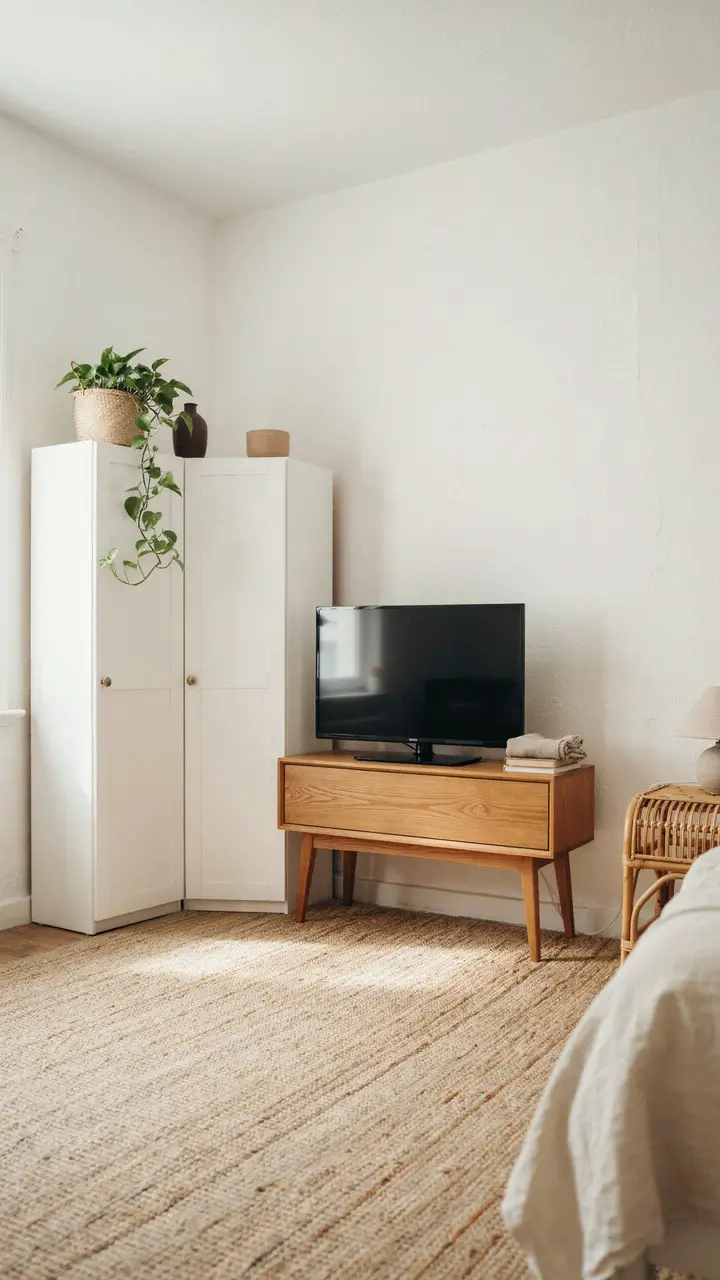
How to Recreate This Look
Renters, this one’s for you. You don’t need built-in carpentry or a single wall anchor to create a corner wardrobe and TV setup that looks genuinely designed. The secret is the intentional gap—positioning two freestanding wardrobe units with a deliberate space between them where your media console slides in creates the visual effect of a custom unit without the commitment.
The gap width sweet spot: 90–100 cm between wardrobe units for a 43-inch TV setup, or 110–130 cm for a 55-inch screen.
Shopping List (All Freestanding, Zero Drilling):
- Two matching freestanding wardrobe units (Wakefit, Godrej Interio, IKEA PAX freestanding configuration)
- Low-profile media console in a complementary tone (thrifted or online marketplaces like OLX/Facebook Marketplace for significant savings)
- TV stand or swivel mount that sits on top of the console
- Cable management box to hide the clutter of cords behind the console (Rs. 300–600)
Budget Breakdown:
- Budget-friendly: Two secondhand wardrobes + thrifted console table, total under Rs. 5,000
- Mid-range: New matching flatpack wardrobes + affordable console, Rs. 15,000–30,000
- Investment-worthy: Full modular wardrobe system with matching console, Rs. 30,000–60,000
8. The Japandi Corner Wardrobe with TV Unit
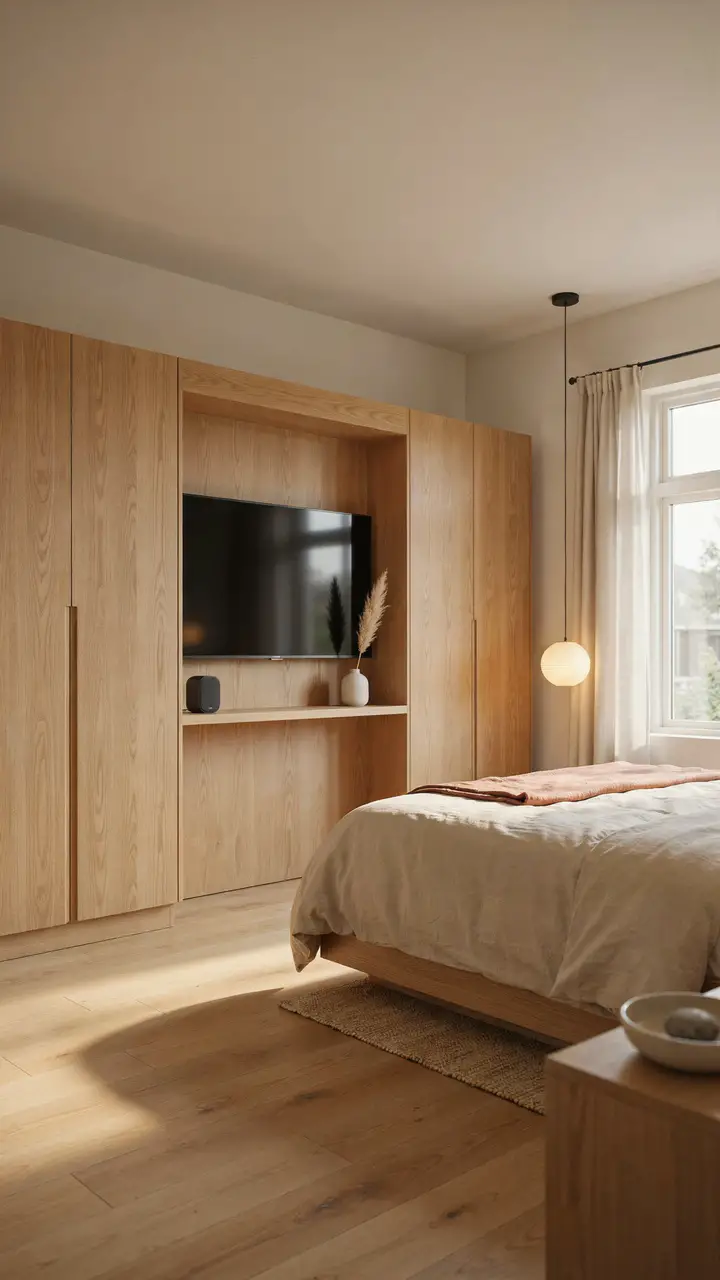
How to Recreate This Look
Japandi is the intersection of Japanese minimalism and Scandinavian warmth, and it’s genuinely one of the most liveable design aesthetics available—especially for bedrooms. The corner wardrobe with TV unit in this style works because every element earns its place and nothing competes for attention.
The one rule Japandi never breaks: If something doesn’t have a function or doesn’t bring you genuine joy, it doesn’t stay. Apply this ruthlessly to the shelf beneath your TV. One object. Maybe two. That’s the whole look.
Material notes: Natural oak, bamboo, pale ash, linen, cotton, ceramic, and woven grass all belong here. Avoid anything shiny, plastic, or overly geometric unless it’s a single deliberate contrast piece.
For a closer look at how walk-in and corner closet layouts can be optimised for serenity and function, these Japandi walk-in closet ideas are genuinely worth a scroll.
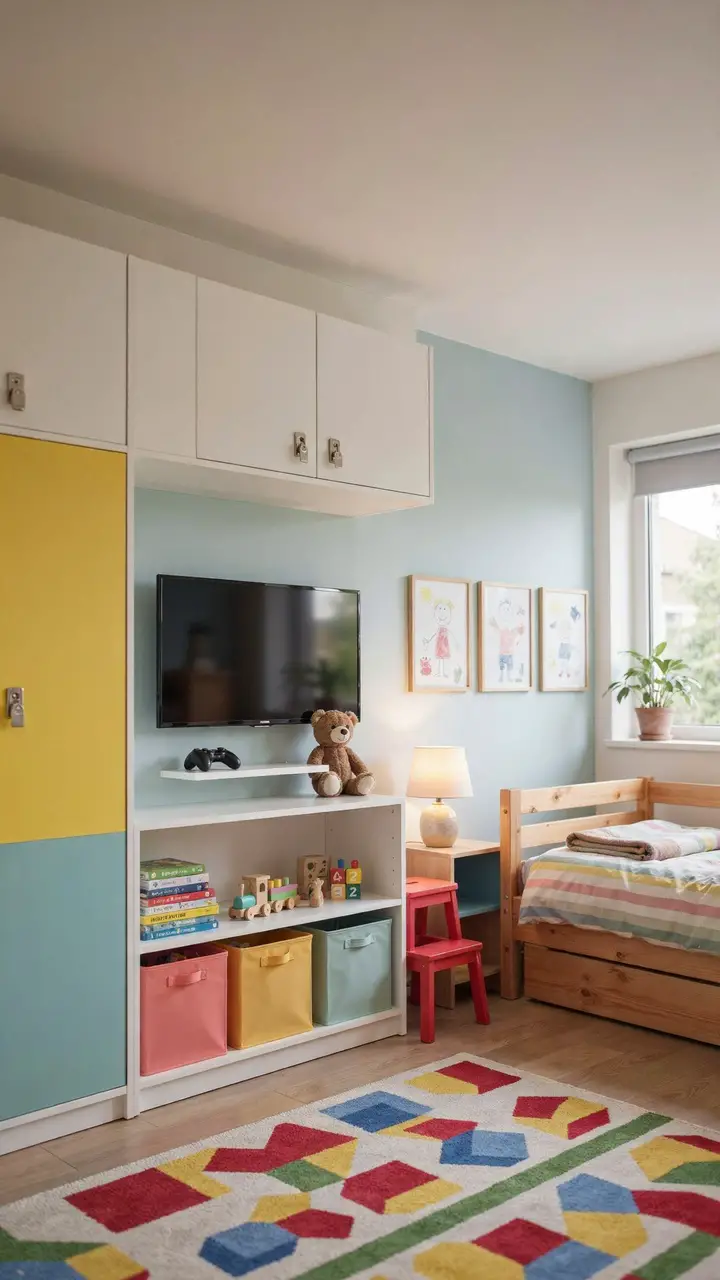
9. The Kids’ Room Corner Wardrobe with TV Unit (Fun, Functional, and Durable)
How to Recreate This Look
Kids’ rooms demand corner wardrobe + TV setups that are safe, durable, and adaptable—because that six-year-old will be ten before you know it, and twelve-year-olds have very different opinions about teal wardrobe door panels (ask me how I know).
Safety First (Always Bold This):
- Always anchor wardrobes to the wall with anti-tip straps, even if they seem stable
- Mount the TV at a lower, child-appropriate height but with a tilting wall bracket that a child cannot easily dislodge
- Choose rounded corner profiles wherever possible for kids’ furniture
- Keep the lower storage accessible to kids (open cubbies, low drawers); keep breakables and off-limits items in upper locked sections
Adaptability Tip: Choose a white or neutral base wardrobe and use removable adhesive panels, wallpaper off-cuts, or peel-and-stick decals to add personality. When tastes change, you peel and swap—not replace.
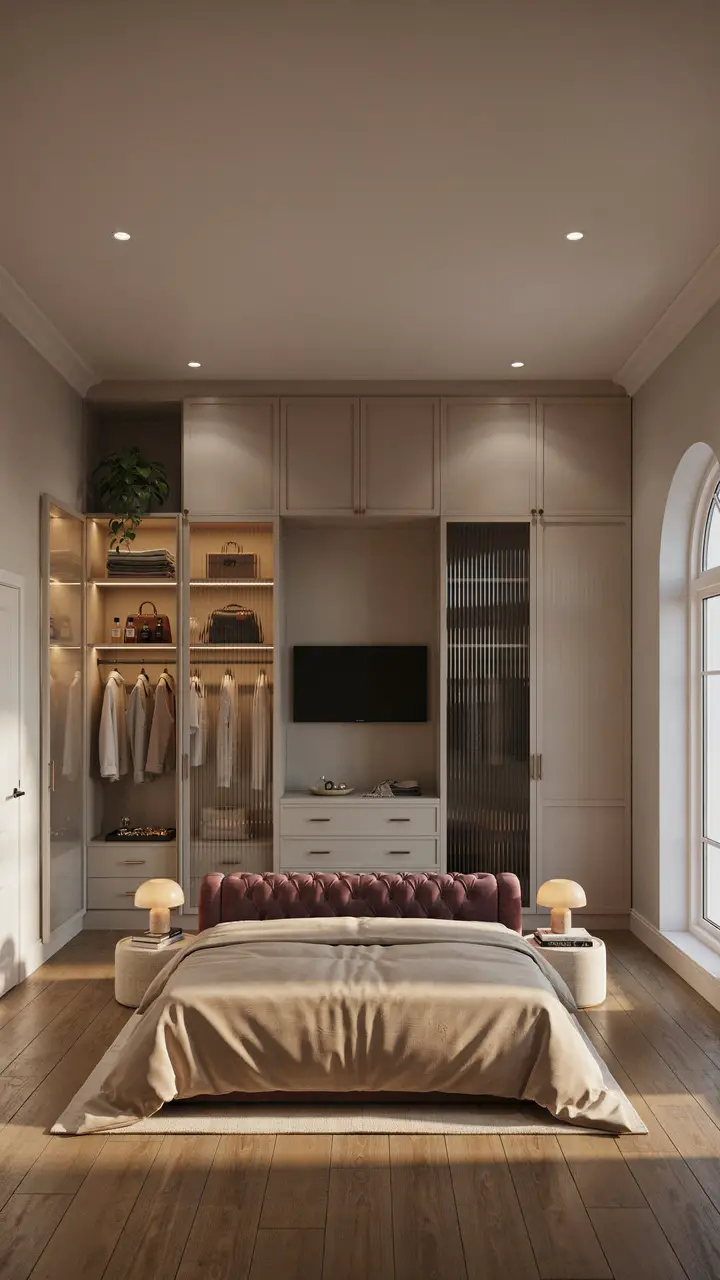
10. The Luxury Corner Wardrobe with TV Unit: Walk-In Vibes on a Bedroom Budget
How to Recreate This Look
Fluted glass. Those two words have changed more bedroom aesthetics in the past three years than almost any other material trend. The texture catches light beautifully, obscures what’s inside just enough to feel intentional, and adds an architectural quality that plain wardrobe doors simply can’t match.
The luxury detail that costs less than you think: Fluted glass door inserts for an existing wardrobe frame can be sourced from glass suppliers and fitted by a local carpenter for Rs. 800–1,800 per sqft depending on your city. You don’t need an entirely new wardrobe—sometimes a door upgrade is all it takes to transform the whole unit.
Budget Breakdown:
- Budget-friendly: Existing wardrobe with DIY fluted glass door replacements + TV wall-mounted between the wardrobe wings, total upgrade cost under Rs. 12,000
- Mid-range: Semi-custom wardrobe with glass inserts + integrated media section, Rs. 35,000–80,000
- Investment-worthy: Fully custom carpentry with integrated lighting, full fluted glass panels, and built-in media console, Rs. 80,000+
Maintenance Note: Fluted glass shows fingerprints more than plain glass, so keep a microfibre cloth nearby. This is especially important if you’re displaying clothes through the glass—the whole effect depends on what’s visible inside looking organised and intentional.
For a deeper dive into luxurious closet design elements that work in regular bedrooms, luxury walk-in closet ideas offer a wealth of visual inspiration worth bookmarking.
Final Thoughts: Your Corner, Your Rules
Here’s the thing nobody tells you about corner wardrobe and TV unit combinations: the “right” one isn’t the one that looks best on Pinterest. It’s the one that fits your actual room dimensions, works with your genuine lifestyle (the one with the laundry chair and the cat who will absolutely sleep on the bed while you’re watching TV), and that you can realistically achieve within your budget and timeline.
Whether you go custom-built or flatpack-clever, dark and moody or light and airy, the corner wardrobe + TV setup is one of the smartest investments a bedroom can make. It turns dead space into a fully functional storage and entertainment hub without adding visual clutter to the rest of the room.
Start with your corner measurements. Then pick the layout that fits. Then—and only then—start worrying about the finish, the colour, and whether your wardrobe doors should be matte or glossy. That order of decisions will save you from spending three weekends assembling something that doesn’t actually fit your room (we’ve all done it, we’re all fine, it builds character).
Your bedroom corner has been waiting for this. Time to give it a purpose. <3

Greetings, I’m Alex – an expert in the art of naming teams, groups or brands, and businesses. With years of experience as a consultant for some of the most recognized companies out there, I want to pass on my knowledge and share tips that will help you craft an unforgettable name for your project through TeamGroupNames.Com!