
You know that random closet in the hallway — the one that’s become a graveyard for Amazon boxes, a broken vacuum you keep meaning to fix, and approximately forty-seven reusable bags you never actually reuse? What if that closet became the most magical square footage in your entire home?
Turning a closet into a mini playroom is one of those small-space design moves that genuinely blows people’s minds — and the best part is, you don’t need a big budget or a contractor. You need some creativity, a measuring tape, and maybe a weekend afternoon with your favorite playlist going.
Whether you’re working with a standard reach-in closet (around 24 inches deep and 3–6 feet wide) or a slightly larger nook, these small playroom ideas for a closet will help you build a dedicated little universe where your kids can actually focus, create, and play — without their toys taking over the entire living room. 🙂
1. The Classic Reading Nook Closet
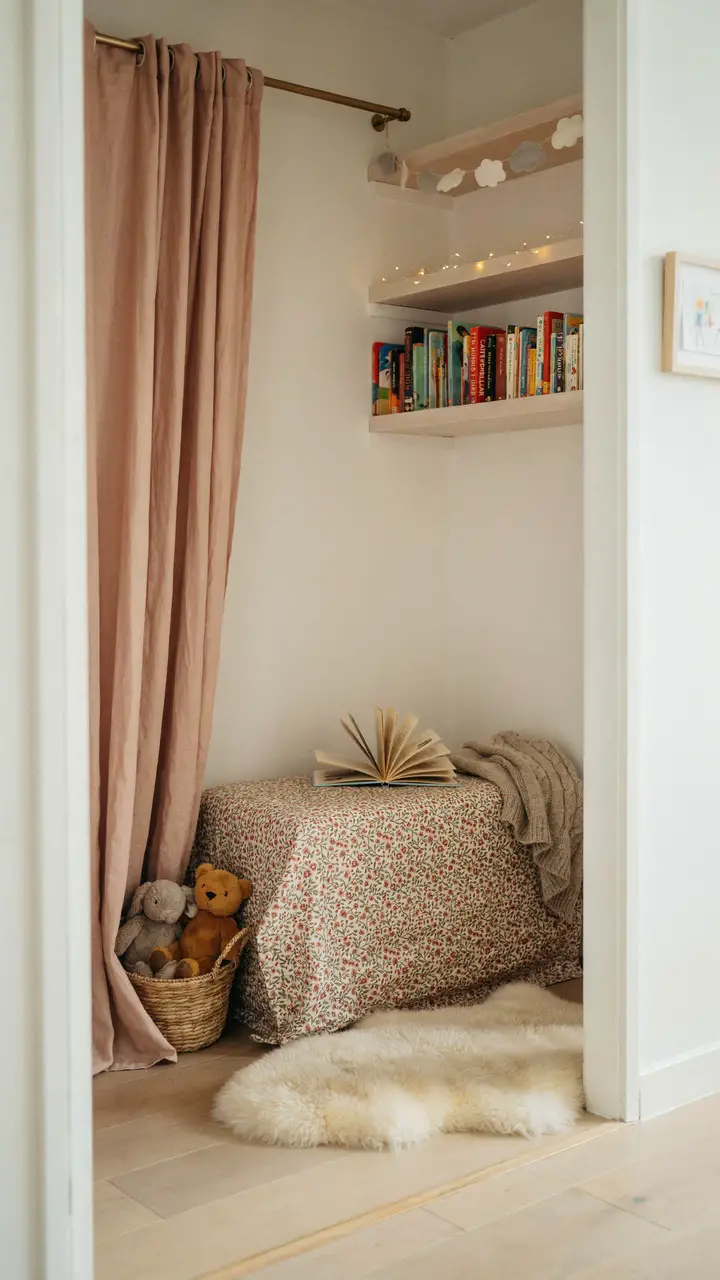
How to Recreate This Look
Books and cozy corners are basically a child’s love language. Removing closet doors entirely (or swapping them for a simple curtain rod and a $15 linen panel from IKEA) opens the space up and makes it feel like a destination rather than a storage spot.
Key items and estimated costs:
- Bench/foam cushion base: Build a simple plywood box or repurpose a small storage bench — $40–$120 DIY or thrifted
- Floating shelves: IKEA LACK shelves (2-pack, ~$15) or Command-strip floating shelves for renters — under $30
- Fabric curtain panel: IKEA, Target, or thrifted — $10–$40
- Battery-operated fairy lights: Amazon — $8–$15
- Sheepskin or faux fur rug: IKEA, HomeGoods — $20–$60
Budget breakdown:
- 💰 Under $100: DIY plywood bench, thrifted cushion, IKEA shelves, no-nail curtain rod
- 💰 $100–$300: Premade storage bench with lift lid, curated shelf styling, peel-and-stick wallpaper on back wall
- 💰 $300+: Custom built-in bench with drawer storage, professional cushion upholstery
Difficulty level: Beginner — honestly, if you can use a drill and a level, you’ve got this.
Renter-friendly tip: Use tension rods for the curtain and Command strips for the shelves. Zero damage, full charm.
2. The Art Studio Closet for Little Creatives
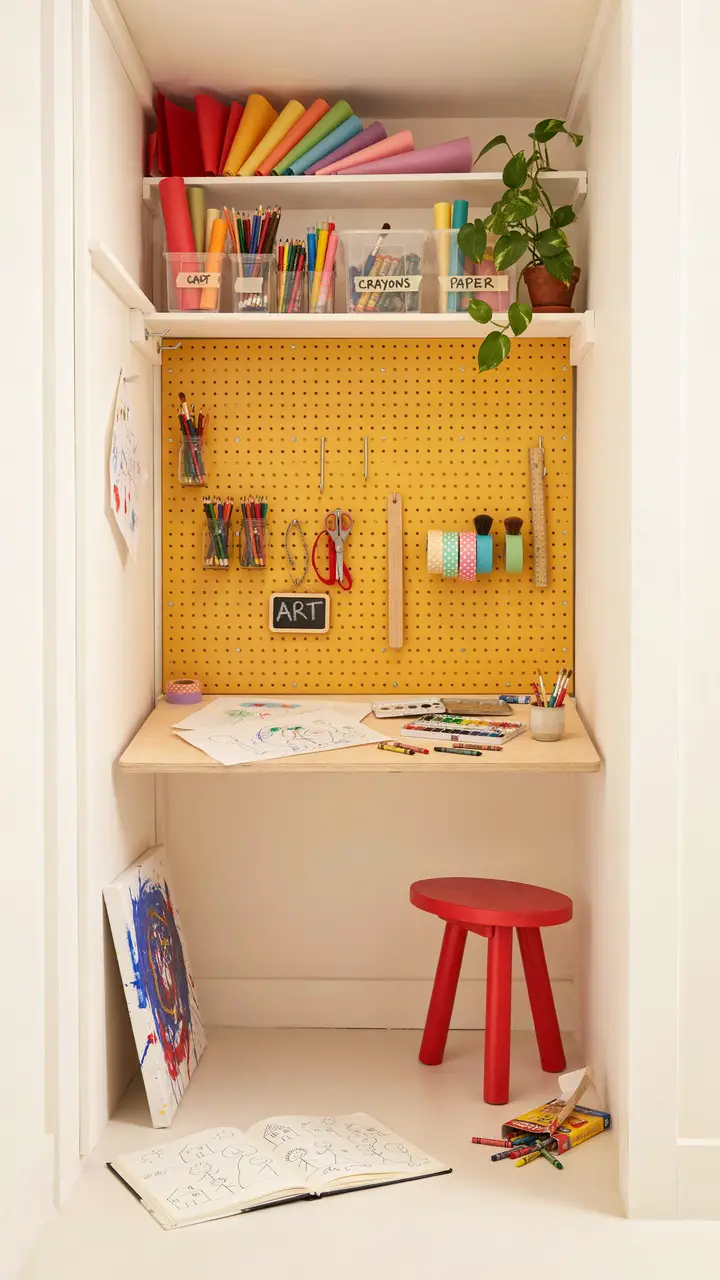
How to Recreate This Look
If your kid has ever tried to use the kitchen table as their personal Louvre, this one’s for you. A pegboard back wall is the real hero here — it keeps supplies visible and accessible (no more “Mom, where’s the glue?”), and it costs almost nothing to set up.
Shopping list:
- Pegboard panel: Home Depot or Lowe’s, cut to closet width — $15–$25
- Pegboard hooks and bins: Amazon or IKEA — $10–$20
- Fold-down wall desk: Amazon, Wayfair, or DIY with a piano hinge and plywood — $40–$120
- Acrylic organizer bins: The Container Store, Amazon — $15–$35
- Wooden stool: IKEA FRÖSET or similar — $20–$40
Lifestyle consideration: This setup works beautifully if you don’t mind a little mess — and honestly, a little mess means a lot of creating is happening. For easy cleanup, line the floor of the closet with a vinyl mat that wipes down in seconds.
For more inspiration on dedicated creative spaces, check out these kids’ art space ideas that work in all kinds of rooms and square footage.
3. The Dramatic Play Closet (A.K.A. The Dress-Up Station)
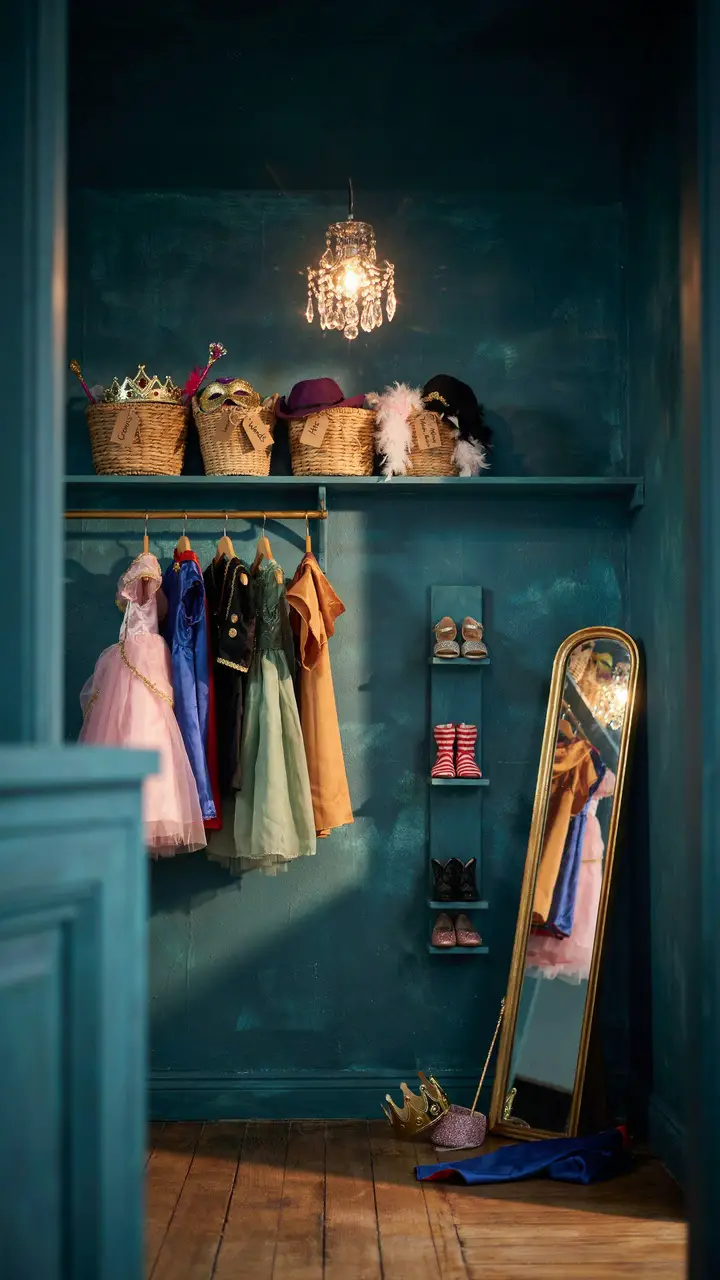
How to Recreate This Look
The eternal problem: costume pieces everywhere. The elegant solution: give them their own kingdom. A dress-up closet requires surprisingly little — a low-mounted rod at kid-height (around 36–42 inches from the floor), some hooks, and a small mirror.
Step-by-step styling:
- Paint the interior a bold, playful color — this is the one closet where going dramatic pays off
- Install a low tension rod for hanging costumes (no drilling required for renters!)
- Add 3–4 wall hooks for bags, capes, and hats below the rod
- Place a narrow over-door shoe rack on one side for costume shoes
- Use labeled wicker baskets on the top shelf for accessories
- Lean a small mirror against the back or side wall at child height
Difficulty level: Beginner — this is mostly shopping and arranging, with minimal installation.
Seasonal swap: Rotate costumes by season — witches and vampires in fall, elves in December, superhero capes in spring. It keeps the space fresh and gives costume-obsessed kids something to look forward to.
4. The Montessori-Inspired Open Shelf Closet
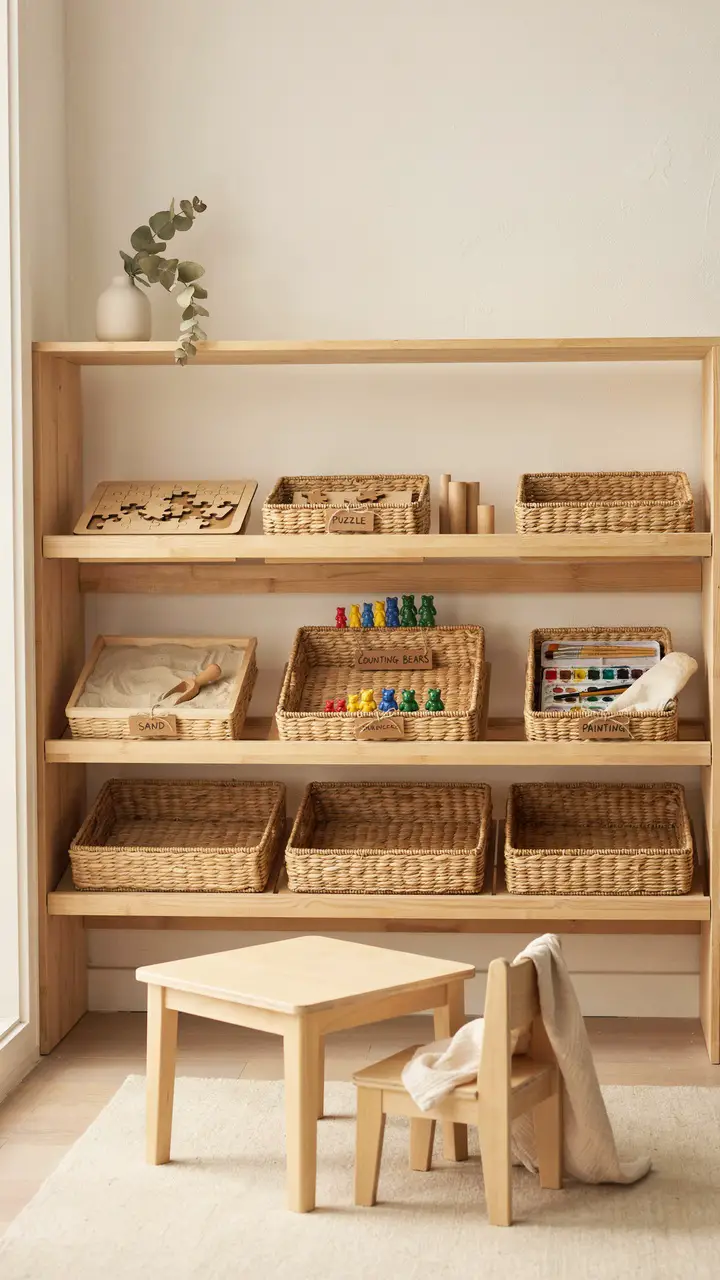
How to Recreate This Look
The whole Montessori approach is about giving kids independence — and a well-organized closet playroom does exactly that. When everything has a visible, labeled place at their eye level, kids can actually clean up after themselves. (Yes, really. Mostly.)
What you need:
- Low open shelving unit: IKEA KALLAX (1×4, horizontal) or TROFAST — $40–$80
- Wicker storage trays: Amazon, IKEA — $5–$12 each
- Printable labels: Etsy (search “Montessori shelf labels”) — $3–$8 digital download
- Small child’s table and chair set: IKEA LÄTT — $25–$35
Space requirement: Works in closets as narrow as 36 inches wide — the shelves face outward and the activity table sits just outside.
Durability note: Wicker trays and wooden shelves hold up exceptionally well to daily kid use. Skip fabric bins in this context — they collapse and frustrate small hands.
For a deeper look at how this philosophy transforms kids’ spaces, Montessori playroom ideas are worth a serious scroll.
5. The Sensory Play Closet
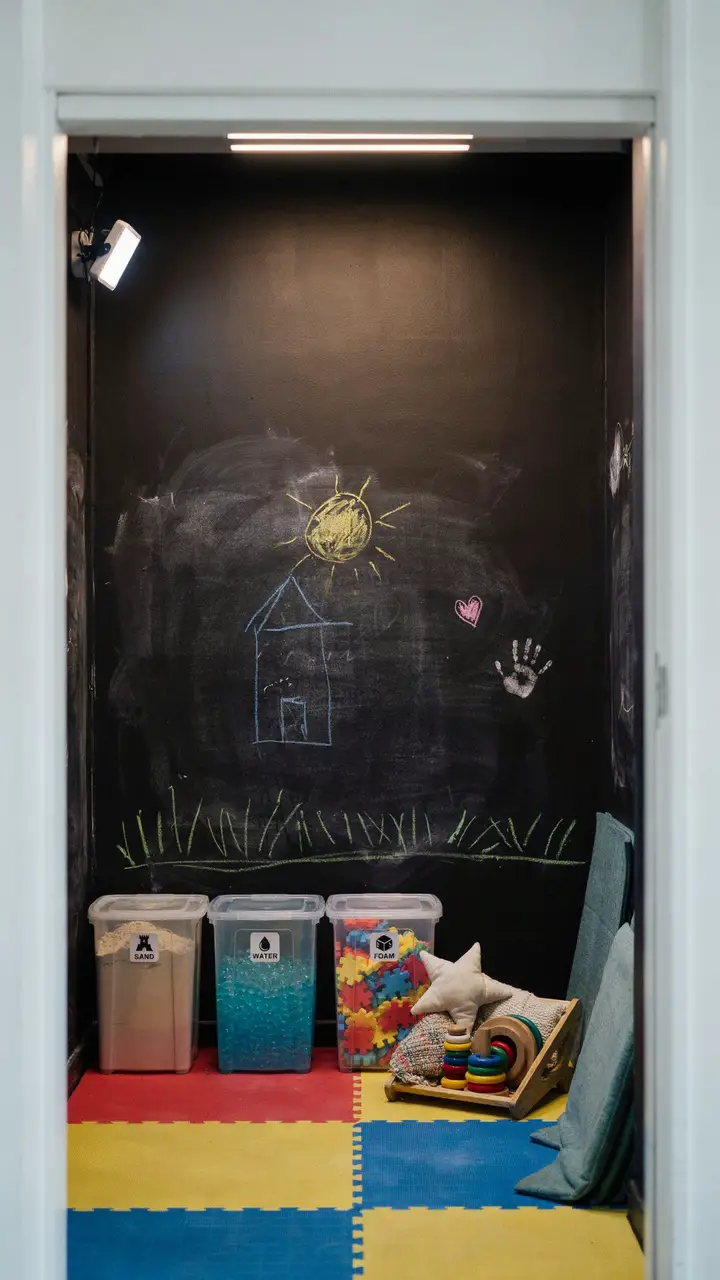
How to Recreate This Look
Sensory play is incredibly beneficial for toddlers and kids with sensory processing differences — and a closet is genuinely one of the best spaces for it, because the containment actually helps kids focus. You’re not fighting the whole living room.
Shopping list:
- Chalkboard paint: Home Depot, Rust-Oleum — $12–$18 per quart (covers a standard closet back wall easily)
- Large clear storage bins with lids: Sterilite or Iris brand, Amazon — $8–$15 each
- Foam floor mat: Amazon or Walmart — $20–$40
- LED strip lights (warm white): Amazon — $10–$20
Common mistake to avoid: Don’t skip the lids on sensory bins. Kinetic sand in an open bin + a curious toddler = a situation you do not want.
Renter-friendly note: Chalkboard paint is considered a paint color and typically allowed in rentals — just check your lease first.
6. The LEGO and Building Zone Closet
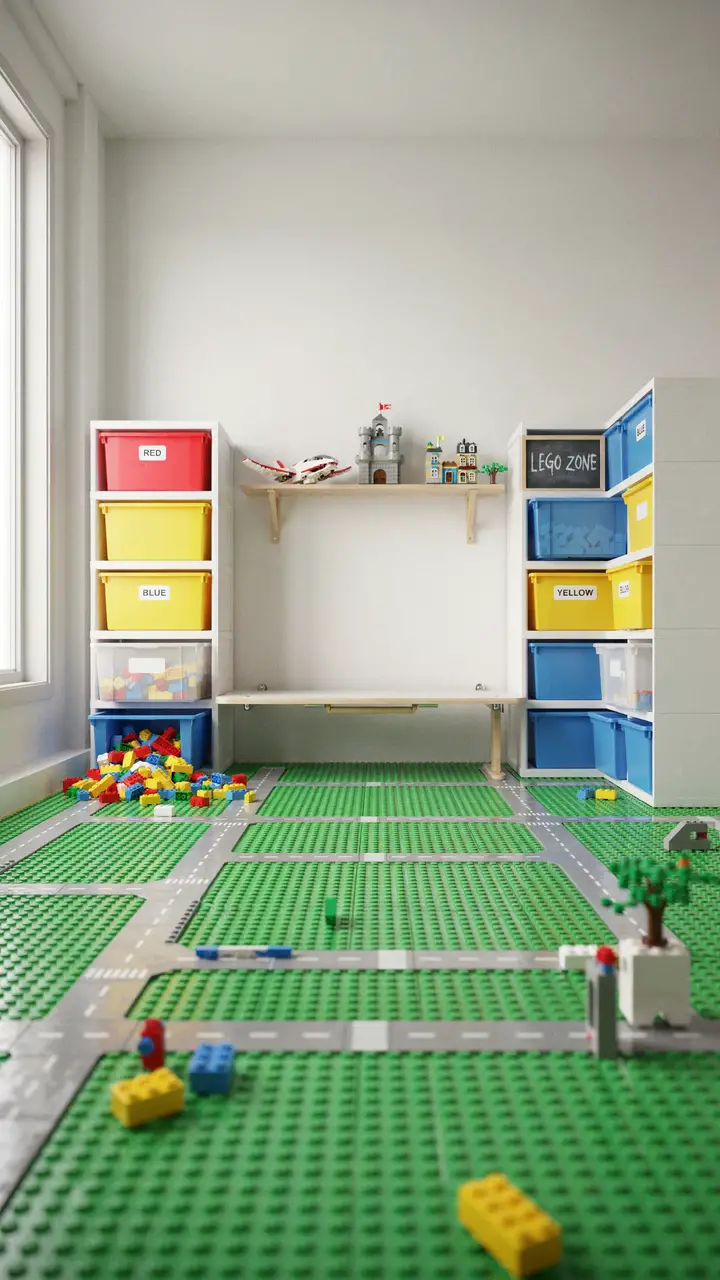
How to Recreate This Look
Every LEGO-loving household knows the pain: bricks everywhere, sets half-finished on the coffee table, and the midnight barefoot walk to the bathroom that ends in agony. A dedicated LEGO closet solves all of this.
Step-by-step:
- Install IKEA TROFAST units on both sides of the closet — they’re modular, affordable (~$30–$40 per unit), and the bins pull out easily
- Sort LEGO by color into individual bins — this sounds fussy, but kids actually maintain this system because finding pieces becomes fast and satisfying
- Mount a fold-down work surface at the back at a comfortable standing height for your child
- Lay a LEGO-compatible base plate mat (Amazon, ~$20–$35) on the floor for spontaneous building
- Add one floating display shelf above for finished masterpieces — this makes the whole thing feel like a real studio
Budget breakdown:
- Under $100: Two TROFAST units + bins, base plate mat, tension-rod curtain for closure
- $100–$300: Same + fold-down desk, display shelf, wall decals
- $300+: Custom built-in shelving, integrated lighting, LEGO wall-mounted storage panels
Looking for more toy storage solutions beyond the closet? These playroom toy storage ideas cover every type of collection beautifully.
7. The Puppet Theater Closet
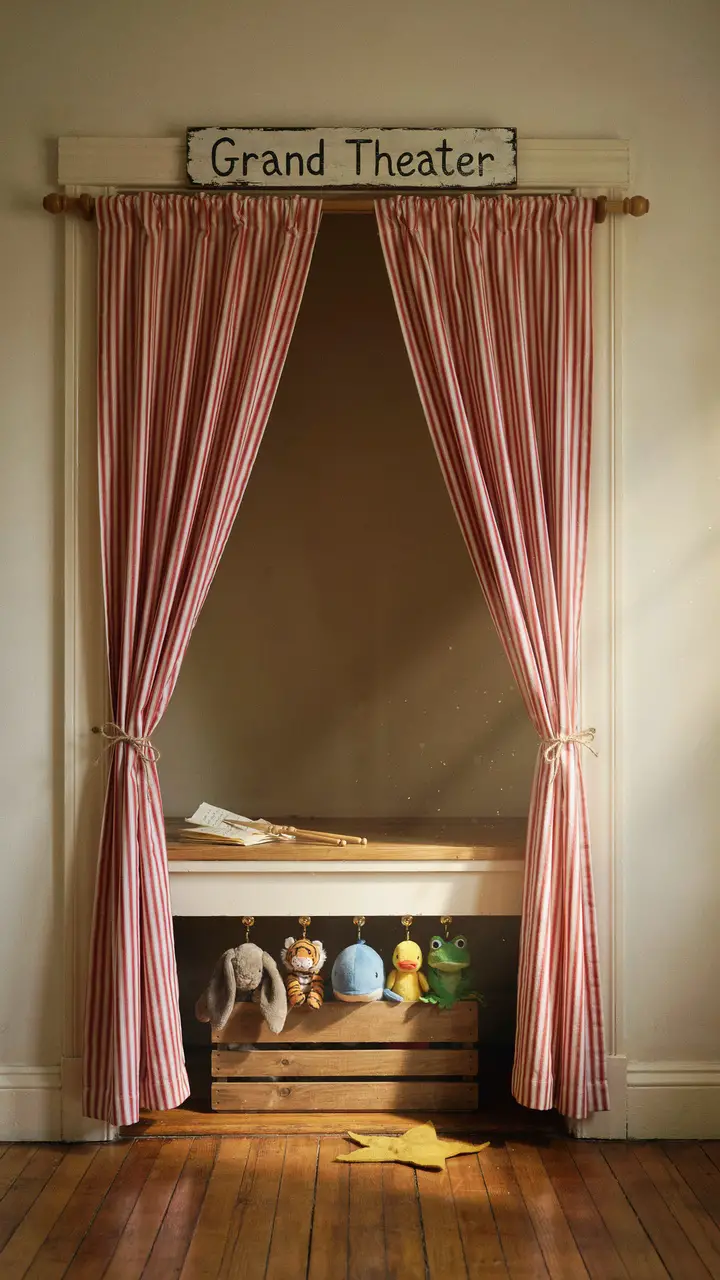
How to Recreate This Look
This one is a serious crowd-pleaser — and genuinely one of the easier DIY closet transformations on this list. The secret is treating the closet opening itself as the “stage frame” and working with it rather than against it.
What you need:
- Curtain rod and stage curtain fabric: IKEA or fabric by the yard from Jo-Ann — $15–$35
- Wooden stage shelf (mounted at mid-opening height): A simple 1×6 board painted white — $8–$15
- Cup hooks for puppet storage: Hardware store — $3–$6
- Hand puppets: Amazon, Melissa & Doug — $10–$40
- Hand-painted sign: DIY with acrylic craft paint on a wood plank — $5–$12
Difficulty level: Beginner to intermediate — the shelf mounting requires a drill and wall anchors, but it’s genuinely a one-hour project.
Seasonal adaptability: Swap the curtain fabric seasonally — cozy plaid in winter, bright gingham in summer. Fresh curtains, completely different vibe.
8. The Cozy Calm-Down Corner Closet
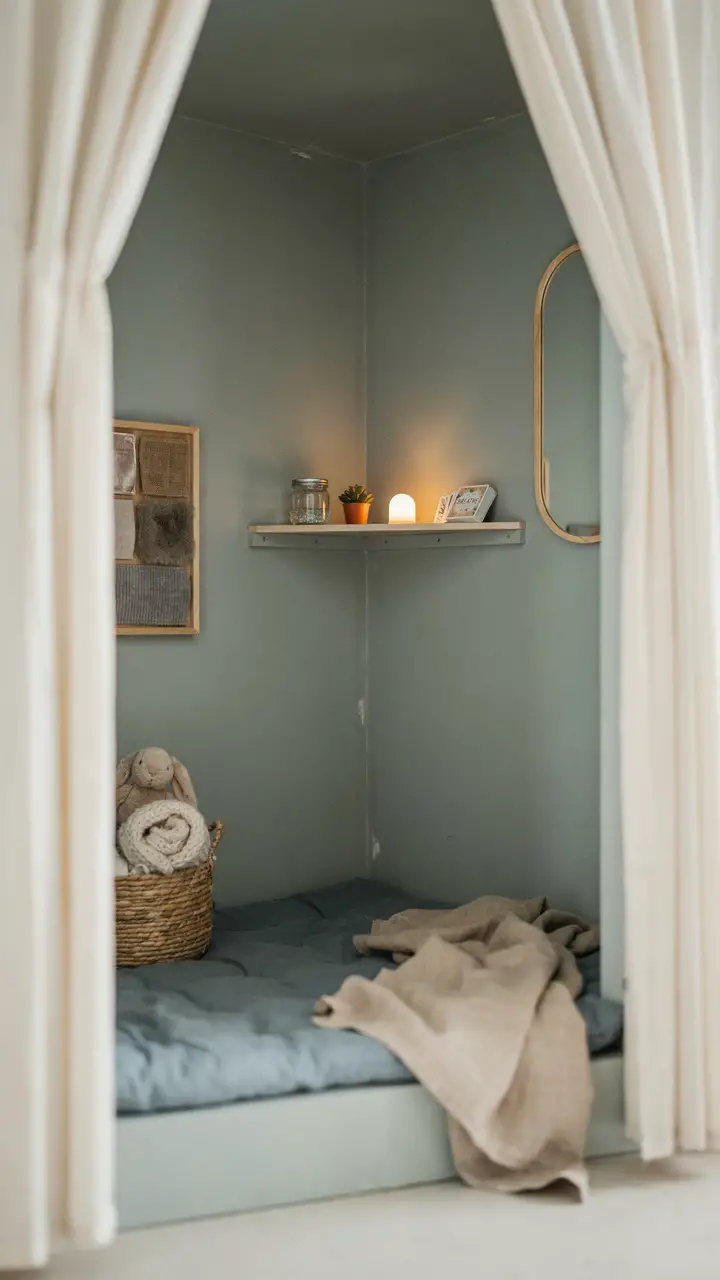
How to Recreate This Look
This isn’t a timeout spot — let’s be really clear about that. A calm-down corner is a child-led, positive retreat where kids can self-regulate when they feel overwhelmed. Giving it a dedicated space makes a surprisingly big difference in how kids actually use it.
Key items:
- Floor cushion or foam pad: Target, IKEA, or Amazon — $20–$60
- Weighted lap blanket: Amazon — $25–$50
- Glitter calm jar (DIY): Glitter glue + warm water + mason jar — under $5
- Tactile texture board: DIY with scraps of fabric, sandpaper, faux fur, bubble wrap on a wooden board — $0–$15
- Mindfulness card deck for kids: Amazon (search “kids yoga cards” or “calm corner cards”) — $10–$20
Lifestyle note: This space works incredibly well for kids who are highly sensitive, neurodivergent, or simply need a quiet reset during busy days. Make it inviting — never punitive.
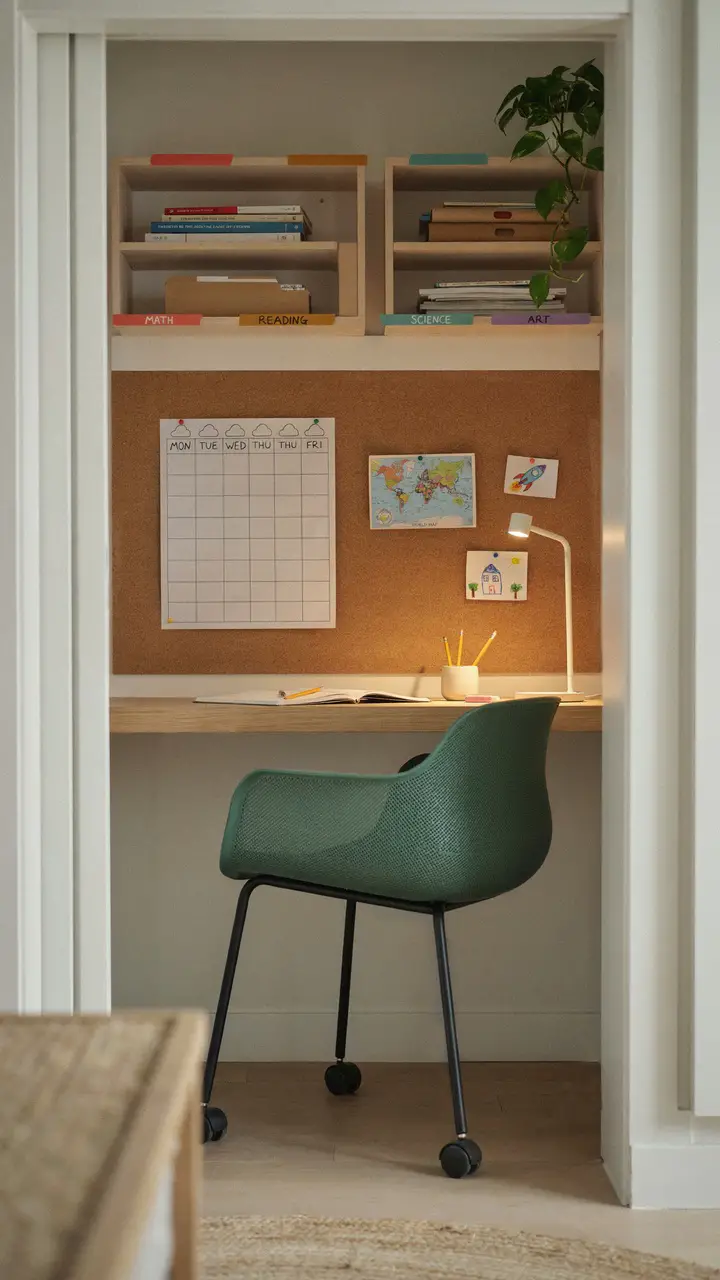
9. The Homework and Reading Station Closet
How to Recreate This Look
FYI — this is the closet idea that parents with school-age kids go absolutely wild for, because it creates a contained, distraction-reducing workspace that kids can actually “go to” mentally as well as physically. Closing the bi-fold doors at the end of the day also means the homework chaos disappears completely. Genius.
Shopping list:
- Floating desk surface: IKEA EKBY shelf + wall brackets — $20–$40
- Corkboard: Amazon or Staples — $15–$30
- Open storage cubbies: IKEA KALLAX or wall-mounted cube shelves — $25–$55
- LED desk lamp: Amazon, TaoTronics or BenQ — $20–$45
- Ergonomic kids’ chair: Amazon or IKEA — $40–$120
Space requirement: Works in closets as shallow as 20 inches — a floating desk only needs 18–20 inches of depth for comfortable seated work at that age.
Common mistake: Installing the desk too high. Measure your child’s elbow height while seated and build from there — aim for the desk surface to sit at elbow height, roughly 22–26 inches from the floor for elementary-age kids.
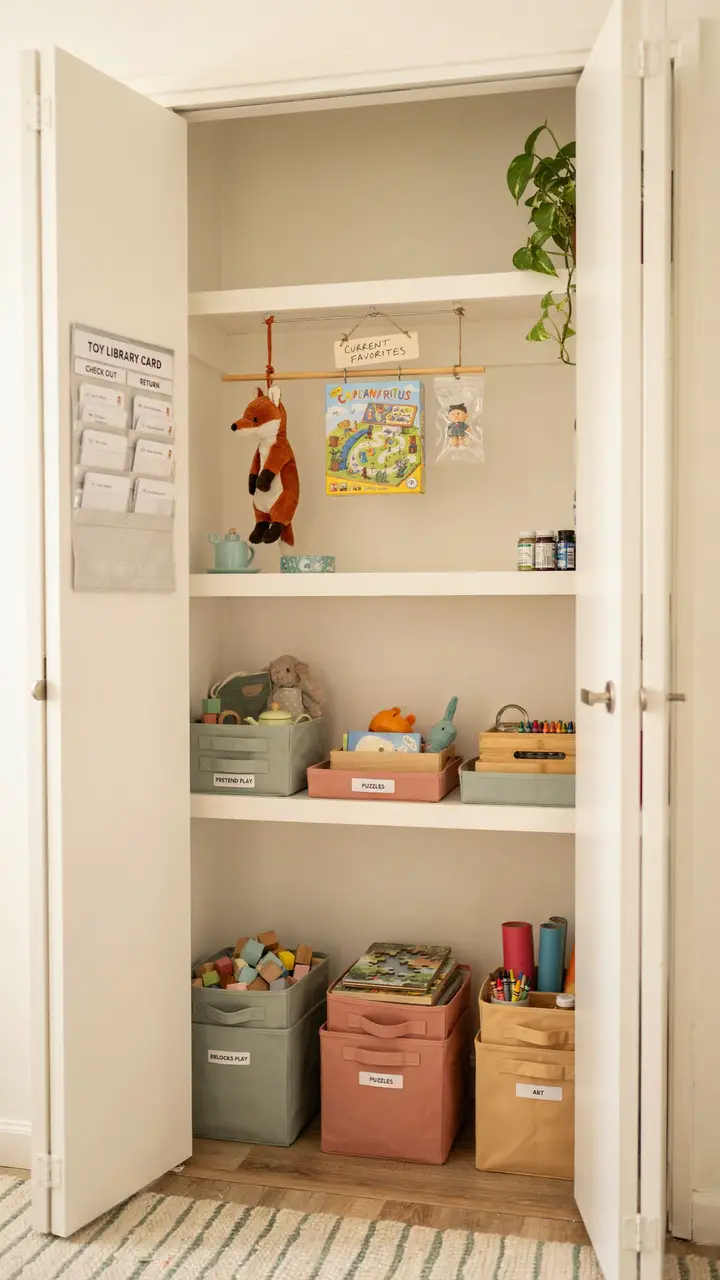
10. The Under-Bed Style Toy Library Closet
How to Recreate This Look
The toy library concept is one of the smartest small-space parenting hacks you’ll ever try. Instead of all toys being accessible all the time (a.k.a. the chaos model), the closet becomes a rotating library — kids “check out” a few things and return them when they want to swap. It dramatically reduces overwhelm (for kids and parents) and makes every toy feel new again.
Step-by-step:
- Install three horizontal rows of low shelving — IKEA KALLAX sections work perfectly, as do basic bracket shelves
- Source labeled canvas bins or wicker baskets — one per toy category — and keep labels simple with picture icons for pre-readers
- Create a simple rotation system: only 5–7 items are “out” at once; the rest stay in the library
- Add a “return shelf” at the very front — a low open shelf where toys get placed before going back to their bin
- Use the top section for parent-managed items (games with many pieces, messier crafts)
Difficulty level: Beginner — this is primarily a shopping and organizing project. The hardest part is actually committing to the rotation system, not the installation.
For more ways to tame the toy situation, these playroom organization ideas are filled with strategies that work in real homes, not just staged ones.
Bringing Your Closet Playroom to Life
Here’s the thing about closet playrooms — they work precisely because they’re small. Boundaries create focus. A defined little space tells a child’s brain: this is where we play, create, build, and imagine. And honestly? Watching a kid disappear into a converted closet for forty-five minutes of uninterrupted play is one of the most satisfying things a parent can witness.
You don’t need to renovate. You don’t need a contractor or a big-box budget. You need one underused closet, a clear vision of what your kid loves most, and the willingness to measure twice and shop once. Start with whichever idea felt like it was written specifically for your family — and remember that imperfect and used is infinitely better than perfect and Pinterest-only.
Your kid doesn’t care if the shelf brackets are perfectly level. They care that there’s a little world in that closet that feels entirely, wonderfully theirs. Go build it. <3

Greetings, I’m Alex – an expert in the art of naming teams, groups or brands, and businesses. With years of experience as a consultant for some of the most recognized companies out there, I want to pass on my knowledge and share tips that will help you craft an unforgettable name for your project through TeamGroupNames.Com!