
You know that feeling when you try on a dress and something just clicks? That moment where you look in the mirror and think, “Yes. This is the one.”
Now imagine that feeling — but wrapped in ancient mythology, intricate knotwork, and the kind of romance that makes misty Scottish highlands feel like your personal backdrop.
That’s what a Celtic wedding dress does to you.
Whether you’re planning a handfasting ceremony under oak trees, a castle wedding in Ireland, or just want a gown with more soul than a typical ballgown, Celtic bridal style delivers something truly unforgettable.
These aren’t your average white-dress-and-done options — they’re pieces with personality, history, and a certain wild, beautiful magic.
I’ve rounded up 10 stunning Celtic wedding dress styles that cover everything from dramatic medieval-inspired gowns to softly romantic lace designs.
Let’s find your perfect match.
1. The Forest Goddess Gown — Emerald Green Velvet with Knotwork Detail
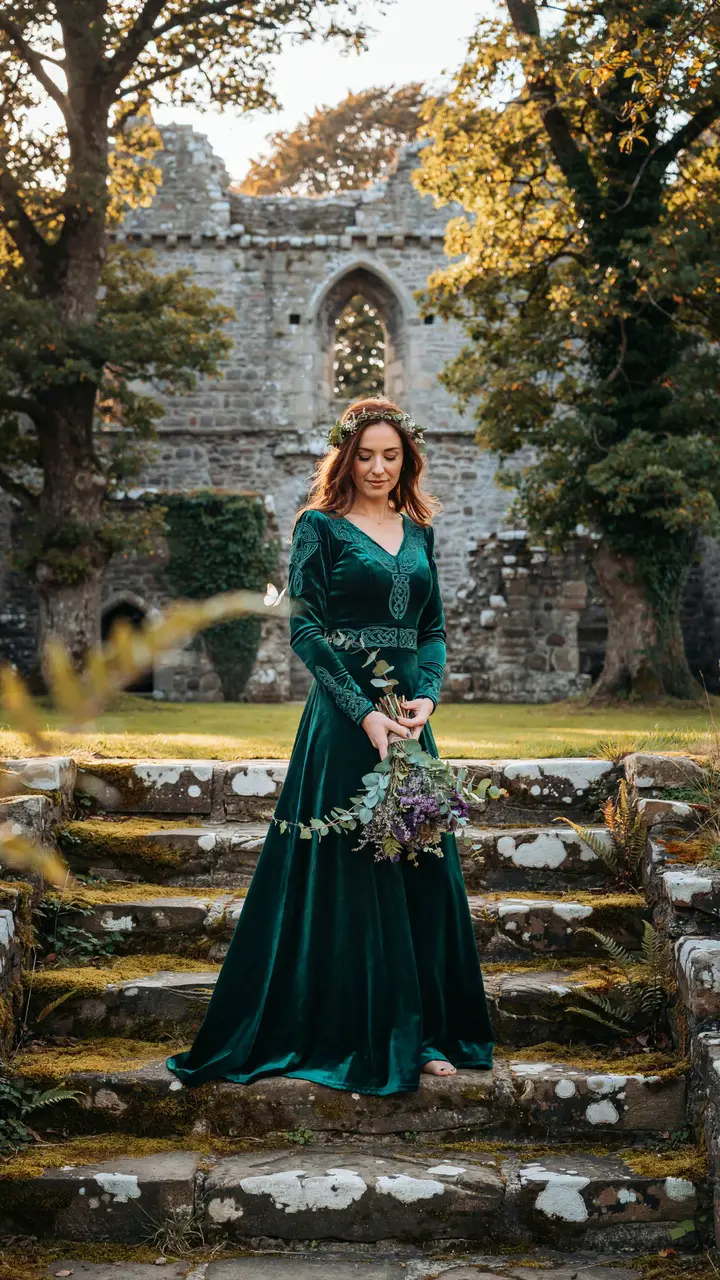
Not all brides want white — and honestly, some brides were born to wear green. This style has been gaining serious momentum in Celtic bridal fashion, and for good reason. Emerald or forest green velvet creates an immediate connection to nature, Irish heritage, and old-world elegance that no ivory tulle can replicate.
How to Style This Look
- The dress: Full-length A-line or fit-and-flare silhouette in rich velvet; look for Celtic knotwork embroidery at the cuffs, neckline, or hem for authentic detail
- Budget options: Check Etsy shops like CelticKnotCouture or SkyeWeddingDesigns for custom gowns; mid-range runs $400–$900, bespoke from $1,200+
- For petite frames: An A-line skirt elongates beautifully; avoid too much fabric pooling — get that hem tailored precisely
- For curvier figures: A defined waist with a structured bodice and gently flared skirt is an absolutely stunning combination — don’t shy away from the drama
- Hair and crown: Loose waves or braids with a wreath of ivy, heather, or rowan berries — skip the traditional veil entirely and let the greenery speak
- Shoes: Barefoot sandals with silver knotwork details, or ankle-strap leather flats if you’re outdoors all day (comfort over everything, FYI)
- Accessory highlight: Silver Celtic knotwork earrings and a Claddagh ring as your wedding band
- Dress it up further: A matching velvet cape in the same shade adds extraordinary drama for a cold-weather or candlelit ceremony
- Dress it down: Remove the cape, add wildflowers in the bouquet, and host your ceremony in a woodland clearing
If you love the idea of team colors for your bridal party, explore some animal team name ideas for a fun, nature-themed Celtic wedding squad.
2. The Lace Celt — Ivory Celtic Lace with Cap Sleeves
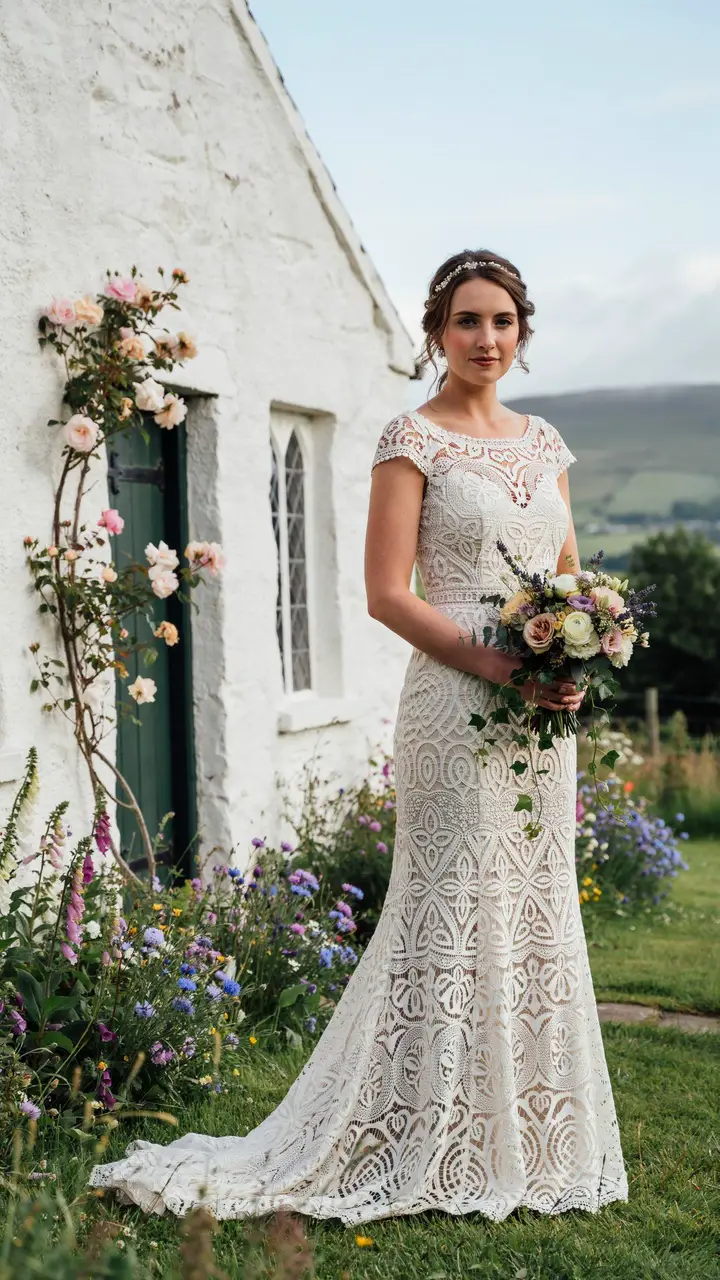
If you want traditional bridal elegance with genuine Celtic soul, this is your dress. True Celtic lace — featuring triskelion spirals, knotwork, and geometric patterns — is the single most recognizable signature of Irish bridal fashion. Carrickmacross and Limerick lace traditions have centuries of history behind them.
How to Style This Look
- The dress: Sheath, A-line, or modest ballgown silhouette entirely constructed in or heavily overlaid with authentic Celtic lace
- Key detail to look for: Knotwork, triskelion, or triple-spiral motifs in the lace pattern — not just any lace qualifies as “Celtic”
- For apple-shaped figures: A V-neckline in lace draws the eye elegantly upward; choose a slightly looser skirt that skims rather than clings
- For pear-shaped figures: Cap sleeves and a defined bodice balance your proportions beautifully — embrace the lace overlay on the top half
- Color options: Ivory, cream, antique white, or even the palest blush for a romantic, non-traditional twist
- Veil alternative: A simple silver headpiece or a pearl-and-knotwork comb — the lace is already doing all the work beautifully
- Bouquet pairing: Wild, loosely gathered blooms — thistles, heather, sweet peas — keep the romance without looking overly formal
- Shoe suggestion: T-strap heels in ivory or cream, or low block heels for a long outdoor ceremony
- Where to shop: Inis Meáin (Ireland), BHLDN for lace-heavy designs, or commission from an Etsy artisan with authentic Irish lace experience
- Price point: Quality Celtic lace gowns start around $600; authentic handmade lace commissions can reach $2,000+
3. The Highland Warrior — White Gown with Tartan Sash
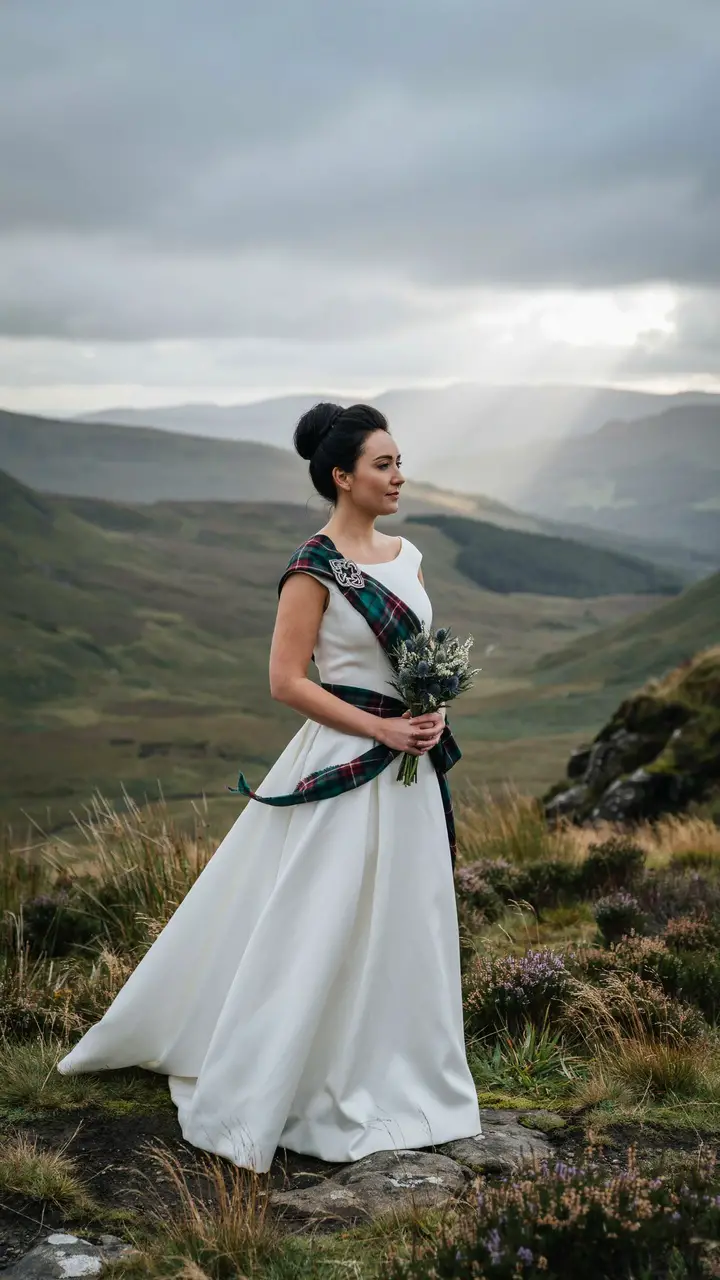
Here’s a truth about Celtic wedding fashion that nobody tells you upfront: you don’t need an entirely Celtic-patterned dress to achieve an authentically Scottish or Irish bridal look. Sometimes, the most powerful statement is the contrast — a clean, classic white gown elevated by a single dramatic tartan sash.
How to Style This Look
- The base gown: Simple, structured A-line or sheath in white or ivory satin, crepe, or duchess satin — let the sash be the star
- The sash: Choose your family tartan, your partner’s clan tartan, or a universal Celtic tartan like the Jacobite; approximately 3–4 inches wide and draped from shoulder to hip
- Brooch: A silver Celtic knot or thistle brooch pins the sash at the shoulder — this is your statement jewelry piece
- For athletic or rectangular figures: The diagonal sash creates beautiful visual curves and draws attention to the waist
- For petite frames: Keep the sash lighter and narrower; a heavy, wide sash can overwhelm a smaller frame
- Hair consideration: An updo keeps the focus on the sash and brooch — if you want it down, pin one side back to keep the brooch visible
- Shoe suggestion: White or silver pointed-toe heels for polish, or ankle boots for outdoor Highland venues
- Groom coordination: Your partner can wear the matching tartan kilt — the visual connection is breathtaking and deeply personal
- DIY option: You can absolutely purchase a quality white gown separately and source a tartan sash independently for significant savings
- Price breakdown: Base gown $300–$800 + tartan sash $40–$120 + Celtic brooch $30–$150 = stunning Highland look for under $1,000
4. The Medieval Queen — Long-Sleeve Fitted Gown with Celtic Embroidery
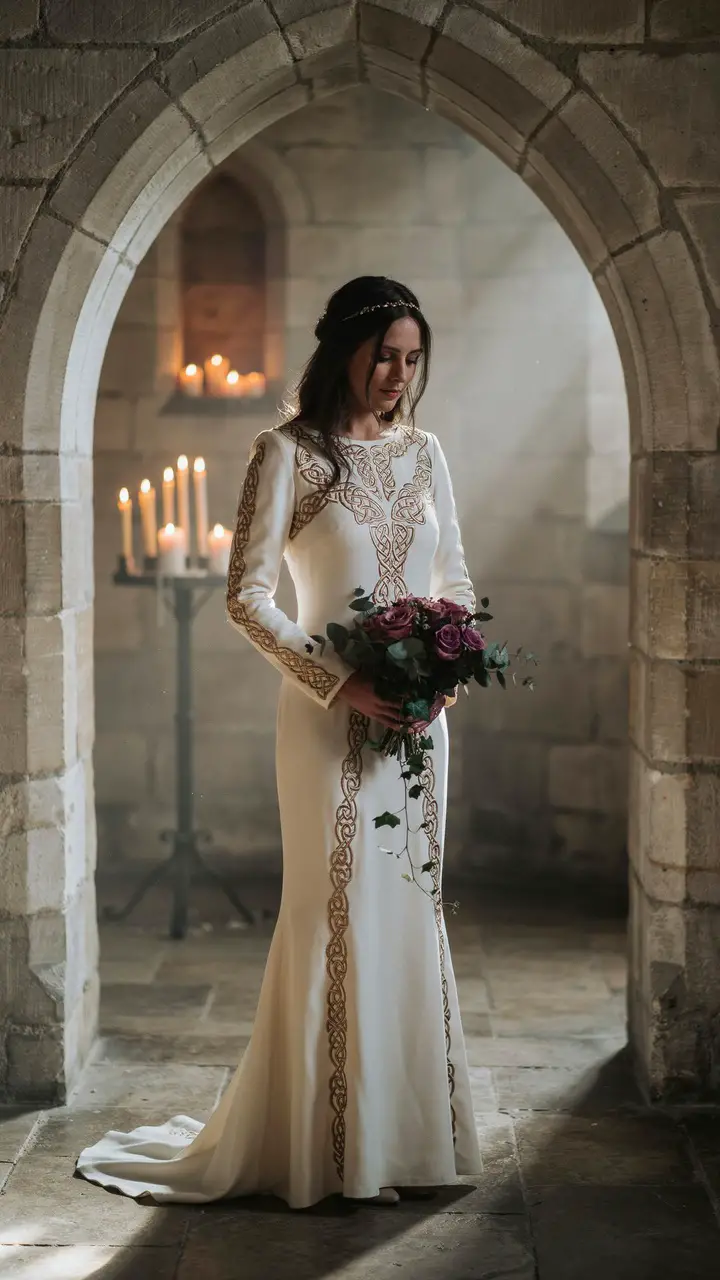
Every now and then you meet a bride who looks at soft, floaty gowns and thinks, “That’s not me.” If you love power, drama, and the feeling of wearing something that could have been commissioned for a queen in 12th-century Ireland — this style is your calling. The long-sleeve fitted Celtic embroidered gown is arguably the most dramatic option in this entire list, and it wears every bit as spectacular as it sounds.
How to Style This Look
- Embroidery placement: Look for knotwork along sleeves, neckline, center front panel, or hem — gold, silver, or copper thread on ivory creates the most historically authentic look
- Silhouette: Fitted through the bodice and hips, with either a straight skirt or subtle A-line — keep it sleek to maintain the medieval elegance
- For shorter figures: A center-front embroidered panel creates a gorgeous vertical line that adds visual height — wear the tallest heel you can comfortably manage
- For fuller figures: Long sleeves are genuinely flattering — avoid restricting fits and opt for a structured lining that skims rather than compresses
- Headpiece: A gold or silver circlet (no veil needed); look for Celtic knotwork or raven/thistle motifs
- Bouquet: Keep it dramatic — burgundy roses, dark dahlias, greenery — match the gown’s commanding energy
- Jewelry: Minimal. One statement Celtic cuff bracelet or armband is all you need; the embroidery is your jewelry
- Where to find it: Game of Thrones costume designers have inspired numerous Etsy artists creating similar styles; also check Morilee, Marchesa Notte, or medieval bridal specialists
- Practical note: Long sleeves in summer heat need breathable underlining — communicate this clearly to your dressmaker
- Price range: $800–$2,500 depending on embroidery complexity and construction
For more inspiration on building a memorable themed wedding aesthetic, take a look at these medieval clan and guild name ideas for your wedding hashtag or reception table names.
5. The Handfasting Bride — Bohemian White Gown with Celtic Cord Detail
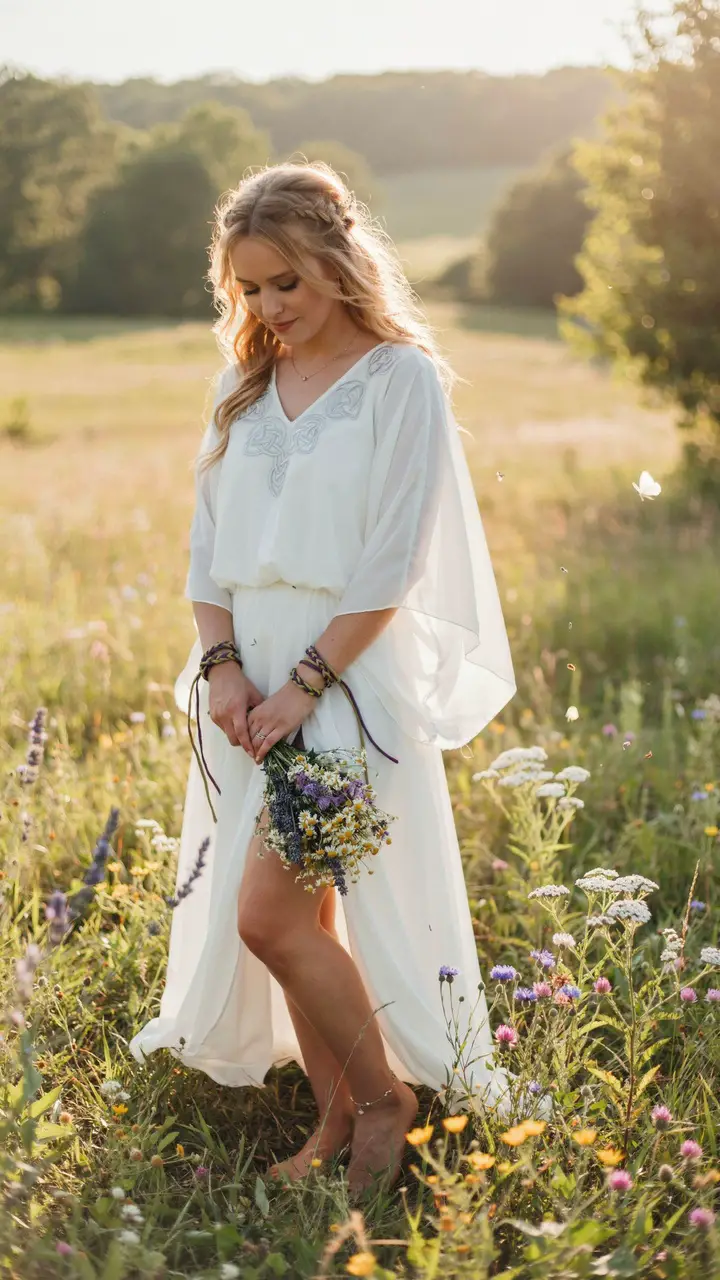
The ancient Celtic handfasting ceremony — where the couple’s hands are literally bound together in a symbolic “tying the knot” — is experiencing a massive revival, and the fashion that accompanies it is wonderfully relaxed and personal. The OOTD for a handfasting bride is less about structure and more about spiritual beauty.
How to Style This Look
- Gown silhouette: Loose, flowy chiffon or gauze in white or cream — think movement and romance, not stiffness
- Celtic detail: Subtle knotwork at neckline or hem keeps it authentic without overwhelming the natural vibe
- The handfasting cord: Commission a custom braided cord in colors that hold personal meaning — traditional colors include red (passion), green (growth), white (purity), gold (wisdom)
- For all body types: Flowy chiffon is genuinely universally flattering — choose your preferred waistline definition (empire, natural, or none at all)
- Footwear: Barefoot sandals, leather moccasins, or simple leather flats — no stilettos in meadow grass, learn from my experience 🙂
- Hair: Free and natural wins here — loose waves, flower crown, or small braids; avoid anything too rigid or formal
- Accessories: Leather wrap bracelets, simple silver Celtic rings, or a moonstone pendant
- Bouquet: Wildflowers entirely — daisies, lavender, Queen Anne’s lace — gathered loosely and wrapped in twine
- Venue: Outdoor woodland, meadow, or sacred site; this gown was made for nature, not a hotel ballroom
- Where to shop: Free People, BHLDN’s bohemian collection, or any artisan making handmade chiffon gowns on Etsy ($200–$600 range)
6. The Silver Moon — Grey or Silver Silk Gown with Moonstone Embellishment
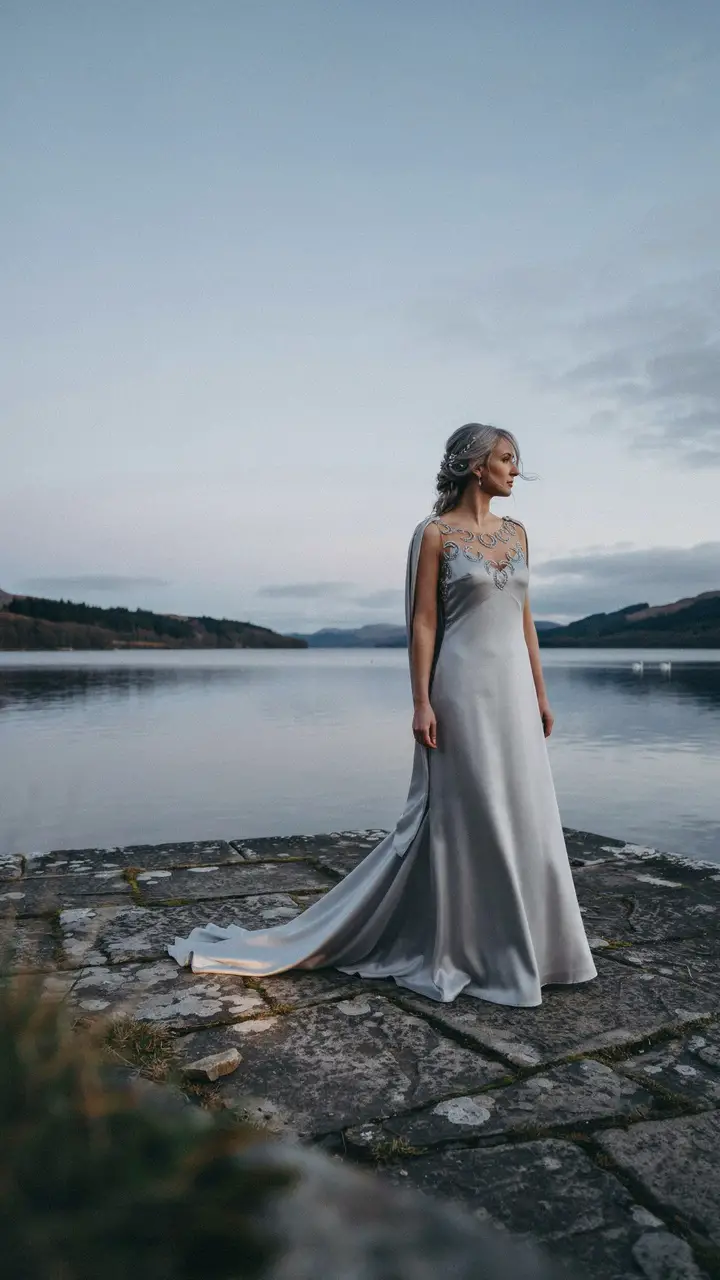
Who said Celtic brides have to choose between white and green? Silver and grey silk is one of the most underused and genuinely spectacular directions in Celtic bridal fashion, and it’s particularly gorgeous for autumn or winter ceremonies. The moonstone embellishment connects directly to Celtic lunar mythology — this is fashion with actual meaning behind it.
How to Style This Look
- Fabric: Liquid silk charmeuse or silk satin in silver, dove grey, or pewter — the way it catches light is genuinely breathtaking
- Embellishment: Moonstone, labradorite, or clear crystal in Celtic crescent moon, triskelion, or knotwork patterns at neckline or bodice
- For fair skin tones: Silver brings out your natural luminosity — this combination was made for you
- For deeper skin tones: Pewter or warm silver tones create a stunning, jewel-like contrast — deeply beautiful
- Cape styling: A separate silk or velvet cape in matching grey adds drama and warmth for cold-weather ceremonies; it’s also removable for the reception
- Hair: Silver hairpins with Celtic moonstone or knotwork details — if you have natural grey in your hair, celebrate it fully with this gown
- Jewelry: Labradorite or moonstone earrings in silver Celtic settings; simple and genuinely ethereal
- Bouquet: White garden roses, silver-dusty miller foliage, and pale lavender — cool tones throughout
- Venue: This gown sings at castle venues, lakeside ceremonies, or candlelit chapel settings
- Price consideration: Quality silk and gemstone embellishment makes this a higher-investment piece ($1,000–$3,000); look for silk-adjacent fabrics like satin-back crepe for budget-friendly alternatives
7. The Rustic Celt — Champagne Gown with Leather and Bronze Accents
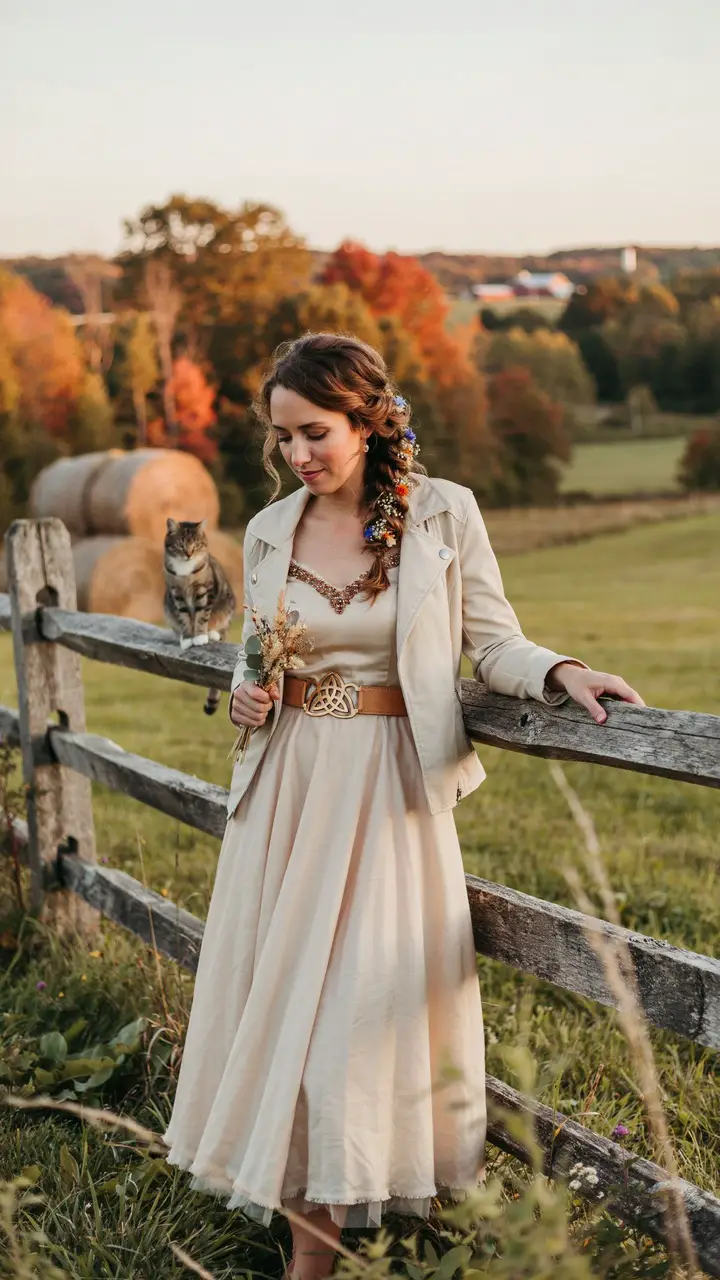
Not every Celtic wedding is in a stone castle — some of the most beautiful ceremonies happen in barns, farms, woodlands, or rustic country spaces. The champagne and leather Celtic look was practically invented for these settings. It’s romantic without being precious, and it has an honesty and warmth that more formal bridal styles simply can’t replicate.
How to Style This Look
- Gown: A-line or soft ballgown silhouette in champagne, warm ivory, or honey — raw silk, textured organza, or chiffon with subtle weight
- The leather belt: This is your signature Celtic piece — a natural or cognac leather belt with a knotwork or triskelion buckle transforms the gown instantly
- For hourglass figures: The defined leather waist is perfect for your proportions — don’t change a single thing
- For straight figures: A wide leather belt creates the curve and definition your silhouette loves — lean into this styling move completely
- Jacket option: A cream or ivory leather moto jacket for outdoor ceremonies, or a faux-leather alternative for a budget-friendly approach
- Boots: This is the one OOTD where cowboy-style ankle boots or brown leather knee-highs look genuinely amazing under a bridal gown — and your feet will thank you
- Hair: Loose romantic braid, side braid with dried flowers, or a messy updo; avoid anything too polished or sleek
- Bouquet: Dried flowers, wheat, and preserved greenery — sustainable, beautiful, and perfectly rustic
- BTW: The leather belt is usually a separate purchase ($50–$200) that you can add to a budget-friendly gown — great way to get a custom Celtic look without a custom price tag
- Seasonal note: Autumn is the absolute prime season for this look — plan accordingly
For fun ideas to name your wedding reception tables or party groups, browse these adventure group names for Celtic mythology-inspired options.
8. The Blue Bride — Cornflower Blue Gown with White Knotwork
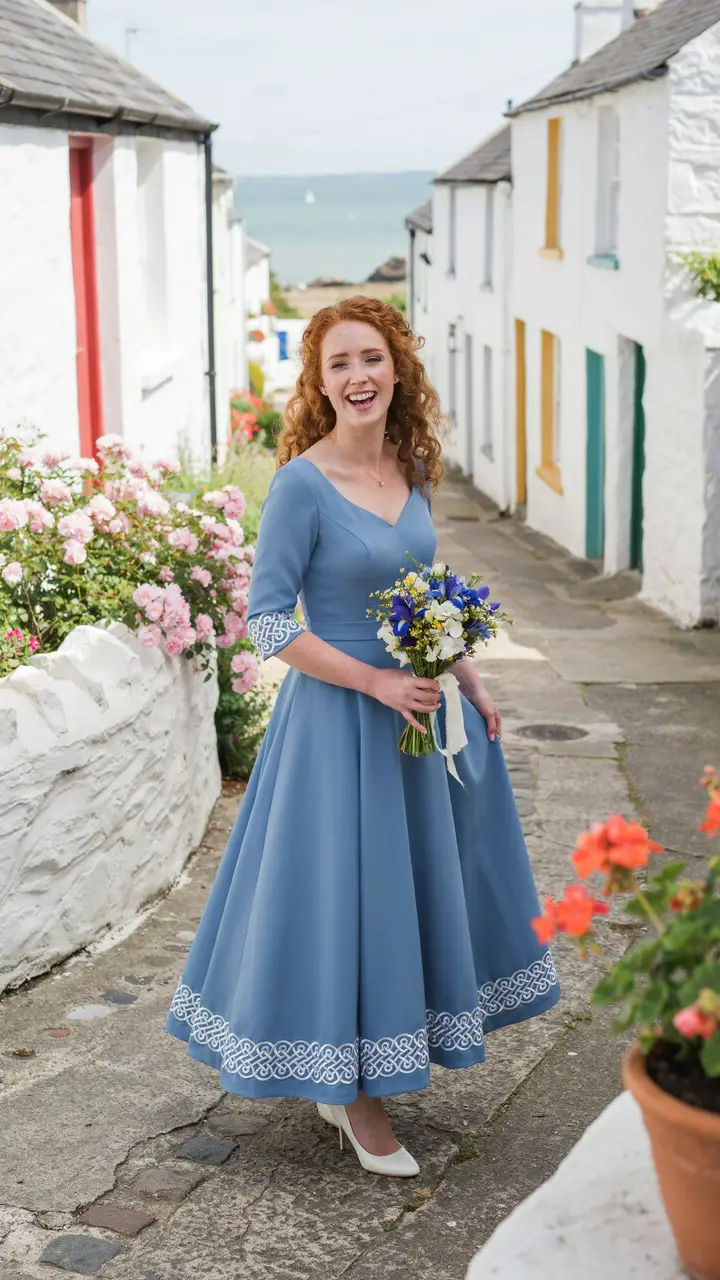
Something that often surprises people: blue was actually considered extremely lucky in Celtic wedding tradition, predating the modern “something blue” custom by centuries. A blue Celtic wedding gown isn’t just fashion-forward — it’s historically accurate. How often does tradition and originality overlap so perfectly?
How to Style This Look
- Color options: Cornflower blue, Celtic blue (slightly deeper), lavender-blue, or even rich cobalt for the boldest statement
- Knotwork detail: White or gold embroidery in Celtic patterns along hem, cuffs, and neckline creates the most beautiful contrast
- Length: Tea-length is charming and practical for outdoor venues; floor-length adds formality if your venue calls for it
- For redheads and warm skin tones: Cornflower and warm blue tones are genuinely magical against warm complexions — embrace this combination fully
- For cooler skin tones: Consider a slightly deeper or more saturated blue to avoid washing out; jewel-toned blue is particularly stunning
- Veil: A simple white or ivory veil keeps the look bridal while letting the blue gown lead
- Headpiece: A crown of white wildflowers or a knotwork silver headband
- Shoes: White kitten heels for a playful finish, or silver strappy sandals for more evening drama
- Bouquet: Blue and white flowers — irises, delphiniums, sweet peas — with a few yellow wildflowers for an authentically Irish meadow feeling
- Historical note: Worth mentioning to your guests that you’re wearing the historically lucky Celtic bridal color — it makes for a wonderful conversation piece and a deeply personal connection to tradition
9. The Dramatic Celt — Black Wedding Gown with Gold Knotwork
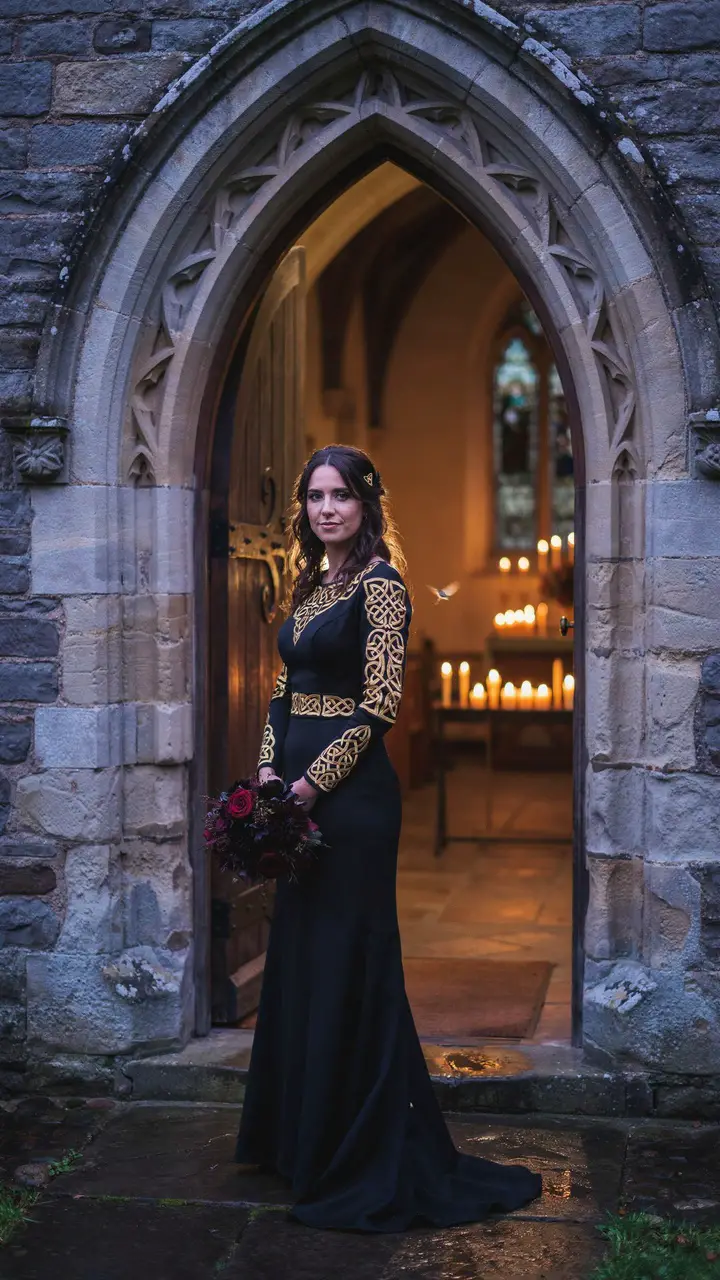
Here’s where we talk about the brides who look at every traditional white gown guide and feel exactly nothing. You know who you are. You’ve always known black was your power color. You love drama. You appreciate ancient symbolism. A black Celtic wedding gown with gold knotwork embroidery doesn’t just make a statement — it makes a declaration.
How to Style This Look
- Gown silhouette: Structured and intentional — fitted sheath, dramatic A-line, or a mermaid silhouette in black silk, velvet, or crepe
- The gold knotwork: Hand-embroidered or woven gold Celtic patterns on sleeves, bodice, and hem; the contrast between black and gold is genuinely breathtaking in candlelight
- For all skin tones: Black is universally flattering — focus your energy on finding the right silhouette for your specific body proportions
- For those hesitant about committing: A black gown with a white or ivory lining visible at the hem or slit softens the look while keeping its dramatic energy
- Hair: Loose and dramatic — long waves, or a sleek chignon with gold Celtic hairpins
- Jewelry: Gold knotwork statement earrings and nothing else — this gown is already doing everything
- Veil consideration: A gold-edged black veil is extraordinary; alternatively, a dramatic cathedral-length ivory veil creates gorgeous contrast
- Bouquet: Dark and rich — black dahlias, deep burgundy, dark purple, with gold ribbon wrapping the stems
- Venue: Gothic chapel, castle, candlelit barn, or any venue that leans into atmospheric drama
- Guest conversation: Prepare for every single person to tell you it’s the most incredible wedding gown they’ve ever seen — and they’ll be right
10. The Classic Celtic Bride — White Gown with Shamrock Embroidery and Green Sash
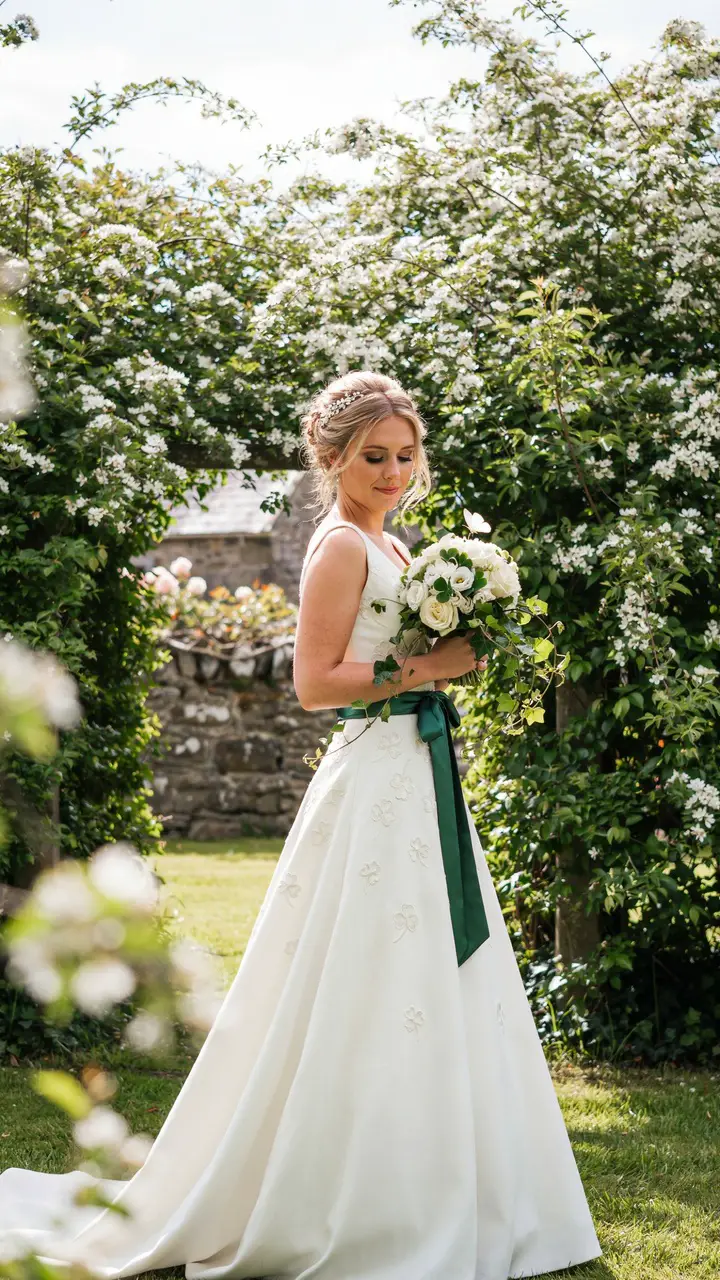
Sometimes the most powerful choice is also the most personal one. The classic white gown with shamrock embroidery and a green sash isn’t trying to be edgy or unexpected — it’s simply deeply, sincerely Irish. And for many brides, that connection to heritage is exactly the statement they want to make on their wedding day.
How to Style This Look
- The gown: Traditional A-line or ballgown in white or ivory with hand-stitched or woven shamrock embroidery — look for scattered motifs rather than overwhelming coverage
- The sash: Forest green, emerald, or sage satin ribbon sash tied at the natural waist; this is your color signature and heritage statement
- For all body types: An A-line silhouette is one of the most universally flattering wedding gown shapes — trust this choice completely
- Embroidery placement: Scattered shamrocks on the skirt and subtle detail at the bodice keep it elegant rather than novelty; less is genuinely more here
- Hair accessories: Pearl and shamrock hairpin, or a simple sprig of fresh clover tucked into your updo on the day
- Bouquet: White roses, green hypericum berries, trailing ivy, and fresh clover — natural, Irish, and genuinely beautiful
- Something borrowed: This is the perfect gown to incorporate a piece of Irish lace from a relative’s vintage gown — as trim, a pocket detail, or a sash backing
- Shoes: White kitten heels or low-block strappy sandals — comfort is non-negotiable for a full day of celebrating
- Jewelry: Pearl earrings with small Celtic knotwork settings; your Claddagh ring on your left hand in the Irish wedding position
- Price range: $400–$1,200 depending on embroidery detail and gown construction; look for Irish bridal designers like Jenny Yoo (Celtic-inspired) or commission via Etsy artisans
For inspiration on naming your Celtic-themed wedding reception tables after Irish clans or groups, these medieval town names offer wonderfully atmospheric options.
Finding Your Celtic Wedding Dress — Final Thoughts
Here’s what I want you to carry away from all of this: your Celtic wedding dress should feel like a second skin, not a costume. Whether you’re drawn to dramatic black velvet with gold knotwork or a softly embroidered ivory lace gown, the most important thing is that it feels genuinely you.
Celtic bridal fashion gives you something extraordinary that mainstream bridal trends often don’t — meaning. Every knotwork pattern, every color choice, every tartan sash has a history, a story, and a connection to something larger than just a dress. When you walk down the aisle in a gown that carries that kind of significance, the confidence you feel isn’t just about looking beautiful. It’s about knowing exactly who you are and where you come from.
So trust your instincts, honor your heritage, and wear the gown that makes your heart absolutely sing. The right Celtic wedding dress isn’t the most expensive one, the most dramatic one, or the most traditional one. It’s the one that makes you look in the mirror and think, “Yes. This is the one.”
And when that moment comes — you’ll know. <3

Greetings, I’m Alex – an expert in the art of naming teams, groups or brands, and businesses. With years of experience as a consultant for some of the most recognized companies out there, I want to pass on my knowledge and share tips that will help you craft an unforgettable name for your project through TeamGroupNames.Com!