
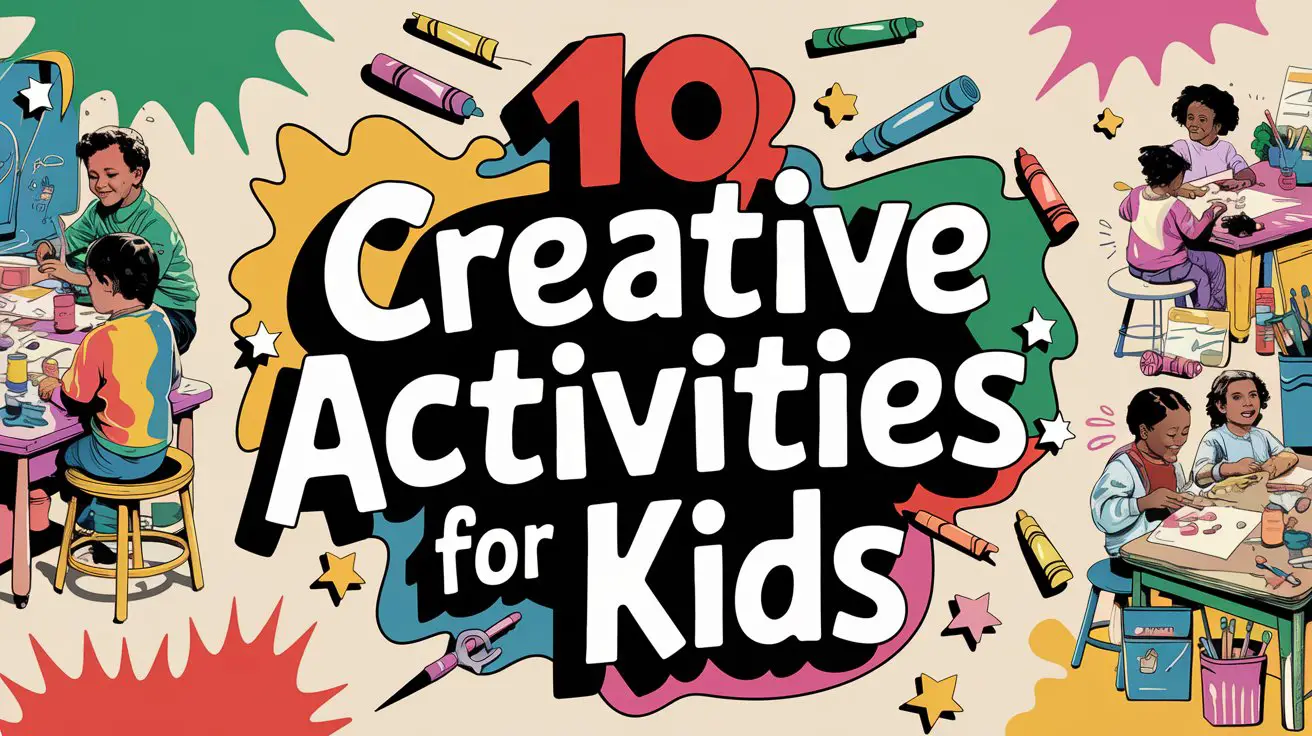
You know that moment when your toddler looks up at you with those big expectant eyes and says, “I’m bored”? Yeah, I’ve been there too—usually about five minutes after I’ve cleaned up from the last activity.
Finding creative activities that genuinely engage kids without requiring a Pinterest-worthy setup or your entire life savings in craft supplies can feel like searching for a unicorn.
But here’s what I’ve learned through plenty of trial and error (and maybe a few glitter explosions): the best activities aren’t always the most elaborate ones. Sometimes the simplest ideas spark the most imagination and learning.
Whether you’re dealing with a high-energy preschooler, a curious toddler, or trying to entertain multiple kids at different ages, I’ve rounded up 10 creative activities that have actually earned their place in my parenting survival toolkit.
These ideas work with real kids, in real homes, without requiring you to transform into a full-time activities coordinator.
Messy Sensory Play That’s Worth Every Grain of Rice
Image Prompt: A curious 2-year-old boy sits cross-legged on a large waterproof mat in a sunny living room, completely absorbed in a large clear storage bin filled with colorful rainbow rice. He’s wearing a bright blue smock (with visible stains from previous adventures) and his face shows pure concentration as he uses his hands to pour rice through a funnel into various containers. Small toy trucks, measuring cups, and plastic animals are scattered throughout the rice. His mom sits nearby on the floor, relaxed and smiling, occasionally offering a new container but mostly letting him explore independently. Stray rice grains dot the mat around him, and there’s a handheld vacuum visible in the background. The lighting is warm and natural, capturing the joyful mess of authentic sensory exploration without looking staged or intimidating.
How to Set This Up
Materials needed:
- 2-3 pounds of white rice (the cheap stuff works perfectly)
- Food coloring or liquid watercolors in various colors
- Gallon-sized ziplock bags (one per color)
- Rubbing alcohol (about 1 tablespoon per bag)
- Large plastic storage bin or sensory table
- Various containers: measuring cups, funnels, small bowls, ice cube trays
- Toy vehicles, plastic animals, or other small toys
- Large waterproof mat or old shower curtain
- Child-sized smock or old t-shirt
Step-by-step instructions:
- Divide rice into ziplock bags (about 1 cup per color)
- Add 1 tablespoon rubbing alcohol and 5-10 drops food coloring to each bag
- Seal bags and let kids shake them until rice is evenly colored (this is part of the fun!)
- Spread rice on baking sheets to dry for 30-60 minutes
- Once dry, pour all colors into your bin and add toys/tools
- Set up on your waterproof mat in an easy-to-clean area
- Let the exploration begin!
Age appropriateness: Perfect for 18 months – 5 years (with supervision for younger toddlers who still mouth everything)
Time commitment:
- Setup: 15-20 minutes (mostly drying time)
- Play duration: Typically 20-45 minutes
- Cleanup: 10 minutes with a handheld vacuum
Mess level: Medium-high, but totally containable with proper prep
Developmental benefits:
- Fine motor skills through scooping, pouring, and pinching
- Sensory exploration with different textures and sounds
- Mathematical concepts like volume and measurement
- Color recognition and sorting practice
- Imaginative play possibilities are endless
Safety considerations: Always supervise younger toddlers who might try tasting the rice. The rubbing alcohol dries completely and isn’t harmful, but you still don’t want them eating handfuls. Keep away from pets who might mistake it for food.
Activity variations:
- Add themed toys (dinosaurs, construction vehicles, farm animals)
- Include child-safe tweezers for extra fine motor challenge
- Hide small objects for a treasure hunt element
- Use different bases: dried beans, pasta, or kinetic sand
Cost-saving tips: Skip expensive sensory tables—a $5 plastic storage bin works just as well. Save containers from yogurt, takeout, and recycling for free tools.
Cleanup strategy: Here’s my secret—sweep most of the rice back into the bin before vacuuming. Store the rice in an airtight container and reuse it dozens of times. Seriously, we’ve had the same rainbow rice for six months. 🙂
For those of you wondering about the mess factor (because I know you are), check out these small group names if you’re planning activities for multiple kids—having a fun team name makes cleanup feel like a game instead of a chore!
DIY Cardboard Box City (A.K.A. The Activity That Might Outlast the Fancy Toys)
Image Prompt: A living room floor transformed into a vibrant cardboard city, with three children aged 3-6 years playing together. The “buildings” are various sized Amazon boxes decorated with marker windows, doors, and colorful designs. Some boxes are stacked to create tall structures, others are cut to make tunnels and garages. The oldest child, about 6, is carefully drawing on a medium-sized box with markers while a 4-year-old drives toy cars through a tunnel made from a long skinny box. The youngest, around 3, is simply enjoying crawling through the largest box which has been transformed into a simple house with a door and window cut out. Construction paper “roads” made from black paper with white lines connect the buildings. Stuffed animals peek out of “windows,” and there are handmade stop signs on popsicle sticks. The scene is cheerfully chaotic—markers scattered around, some boxes slightly wonky, tape visible on seams—capturing the authentic creative process rather than a finished product. Natural afternoon light fills the room, and there’s visible joy and cooperation between the siblings.
How to Set This Up
Materials needed:
- Various sized cardboard boxes (save those delivery boxes!)
- Washable markers or crayons
- Child-safe scissors
- Masking tape or painter’s tape
- Construction paper (optional for roads and decorations)
- Toy cars, action figures, or small dolls
- Stickers (if you’ve got them lying around)
- Optional: non-toxic paint, glue sticks, craft supplies
Step-by-step instructions:
- Collect boxes of different sizes over a few weeks (or raid your recycling bin)
- Let kids decide what each box will become—house, store, fire station, etc.
- Help cut doors and windows where they want them (adults handle sharp cutting)
- Kids decorate with markers, stickers, and construction paper
- Use tape to secure boxes in place or connect them
- Create “roads” with black construction paper and white crayon lines
- Add toy vehicles, figures, and animals to populate the city
- Watch your kids play for way longer than expected
Age appropriateness: Great for ages 3-8 years, with varying complexity levels
Time commitment:
- Setup: 30-60 minutes (or spread over several days)
- Play duration: Can last for days or even weeks!
- Cleanup: 10 minutes (or just leave it up—it’s art!)
Mess level: Low to medium—mostly involves art supplies you already manage
Developmental benefits:
- Spatial reasoning through building and arranging structures
- Creative problem-solving when figuring out how to connect boxes
- Imaginative play scenarios in their custom city
- Fine motor skills with cutting, drawing, and decorating
- Cooperative play when building together with siblings or friends
- Planning and organization skills
Safety considerations: Supervise cutting activities. Make sure boxes are stable if kids will be climbing on or into them. Check for staples or sharp edges before play begins.
Activity variations:
- Create a themed city: pirate island, space station, medieval castle town
- Add a “business district” where kids can “sell” toys or snacks
- Make a garage for their toy car collection
- Build a zoo with cardboard animal enclosures
- Create a drive-through restaurant setup
Budget-friendly bonus: This activity is essentially free if you save packaging! No need for fancy playhouses when cardboard boxes offer endless possibilities.
Parent sanity tip: Don’t stress about perfection. My kids’ cardboard city had crooked windows and marker smudges everywhere, but they played with it for three straight weeks. That’s a parenting win in my book. When they’re finally done, recycling it is easy and guilt-free.
BTW, if you’ve got multiple kids working together on projects like this, giving them a fun team name for kids can reduce squabbling and increase cooperation. “Construction Crew Alpha” somehow makes sharing markers way easier!
Nature Art Collages (Perfect for Exhausting Outdoor Energy First)
Image Prompt: A 4-year-old girl with wild curly hair sits at a patio table in a sunny backyard, creating an art collage on a large piece of white cardboard. She’s wearing grass-stained shorts and a bright pink t-shirt, clearly having spent time collecting her materials. Spread across the table are her treasures from nature: colorful fall leaves, small twigs, flower petals, pebbles, acorns, and bits of bark. She’s carefully applying glue from a glue stick to arrange leaves in a pattern that makes sense to her four-year-old mind—not perfect, but wonderfully creative. A small basket of additional nature items sits nearby. Her expression is one of focused concentration mixed with pride. In the background, you can see the garden where she collected her supplies, with a parent raking leaves. The scene captures that perfect late afternoon golden hour light, and there’s glue residue on her fingers and the table. The overall feeling is of peaceful, purposeful creativity that happens after active outdoor play.
How to Set This Up
Materials needed:
- White cardboard, poster board, or thick construction paper
- Glue sticks or white school glue
- Small basket or container for collecting
- Items to collect: leaves, twigs, flowers, pebbles, seeds, bark, pine cones
- Optional: markers, crayons, or paint for additional decoration
- Newspaper or protective covering for your work surface
- Damp cloth for inevitable glue-covered fingers
Step-by-step instructions:
- Take your LO outside for a “treasure hunt” walk to collect nature items
- Discuss what makes good collage materials (not too wet, not too big)
- Let them fill their basket with whatever catches their eye
- Set up your work station outdoors or cover an indoor table
- Provide the base paper or cardboard
- Show them how to apply glue, then step back
- Let them create their masterpiece without too much direction
- Allow to dry completely (overnight is best)
- Display proudly on the fridge or wall!
Age appropriateness: Works beautifully for 2.5 – 7 years, with simpler designs for younger kids
Time commitment:
- Nature walk/collecting: 20-30 minutes
- Creation time: 20-45 minutes
- Drying: Several hours to overnight
- Total engagement: About an hour of active fun
Mess level: Low—mostly contained to the work surface, though glue can be sticky
Developmental benefits:
- Observational skills during the nature walk
- Fine motor development through picking up small objects and applying glue
- Creative expression without right or wrong answers
- Connection to nature and understanding seasons
- Pattern recognition and design thinking
- Sensory experience with different textures
- Patience while waiting for glue to dry
Safety considerations: Teach kids to identify poison ivy, poison oak, or other harmful plants in your area before collecting. Avoid anything with thorns. Supervise younger children who might put small items in their mouths. Check collected items for insects before bringing indoors.
Seasonal variations:
- Spring: Fresh flower petals, new green leaves, cherry blossoms
- Summer: Pressed flowers, grass, small shells from beach trips
- Fall: Colorful leaves, acorns, interesting seed pods
- Winter: Evergreen sprigs, pine cones, interesting bare branches
Extension ideas:
- Press flowers between heavy books before gluing for flatter designs
- Create seasonal collages throughout the year to see changes
- Make nature mandalas on the ground (no glue needed!) for temporary art
- Add drawings or painted backgrounds before gluing items
- Use the collages as greeting cards or gift wrap decorations
Storage tip: If you collect more than you’ll use in one session, dry items on newspaper for a few days, then store in a shoebox for future rainy day projects.
Real talk moment: Some kids will create intricate designs. Others will glob glue everywhere and stick one leaf on it. Both are perfect. The goal is process, not product. Plus, you just got them outside moving their bodies before doing a sit-down activity—that’s strategic parenting right there.
Looking for more outdoor inspiration? These adventure group names might spark ideas for turning regular backyard time into exciting explorations that lead to even better nature art materials!
Homemade Playdough Creations (Yes, You Can Make It Yourself!)
Image Prompt: A bright kitchen counter scene with a 3-year-old boy and his mom working together with homemade playdough. The child, wearing a small apron, has flour on his nose and an enormous smile as he uses cookie cutters to create shapes in vibrant blue playdough. The counter shows the delightful chaos of active play: multiple colors of playdough in various stages of creation, a rolling pin designed for kids, plastic knives for cutting, small cookie cutters shaped like animals, and a few completed “masterpieces” arranged on a plate. Mom is in the background, hands dusted with flour, kneading a batch of purple playdough while watching her son play. Various containers of food coloring are visible, along with measuring cups and a large mixing bowl with remnants of dough. The scene feels warm and collaborative, capturing both the messy creative process and the joy of making something together. Natural kitchen lighting illuminates flour dust particles in the air, and there’s that wonderful sense of playful learning happening in an everyday space.
How to Set This Up
Materials needed:
For the playdough:
- 2 cups all-purpose flour
- 2 cups warm water
- 1 cup salt
- 2 tablespoons vegetable oil
- 1 tablespoon cream of tartar (helps with texture and preservation)
- Food coloring or liquid watercolors
- Large mixing bowl
- Measuring cups and spoons
- Stove and pot (adult use only)
For playing:
- Rolling pins (child-sized or regular)
- Cookie cutters in various shapes
- Plastic knives, forks, or playdough tools
- Toy dishes, molds, or stamps
- Craft sticks, buttons, or googly eyes for decorating
- Play surface or placemat
Step-by-step instructions:
- Mix flour, salt, cream of tartar in a large pot
- Add water and oil, stirring to combine
- Cook over medium heat, stirring constantly (this is the adult job!)
- Mixture will go from lumpy to smooth, then form a ball (about 3-5 minutes)
- Remove from heat when it pulls away from sides of pot
- Let cool until safe to handle (about 10 minutes)
- Divide into portions for different colors
- Add food coloring to each portion and knead until evenly colored
- Let kids play immediately or store in airtight containers
- Playdough lasts 3-6 months if stored properly!
Age appropriateness: Safe for 2+ years (the cooked recipe is safer than raw dough for mouthing toddlers)
Time commitment:
- Making dough: 15-20 minutes
- Play session: 30-60+ minutes
- Cleanup: 5-10 minutes
Mess level: Medium—flour and playdough bits, but nothing permanent
Developmental benefits:
- Fine motor strength through squeezing, rolling, and manipulating
- Hand-eye coordination with tools and cutters
- Creative expression without rules or right answers
- Pre-writing skills by strengthening hand muscles
- Sensory exploration with different textures and temperatures
- Following instructions if they help with the recipe
- Color mixing experiments (what happens when you combine colors?)
Safety considerations: The cooking step is for adults only—that pot gets hot! While this recipe is non-toxic if eaten, it’s very salty and not meant for consumption. Supervise younger toddlers who might try to snack on it. Check for flour allergies before making.
Why homemade is better than store-bought:
- Costs about $1 per batch vs. $3-5 for tiny containers
- You control ingredients—no weird chemicals
- Lasts longer when stored properly
- Custom colors exactly what your kid wants
- The making is part of the activity—they love helping!
- Softer texture that’s easier for small hands
Activity variations:
- Add glitter for “fairy dough”
- Mix in lavender essential oil for calming sensory play
- Create a playdough “bakery” with pretend prices and ordering
- Make letters and practice spelling their name
- Build 3D structures like snowmen or caterpillars
- Hide small objects inside for a discovery game
- Use it for counting practice (make 5 balls, 3 snakes, etc.)
Storage solutions: Store each color in its own airtight container or ziplock bag. If it starts to dry out, add a few drops of water and knead. If it gets sticky, add a pinch of flour.
Cleanup hack: Let playdough bits dry completely on the table—they sweep up way easier than when wet. Use a damp cloth for residue. Vacuum any floor crumbs once they’re dry.
Honest parent moment: Yes, there’s a little cleanup. But this activity buys you legitimate “I need to prep dinner” time. My kids will play with playdough for 45 minutes straight, which is basically gold in the toddler attention span economy. Worth it.
FYI, if your kids enjoy creating things together, check out these creative team names for your little makers. Calling yourselves the “Dough Masters” or “Color Crew” somehow makes sibling cooperation 10x easier!
Water Painting the Deck (Zero Mess, Maximum Fun)
Image Prompt: A sunny summer morning in a suburban backyard where a 2.5-year-old girl in a colorful swimsuit is enthusiastically “painting” a wooden deck with water. She holds an oversized paintbrush in her chubby toddler hand, dipping it into a small bucket of plain water beside her, then making broad strokes across the dry wood. The wet sections of the deck are visibly darker, creating clear “paintings” that she’s clearly proud of. Her expression is one of pure concentration and joy—she’s taking her “job” very seriously. Behind her, a younger sibling (around 18 months) sits in a splash pad, and a parent is visible in a lawn chair with a book, relaxed and enjoying the peaceful scene. Other “painting” tools are scattered nearby: foam brushes, kitchen basting brushes, and sponges in a small basket. The whole scene captures the perfect summer activity—kids engaged and cooling off, parent actually getting a moment of peace, and absolutely zero cleanup required since it’s just water on a hot day. The deck boards show various “artwork” at different stages of drying, creating an interesting pattern of light and dark.
How to Set This Up
Materials needed:
- Large bucket or bowls filled with plain water
- Various “painting” tools:
- Old paintbrushes (different sizes)
- Foam brushes from the dollar store
- Kitchen basting brushes
- Large car-washing sponges
- Old dish sponges
- Paintable surface: deck, fence, driveway, sidewalk, exterior walls
- Swimsuit or clothes that can get wet
- Towel for sitting
- Optional: small spray bottles for extra fun
Step-by-step instructions:
- Choose a warm, sunny day when water will evaporate
- Fill buckets with plain tap water (room temperature or cool)
- Set out various “painting” tools—let kids choose
- Show them how the dry surface gets darker when “painted”
- Give minimal direction—just let them explore
- Refresh water as needed (or let them help fill buckets)
- Watch them paint for surprisingly long stretches
- No cleanup needed—everything dries!
Age appropriateness: Perfect for 18 months – 6 years (yes, really—older kids enjoy it too!)
Time commitment:
- Setup: 2 minutes (seriously, that’s it)
- Play duration: 20-60 minutes depending on age and temperature
- Cleanup: None. Zero. Zilch.
Mess level: Basically none—they might get wet, but that’s the point on a hot day
Developmental benefits:
- Gross motor skills through arm movements and bending
- Hand-eye coordination controlling brush placement
- Cause and effect understanding (wet = dark, then it fades)
- Artistic expression without pressure of permanent art
- Sensory experience with water temperature and textures
- Patience and observation watching water evaporate
- Independence since they can “paint” without adult help
Safety considerations: Always supervise around water, even shallow buckets. Empty buckets when done to prevent drowning hazard. Watch for slippery surfaces if they spill water. Use kid-friendly, splinter-free brushes.
Best surfaces for water painting:
- Wooden decks (shows contrast beautifully)
- Concrete driveways or patios
- Brick walls or paths
- Fences (wood or vinyl)
- Exterior siding
- Chalkboards or blackboards (wipes clean!)
Why this activity is genius:
- Literally zero cleanup—it just evaporates
- Costs nothing beyond water
- Keeps kids cool on hot days
- You can sit and watch instead of hovering
- No art supplies to organize afterward
- Repeatable daily without guilt or mess
- Toddlers think they’re doing “grown-up” work
Extension ideas:
- Race to see whose painting dries first (science!)
- Create specific pictures or write their names
- Paint shapes and identify them before they disappear
- Use different colored buckets (yellow, blue, red) and talk about colors
- Add measuring cups for pouring practice
- Give them spray bottles for a different technique
- Paint each other’s shadows on the ground
Weather modifications:
- Hot day: This is the perfect activity, self-cooling included
- Mild day: They’ll stay drier but still engaged
- After rain: Great for puddle-free outdoor time
Real parent confession: This has saved my sanity on countless summer afternoons. I call it “painting” instead of “playing with water” because somehow that makes my toddler treat it more seriously and stay engaged longer. Is that manipulative? Maybe. Does it work? Absolutely. 🙂
Need more backyard inspiration that doesn’t involve actual toys? These outdoor team names might spark new ways to frame everyday activities as exciting adventures!
DIY Musical Instruments (Loud? Yes. Worth It? Also Yes.)
Image Prompt: A living room carpet scattered with homemade musical instruments, where three children ages 2-5 are creating an enthusiastic (if not exactly melodious) band. The oldest child, about 5, is shaking a tambourine made from paper plates with dried beans inside, decorated with stickers and ribbons. The middle child, age 3, is enthusiastically banging on “drums” made from upside-down metal pots with wooden spoons. The youngest, around 2, is discovering the joy of a shaker made from a plastic bottle filled with rice, his face lit with wonder at the sound he’s creating. Other instruments are scattered around: rubber band “guitars” stretched over tissue boxes, a xylophone made from glasses with different water levels, and bells tied to ribbons. The scene is cheerfully chaotic—not quiet at all—and captures the pure joy kids find in making noise, I mean music. A parent sits on the couch in the background with hands over ears but smiling broadly, clearly amused by the concert. Colorful construction paper decorations and marker designs on the homemade instruments show the creative process. Natural living room lighting captures the authentic energy of kids discovering rhythm and sound.
How to Set This Up
Materials needed:
For shakers:
- Empty plastic bottles or containers with lids
- Rice, dried beans, beads, or small pebbles
- Tape to secure lids
- Decorative supplies: markers, stickers, washi tape
For drums:
- Sturdy boxes, metal pots, or plastic containers
- Wooden spoons, dowels, or pencils (with erasers for safety)
- Optional: balloons stretched over tops for different sounds
For tambourines:
- Two paper plates
- Dried beans, rice, or jingle bells
- Stapler or glue
- Ribbon or yarn for holding
- Decorating supplies
For rubber band guitars:
- Empty tissue boxes or small cardboard boxes
- Rubber bands of different thicknesses
- Tape or glue
- Optional: paper towel tube for “neck”
For simple flutes/kazoos:
- Paper towel tubes
- Wax paper
- Rubber bands
- Decorating supplies
Step-by-step instructions:
Shakers:
- Fill plastic bottles 1/4 full with rice or beans
- Secure lid tightly with tape
- Decorate outside with markers or stickers
- Shake and enjoy!
Paper plate tambourine:
- Place beans between two paper plates (face to face)
- Staple around edges, leaving a small opening
- Add more beans if needed through opening
- Staple completely closed
- Attach ribbon handle with tape
- Decorate the outside
Tissue box guitar:
- Stretch 4-6 rubber bands around empty tissue box
- Space them out across the opening
- Strum or pluck the bands
- Optional: tape on a paper towel tube as a neck
Age appropriateness:
- Ages 2-3: Simple shakers and drums (making the music)
- Ages 4-5: Can help create most instruments
- Ages 6+: Can make everything independently
Time commitment:
- Making instruments: 20-40 minutes
- Playing/performing: 20-60 minutes (until your ears need a break!)
- Cleanup: 5 minutes
Mess level: Low—mostly involves art supplies during creation
Developmental benefits:
- Rhythm and timing through music-making
- Cause and effect (action creates sound)
- Fine motor skills through instrument creation and playing
- Creative expression without words
- Auditory processing distinguishing different sounds
- Cooperation if playing together
- Following patterns in simple songs
- Confidence building through performance
Safety considerations: Ensure lids on shakers are taped securely so small items can’t come out. Supervise younger children with rubber bands. Use rounded wooden spoons, not sharp sticks, for drumming. Check that staples on tambourines don’t have sharp edges.
Making it educational:
- Loud vs. soft: Experiment with gentle vs. energetic playing
- Fast vs. slow: Practice different tempos
- High vs. low: Compare sounds from different instruments
- Patterns: Clap or play simple rhythms to copy
- Songs: Play along to familiar children’s music
Performance ideas:
- Host a “family concert” where kids perform for adults
- March around the house in a parade
- Create a music video on your phone
- Play along with favorite songs
- Make up silly songs together
Parent survival tips:
- Set “music time” boundaries—maybe not before 8 AM on weekends
- Designate a space for instrument storage
- Use it as a transition activity when you need kids to burn energy
- Join in sometimes—your terrible singing makes them feel confident
- Record performances for grandparents (they’ll love it, and it keeps kids engaged longer)
Honest moment about the noise: Look, this activity is LOUD. But it’s the good kind of loud—the sound of kids exploring creativity and rhythm. Put on your patient parent hat (or earplugs), and remember that these instruments eventually break or get forgotten. Enjoy the chaos while it lasts, or schedule “concert time” right before bath time when you need them awake and energetic anyway!
Budget bonus: This costs basically nothing if you use recycled materials. That $30 toy drum set will sit in the corner unused, but the instruments they made themselves? They’ll actually play with those.
If you’re coordinating this with multiple kids or planning a playdate “band,” giving them a fun music team name turns noise into a “professional performance.” Suddenly they’re not just making racket—they’re “The Rockin’ Rainbow Band” having practice!
Simple Science Experiments (That Look Impressive But Are Super Easy)
Image Prompt: A kitchen table transformed into a science lab, where a 5-year-old girl in safety goggles (really just swimming goggles, let’s be honest) watches with wide-eyed amazement as a baking soda and vinegar volcano erupts with colorful foam. She’s wearing an oversized button-up shirt as a “lab coat” and her expression is pure wonder mixed with a little nervousness about the bubbling reaction. The volcano is made from a plastic water bottle surrounded by clay or playdough, sitting on a large tray to catch the overflow. Around the table are other simple experiments in progress: a jar with oil and water separation experiment (colored with food dye), another jar showing a color-mixing experiment with milk, food coloring, and dish soap creating swirling patterns, and some dissolving Skittles creating a rainbow on a plate. A parent stands nearby with their phone out, capturing the reaction and ready to help if needed. The kitchen counter is protected with old newspapers, and there’s scientific excitement in the air despite the basic supplies. Natural window light illuminates the colorful reactions, and the scene captures that magical moment when kids realize science is actually really cool.
How to Set This Up
Materials needed for 4 basic experiments:
Baking soda volcano:
- Empty water bottle
- Baking soda (2-3 tablespoons)
- White vinegar (1/2 – 1 cup)
- Red or orange food coloring
- Dish soap (1 tablespoon)
- Large tray or baking pan
- Optional: playdough or clay to build volcano shape
Dancing raisins:
- Clear glass or jar
- Clear carbonated soda (like Sprite or 7-Up)
- Raisins (5-10)
Color mixing milk:
- Shallow dish or plate
- Whole milk (enough to cover bottom)
- Liquid food coloring (multiple colors)
- Dish soap
- Cotton swabs
Skittles rainbow:
- White plate with a rim
- Skittles candies (one packet)
- Warm water
Step-by-step instructions:
Volcano (the crowd favorite):
- Place empty bottle on tray
- Add baking soda to bottle
- Add food coloring and dish soap
- When ready for eruption, pour in vinegar
- Watch it bubble and overflow!
- Repeat as many times as kids want
Dancing raisins:
- Fill glass with clear soda
- Drop in raisins
- Watch them sink, then rise, then sink again
- Explain (simply): bubbles attach to raisins and make them float up
Color mixing milk:
- Pour milk onto plate (thin layer)
- Let it settle and become still
- Add drops of different food colors around the edge
- Dip cotton swab in dish soap
- Touch soap to the middle of colored milk
- Watch colors swirl and dance!
Skittles rainbow:
- Arrange Skittles in a circle around the edge of plate
- Pour warm water into the center carefully
- Watch colors dissolve toward center creating rainbow
- The colors don’t mix—they stay in lanes!
Age appropriateness:
- 3-4 years: Watch and help pour (with supervision)
- 5-6 years: Can help measure and mix ingredients
- 7+ years: Can perform most experiments independently
Time commitment:
- Setup per experiment: 5-10 minutes
- Actual experiment: 5-15 minutes each
- Repeat factor: Kids will want to do volcano 5+ times
- Total activity time: 45-90 minutes easy
Mess level: Medium—mostly liquid-based but contained to work area
Developmental benefits:
- Scientific thinking through cause and effect
- Prediction skills (what will happen when…)
- Observation abilities watching reactions carefully
- Vocabulary building learning science words
- Following instructions step by step
- Mathematical concepts through measuring
- Patience waiting for reactions to happen
Safety considerations: Adult supervision required, especially with vinegar (don’t get in eyes). The experiments shown here use only food-safe, non-toxic materials. Still teach kids not to taste experiments. Protect surfaces with trays or newspapers.
The “why” behind each experiment (simple explanations for kids):
Volcano: “Baking soda and vinegar have a chemical reaction that makes lots of bubbles—like when you shake a soda!”
Dancing raisins: “The bubbles in soda stick to the bumpy raisin and carry it up like a balloon. When bubbles pop at the top, it sinks down again.”
Color milk: “Soap breaks up the fat in milk, making it move fast and carrying the colors with it.”
Skittles rainbow: “Each Skittles has sugar and color. When water touches them, the color dissolves but each color has different heaviness so they don’t mix.”
Extension ideas:
- Keep a “science journal” with drawings of what happened
- Try volcano with different vinegar amounts
- Test if raisins work in other fizzy drinks
- Experiment with skim vs. whole milk in color mixing
- Try other candies for the rainbow experiment
- Make predictions before each experiment
Common questions kids ask:
- “Can we do it again?” (Yes, that’s why we bought the big box of baking soda!)
- “What happens if we use more?” (Great question—let’s find out!)
- “Why doesn’t it work?” (Usually because the baking soda/vinegar ratio is off)
Parent hack: Film the reactions on your phone. Kids LOVE watching themselves do science, and it extends the activity when they review the videos. Plus, instant content for the family group chat!
Budget reality check: All these experiments use kitchen pantry staples. The entire set costs maybe $10-15 if you buy everything new, but you probably already have most items. Compare that to a $40 “chemistry kit” from the toy store that they’ll use once.
When to do this: Perfect for:
- Rainy afternoons when outdoor play isn’t happening
- Birthday party activities (kids love showing off the volcano)
- Playdate entertainment that impresses other parents
- Screen-free weekend mornings
- “I’m bored” emergency activities
Real talk: My kids will choose science experiments over screens at least 60% of the time, and that’s saying something in 2026. There’s just something magical about making things bubble, change colors, or move on their own. Plus, you look like a super engaged parent when really you’re just mixing household items together. Win-win.
Looking for more educational team names if you’re doing this with a group? “The Lab Rats” or “Bubble Busters” makes everything feel more official and fun!
Story Stones for Imaginative Storytelling
Image Prompt: A cozy reading nook with soft afternoon light where a 4-year-old boy sits cross-legged on a cushion, holding a small painted stone up to examine it closely. Spread before him on a colorful rug is a collection of about 15-20 smooth river rocks, each painted with a simple image: a princess, dragon, castle, tree, rainbow, car, dog, sun, moon, star, etc. The stones are painted in bright, cheerful colors with clear, recognizable images. The child is mid-story, using the stones to create his own tale, and his animated expression shows he’s completely absorbed in his imaginary world. Behind him, his younger sister (about 2) is picking through the stones, choosing her favorites. A small fabric drawstring bag for storing the stones sits nearby, and you can see a few stones still in progress with paint bottles and brushes on newspaper in the background. A parent sits on the floor nearby, genuinely engaged and listening to the creative story being woven. The scene feels warm, screen-free, and captures that beautiful moment of pure childhood imagination at work. The stones themselves are clearly homemade—not perfect or professionally done, but perfect in their imperfection and full of personality.
How to Set This Up
Materials needed:
- 15-25 smooth flat stones (collect from nature or buy river rocks at craft stores)
- Acrylic paint or paint pens
- Small paint brushes
- Clear acrylic sealer spray (optional but makes them last longer)
- Newspaper or plastic tablecloth for work surface
- Permanent marker for outlining (optional)
- Small bag or box for storage
- Paper towels and water cup
Images to paint on stones (keep simple!):
- Characters: princess, prince, dragon, knight, animal friends, family members, monsters
- Settings: castle, house, forest, ocean, mountains, school
- Transportation: car, boat, rocket, horse, bicycle
- Nature: sun, moon, stars, rainbow, flowers, trees
- Objects: treasure chest, magic wand, crown, food items
- Emotions: happy face, sad face, surprised face, sleepy face
Step-by-step instructions:
Creating the stones (can be a separate activity):
- Wash and dry all stones completely
- Paint entire stone white as a base coat (optional but helps colors pop)
- Let base coat dry completely
- Sketch your image lightly with pencil first
- Paint the image with bright colors
- Let dry thoroughly (1-2 hours)
- Add details or outlines with marker or thin brush
- Spray with sealer once completely dry (adult job, do outside)
- Store in special bag or box
Using the stones:
- Pour out stones and let child examine them
- Have child pick 3-5 stones randomly
- Create a story using those characters/objects
- Take turns adding to the story
- Pick new stones and start a new tale
Age appropriateness:
- Ages 2-3: Choose stones and name objects
- Ages 4-5: Create simple stories with help
- Ages 6+: Create complex narratives independently
- Parents: Actually enjoy this activity too!
Time commitment:
- Creating stones: 1-2 hours (can spread over multiple days)
- Playing/storytelling: 20-45 minutes per session
- Reusable forever!
Mess level:
- Creating: Medium (painting activity)
- Using: Zero mess!
Developmental benefits:
- Language development through storytelling
- Creativity and imagination building narratives
- Sequencing skills (what happens first, next, last)
- Vocabulary expansion describing characters and actions
- Confidence in speaking practicing narrative skills
- Turn-taking when telling stories together
- Memory skills remembering story elements
- Problem-solving figuring out plot challenges
Safety considerations: Make sure stones are large enough not to be choking hazards (bigger than a golf ball). Use non-toxic paints. Let sealer dry completely outside before children handle stones. Supervise younger toddlers who might try to mouth them.
Storytelling prompts to get started:
- “Once upon a time, there was a [pick stone]…”
- “One day, [character stone] went on an adventure to find [object stone]…”
- “In a land far away, a [character] met a [character] and they…”
- “The biggest problem was [challenge], but they solved it by…”
Variations and extensions:
- Story jar: Pull stones from bag without looking
- Collaborative stories: Each person adds one sentence
- Silly stories: Intentionally pick mismatched stones for funny tales
- Beginning, middle, end: Pick three stones to represent story structure
- Acting out: Use stones as props while acting the story
- Recording stories: Voice memo or video for grandparents
- Writing practice: Older kids can write down their stories
- Foreign language practice: Tell stories in second language they’re learning
Theme sets you can create:
- Fantasy adventure: Dragons, castles, knights, wizards, magic items
- Ocean tales: Fish, boats, mermaids, treasure, beach scenes
- Space stories: Rockets, aliens, planets, stars, astronauts
- Everyday life: Family, school, pets, vehicles, houses
- Animal adventures: Zoo animals, farm animals, pets, wild creatures
Why story stones are amazing:
- Screen-free entertainment that genuinely engages
- Portable activity – throw bag in diaper bag or purse
- Restaurant/waiting room lifesaver for keeping kids occupied
- No pieces to lose (unlike most toys)
- Works for wide age range at once
- Encourages verbal skills without worksheets
- Makes storytelling less intimidating with visual prompts
- Quality time connection between parent and child
Budget-friendly tips:
- Collect smooth stones from nature walks (free!)
- Use leftover acrylic paints from other projects
- Dollar store paint pens work great
- Skip the sealer if you’re gentle with the stones
- Paint over stones that get worn to create new images
Storage solutions:
- Drawstring fabric bags (kids love the treasure aspect)
- Small decorated boxes
- Mason jars (pretty display on shelf)
- Ziplock bags in diaper bag for travel
Real parent story: We made story stones on a rainy Saturday, and they’ve become our go-to quiet time activity. My son uses them during his younger sister’s nap time, and she’s learning new words by naming the pictures. We’ve used them in the car, at restaurants, during a power outage, and even at bedtime for calming storytelling. Best $3 investment (for the river rocks) I’ve made in parenting.
The best part: Unlike most toys, these actually get MORE valuable with age as kids’ storytelling abilities develop. The same stones a 3-year-old uses to name objects become tools for elaborate adventure stories at age 6.
For kids who love imaginative play, check out these creative group names to inspire even more storytelling adventures!
Indoor Obstacle Course (Burning Energy Without Leaving the House)
Image Prompt: A living room completely transformed into an indoor adventure course where two kids (ages 3 and 5) are actively navigating their way through various challenges with huge grins on their faces. The older child is carefully walking across a “balance beam” made from painter’s tape on the floor in a zigzag pattern, arms stretched out for balance. The younger child is crawling through a “tunnel” made from a large cardboard box with both ends cut open. Around the room you can see other obstacle stations: couch cushions arranged as stepping stones, a blanket draped over chairs creating a crawl-under cave, a laundry basket with stuffed animals inside that need to be tossed into another basket, masking tape “hopscotch” squares on the floor, and a hula hoop propped against the couch to crawl through. A timer sits on the coffee table, adding an element of challenge. The room is cheerfully chaotic but safe, with furniture pushed slightly aside. A parent sits on the stairs with a coffee cup, watching and smiling, occasionally cheering but mostly just enjoying watching them burn off energy. The scene captures that perfect combination of physical activity, problem-solving, and pure fun, all within the confines of a regular home. Natural daylight streams through windows, and you can tell these kids are having the time of their lives despite being indoors.
How to Set This Up
Materials needed (all things you already own!):
- Painter’s tape or masking tape (won’t damage floors)
- Couch cushions or throw pillows
- Cardboard boxes (various sizes)
- Blankets or sheets
- Laundry baskets
- Stuffed animals or soft balls
- Kitchen chairs
- Jump rope or ribbon
- Hula hoop (if you have one)
- Timer or phone stopwatch
- Tunnel (toy tunnel if you have it, or make with boxes)
Obstacle station ideas:
- Balance beam: Tape straight or zigzag line on floor to walk across
- Stepping stones: Couch cushions or taped circles to hop between
- Tunnel crawl: Cardboard box or toy tunnel to crawl through
- Limbo station: Hold jump rope between two chairs at various heights
- Cave crawl: Blanket over chairs or table to crawl under
- Toss challenge: Throw stuffed animals into laundry basket from distance
- Hopscotch: Tape squares on floor in classic pattern
- Hula hoop portal: Step or crawl through hoop
- Wall touch: Run to wall, touch specific spot, run back
- Animal station: Walk like different animals for each section
Step-by-step instructions:
- Choose 5-8 obstacle stations based on space and age
- Set up stations in a circular or linear path
- Make sure path is clear of breakable items
- Test each obstacle for safety
- Demonstrate how to complete course
- Let kids practice once slowly
- Use timer for timed challenges (optional)
- Encourage them to go through multiple times
- Switch up obstacle order to keep it fresh
- Take breaks for water and snacks
Age appropriateness:
- 2-3 years: Simple 3-4 station course, focus on crawling and stepping
- 4-5 years: 6-8 stations with variety, can understand rules
- 6+ years: Complex courses, timed challenges, creative modifications
- Siblings: Different difficulty levels for each child
Time commitment:
- Setup: 15-20 minutes
- Active play: 30-60 minutes (they’ll do it again and again!)
- Cleanup: 10 minutes
- Energy burned: SIGNIFICANT
Mess level: Low—just furniture rearranged temporarily
Developmental benefits:
- Gross motor skills through diverse movements
- Balance and coordination navigating obstacles
- Problem-solving figuring out best path
- Confidence building mastering challenges
- Listening skills following course instructions
- Patience waiting for turns
- Spatial awareness moving through confined spaces
- Physical fitness with fun, not forced exercise
Safety considerations:
- Remove sharp objects and breakable items from area
- Ensure all obstacles are stable (test weight limits)
- No jumping from high furniture
- Supervise younger children, especially in tunnels
- Keep course away from stairs
- Make sure tape won’t damage floors (test small area first)
- Encourage safe speed—it’s not always about going fastest
Making it more challenging:
- Add time limits for older kids
- Require backwards crawling through tunnel
- Close eyes for certain balance sections (with supervision!)
- Carry stuffed animal throughout entire course
- Complete course on hands and knees only
- Do everything twice before moving to next station
- Create “penalty” stations if they miss a target (like 5 jumping jacks)
Making it easier:
- Wider tape lines for balance
- Fewer total stations
- Hold parent’s hand through scary parts
- No time pressure, just completion
- Bigger targets for tossing
- Lower limbo bar
Theme variations:
- Ninja warrior: Wear bandanas, call it “training”
- Superhero academy: Each station tests a different power
- Zoo escape: Walk like animals at each station
- Spy mission: Crawl silently, don’t touch “lasers” (string)
- Pirate adventure: Find treasure at the end
- Space exploration: Each station is a different planet
Rainy day savior: This is THE indoor activity when weather keeps you trapped inside but kids have energy to burn. It works better than screens for actually tiring them out before naptime or bedtime.
Competitive vs. cooperative options:
- Timed races: See who completes fastest (for competitive kids)
- Team course: Work together to help each other (for siblings)
- Beat your time: Compete against own previous time (builds confidence)
- Cheerleader role: Those waiting can cheer for active participant
Parent survival tips:
- Set this up before you desperately need it
- Take videos—kids love watching themselves
- Use course as a reward: “After we clean up toys, obstacle course time!”
- Set it up before coffee finishes brewing in the morning
- Leave it up all day if you can—they’ll use it multiple times
- Incorporate it into daily routine (morning energy burn before quiet activities)
The honest truth:
Setup takes 15 minutes. They’ll play for an hour. Cleanup takes 10 minutes. That’s an excellent return on investment of your time. Plus, tired kids nap better and go to bed easier. This is strategic parenting disguised as fun.
Budget: $0 if you use items you already own. Compare that to a trampoline park visit ($15-30 per kid) and you’ve got a winner.
When to deploy this activity:
- ✓ Rainy or cold days
- ✓ Before naptime when they’re wound up
- ✓ Before bedtime for the same reason
- ✓ When sibling bickering starts (refocus that energy!)
- ✓ Morning wake-up to start day actively
- ✓ Playdate entertainment
- ✓ Screen-free weekend mornings
If you’re doing this with multiple kids, creating team names for kids adds an extra layer of fun. “Team Lightning” vs. “The Thunder Kids” somehow makes everything more official and reduces fighting over whose turn it is!
Dress-Up Fashion Show (Raid the Closet and Unleash Creativity)
Image Prompt: A hallway turned runway where three children ages 3-6 are fully committed to their fashion show, dressed in wonderfully mismatched and oversized clothing from the dress-up box. The oldest child, around 6, struts confidently down the “runway” (really just the hallway carpet) wearing a sparkly princess dress that’s too long, paired with dad’s old tie, rain boots, and a cowboy hat, striking a dramatic pose at the end. The middle child, about 4, waits at the “backstage” area (behind a doorway) wearing a pirate costume mixed with a tutu and sunglasses, peeking around the corner with excitement. The youngest, around 3, toddles in mom’s high heels that are hilariously too big, wearing a superhero cape, kitchen apron, and carrying a fancy purse, delighted with every wobbling step. Two parents sit on the floor at the end of the runway on couch cushions as the “audience,” phones out taking pictures and cheering enthusiastically. Clothes are strewn around—scarves, hats, costume pieces, old Halloween costumes, and accessories. There’s a full-length mirror propped against the wall where kids check themselves out before walking. The scene is joyful chaos, captured in warm home lighting, and everyone is genuinely having the time of their lives. The kids’ expressions show pure confidence and creativity—they’re taking this very seriously while having incredible fun.
How to Set This Up
Materials needed:
- Large box, bin, or designated closet space for dress-up clothes
- Various dress-up items (see list below)
- Full-length mirror or phone camera for kids to see themselves
- Designated “runway” space (hallway works perfectly)
- “Audience seating” (cushions, chairs, or just floor space)
- Optional: music playlist for runway walks
- Phone or camera for documenting the looks
What to include in dress-up collection:
Clothing:
- Old bridesmaid dresses or formal wear
- Oversized t-shirts and button-downs
- Tutus and dance skirts
- Old Halloween costumes
- Dad’s old ties and belts
- Scarves of various colors
- Vests, blazers, or suit jackets
- Aprons or chef hats
Accessories:
- Play jewelry (beaded necklaces, plastic rings, bracelets)
- Sunglasses (old pairs that are scratched)
- Hats: cowboy, fancy, baseball, crowns, tiaras
- Bags: purses, tote bags, small suitcases
- Gloves (winter or fancy)
- Shoes: high heels (supervised), rain boots, slippers
Costume pieces:
- Capes (superhero or princess)
- Wings (fairy, butterfly, or angel)
- Masks
- Wands or swords
- Boas or fur wraps
- Character pieces from past Halloweens
Step-by-step instructions:
- Designate clear runway space (hallway or living room)
- Set up audience area with cushions or chairs
- Show kids the dress-up collection
- Let them choose outfits independently (resist urge to match things!)
- Help with tricky fasteners if needed, otherwise hands-off
- Put on some upbeat music
- Each child takes turns walking the “runway”
- Audience claps and cheers enthusiastically
- Take photos at the end of runway
- Let them change outfits and repeat multiple times
Age appropriateness:
- 2-3 years: Love putting on hats, capes, and shoes; need help with complex items
- 4-5 years: Can dress independently; love layering everything
- 6+ years: Create elaborate character-based outfits; might choreograph walks
- All ages: LOVE the applause and attention
Time commitment:
- Setup: 5 minutes (if you keep clothes organized)
- Getting dressed: 10-15 minutes per round
- Fashion show: 20-60 minutes (they’ll do multiple shows)
- Cleanup: 10-15 minutes
Mess level: Medium—clothes everywhere, but that’s the point!
Developmental benefits:
- Self-expression through clothing choices
- Confidence building performing in front of audience
- Independence dressing themselves
- Fine motor skills with buttons, zippers, and ties
- Creativity mixing unexpected items
- Dramatic play creating characters
- Body awareness moving in different clothes
- Decision-making choosing their look
- Social skills taking turns and receiving applause
Safety considerations: Supervise very young children in high heels (they WILL fall). Make sure capes don’t drag dangerously. Avoid anything with small, detachable parts for kids who still mouth objects. Check that long dresses won’t trip them on stairs.
Fashion show variations:
Themed shows:
- Superhero spectacular: Everyone creates superhero looks
- Fancy gala: Formal wear only
- Career day: Dress as different jobs
- Decades show: ’50s, ’70s, ’80s inspired (if you have those clothes!)
- Color challenge: Each kid picks a color and uses only that color
- Mix-match madness: Intentionally silly combinations
- Character impersonation: Dress as favorite book or movie characters
Adding extra elements:
- Runway music: Let each child pick their “walk-out song”
- Commentary: Parent acts as fashion announcer describing outfits
- Judging: Score on creativity, confidence, etc. (keep it positive!)
- Prizes: Everyone wins something (“Most Creative,” “Best Use of Hats,” etc.)
- Photo shoot: Dedicated photo area at end of runway
- Program: Kids create paper program listing each “look”
- Tickets: Make pretend tickets for audience members
Building your dress-up collection (budget-friendly):
- Thrift stores (amazing source of cheap, quirky items)
- Post-Halloween costume sales (buy for next year)
- Ask relatives for old costume jewelry or accessories
- Garage sales (dresses for $1!)
- Your own old clothes before donation
- Ask friends with older kids for hand-me-downs
- Dollar store accessories (crowns, wands, jewelry)
Storage solutions:
- Large plastic bins with lids (protect from dust)
- Over-door shoe organizers (perfect for accessories)
- Hanging closet rod at kid height
- Labeled baskets for categories (hats, scarves, jewelry)
- Hooks on wall for capes and costumes
Playdate activity gold:
This works phenomenally well for playdates. Kids get a structured activity that’s still completely open-ended. They’re occupied for ages, and parents get to sit and chat (while being the “audience”).
Parent involvement level:
- Minimal: Just sit and watch/cheer
- Medium: Help with tricky fasteners, take photos
- Maximum: Act as announcer, play music, create elaborate setups
When things get competitive: Sometimes kids want to “win” or argue about who goes first. Solutions: Everyone is a winner with specific categories (most colorful, silliest, most accessories, etc.). Use timer for equal runway time. Create a performance order chart.
The magic moment:
There’s something incredible about watching your shy child suddenly transform into a confident runway model when wearing a cape and crown. Or seeing your energetic kid carefully coordinate a “look” with focus and intention. Dress-up play lets kids try on different personas safely.
Real parent confession:
I keep the dress-up box in an accessible place because it’s my secret weapon. The minute I hear “I’m bored” or bickering starts, I suggest a fashion show. Suddenly they’re occupied, creative, and cooperative. It’s basically magic.
Bonus for parents: The photos you get from these fashion shows become treasured memories. My phone is filled with pictures of my kids in ridiculous outfit combinations, and they’re some of my favorites.
Got multiple kids or planning a dress-up playdate party? Give everyone fun team names like “The Glamour Squad” or “Fashion Force”—suddenly cooperation improves and everyone’s on the same team!
Conclusion: Simple Play, Meaningful Moments
Here’s what I’ve learned after trying hundreds of activities with kids of different ages: the best activities aren’t the ones that require the most prep, cost the most money, or look the most impressive on social media. The best activities are the ones that actually get done, that spark genuine engagement, and that you can realistically pull off on a random Tuesday afternoon when you’re exhausted.
Every single activity I’ve shared here works because it respects three things: your limited time, your actual budget, and the reality that kids’ attention spans are short but their capacity for joy is enormous. You don’t need to be a Pinterest-perfect parent to give your kids meaningful play experiences. You just need some basic supplies, a little creativity, and the willingness to embrace the mess and chaos that comes with childhood.
Some days the rainbow rice will end up vacuumed from corners for weeks. The cardboard city will block your hallway for longer than you’d planned. The fashion show will somehow result in every single item of clothing being on your floor. And you know what? That’s exactly how it should be. Those messes are evidence of learning happening, imagination flourishing, and memories being made.
Trust your instincts, celebrate the imperfect attempts, and remember that your kids don’t need elaborate activities—they need engaged parents who are willing to let them explore, create, and play. The homemade playdough they helped make will always mean more than the store-bought stuff. The volcano they erupted with you watching will be remembered long after the fancy toy is forgotten. The fashion show where they wore rain boots with a princess dress and you genuinely cheered? That’s the stuff childhood is made of.
So the next time you hear “I’m bored” or need to fill a rainy afternoon, pull out these ideas. Adapt them to your kids’ interests and your family’s style. Make them simpler or more elaborate as needed. And most importantly, give yourself permission to be a good-enough parent who provides good-enough activities that create extraordinary moments of connection and joy.
You’ve got this. Now go make some rainbow rice—and maybe grab the vacuum ahead of time. <3

Greetings, I’m Alex – an expert in the art of naming teams, groups or brands, and businesses. With years of experience as a consultant for some of the most recognized companies out there, I want to pass on my knowledge and share tips that will help you craft an unforgettable name for your project through TeamGroupNames.Com!