
You know that feeling when you open your closet door and just… stare?
Not because everything looks amazing, but because somehow, despite owning approximately 47 black tops, you’re convinced you have nothing to wear.
The closet chaos is real, and it creeps up on everyone — the extra throw pillow collector, the “I’ll wear this someday” hoarder, the person who genuinely cannot find matching socks on any given Tuesday.
Here’s the thing: a closet clean out isn’t just about making space.
It’s about reclaiming your mornings, your sanity, and honestly, your whole relationship with your wardrobe. And the best part?
You don’t need a custom built-in system that costs more than your rent to make it happen.
Let’s get into it.
1. Start With the “One Year Rule” — And Actually Stick to It
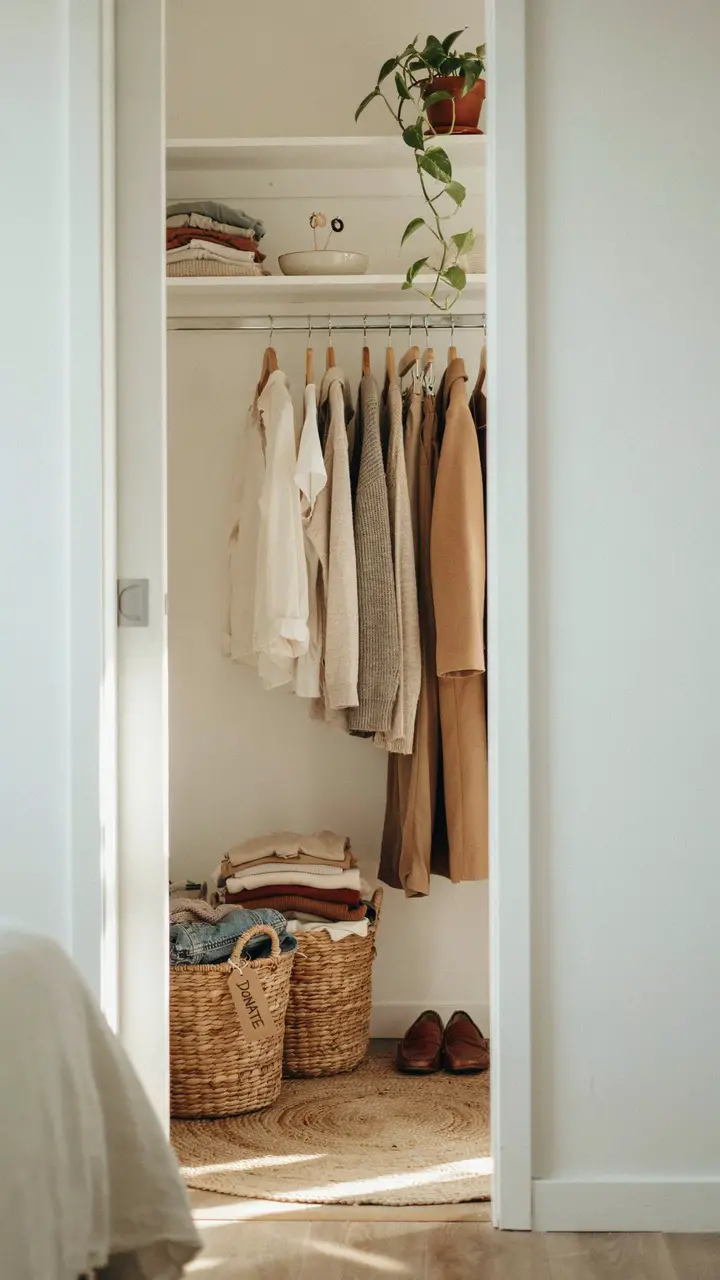
If you haven’t worn it in over a year — not “I keep meaning to wear it” or “I wore it once in 2019 and felt amazing” — it goes. This single rule does the heavy lifting so you don’t have to spend three hours agonizing over each piece. Be honest with yourself: seasons count, but if a full cycle has passed and it stayed on the hanger, it’s not coming back into rotation.
How to Recreate This Look
- Wicker donation baskets ($15–$30, Target or TJ Maxx) keep the process visual and motivating
- Wooden or velvet slim hangers ($20–$40 for a set of 50) replace the plastic chaos and instantly unify the look
- Set a timer for 45-minute editing sessions — decision fatigue is real, and short bursts work better than marathon clean-outs
- Difficulty level: Beginner — no tools required, just commitment
- Budget tier: Under $50 total investment, massive payoff
2. Sort Into Four Piles — Not Two
Most clean-out advice tells you “keep or donate.” But four piles actually work better: Keep, Donate, Sell, and Repair. That blazer with the missing button? It doesn’t belong in donate — it belongs in repair. That barely-worn dress still has tags? Sell it on Poshmark or Depop and fund your next organizational splurge. Being specific about where things go means fewer items end up in a “maybe” purgatory box under your bed (we’ve all been there).
Pro tip: Photograph sellable items before you put them in the pile. You’ll be way more likely to actually list them if the photos are already done.
3. Empty It Completely Before You Reorganize
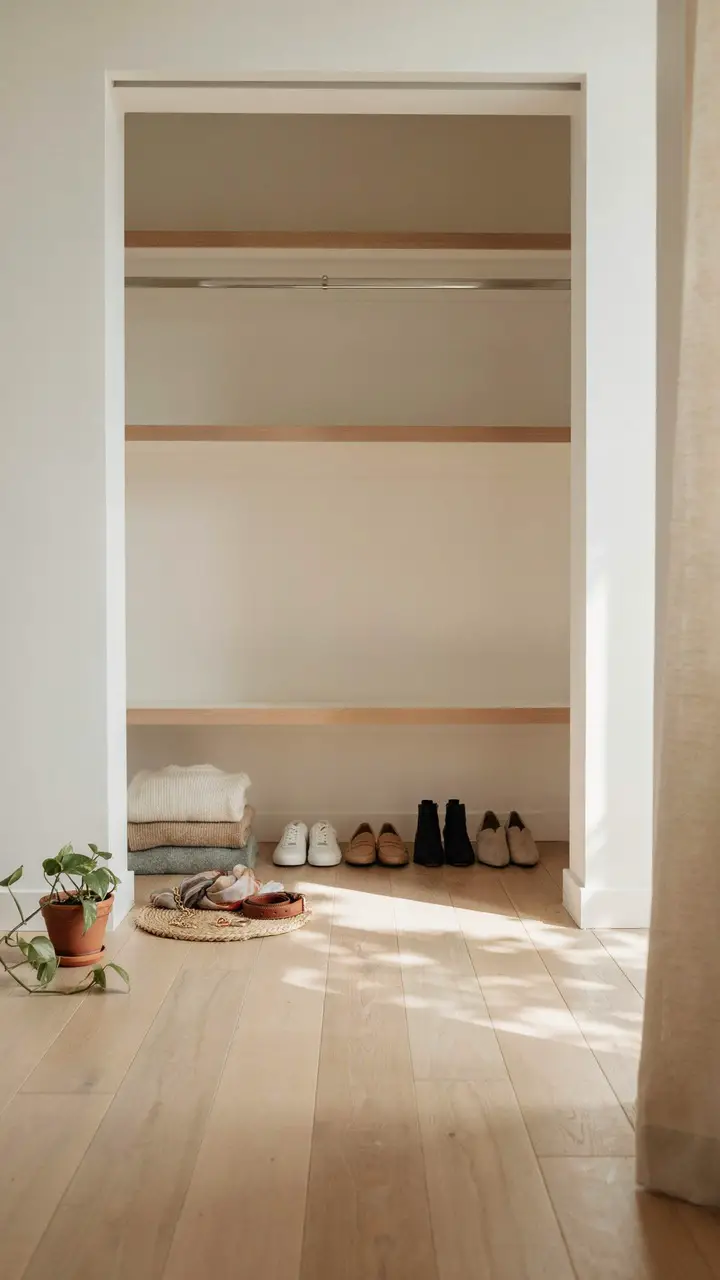
This one sounds extreme, but it genuinely works. When you reorganize around existing items, you end up keeping things by default rather than by choice. Pull everything out, wipe down the shelves, and let yourself see the actual blank canvas. It’s a little chaotic for about an hour, and then it becomes deeply satisfying.
How to Recreate This Look
- White peel-and-stick shelf liner ($10–$18, Walmart or Amazon) freshens shelves instantly
- Sorting bins or cardboard boxes (free from any grocery store run) keep categories separate while you work
- Time required: 2–4 hours for an average reach-in closet
- Difficulty level: Beginner with a solid playlist
4. Organize by Category, Then by Color
Here’s where things get genuinely fun. Once you’ve edited down to your keepers, hang everything by category first — all tops together, all pants together, all dresses together — and then arrange each category by color from light to dark. This isn’t just aesthetic (though, yes, it looks incredibly satisfying). It’s functional. You’ll immediately see what you actually own, which colors dominate your wardrobe, and where the gaps are. Spoiler: most people discover they own eleven navy blue items and approximately zero things they can wear to anything with a dress code.
If you want to go deeper on organizing your storage space beyond the closet itself, check out these small closet organization ideas for creative solutions that work in even the tightest spaces.
5. Add a Second Rod to Double Your Hanging Space
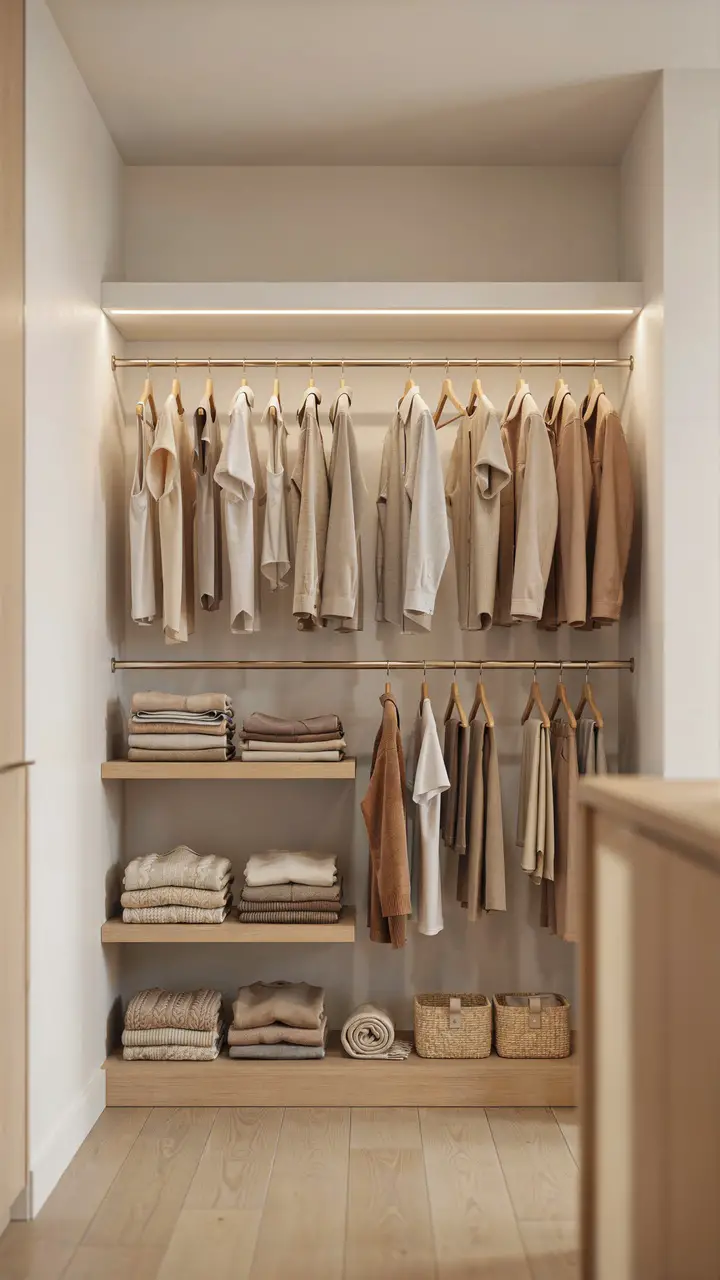
This is one of the most underrated closet updates you can make — and it costs almost nothing. A tension-mounted second rod ($15–$25) slides right under your existing bar and instantly doubles hanging capacity for shorter items: blouses, folded trousers, blazers, skirts. No drilling, no landlord drama, no tools beyond maybe a measuring tape.
How to Recreate This Look
- Tension closet rod ($15–$25, Amazon or The Container Store)
- Velvet slim hangers ($25–$40 for 50 pack) to maximize the space between garments
- Works best in closets with at least 36 inches of width and full-length hanging items that can be moved to a wardrobe or separate rack
- Rental-friendly: Absolutely — no installation required
- Difficulty level: Beginner; takes about 15 minutes
- Seasonal tip: In winter, move bulkier coats to hooks behind the closet door and reclaim the rod for layering pieces
6. Use the Back of the Door — Seriously, Use It
The back of the closet door is prime real estate that most people completely ignore. An over-the-door organizer ($20–$45) can hold shoes, accessories, scarves, belts, cleaning products, or even a full shoe collection depending on the style. For a more intentional look, opt for a clear-pocket organizer so you can see everything at a glance, or go for hooks in a matte black or brushed gold finish if you want it to look like a design choice rather than a storage solve.
BTW — these also work brilliantly on bathroom doors, pantry doors, and the inside of kitchen cabinet doors. One small purchase, multiple wins throughout your home.
7. Invest in Uniform Hangers (It’s Not Vain, It’s Transformative)
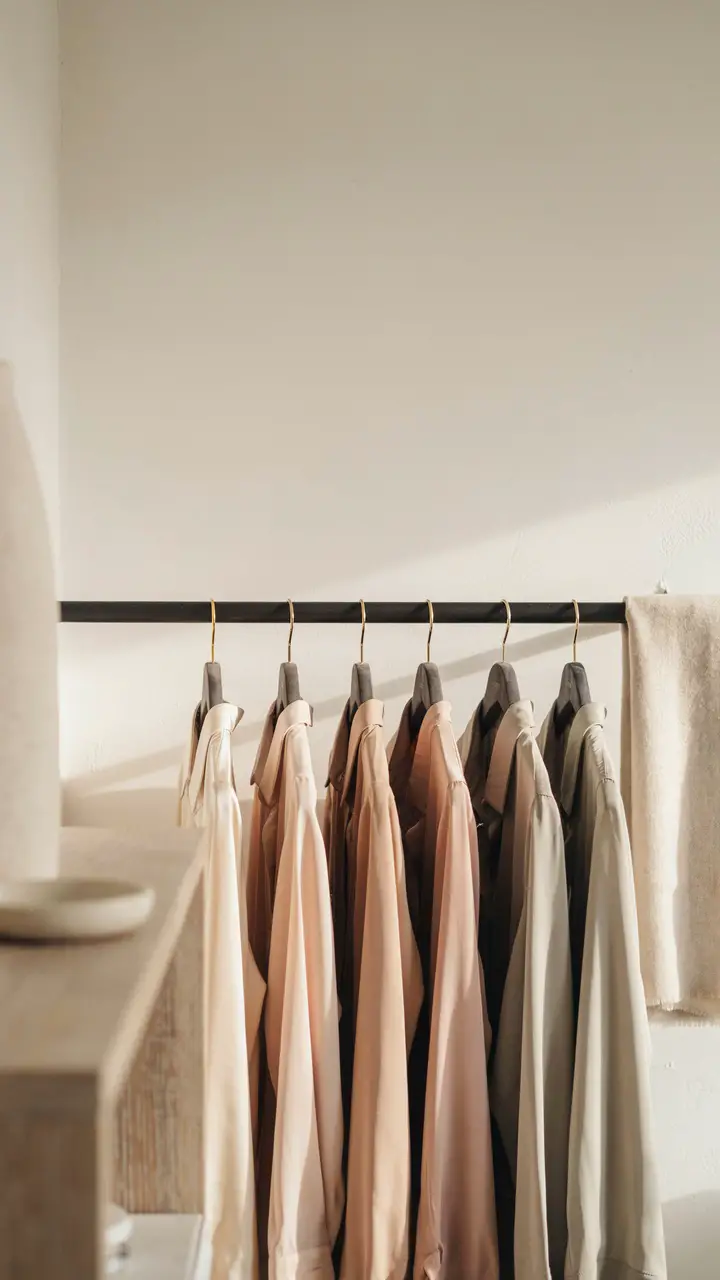
Swapping out a chaotic mix of wire, plastic, and random wooden hangers for a single uniform style is genuinely one of the fastest ways to make your closet look intentional. Velvet slim hangers prevent shoulder bumps in knitwear, keep items from sliding off, and take up about half the space of standard plastic hangers. A set of 50 runs $20–$35 on Amazon, and the visual transformation is immediate and dramatic.
How to Recreate This Look
- 50-pack velvet slim hangers in charcoal or blush ($20–$35, Amazon)
- Face all hangers the same direction and ensure all items face the same way
- Style compatibility: Works with every aesthetic from minimalist to maximalist — it’s about function, not style
- Difficulty level: Absolute beginner
- Time required: 30–45 minutes to swap an entire closet
8. Fold Bulky Items Using the KonMari Method
Sweaters, jeans, and workout gear don’t need to hang — and hanging them often wastes precious rod space. Folding them vertically (file-folding style, à la Marie Kondo) and storing them in drawers or open bins means you can see every single item at once without digging. No more pulling out an entire stack just to find the grey hoodie at the bottom. Everything stands up on its edge, everything is visible, everything is accessible.
For small bedroom closets that double as storage, pairing this folding method with small bedroom closet organization ideas can genuinely revolutionize how the space functions day to day.
9. Create a “Capsule Zone” for Your Most-Worn Pieces
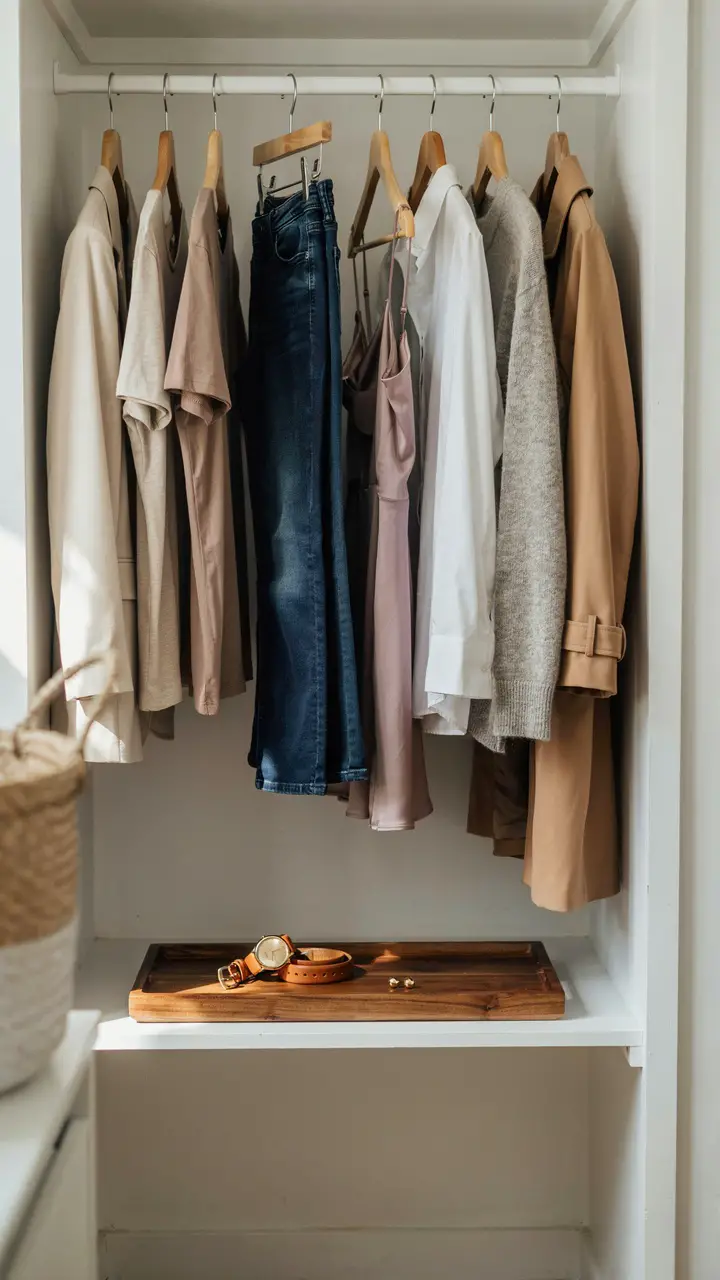
Designate a specific section of your closet as your “capsule zone” — the 10–15 pieces you actually reach for every week. Keep these front and center, easy to see, and easy to access. Everything else lives toward the back or sides. This one simple shift removes the daily decision fatigue of staring at a full closet and seeing nothing to wear.
How to Recreate This Look
- Cabinet or drawer dividers ($15–$30) to separate the capsule zone from seasonal items
- Wooden or acrylic tray ($12–$25) for a single day’s accessories — watch, jewelry, belt
- Budget tier: Under $50 total for this section
- Style compatibility: Every aesthetic; it’s a structure, not a style choice
- Seasonal adaptability: Swap the capsule zone quarterly — swap in fall layers, swap out summer linens
10. Schedule a Quarterly Refresh — Not Just an Annual Overhaul

The single biggest mistake in closet organization? Treating it as a once-a-year event. Quarterly check-ins (15–30 minutes, four times a year) keep things from spiraling back into chaos. Use seasonal transitions as your natural trigger: swap winter coats for spring layers, rotate heavy knits to the back, move sandals forward. Think of it less like a chore and more like a wardrobe editor’s seasonal review.
How to Recreate This Look
- Seasonal storage bins ($20–$40 each, IKEA SKUBB or similar) for off-season items
- Under-bed storage ($25–$60 per bag or box) for bulky off-season pieces
- Difficulty level: Beginner once the initial clean-out is done
- Time required: 20–30 minutes per quarterly refresh
- Common mistake to avoid: Don’t skip the edit during the swap. Moving things in and out without reassessing means clutter just rotates rather than resolves.
One Last Thing Before You Open That Closet Door
The perfect closet isn’t about having a custom system with velvet-lined drawers and a chandelier (though, truly, no judgment if that’s your dream). It’s about a space that works for you — where you can find what you need, see what you own, and get dressed in the morning without a minor existential crisis.
Start small. Do the one-year rule pass-through this weekend. Add a second rod next month. Build it out piece by piece. Your closet is a living thing that should grow and shift with you — not a Pinterest project you complete once and never touch again.
You’ve got this. And honestly? The morning you open those doors and everything makes sense will feel better than you expect. 🙂
Looking to take your closet organization further? Explore DIY small closet organization ideas, walk-in closet storage ideas, and master closet organization for room-specific inspiration that matches your space and budget.

Greetings, I’m Alex – an expert in the art of naming teams, groups or brands, and businesses. With years of experience as a consultant for some of the most recognized companies out there, I want to pass on my knowledge and share tips that will help you craft an unforgettable name for your project through TeamGroupNames.Com!