
You know that moment when a guest politely asks for an extra towel, and you briefly consider just handing them the one off your bathroom rack rather than opening that closet? Yeah. We’ve all been there.
The deep linen closet is the great equalizer — it doesn’t care how beautifully you’ve styled your living room.
Behind that door lives a chaotic avalanche of mismatched pillowcases, a flat iron from 2017, and approximately eleven towels folded in eleven different ways.
The good news? A deep linen closet is actually a storage gift. All that extra shelf depth is potential you haven’t tapped yet.
These ten ideas will help you unlock it — without a contractor, a massive budget, or an entire lost weekend.
1. Start With a Full Purge (Yes, Everything Comes Out)
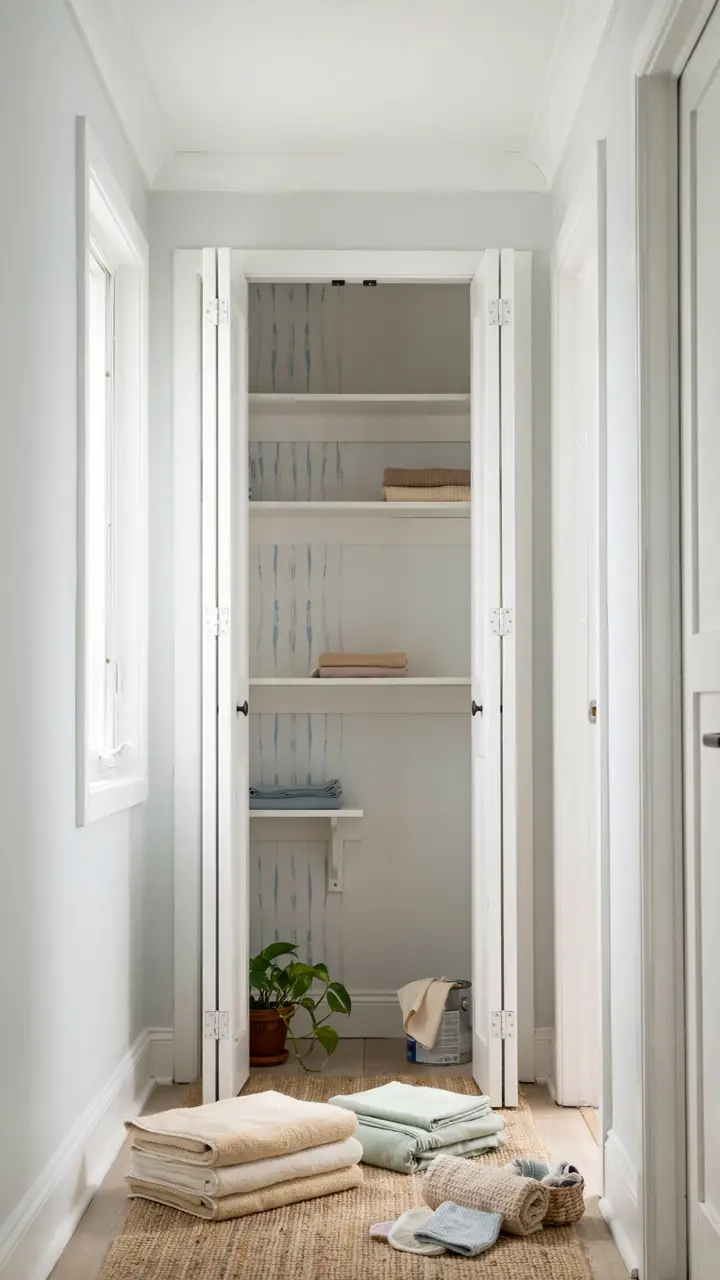
Pull everything out of the closet, sort through it, and get rid of anything worn out or no longer useful. Set up a donation pile for mismatched sheets and old linens you haven’t used in years, and toss out anything threadbare. While you’re at it, wipe down every shelf — it’s deeply satisfying and costs nothing.
This is also the perfect moment to freshen the interior with a coat of paint or peel-and-stick wallpaper. It takes almost no time and makes a surprising difference in how motivated you’ll feel to keep the space organized afterward.
How to Recreate This Look
- Shopping list: Peel-and-stick wallpaper in a stripe or simple geometric ($18–$35/roll at Target or Amazon), a small foam roller for paint, mild all-purpose cleaner
- Steps: Remove everything → wipe shelves → apply wallpaper to back wall → allow to dry before restocking
- Budget breakdown:
- Budget (under $100): Paint walls yourself with leftover interior paint ($0–$15)
- Mid-range ($100–$500): Peel-and-stick wallpaper on back wall + new shelf liner paper ($40–$80)
- Investment ($500+): Custom painted millwork or built-in cabinetry
- Difficulty: Beginner. Total time: 2–3 hours
- Mistake to avoid: Skipping the purge and organizing around things you don’t use. This defeats the entire purpose.
2. Use Long, Pull-Out Bins to Conquer the Deep Shelves
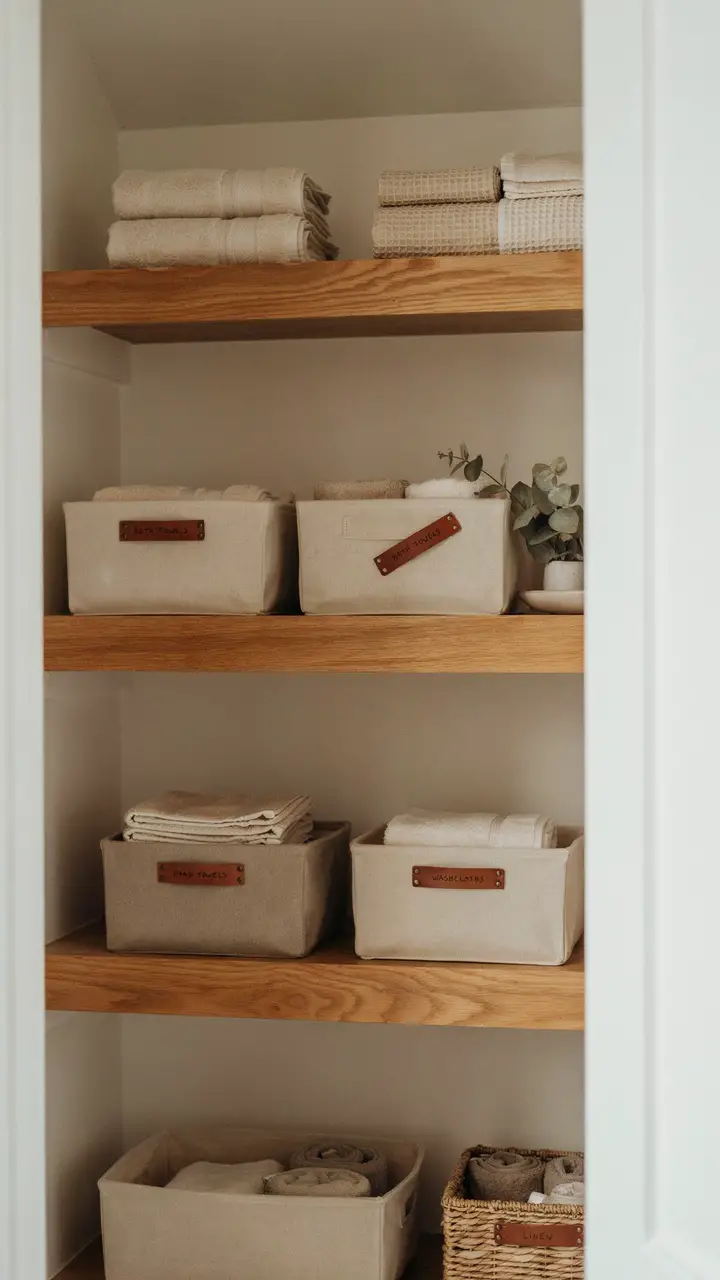
Here’s the hard truth about deep shelving: since you can’t easily reach the back of deep shelves, you either don’t use that space at all, or you end up shoving things back there and creating a disorganized mess. The elegant fix? Bins that function like drawers.
Bins make it easy to pull the proper category out all at once and grab what you need in one fell swoop. Clear storage bins make it easy to identify contents, while covered baskets keep linens dust-free.
How to Recreate This Look
- Shopping list: Long handled fabric bins (12–14″ deep, around $12–$20 each at IKEA, Target, or The Container Store), label tags or a DYMO label maker (~$25)
- Best for: Towels, sheet sets, extra blankets, seasonal bedding
- Style compatibility: Works in any aesthetic — choose woven rattan for bohemian or warmth vibes, white canvas for minimalist, clear acrylic bins for modern/utilitarian
- Budget breakdown:
- Budget: Dollar Store plastic bins with handles ($1–$3 each)
- Mid-range: Fabric bins with leather label tabs ($12–$20 each)
- Investment: Custom pull-out drawer inserts from a closet company ($150–$400+)
- Kids and pets: Fabric bins hold up well and won’t crack; avoid very lightweight bins on lower shelves where curious toddlers might pull
- Difficulty: Beginner. No tools, no drilling.
3. Master the Pillowcase Bundle Method for Sheet Sets
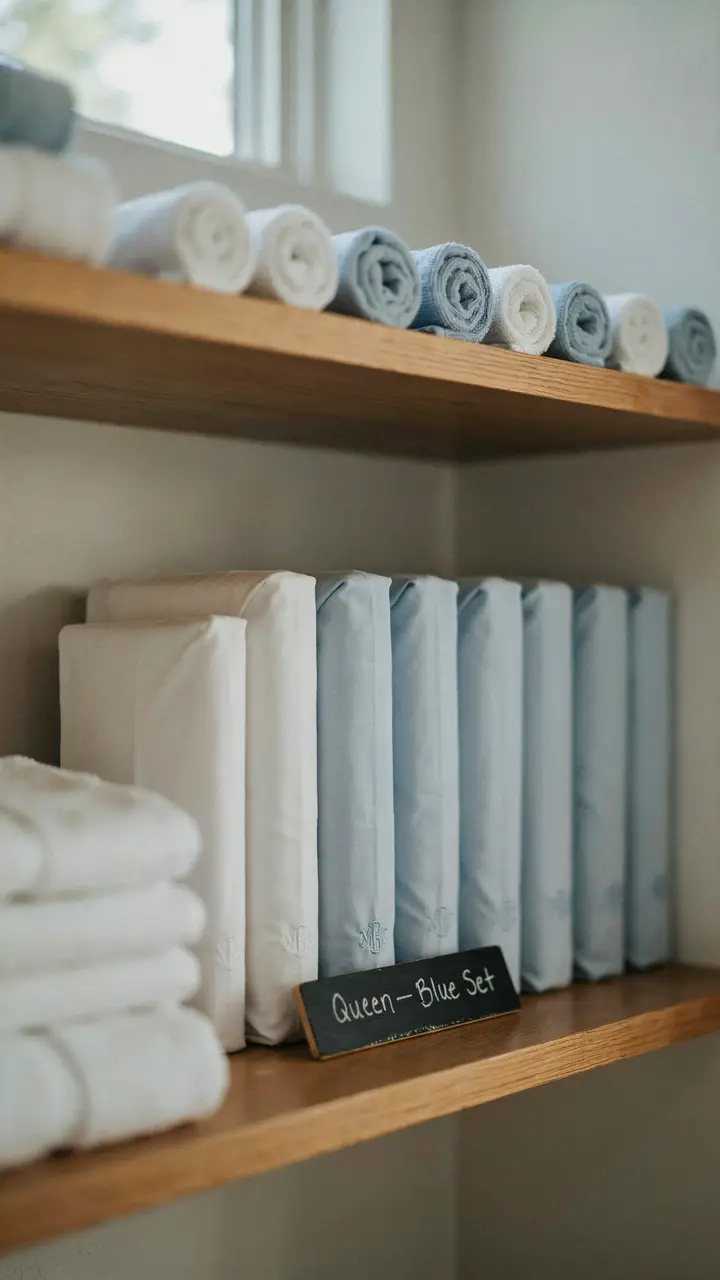
If you’ve ever spent four minutes hunting a fitted sheet that wandered away from its matching set, this idea will change your life. The pillowcase method means folding your sheet sets neatly and tucking them inside one of the matching pillowcases — keeping everything together so you’re never left hunting for a missing fitted sheet or top sheet. Just grab a pillowcase bundle, and you have a full set ready to go.
FYI — this also makes it easier to store sets upright, like books, which maximizes shelf space significantly.
How to Recreate This Look
- Shopping list: Chalkboard label stickers ($6 on Amazon), chalk pen, existing pillowcases
- Steps: Fold fitted sheet → fold flat sheet on top → fold both in thirds → tuck into one pillowcase → store upright
- Tip: Store by bed size — queen sets together, twin sets together
- Difficulty: Beginner. Zero cost. Pure payoff.
- Seasonal adaptability: Swap flannel bundles in winter, keep lightweight cotton ones accessible in summer
4. Add Shelf Dividers to Stop the Towel Avalanche
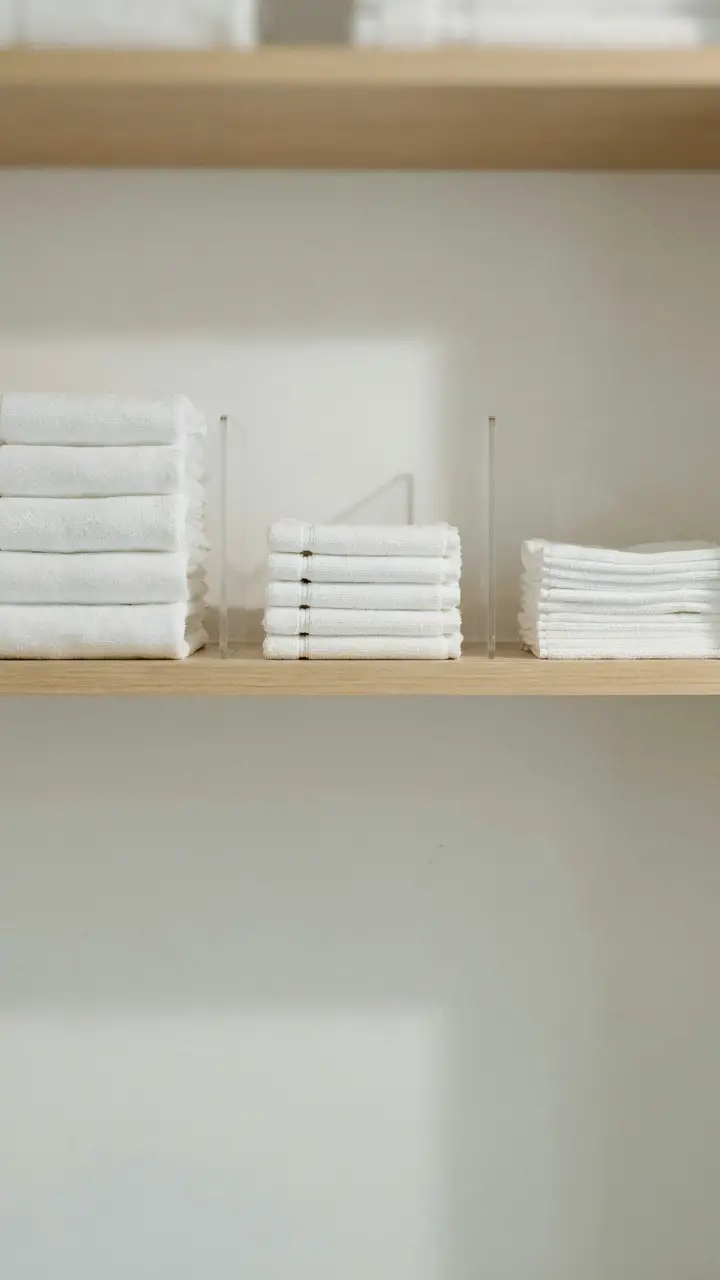
You fold your towels perfectly. You stack them beautifully. You close the closet door. You open it three days later and they’ve collapsed into each other like a domino rally. Instead of constantly refolding and restacking, use vertical dividers to create designated sections for bath towels, fitted sheets, and pillowcases. Clear acrylic adjustable dividers are particularly good because you can set them up to fit your linen collection perfectly and they’re easy to wipe clean.
How to Recreate This Look
- Shopping list: Clear acrylic adjustable shelf dividers ($15–$25 for a set of 4, available at Wayfair, The Container Store, or Amazon)
- Steps: Measure shelf depth → slide dividers onto shelf edge → adjust spacing → assign one section per towel category
- Budget breakdown:
- Budget: Repurposed wire shelf scraps as DIY dividers ($0)
- Mid-range: Acrylic adjustable dividers ($15–$25)
- Investment: Custom built-in cubbies ($200+)
- Difficulty: Beginner. Takes about ten minutes.
5. Install Motion-Activated LED Lights So You Can Actually See
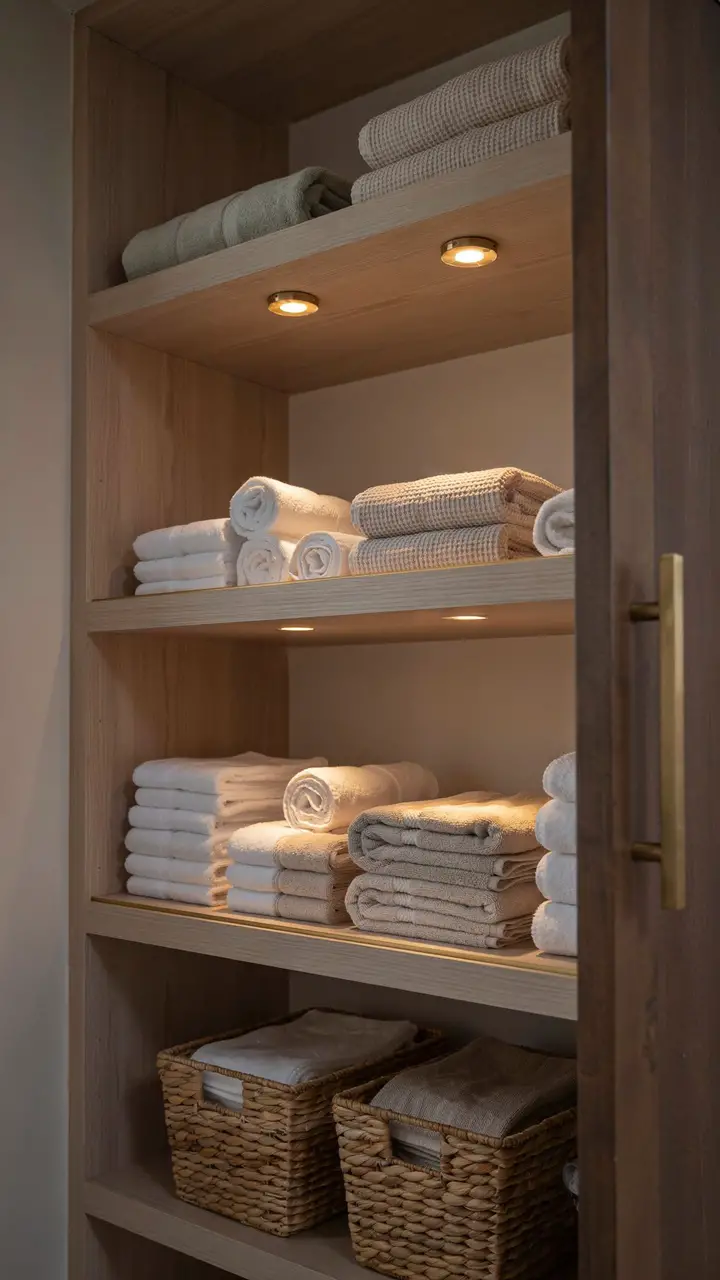
Deep closets are dark closets. Linen closets are typically dark without much natural light, making it harder to see what’s inside. Rechargeable LED motion lights are an ideal fix — they attach magnetically to wire shelves and activate automatically when you open the door.
If your closet space is especially deep, a few stick-on LED lights help you see everything stored at the back. Simple, inexpensive, and wildly effective.
How to Recreate This Look
- Shopping list: Magnetic rechargeable LED motion sensor puck lights (3-pack, $14–$22 on Amazon), USB charging cable (usually included)
- Where to place: Underside of top shelf and middle shelf
- Budget breakdown:
- Budget: Clip-on book light temporarily mounted ($8)
- Mid-range: Rechargeable LED puck lights ($14–$22)
- Investment: Hardwired LED strip lighting with dimmer (~$60–$120 with an electrician)
- Difficulty: Beginner. Stick, done.
- Maintenance: Recharge every 4–6 weeks
6. Mount an Over-the-Door Organizer for Small Items
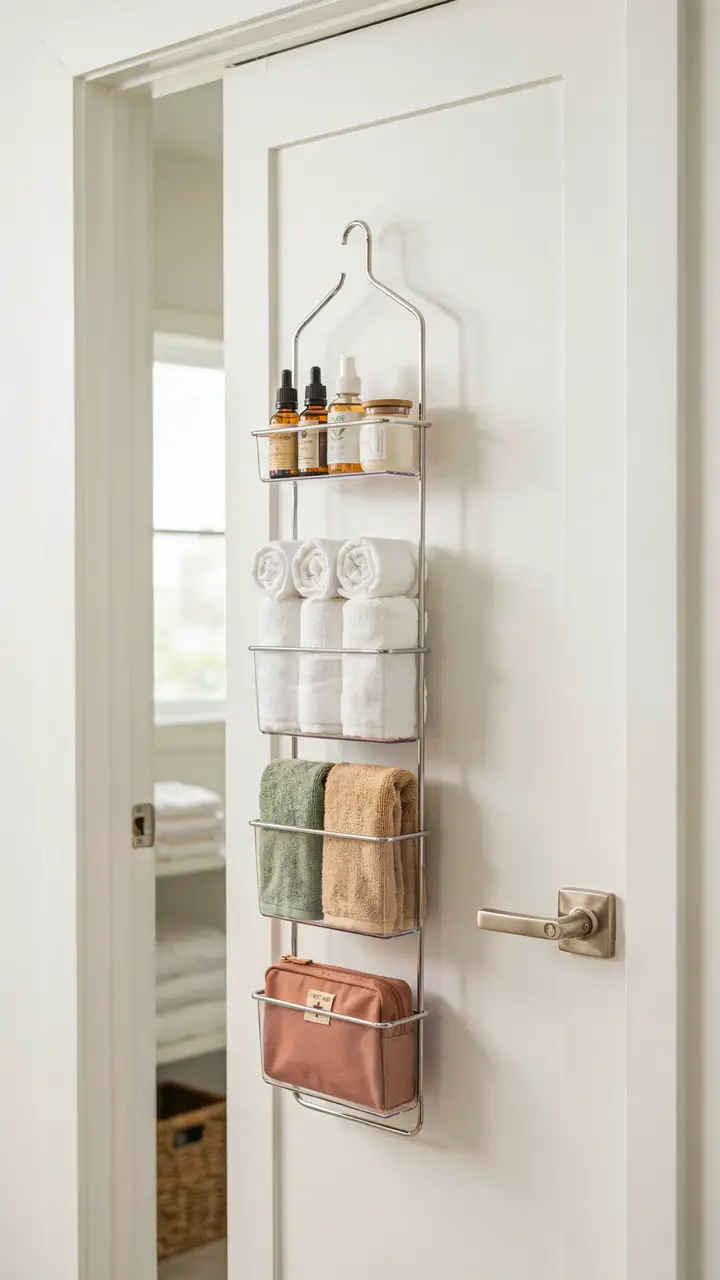
The back of your closet door is prime real estate you’re currently leaving blank. The back of the cabinet door is the perfect place to store small items you need to grab quickly — think washcloths, sanitary products, cleaning supplies, extra toiletries, and other miscellaneous household items. Purpose-made cabinet door racks with wire shelves and hooks work beautifully, as do over-the-door shoe organizers with clear pockets.
How to Recreate This Look
- Shopping list: Over-the-door wire rack organizer ($18–$35 at Target or Amazon), or clear-pocket shoe organizer ($10–$18)
- Rental-friendly: Yes — no drilling required; hooks fit over the door frame
- Best for: First aid supplies, small toiletries, cleaning sprays, washcloths
- Budget breakdown:
- Budget: Repurpose a shoe organizer ($0 if you have one)
- Mid-range: Dedicated door organizer ($18–$35)
- Investment: Custom door-mounted pull-out rack system ($80–$150)
- Difficulty: Beginner.
7. Roll Towels and Use a File Sorter for Washcloths
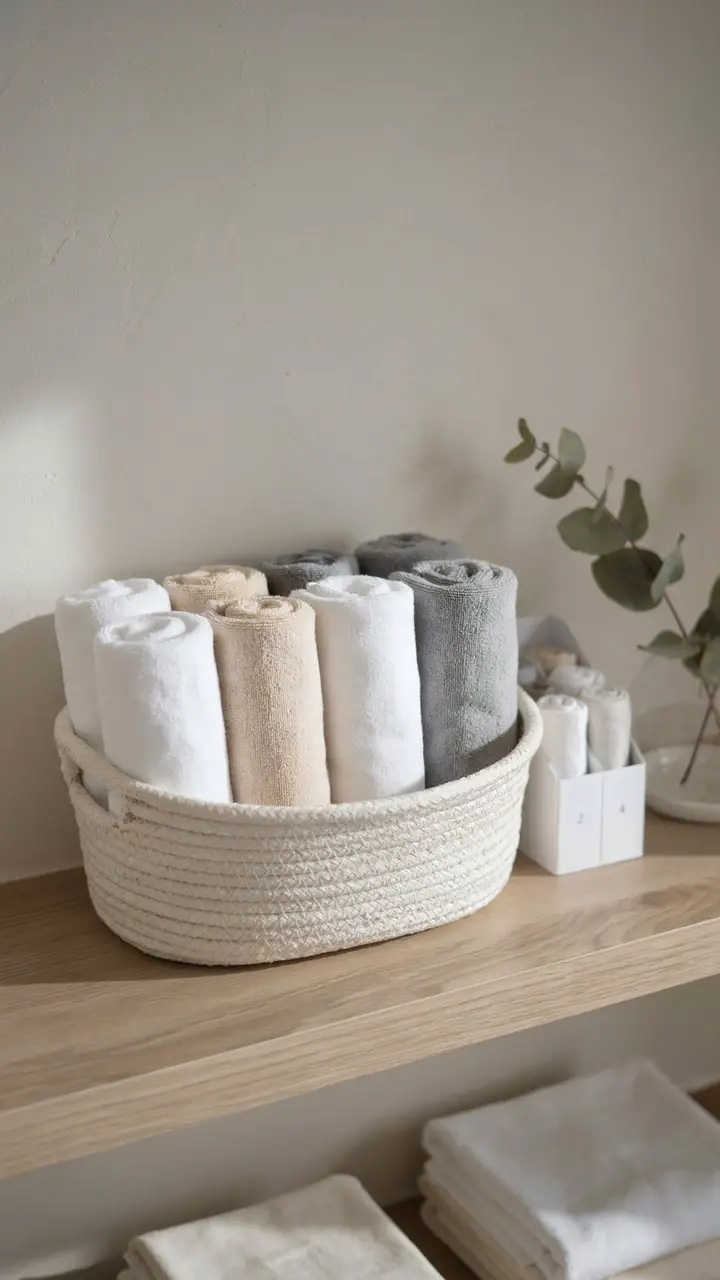
Flat-stacked towels tip. Rolled towels do not — and they take up less space besides. Rolling bulky items like bath towels instead of folding them makes a real difference, and placing rolled towels into a repurposed wine rack keeps them individually accessible.
For washcloths specifically, use a file sorter — roll them up, place them vertically in the slots, and never deal with a toppling stack of washcloths again.
How to Recreate This Look
- Shopping list: Desktop file sorter ($8–$15), woven basket or bin for rolled bath towels ($12–$25)
- Steps: Roll each towel tightly from one end → stand upright in basket → store file sorter directly on shelf for washcloths
- Tip: Fold towels in thirds lengthwise before rolling for a consistent, uniform cylinder
- Difficulty: Beginner.
- Durability: Works well with kids — they grab one towel without disrupting the row
8. Store Bulky Bedding in Vertical Under-Bed Organizers on Top Shelves
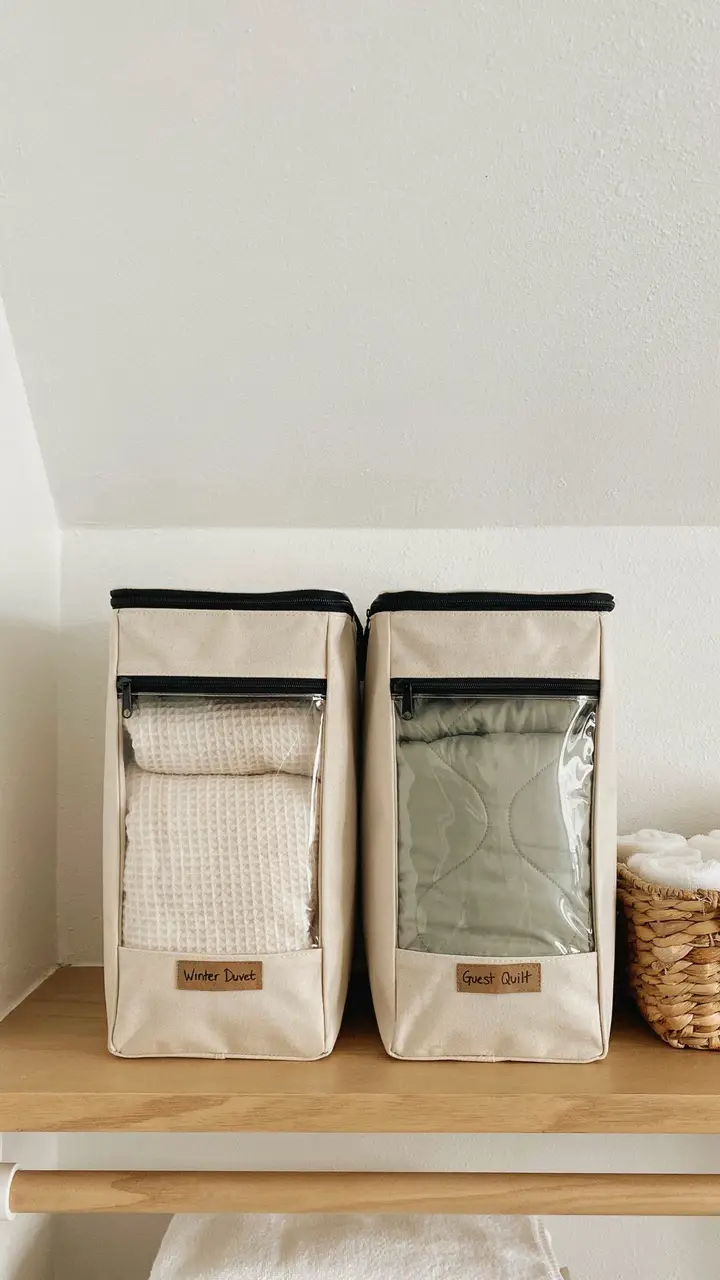
Rather than rolling and stacking comforters where they’ll get dusty, use under-bed organizers with clear covers and stack them vertically on the top shelf. These organizers have handles to help you lift them on and off the shelf, clear windows so you can see what’s inside, and labels to identify them.
All seasonal items or things you rarely use should go on top shelves or in the back of the closet — behind more frequently used items — to optimize the space.
How to Recreate This Look
- Shopping list: Zippered under-bed storage bags with clear window ($12–$20 each at IKEA, Target, or Amazon), adhesive labels
- Budget breakdown:
- Budget: Large ziplock storage bags ($5 for a pack)
- Mid-range: Zippered fabric storage bags with handles ($12–$20 each)
- Investment: Premium linen storage bags in breathable fabric ($30–$50 each)
- Seasonal adaptability: Swap winter comforters to top shelves in spring; pull them back down in fall in under 5 minutes
- Difficulty: Beginner.
9. Label Everything (Seriously, Everything)
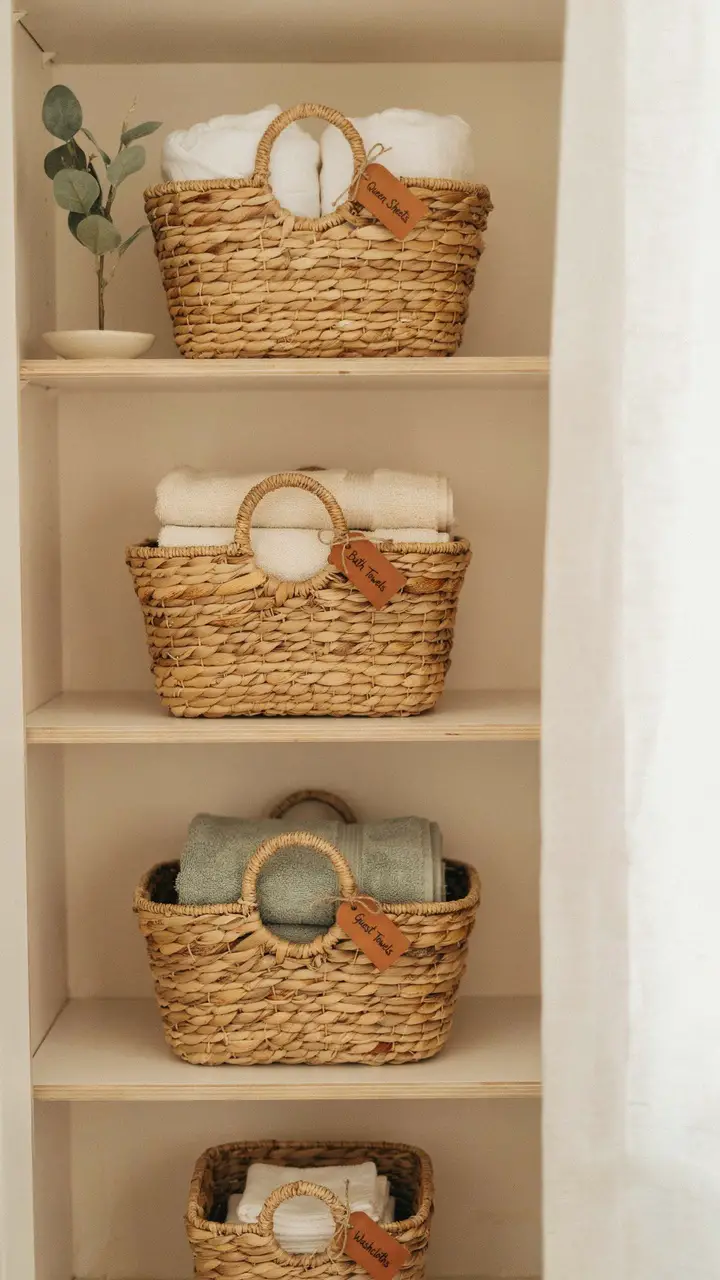
Labels sound mundane until the third time someone puts the hand towels in the sheet bin. Labeling your bins, baskets, or shelves makes it easier for everyone to find what they’re looking for — and more importantly, it clarifies where to put things away.
A DYMO LetraTag handheld label maker lets you choose from various fonts and colors; rewritable chalkboard labels are another flexible option, especially if categories shift seasonally.
How to Recreate This Look
- Shopping list: DYMO LetraTag label maker ($22–$28 at Target), or chalkboard label stickers + chalk pen ($8), or leather loop tags ($10 for a pack on Etsy)
- Difficulty: Beginner.
- Tip: Include both the category (Bath Towels) and, if relevant, the size (Queen Sheets) on each label
10. Add a Rolling Cart or Hamper at the Bottom
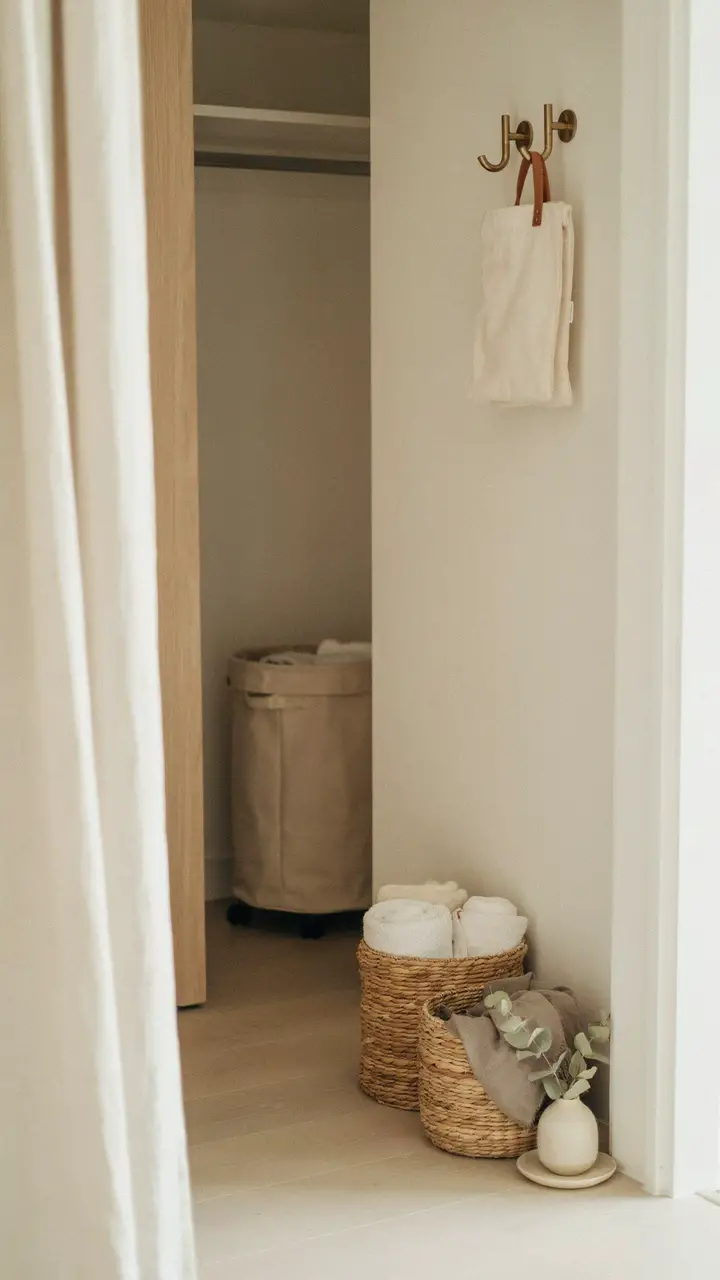
A cart or trolley on wheels is a great way to keep frequently used linens accessible, especially if your closet has no built-in shelving at the bottom. You can position it at the base of the closet and roll it out whenever you need something from it.
Color-coding rolling hampers is also a clever way to encourage family members to sort light and dark laundry without even thinking about it. Bonus: the hamper rolls directly to the laundry room.
How to Recreate This Look
- Shopping list: Rolling hamper with collapsible bin or color-coded bags ($25–$55 at IKEA, Target, or World Market), command hook for laundry bag
- Budget breakdown:
- Budget: A handled laundry basket you already own, repositioned inside the closet
- Mid-range: Rolling wheeled hamper ($25–$55)
- Investment: Custom built-in laundry pull-out with two-compartment sorting ($200–$500)
- Difficulty: Beginner.
- Works with kids: Absolutely — the color-coded sorting method means even young children can participate in laundry prep
- Maintenance: Wipe down the cart base every couple of months; no other upkeep required
A Closet Worth Opening
Here’s the honest truth: organizing a deep linen closet doesn’t require a massive overhaul. It requires a handful of the right containers, a consistent folding method, a few smart labels, and enough light to actually see what you have. Start with the purge, invest in a set of long handled bins, master the pillowcase bundle — and the rest will follow naturally.
The best organized closet isn’t the fanciest one. It’s the one where everyone in your household knows where things go and actually puts them back. That small daily smoothness — grabbing the right towel, the right sheet set, without a single second of digging — is one of those quiet domestic joys that makes a home feel genuinely yours. 🙂

Greetings, I’m Alex – an expert in the art of naming teams, groups or brands, and businesses. With years of experience as a consultant for some of the most recognized companies out there, I want to pass on my knowledge and share tips that will help you craft an unforgettable name for your project through TeamGroupNames.Com!